Castels Castle: A Medieval Fortress in Switzerland

Visitor Information
Google Rating: 4.7
Popularity: Very Low
Official Website: www.burgcastels.ch
Country: Switzerland
Civilization: Unclassified
Site type: Military
Remains: Castle

History
Castels Castle is situated near the village of Putz within the municipality of Luzein in Switzerland. Its origins trace back to the early Middle Ages, constructed by local medieval powers as a place of refuge or a fortified church. The main tower of the castle was built around the year 1200, with the surrounding defensive walls originating from the 12th or 13th century.
During the 14th century, the castle became the administrative center for managing the Aspermont estates in the Upper Prättigau region. In 1338, ownership changed hands when the fortress and lands were sold to Count Friedrich V von Toggenburg and Ulrich von Matsch. A division of these properties followed in 1344, assigning Castels Castle to the Matsch family. Ownership fluctuated between the Toggenburg and Matsch families through the late 15th century due to political and financial shifts.
Near the end of the 15th century, financial difficulties forced Gaudenz von Matsch to sell Castels to Emperor Maximilian I of the Habsburg dynasty. During the Swabian War in February 1499, forces from the League of the Ten Jurisdictions seized the castle, compelling the local authorities to swear loyalty to them. However, later that year, the peace treaty signed in Basel restored the castle to Habsburg control. Despite this, local nobles frequently served as Austrian administrators known as vogts, overseeing the region on behalf of the emperor.
Throughout the 16th century, Castels continued as the center for Austrian governance in the Prättigau area. In April 1622, a local uprising saw residents besiege and capture the castle after cutting off its water supply, causing serious damage. Austrian troops retook the fortress in September the same year. The subsequent Lindau peace treaty demanded repairs to the structure, though it remains unclear if full restoration took place.
In 1649, the Prättigau region bought its independence from Austria and proceeded to dismantle Castels Castle. Since its deliberate destruction, the site has stood as a ruin and today is recognized for its national heritage significance in Switzerland.
Remains
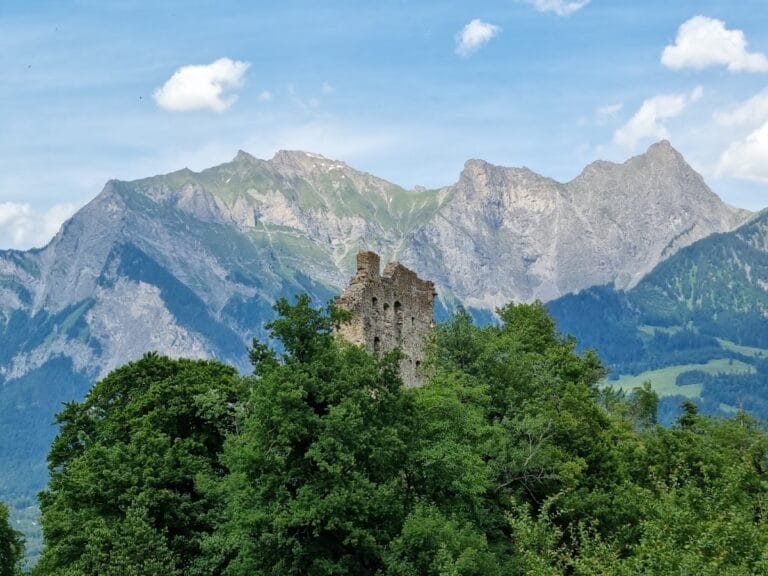
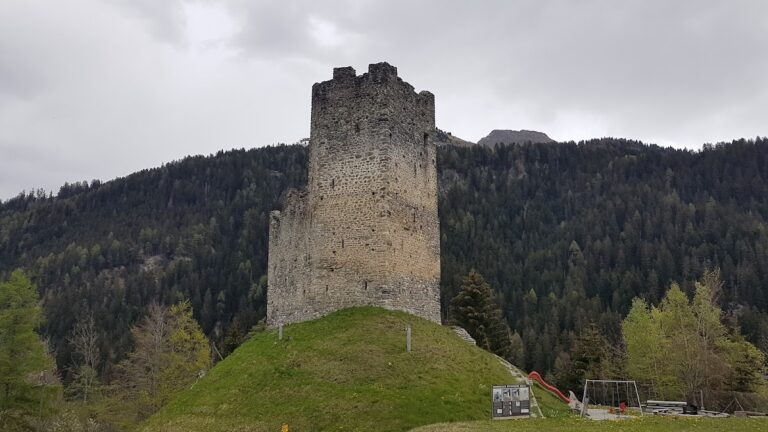
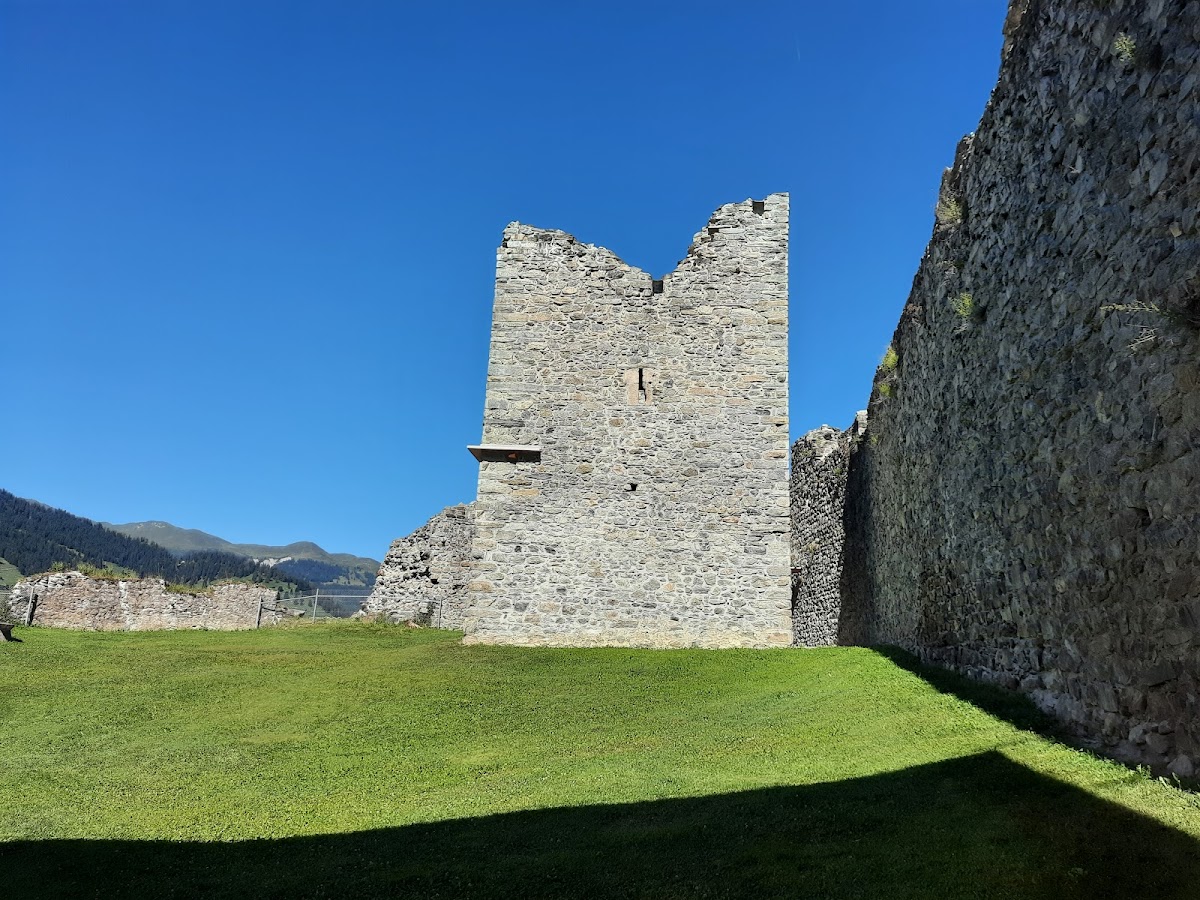
The ruins of Castels Castle occupy a rocky outcrop approximately 1,065 meters above sea level, with a steep cliff providing natural defense along the southern edge. A defensive ditch remains visible on the northern side. The castle’s outer ring wall encloses the site, built in multiple stages from the 12th through the 15th centuries. In the 16th or 17th century, the wall was reinforced with a wide outer ward known as a zwinger, measuring around five meters across, and an additional outer wall featuring a distinctive half-round tower.
Originally, access to the castle was through the western side via a narrow ledge along the rock. This main entrance was later relocated to the north side, where it was fortified with a barbican—a protective gateway structure. Remains of this barbican survive today, showing firing slits that would have accommodated hand firearms or small cannons, reflecting advancements in defensive design.
A prominent feature of the castle is its free-standing square tower, known as a bergfried, which measures about 8.5 meters on each side with walls two meters thick. This tall, multi-story tower stood roughly two meters inside the ring wall and originally had a high entrance on its second floor facing west, accessible by wooden stairs or platforms. The tower’s corners are constructed from carefully worked bossed ashlar masonry, large stone blocks with a raised surface, and fragments of smooth plaster from the 16th century still cling to its walls.
On the southwest side lay the residential section of the castle, which by 1616 had become a well-appointed two-story palas. This living area included a large hall, several chambers, a chapel, kitchen facilities, and storage rooms such as a granary and wine cellar. Within the courtyard stood a well supplied by a water conduit, along with other service buildings including a heated bathing house, an oven for laundry, and a pigsty. The exact locations of these ancillary structures have not been confirmed through excavation.
By the 17th century, the bergfried was used not only for defense but also as a prison and armory. Its dungeon was equipped with hand and foot shackles and a hoisting mechanism to raise and lower prisoners. Defensive upgrades from the 16th or 17th century include battlemented wall walks with crenellations—regular gaps for defenders—and firing slits on the northern curtain wall, demonstrating adaptation to firearm technology.
Together, these remaining features provide valuable evidence of Castels Castle’s long history as a fortified administrative center, its adaptations to changing military practices, and its eventual decline into a protected ruin.
Nearby sites