Gutenberg Castle: A High-Medieval Castle in Liechtenstein


Site at a Glance
- Rating
- 4.5
- Popularity
- Medium
- Country
- Liechtenstein
- Primary era
- Medieval
- External website
- Open
- Eras represented
- Iron Age, Classical, Medieval, Modern
- Civilizations
- Habsburg, Holy Roman Empire, Roman
- Site type
- Military
- Remains
- Castle
On this page12 sections
History
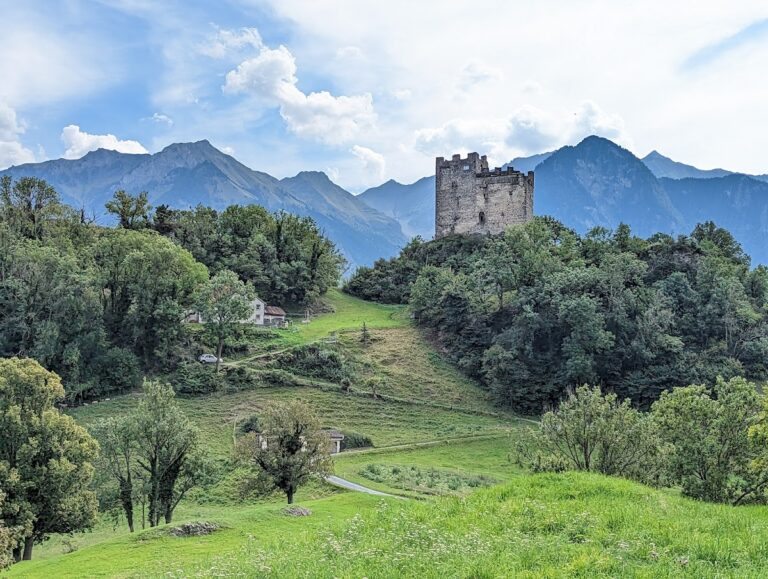
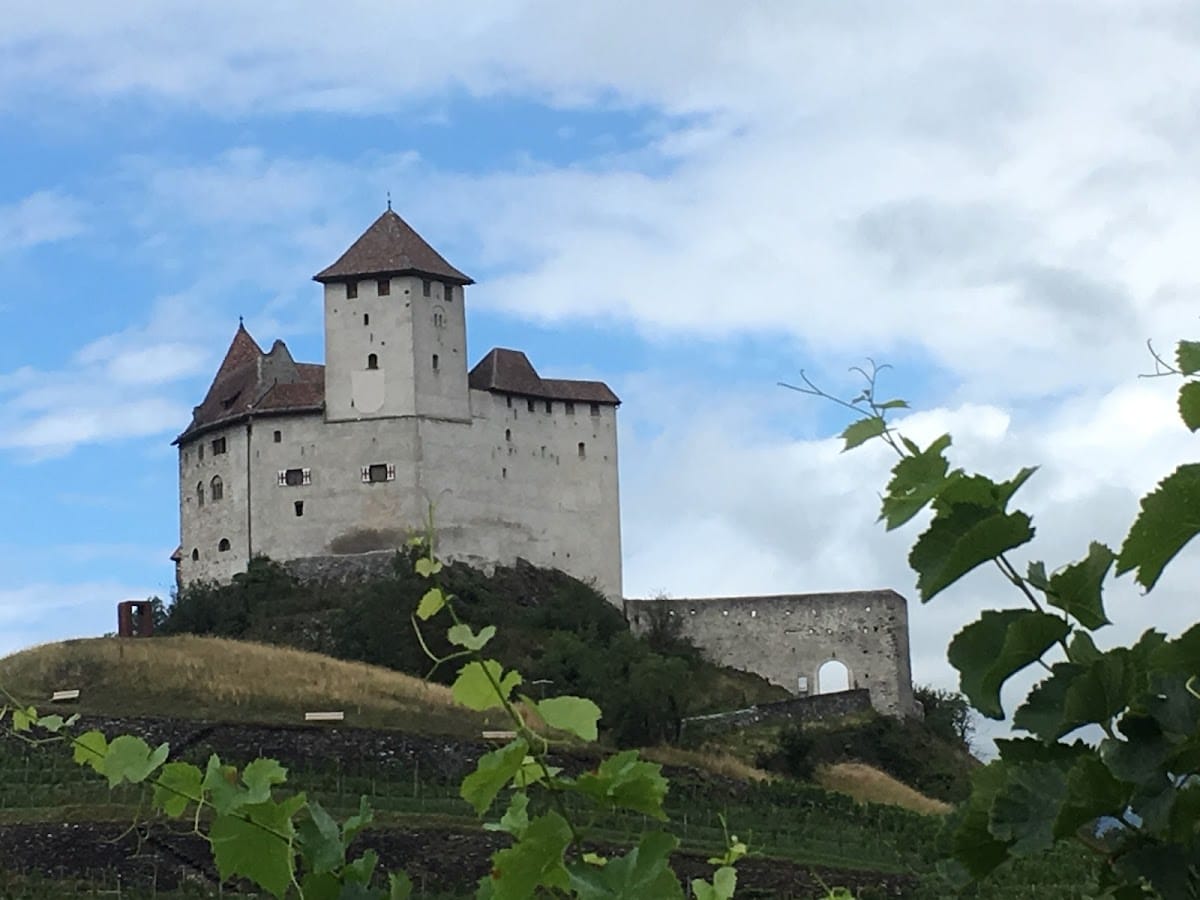
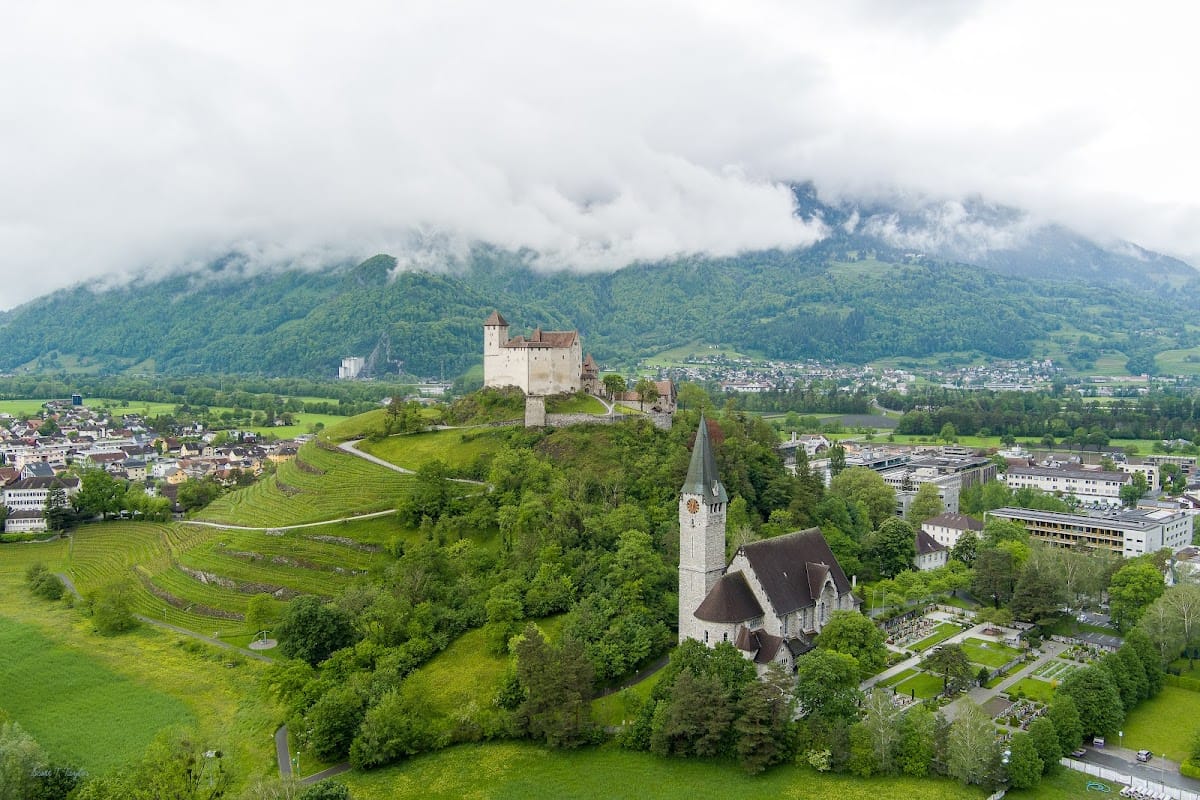
Gutenberg Castle is a high-medieval castle in Balzers, Liechtenstein, on a rocky hill near the centre of the country’s southernmost municipality. It is one of Liechtenstein’s five castles and one of the two to have survived intact into the present. Unlike Vaduz Castle, the residence of the princely family above the capital, Gutenberg Castle was not a residence of the princely family.
Early occupation and medieval fortification
Archaeological evidence places human activity on the castle hill as early as the Neolithic period, the later part of the Stone Age associated with settled communities, farming, and early pottery. The hill may also have served as a cult place. Before the medieval fortification was built, parts of the site, including the area later occupied by the inner courtyard, were used for burials. Numerous skeletons found in and around the castle indicate the extent of this earlier funerary use.
The medieval complex grew from an earlier church and cemetery. During the twelfth century, the cemetery was abandoned, and a continuous defensive wall was then built around the former church area. Later phases added and enlarged the main tower, whose upper part was strengthened with battlements. The name Gutenberg probably derives from a noble family first recorded in 1296.
Frauenberg and Habsburg control
The Lords of Frauenberg held the castle from the thirteenth century until Heinrich von Frauenberg died in 1314. Ownership then passed to the Habsburgs, a European ruling dynasty whose territories included areas around the Alpine Rhine. Under Habsburg control, Gutenberg served as a watch post against forces of the Swiss Confederation stationed at St. Luzisteig.
The castle’s military history is reflected in surviving impact holes from battles and sieges. Much of Balzers burned during the Zurich War, although the extent of any damage to Gutenberg Castle remains disputed. A failed siege and bombardment during the Swabian War in 1499 are documented. This conflict was fought between the Swiss Confederation and Habsburg-led forces of the Holy Roman Empire, a politically diverse central European realm ruled by princes, nobles, and cities.
Under Maximilian I, a Habsburg ruler who became Holy Roman Emperor in 1508, substantial construction and defensive work took place around the beginning of the sixteenth century. The work probably repaired damage from the 1499 siege while also strengthening the castle. A drawbridge remained in use until at least 1537, when a storm destroyed it. It was never replaced.
Decline, reuse, and reconstruction
During the seventeenth and eighteenth centuries, Gutenberg Castle ceased to serve military purposes. Several fires damaged the complex, although it was still used as a residence around 1750. After the major Balzers fire of 1795, the ruined castle became a source of building material for rebuilding the village.
The municipality of Balzers acquired the ruin and its associated lands in 1824. In 1854, it sold the castle hill and castle to Princess Franziska da Paula of Liechtenstein, a member of the dynasty that rules the principality. She sold the property in 1905 to Egon Rheinberger, a Liechtenstein architect, painter, and sculptor.
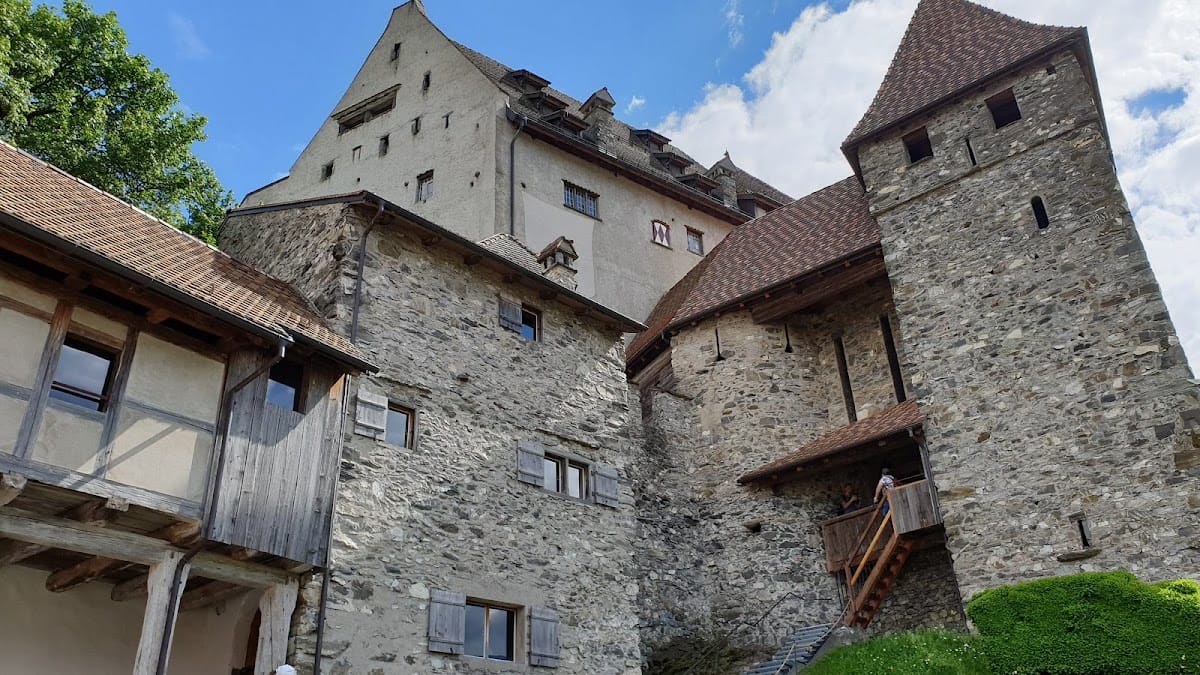
Rheinberger rebuilt the ruined castle between 1905 and 1912, using the surviving medieval remains as a guide for an approximately faithful reconstruction. Because the former interior fittings had not survived, he had broad freedom in arranging and designing the interiors. After his death in 1936, the castle was leased for events and occupied by other residents. It was sold to private owners in 1951, including the Liechtenstein-born Mexican actress Medea de Novara and her husband, Miguel Contreras Torres.
The government of Liechtenstein acquired Gutenberg Castle in 1979 for state and museum purposes. Medea de Novara retained a right of residence until her death in 2001. The castle has also hosted notable cultural events, including the open-air play The Last Gutenberger in 1925 and the film production William Tell in 1933. It continues to be used for cultural events and ceremonies.
Remains
Gutenberg Castle occupies a free-standing rocky hill approximately 70 metres high. Its southern slope is relatively gentle and has supported vineyards for thousands of years, while the eastern and northern sides, particularly the western side, rise in almost vertical rock faces above the Rhine Valley. The medieval fortification developed into a roughly circular enclosure protected by a ring wall, a continuous defensive wall surrounding a fortified compound. The main tower and later battlements form part of the surviving fabric, which also incorporates evidence of successive repairs and additions.
Archaeological evidence
Neolithic and ritual finds
Excavations in 1932 and 1933 uncovered seven human bronze statuettes and two animal figures, a boar and a stag. They were probably fertility or ritual objects. The 12-centimetre figure known as Mars von Gutenberg is regarded as the most important of the group and is displayed in the Liechtenstein National Museum. The same excavations produced a pottery vessel associated with the Rössener culture, a Middle Neolithic archaeological culture known especially for its pottery and dating here to approximately 4400 BC.
Iron Age and Roman evidence
Excavations in 1982 revealed parts of a later Iron Age dry-stone wall within the castle foundations. A dry-stone wall is made by fitting stones together without mortar. Masonry of Roman origin was built above this earlier wall, and coins minted around AD 350 suggest that a Roman watch post may have occupied the hill. A watch post was a defensive position intended mainly for observation and warning rather than for housing a large garrison.
Fortifications and reconstructed buildings
Medieval enclosure and tower
The foundations and surviving masonry preserve the sequence from the earlier church complex to the ring wall, main tower, battlemented upper parts, and later defensive repairs. The castle retained its drawbridge until a storm destroyed it in 1537. The bridge was not rebuilt, leaving the surviving entrance arrangements shaped by that change.
Rheinberger’s reconstruction
Rheinberger’s reconstruction follows the remaining medieval building fabric while giving the interiors a largely new arrangement. In the lower parts of the castle, he added a chapel, a chaplain’s residence, and a forge, among other structures. Much of the interior furnishing was acquired through the art trade, while other pieces were newly made. The furnishings were later divided among heirs, and some were transferred to the Liechtenstein National Museum.
Outer bailey and garden
The castle’s outer bailey, an enclosed area adjoining the principal fortified buildings, remains accessible throughout the year. A chapel and rose garden were reconstructed in 2010 and form part of the publicly accessible visitor area during the summer season. The parish church of St. Nicholas stands approximately 100 metres east of the castle, while the educational institution Haus Gutenberg is located at the foot of the hill.