Castelnuovo Fogliani Castle: A Medieval and Noble Heritage Site in Italy



Visitor Information
Google Rating: 4.5
Popularity: Low
Google Maps: View on Google Maps
Official Website: www.castellidelducato.it
Country: Italy
Civilization: Unclassified
Remains: Military

History
Castelnuovo Fogliani Castle stands in the locality of Castelnuovo Fogliani within the municipality of Alseno, Italy. It was constructed during the medieval period by the local Italian nobility to serve both defensive and residential purposes in the fertile lowlands of Emilia-Romagna.
The fortress dates back to the 12th century when it was known as Castelnuovo dei Terzi. Initially, it functioned as a fortified stronghold and noble residence for influential families controlling the Parma and Po Valley regions, including the Da Correggios and the Pallavicini. In 1364, Niccolò de’ Terzi the Elder acquired the jurisdiction of Castelnuovo and Casale Albino. His possession was confirmed a few decades later when Gian Galeazzo Visconti, Duke of Milan, enfeoffed these territories to him in 1386. This grant was imperialized the following year by Emperor Wenceslaus, who extended the fief to Niccolò’s descendants.
Niccolò de’ Terzi’s lineage maintained control of the castle until 1449, with his grandson, Niccolò de’ Terzi the Warrior, playing a notable role until his defeat by Francesco I Sforza. After exile, the castle briefly changed hands among other noble families, including a branch of the Terzi from Sissa, the Dalla Porta family, and the Visconti of Piacenza. By 1466, Galeazzo Maria Sforza, Duke of Milan, granted an honorary fief to his half-brother, Tristano Sforza. Following Tristano’s death in 1472, Lodovico Fogliani of Reggio received the fief, linking the castle to the Sforza family through his marriage to Lucia Terzani.
Lodovico’s son Corrado Sforza Fogliani formally inherited the castle in 1479, establishing the Sforza Fogliani branch based in Piacenza. His family held the castle and the surrounding lands for the next three centuries. It was during their tenure that the village and the fortress received their modern name, Castelnuovo Fogliani.
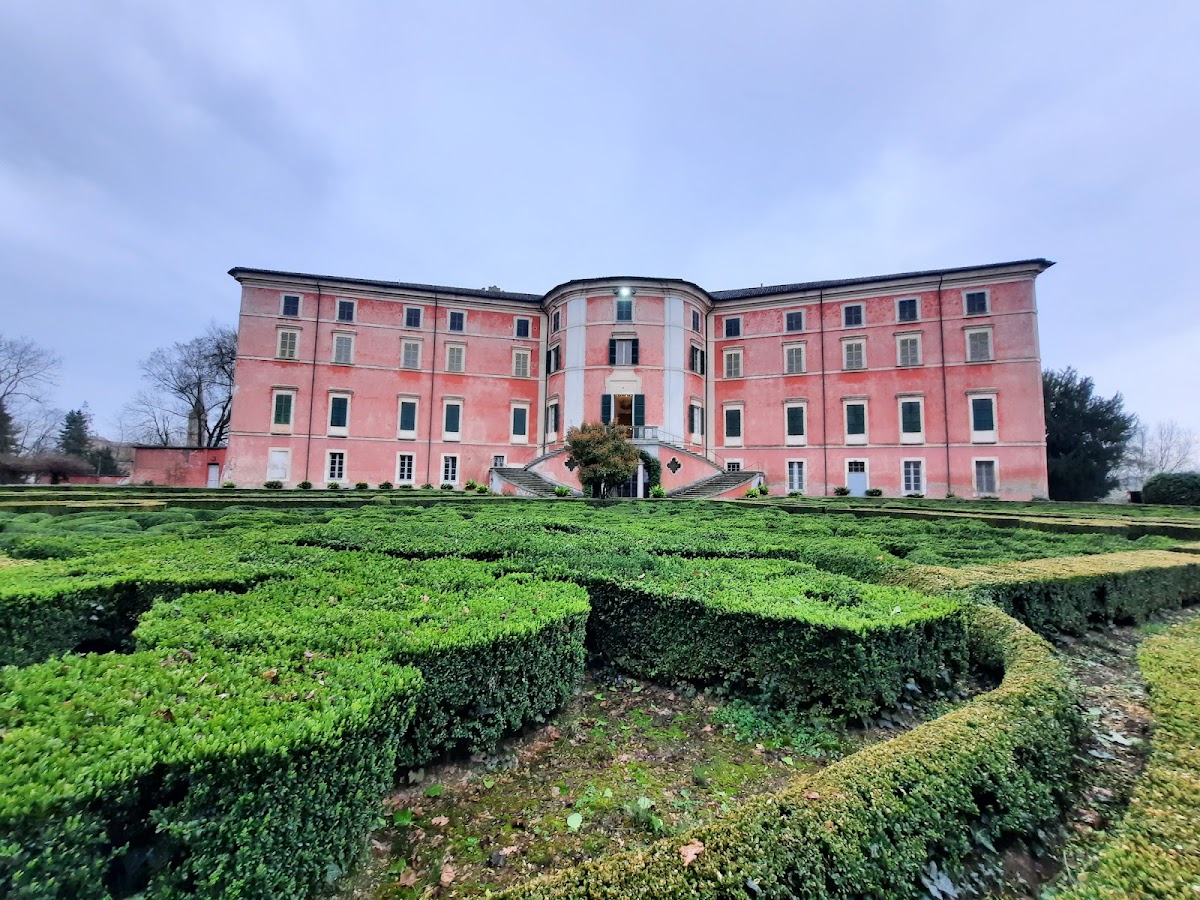
The 17th century brought major architectural transformation when Duke Giovanni Fogliani commissioned Luigi Vanvitelli, a notable architect, to rebuild the castle into an elegant noble palace. This reconstruction marked the highest point in the site’s architectural evolution. Later, in 1769, ownership passed to Federico Meli Lupi di Soragna, Giovanni’s grandson, on the condition that he adopt the Fogliani family name.
The castle remained in noble hands until the last male heir, Federico Fogliani, named his daughter Clelia Sforza Fogliani d’Aragona as universal heir. Clelia, married to Marquis Pallavicini of Parma but leaving no heirs, gifted the palace-castle to the Catholic Church in 1925. Pope Pius XI designated it as an academic institution for clergy, and under the guidance of Father Agostino Gemelli, the founder of the Catholic University of the Sacred Heart in Milan, the castle began serving its new role in education when classes started in 1926.
Remains
The current remains of Castelnuovo Fogliani Castle reflect both its medieval origins and later noble enhancements. The original fortress was a lowland defensive structure comprising various buildings and fortifications designed to protect the surrounding territory. Its position near the banks of the Ongina River allowed commanding views from the elevated site historically known as Monte Bello or Belmonte, names that evocatively describe its scenic outlook dating back to the 12th century.
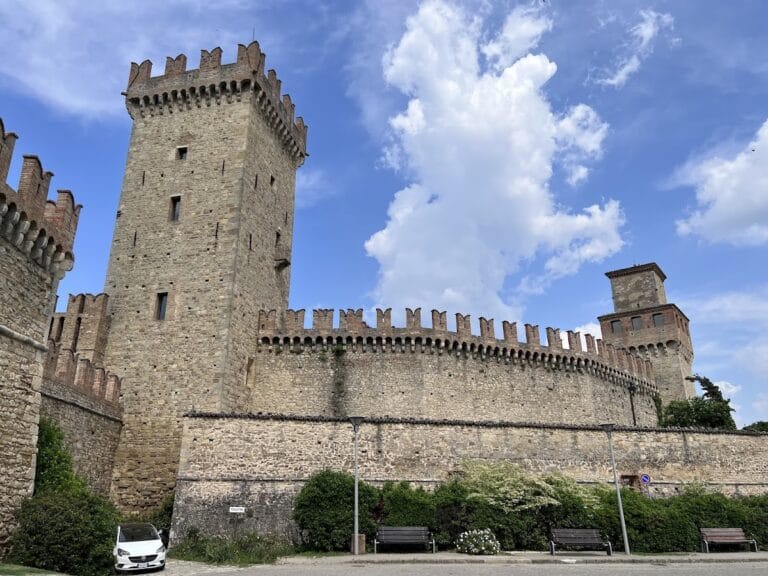
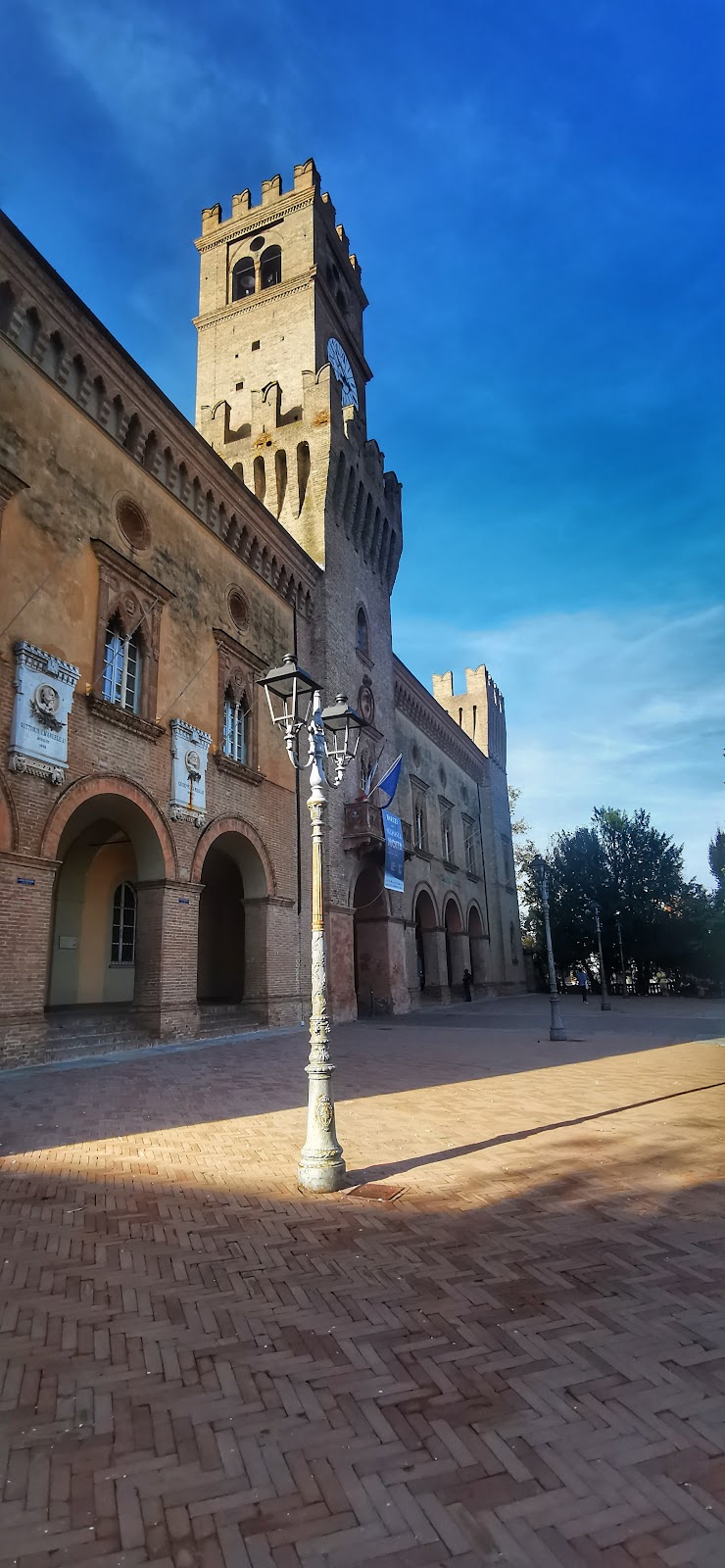
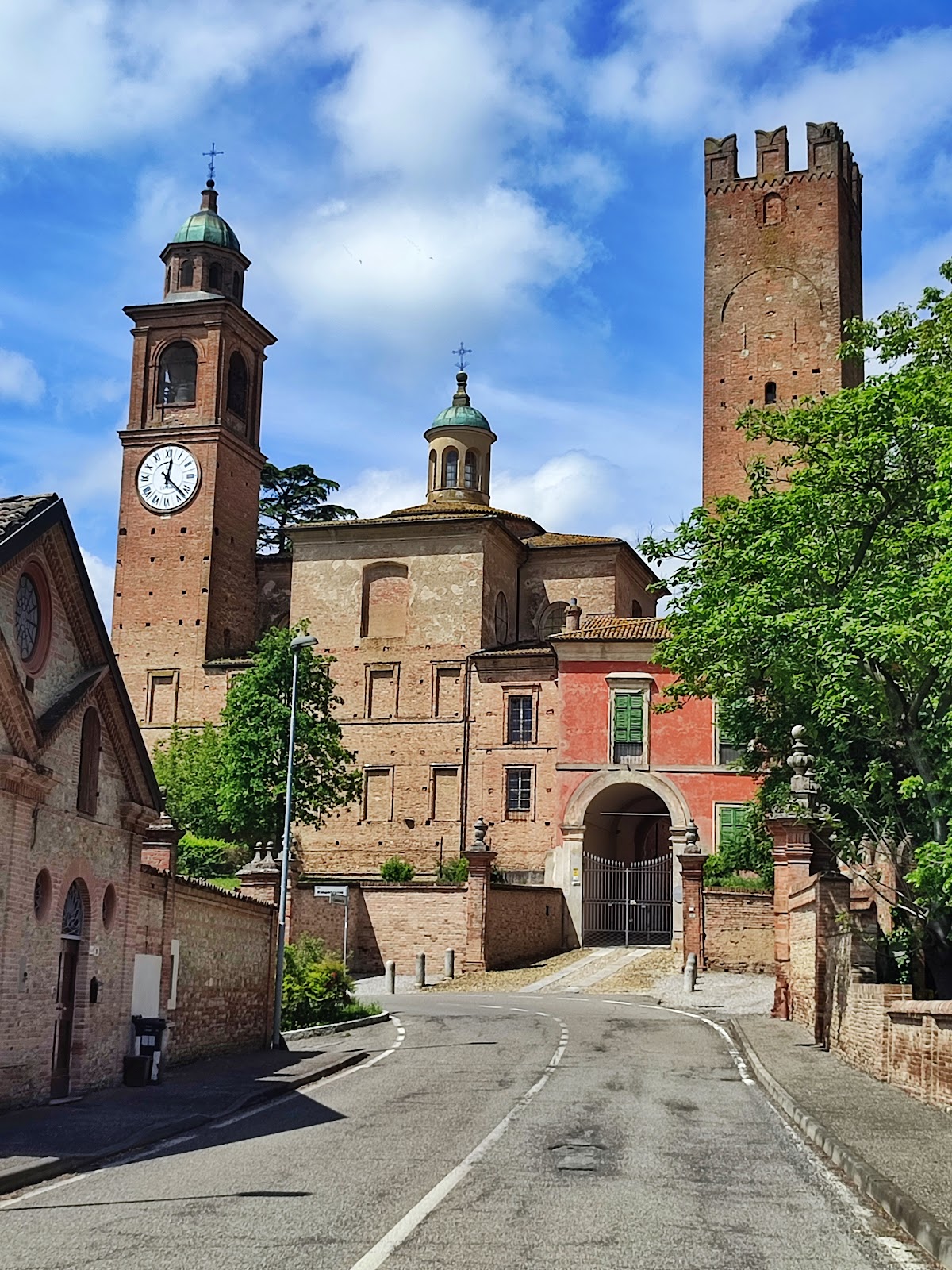
The most prominent surviving feature from the medieval period is the tall tower constructed in 1377 under Niccolò de’ Terzi the Elder. This tower stands almost alone today, positioned at the edge of a spacious square that connects it visually with the modern settlement. The tower’s endurance contrasts with the broader castle complex, which underwent extensive rebuilding in the 17th century. At that time, architect Luigi Vanvitelli transformed the site into a stately noble residence, leaving little of the original fortress beyond the tower.
Earlier fortifications, including bastions erected by the Pallavicini family, suffered damage during various conflicts predating the 1377 reconstruction of the tower. The tower itself was built using the common masonry techniques of the period, designed for both defense and surveillance. Its prominence and placement reflect the castle’s strategic role within the region’s shifting political and military landscape.
Today, the tower remains in situ as a testament to the castle’s medieval past, while the later noble palace surrounding it showcases the architectural tastes and social status of successive owners. These layers of construction and renovation tell a story of continuity and change from a military stronghold to an aristocratic estate, and ultimately to an institution dedicated to clerical education.
Nearby sites