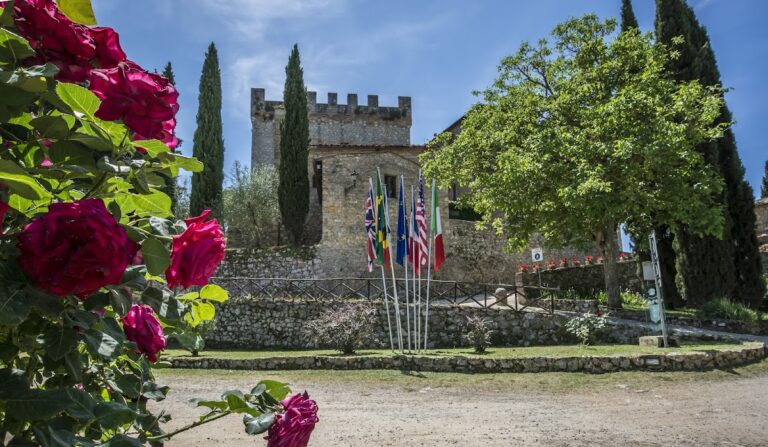
Castello di Staggia Senese: A Medieval Fortress in Italy

Visitor Information
Google Rating: 4.2
Popularity: Low
Official Website: www.laroccadistaggia.it
Country: Italy
Civilization: Unclassified
Site type: Military
Remains: Castle

History
The Castello di Staggia Senese is a medieval fortress located in the municipality of Staggia Senese, Italy. It was originally constructed by the local feudal family known as the Soarzi during the early Middle Ages.
The first recorded mention of Staggia Senese dates back to the year 994, when it was under the control of the Soarzi family, a prominent feudal lineage in the Valdelsa area. Throughout the 12th century, the Soarzi played an active role in the territorial conflicts between the city-states of Florence and Siena. Their influence began to wane during the 13th century, a period which also saw the village’s expansion along alternative routes of the Via Francigena, an important medieval pilgrimage road.
By the late 1200s, ownership of the castle passed to the Franzesi family, wealthy merchants originating from the Upper Valdarno region with established trade connections to France. The Franzesi undertook significant renovations and expansion of the fortress, including the construction of a feudal palace within the castle walls. However, following the family’s financial collapse in 1361, the castle was sold to forces from Florence. The Florentines used the fortress strategically as a defensive outpost facing Siena, which remained a rival city-state.
The ongoing border disputes led to the reinforcement of the castle’s walls in 1372. Later, in 1431, under the direction of Filippo Brunelleschi, the renowned Renaissance architect, the castle’s defenses were further strengthened by connecting the town’s walls directly to the castle, which was turned into the main keep or “cassero.” Despite these efforts, the advancement of firearms and the eventual conquest of Siena by Florence in 1555 diminished the military importance of the fortifications.
After centuries of decline, the castle’s structural integrity suffered until restoration work was conducted between 2005 and 2006. These efforts focused on removing internal overgrowth and consolidating the remaining buildings. Today, the fortress remains privately owned and is managed by the Fondazione la Rocca di Staggia, with the site accessible to the public.
Remains
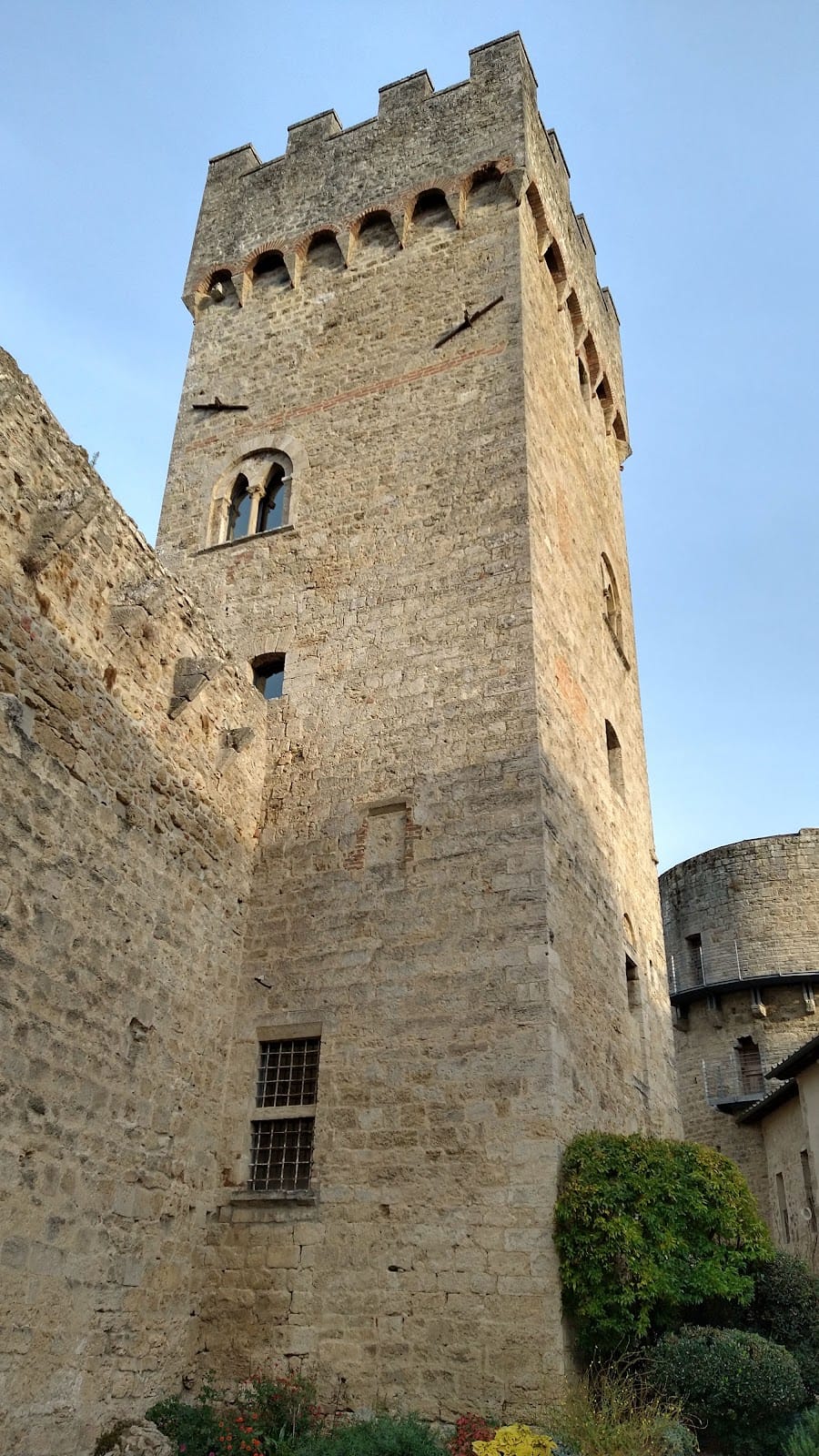
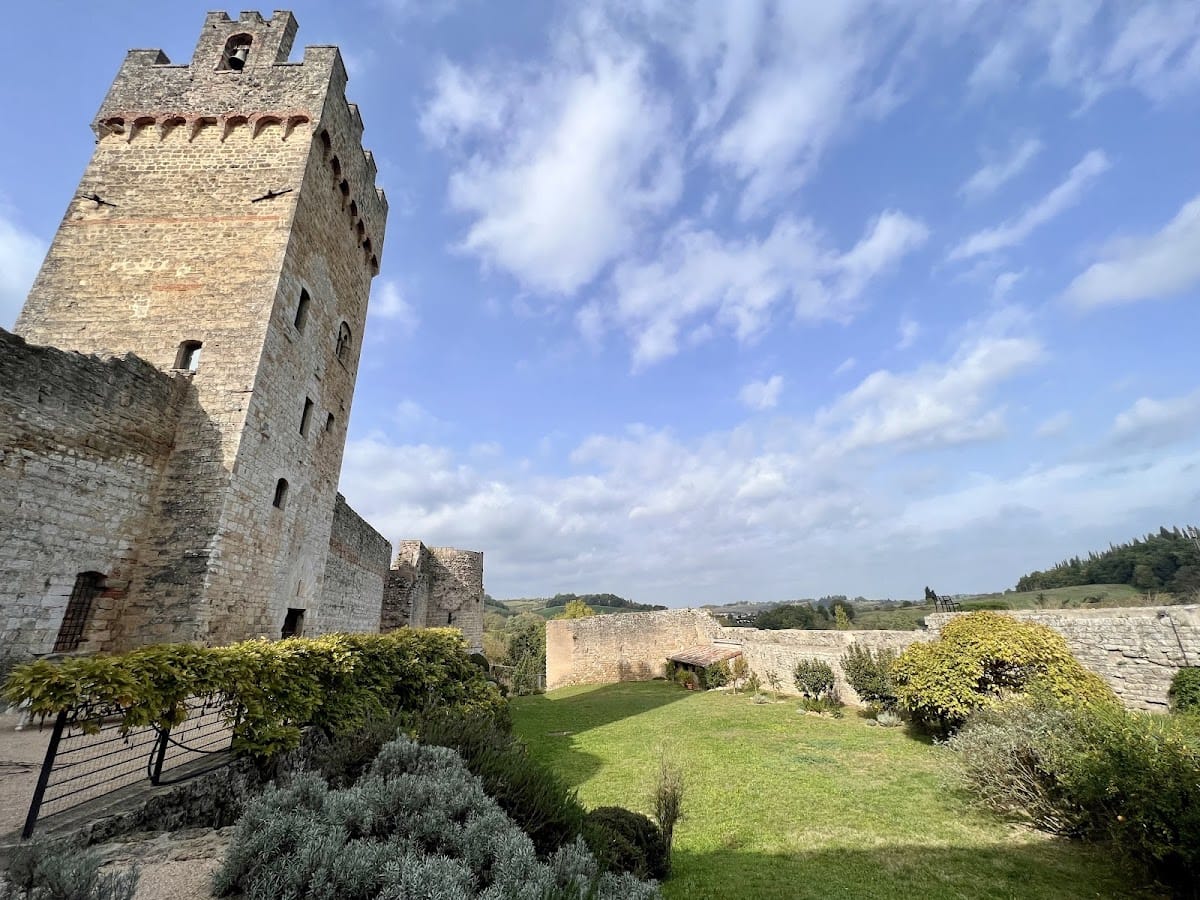
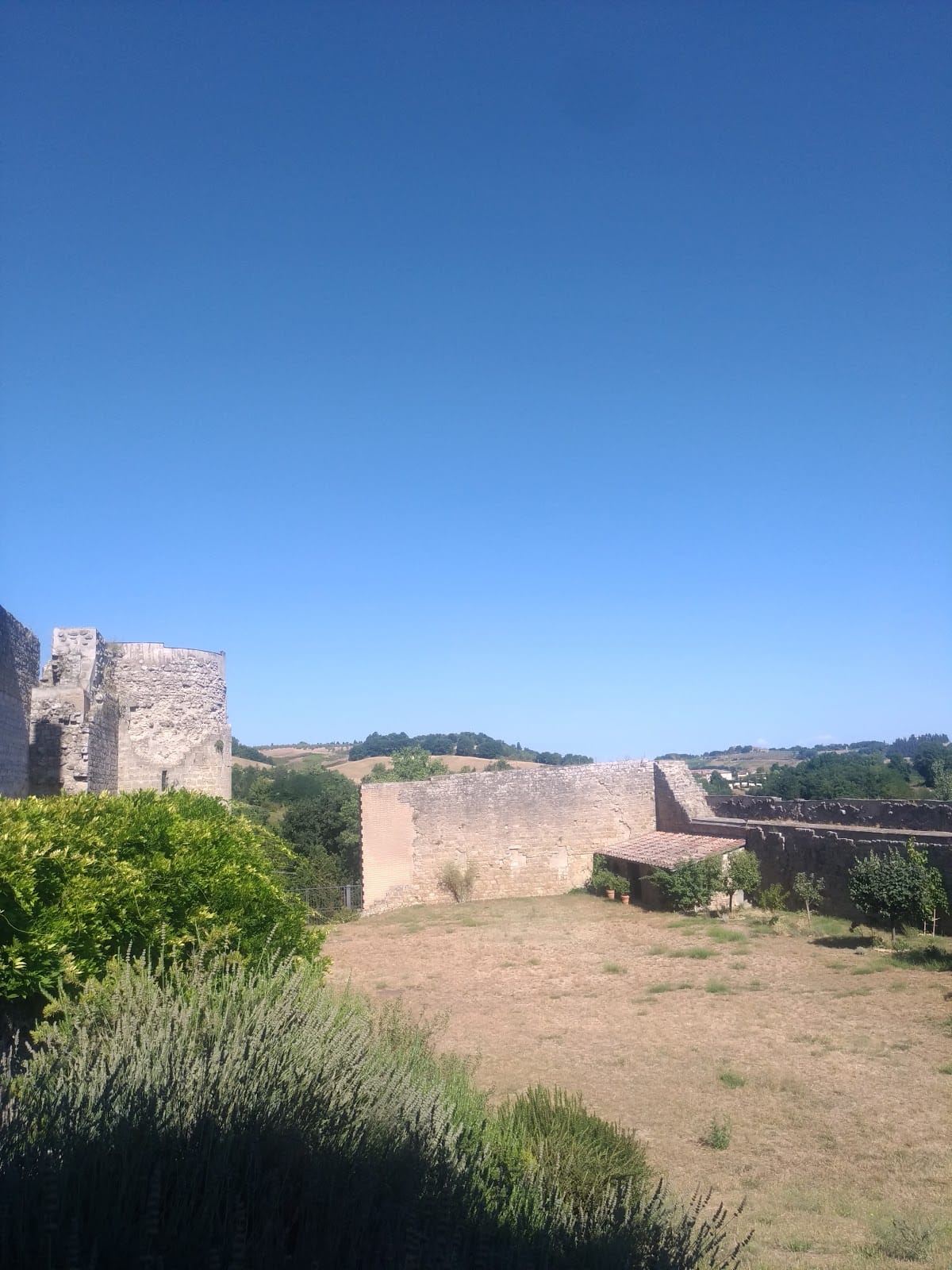
The Castello di Staggia Senese occupies a hilltop and presents an irregular quadrilateral shape, arranged independently from the village’s street layout, highlighting its origin as a distinct structure. At the core of the castle stands a square keep, or mastio, dating from the era of the Soarzi family. This central tower is enveloped by two separate fortified enclosures, a rare design feature in Tuscan castles known as a dual-circuit layout.
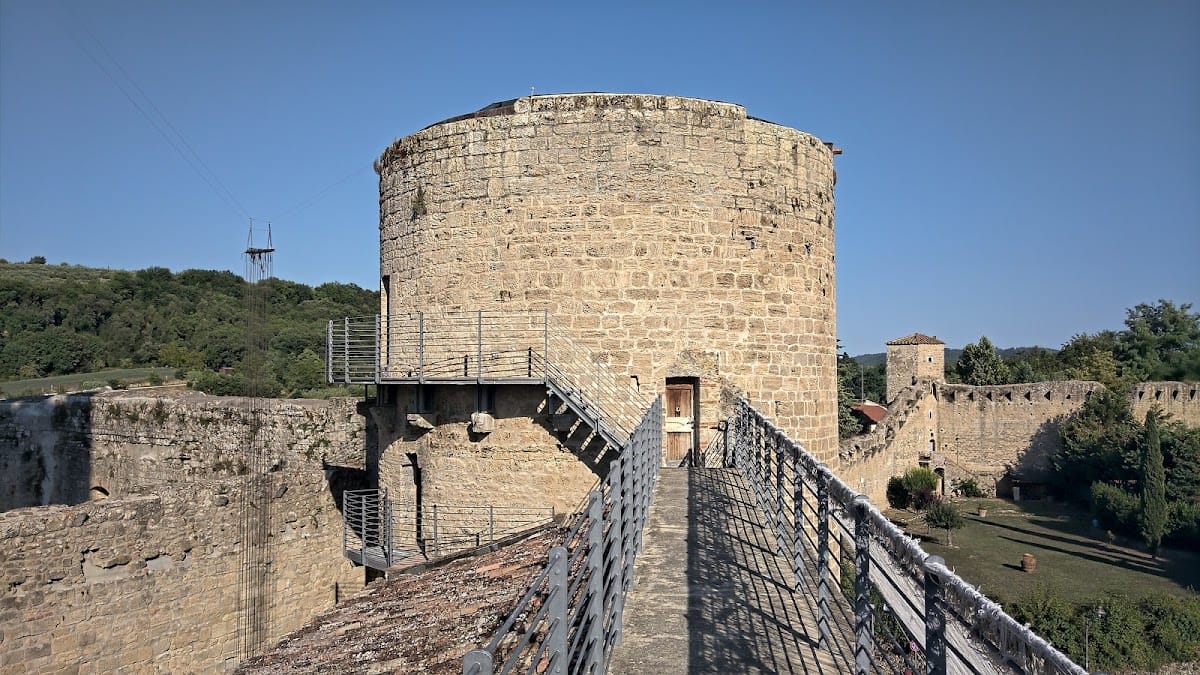
The outer enclosure, dating primarily from later medieval modifications, contains two large cylindrical towers positioned at its corners, which were constructed in the 15th century. Inside this area lies the remains of the Franzesi family’s 14th-century palace, identifiable through surviving architectural elements such as elaborately carved portals, decorated windows, and a sizable fireplace set within the courtyard.
The inner enclosure served both as a space for everyday functions and as a refuge during hostilities. Originally it featured square towers similar to those found on the perimeter walls, though today only one of these towers remains in good condition. The fortress’s only access point is through a ramp that crosses Porta Lecchi at a right angle, creating two distinct street levels that segregate traffic flows—an unusual characteristic in the region.
The castle’s surrounding walls, largely rebuilt or reinforced during the 1372 renewal, have been preserved with various towers punctuating the curtain walls. These towers include quadrangular and polygonal shapes, while historically the complex also featured a pseudo-elliptical tower that no longer stands. Along the walls, stone corbels, some supported further by arches, would have held a walkway allowing defenders to patrol the perimeter. The circuit is broken only at two points along Via Romana.
Originally, the castle featured three gates: Porta Romana to the south, Porta Fiorentina to the northwest, and Porta Lecchi to the northeast. Of these, only Porta Fiorentina and Porta Lecchi survive today, as Porta Romana and the adjacent tall tower were destroyed by retreating German troops in 1944 during World War II. One of the northern towers displays a coat of arms on its facade, serving as a marker of ownership or allegiance.
In recent restoration efforts, structural reinforcements were made using cement and bricks to stabilize the ancient stonework. Additionally, a modern metal walkway was installed along the southern wall facing the village, providing better access and preserving the historical fabric.
Nearby sites