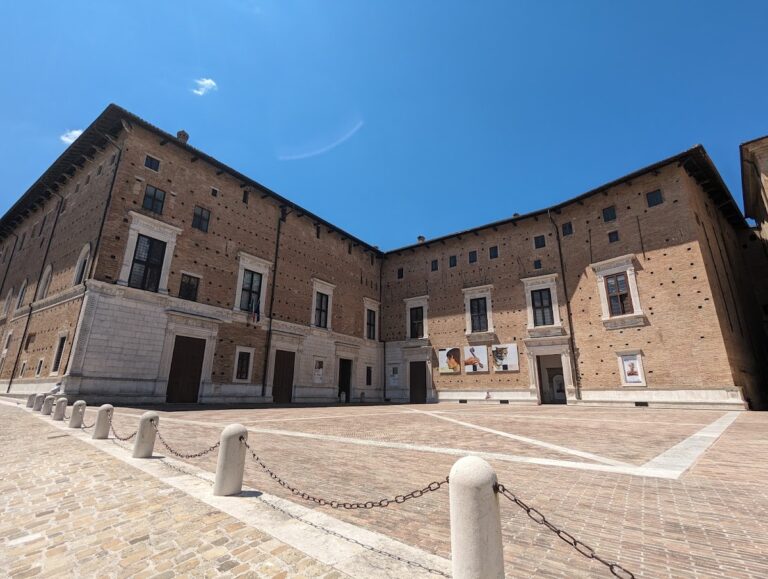
Castle Brancaleoni: A Medieval Fortress and Renaissance Residence in Italy


Site at a Glance
- Rating
- 4.6
- Popularity
- Low
- Country
- Italy
- Primary era
- Early Modern
- External website
- Open
- Eras represented
- Medieval, Early Modern
- Civilizations
- Duchy of Urbino
- Site type
- Domestic
- Remains
- Palace
On this page9 sections
History
Medieval Origins
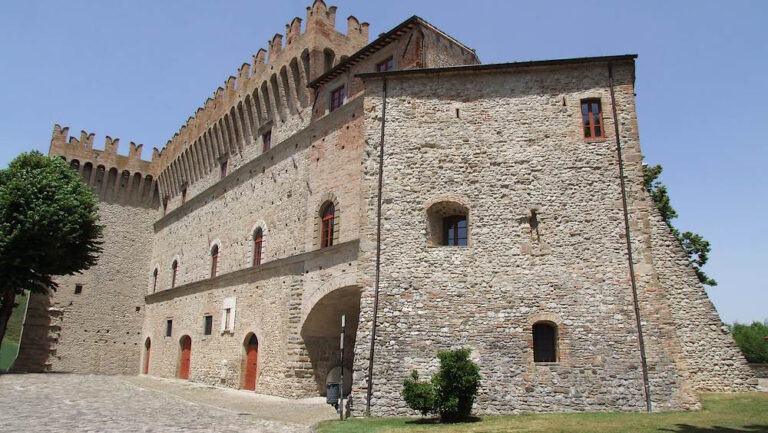
Castle Brancaleoni is a medieval and Renaissance complex in Piobbico, Italy, founded as a thirteenth-century fortress. It belonged to the Brancaleoni counts, the ruling family associated with Piobbico from 1213 to 1816, and its initial proprietor is identified as Gentile Brancaleoni.
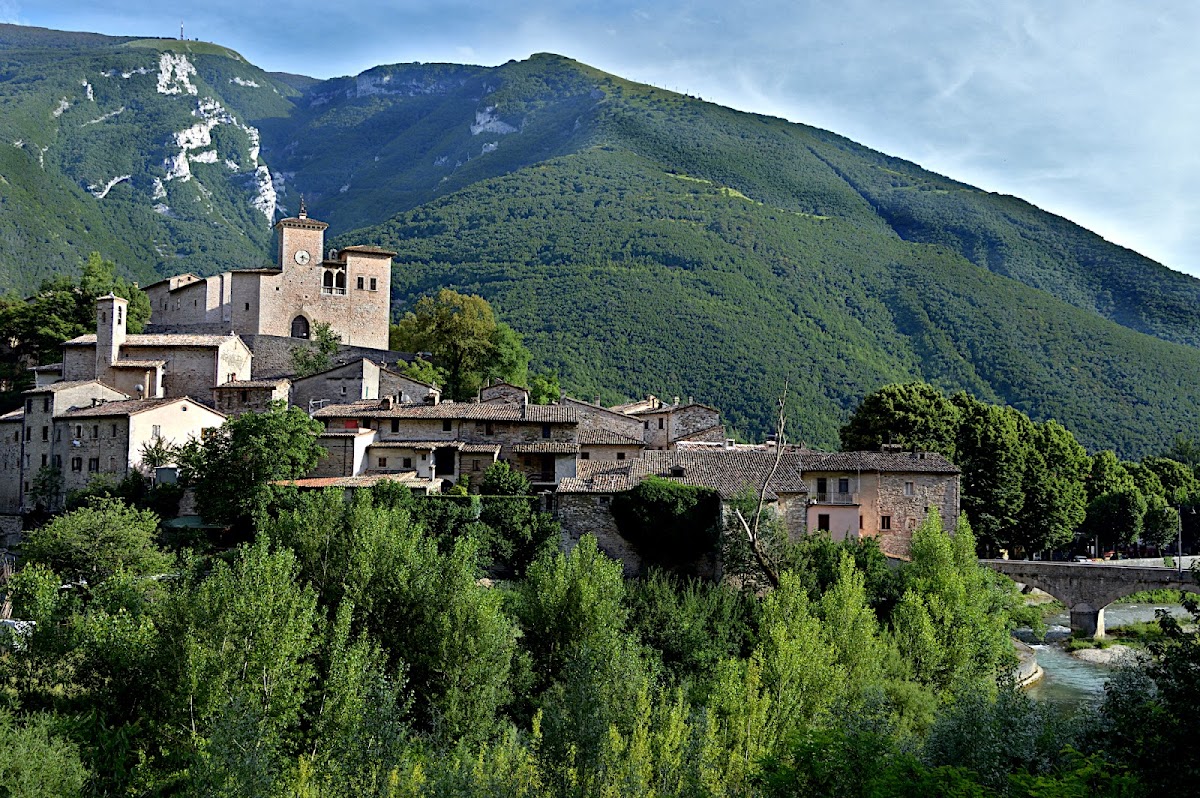
The complex developed on a rocky ridge overlooking Piobbico and the broad basin occupied by the town. Buildings were added to the original fortress nucleus between the thirteenth and fifteenth centuries, creating a group that combines medieval defensive construction with later residential architecture.
Renaissance Transformation
Between 1573 and 1587, the counts of Piobbico, Guido and Roberto Brancaleoni, commissioned a major remodelling. The fortress was transformed into a Renaissance residence, reflecting the family’s continuing occupation of the site and its changing role from stronghold to aristocratic palace.
Neglect, Restoration, and Present Status
After the Second World War, the complex fell into serious neglect, and its interiors were disfigured. Radical restoration later renewed the site. Castle Brancaleoni is now used as a museum complex, including the Brancaleoni Civic Museum. It is designated Italian national heritage, and ownership rests with the Italian Republic.
Remains
Fortress and Palace Complex
Castle Brancaleoni extends along the ridge of a rocky outcrop above Piobbico. Its buildings, constructed in brick and stone, were added around the original nucleus from the thirteenth to the fifteenth century. The residence is surmounted by a tower incorporating a clock, while the overall arrangement preserves the complex’s combination of fortified medieval elements and Renaissance domestic spaces.
Honor Courtyard
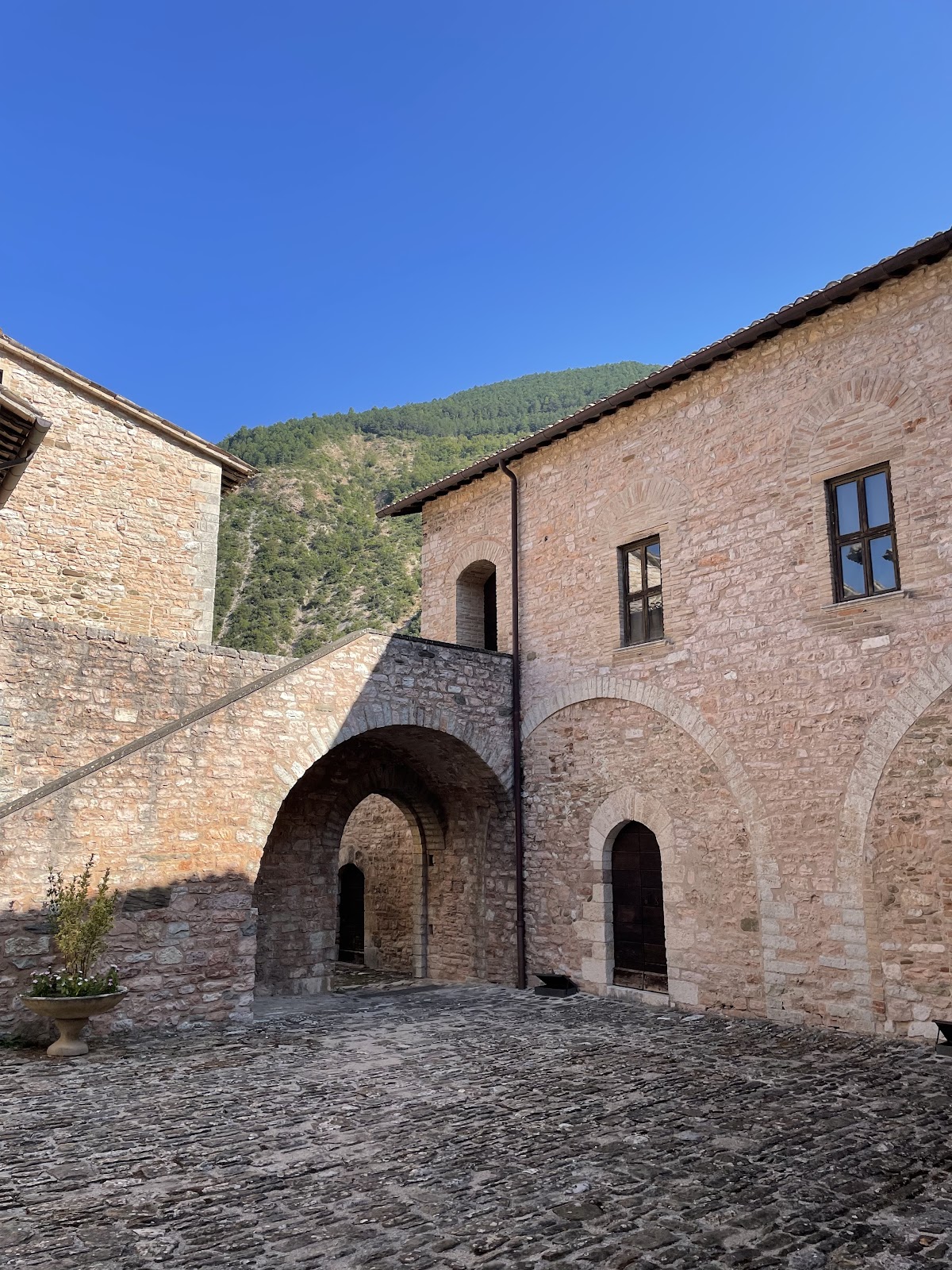
The rectangular honor courtyard dates from the 1470s and 1480s. Designed by Baccio Pontelli and commissioned by Count Guido Antonio I Brancaleoni, it is enclosed by a portico whose arches rest on Doric columns, a classical form known for its sturdy proportions and relatively plain capitals. Its design recalls the larger courtyard of the Ducal Palace of Urbino. Guido Antonio I served as captain to Federico da Montefeltro, Duke of Urbino and a major fifteenth-century military leader and patron of Renaissance culture.
Chapel and Painted Rooms
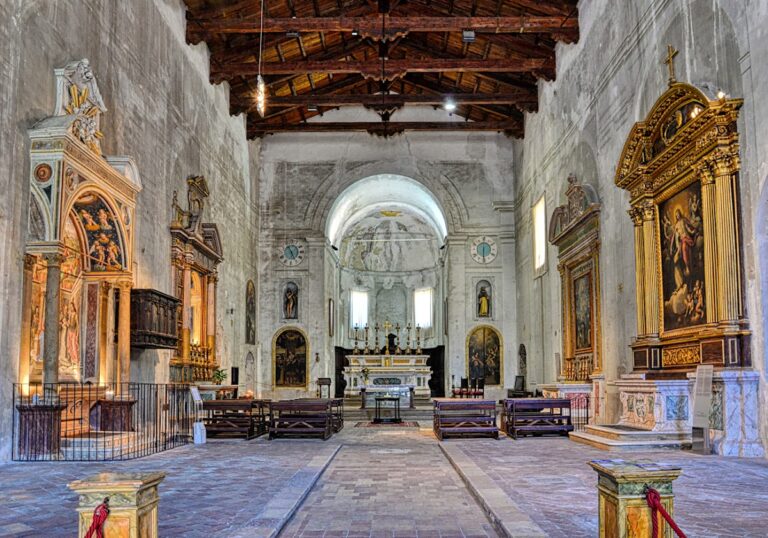
The complex contains a seigneurial chapel dedicated to Saint Charles Borromeo, a sixteenth-century Catholic cardinal and reformer who became an important figure of Catholic devotion. In the private room of Count Antonio II, known as the Greek Room, frescoes portray episodes from Hellenic history and mythology. Giorgio Picchi of Urbania created these paintings in 1585, while the stucco work is attributed to the school of Federico Brandani, who died in 1575 and therefore did not complete it. Other frescoes, attributed to Federico Zuccari, celebrate the Brancaleoni family by portraying Antonio II and Countess Laura Cappello among their numerous descendants.
Museum Collections
The palace rooms house the Brancaleoni Civic Museum and a permanent exhibition of clothing and jewellery from the Alessandro Righi Luperti Collection. These uses place the surviving interior spaces within the complex’s restored presentation as a museum.