Castell de Montfalcó: A Medieval Fortified Village in les Oluges, Spain


Visitor Information
Google Rating: 4.5
Popularity: Medium
Official Website: visit.somsegarra.cat
Country: Spain
Civilization: Medieval European
Site type: Military
Remains: Castle

History
The Castell de Montfalcó stands within the municipality of les Oluges in modern Spain and was built by the Christian communities during the medieval period. Its strategic position atop a hill overlooks the meeting point of the Vergós stream and the Sió river, providing a commanding view of the surrounding landscape.
The origins of the castle date back to around the mid-11th century, a time when the area was reclaimed through Christian conquest and subsequent repopulation led by Bernat, Count of Berga. During this period, the territory became part of the frontier lands of the County of Cerdanya, serving as a defensive stronghold. The earliest recorded mention of the site appears in 1043 under the name “Monte Falconi,” reflecting its early medieval importance. Initially, the castle remained under the suzerainty of the Counts of Cerdanya, who granted it as a fief to various noble families.
Over the following decades, ownership passed through notable figures connected with the regional nobility. In 1079, the castle was associated with Ramon Miró, while in 1095 it was held by Dalmau Bernat, viscount of Berguedà. Later, in 1135, the troubadour nobleman Guillem de Berguedà formally paid homage to Ramon Berenguer IV for ownership of this castle and others, demonstrating its continued significance within the feudal hierarchy.
Throughout the 12th century, the castle’s name appears frequently in testamentary documents, revealing transitions of possession among local families such as Ramon de Cervera and Ramon de la Guàrdia. Isabel de Torroja, married to Ramon Folc IV of Cardona, also figures in records relating to the castle. Over time, Castell de Montfalcó became integrated into the expanding domain of the viscounty, which later evolved into the county and duchy of Cardona. Administratively, it fell under the batllia (a form of local jurisdiction) of Torà and remained part of the feudal structure until the 19th century, when feudal lordships were abolished in Spain.
Militarily, Montfalcó played a defensive role during regional conflicts, notably during confrontations with King Peter I of Castile. Its status as a highly valued fortress underscores the strategic importance it held in the medieval border disputes and warfare of the region.
Remains
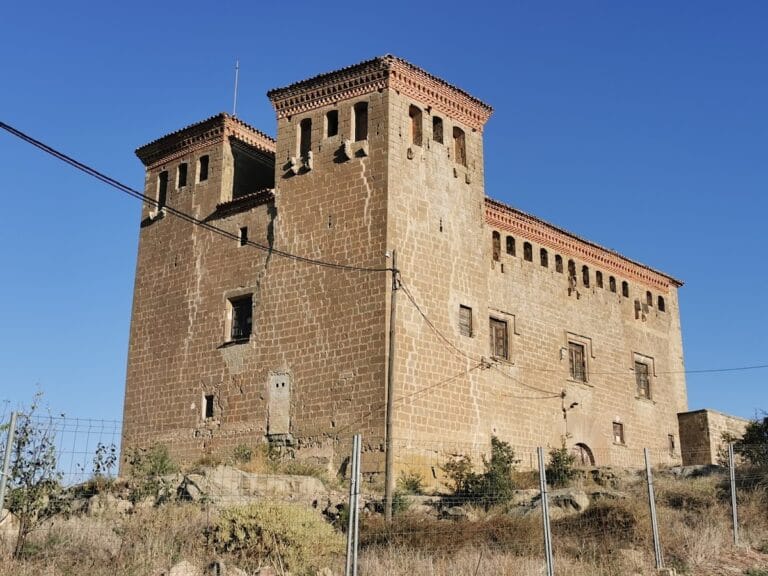
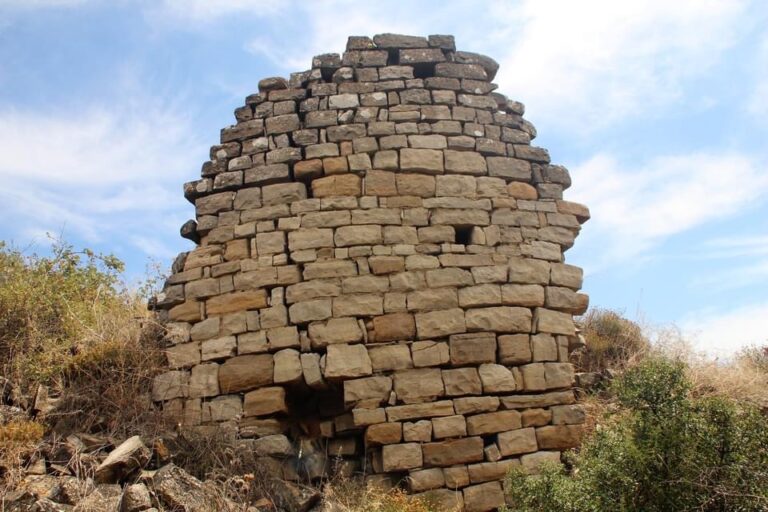
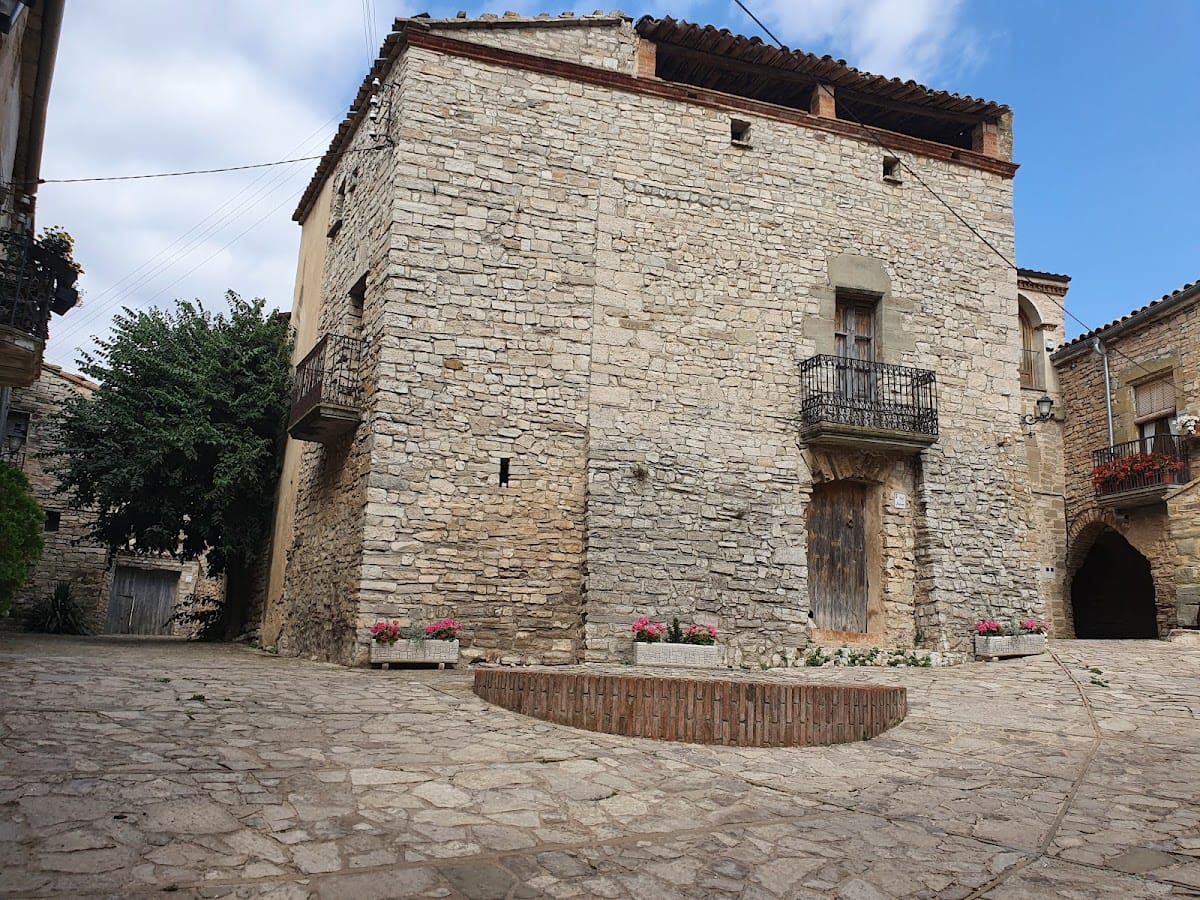
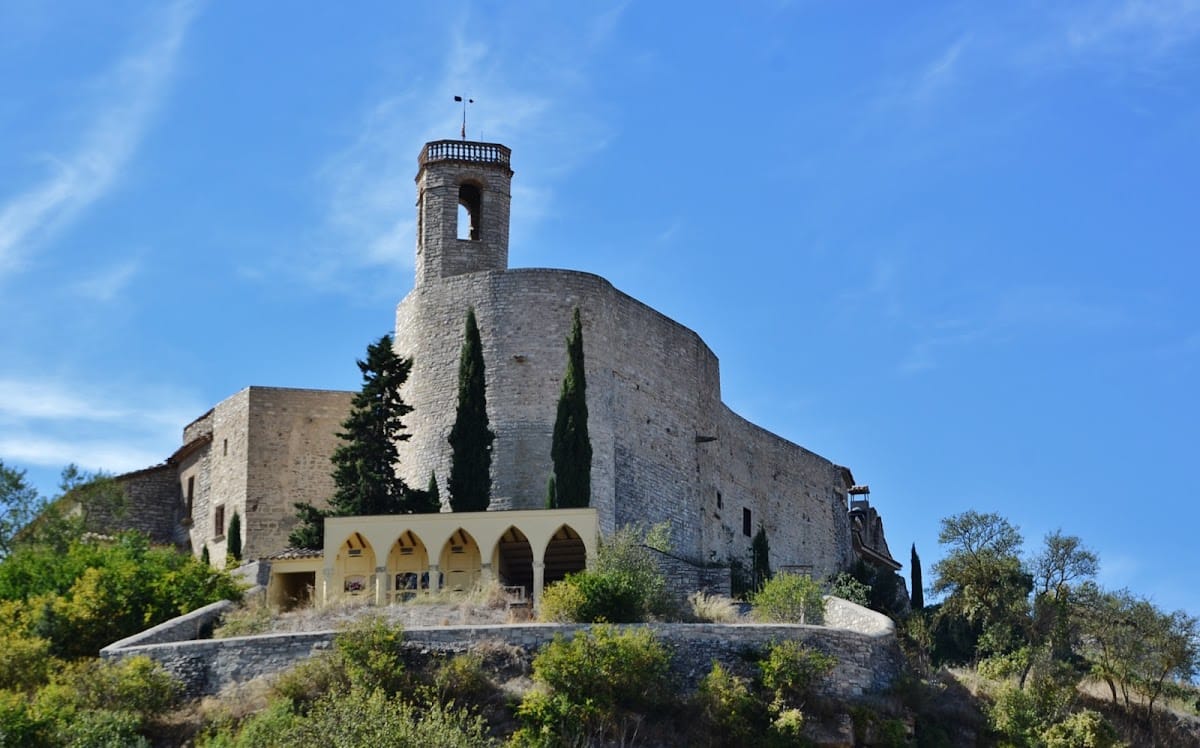
The Castell de Montfalcó is distinguished by its extensive walled enclosure, known in Catalan as a “vila closa,” a type of fortified village. The perimeter wall, which stands about eight meters high and measures approximately one meter thick, follows the natural limestone base of the hill on which it is situated. Built from finely cut rectangular ashlar stones held together with lime mortar, the wall is remarkably well preserved. Occasional square stones are embedded within the structure, and gaps remain where scaffolding would have been placed during construction.
Inside the enclosure, homes are constructed directly against the inner side of the defensive wall, creating a densely packed village settlement. Access to the interior is granted through a single gate located on the eastern side. This gate features a double entrance framed by voussoired arches—arches formed by wedge-shaped stones that distribute weight evenly, common in medieval masonry. Passing through the entrance leads into a central plaza where a cistern remains, a water storage facility that was vital for the inhabitants during sieges or dry periods.
Additional architectural interest is found in the northwest part of the enclosure where a porch area stands out for its design. The overall scale of the walled village suggests that the walls and enclosure date from a later medieval phase, rather than being constructed immediately after the area’s initial Christian reconquest.
Together, these elements illustrate the defensive layout and communal organization of a medieval fortified settlement that functioned both as a military stronghold and a residential space. The preservation of the walls, gate, and cistern provides valuable insight into the construction methods and daily necessities of those who inhabited Castell de Montfalcó during the Middle Ages.
Nearby sites