Castell de Cervià: A Medieval Fortress in Cervià de Ter, Spain



Visitor Information
Google Rating: 4.4
Popularity: Very Low
Google Maps: View on Google Maps
Country: Spain
Civilization: Unclassified
Remains: Military

History
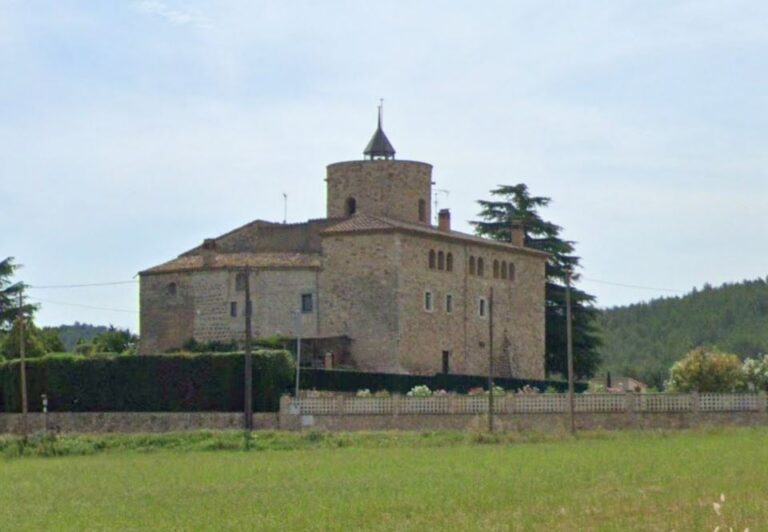
The Castell de Cervià is a medieval fortress located in the municipality of Cervià de Ter in Spain. This castle was built and used by the feudal nobility of the region during the early and late Middle Ages.
The earliest records of the site date back to the year 989, when a couple named Sunyer Llobet and his wife Avierna acquired the lands of Cervià and Raset from local counts. By 1024, the presence of the castle is clearly attested in Sunyer Llobet’s last will, confirming it existed at least in the early 11th century. The Llobet family maintained control of the estate over several generations. Around 1019, Silvi Llobet became its owner and later passed it on to his nephew, Gaufred Bastons. In 1061, Gaufred pledged loyalty and promised military aid to Counts Ramon Berenguer I and Almodis of the Marca, including the contribution of twenty knights, linking the castle to the larger political dynamics of the region.
From the 12th century onwards, the fortress came under the authority of the Llers family, beginning with Arnau I de Llers. This connection was officially recognized by Count Ramon Berenguer IV in 1139. Over time, the family name associated with the castle evolved into Cervià, identifying them closely with the site. The castle occupied a strategic position along the frontier between the County of Girona and Empúries, overseeing important routes leading toward Peralada and Roussillon, and it was situated less than a day’s travel from the city of Girona.
During the 15th century, the Cervià family encountered serious financial troubles which forced the sale and mortgaging of much of their property, including the castle itself. At this time, amid the conflict involving King Joan II, control of the castle and its surrounding village was entrusted to Esteve d’Agramunt. In 1467, the Duke of Lorraine used the castle as a military camp during his siege of nearby Girona. Subsequently, the castle was granted to a nobleman named Joan de Sancto Gilagio, with Captain Pere Alfons overseeing its management in 1469. Later, King Joan II sold the jurisdictions of Cervià and the neighboring Bordils to Juan de Vilapando for 5,000 florins. By 1477, ownership passed to the Xatmar family, who were connected by 1788 to the Fonsdeviela family, holders of the marquisate of la Torre.
Historical documents from the late 15th century do not explicitly mention the castle’s role in military actions, and records from after the early 16th century refer solely to the village or domain of Cervià without citing the fortress. By the mid-17th century, accounts describe the castle as a ruin. In 1657, Narcís Camós noted that only traces remained, indicating it had been destroyed or abandoned long before.
After centuries of ownership shared privately among different families, the land containing the castle ruins was eventually transferred into municipal hands in 2013 through a combination of donation and purchase by the local town council of Cervià de Ter. The following year, the University of Girona initiated a project focused on researching, stabilizing, and enhancing the castle site, supported by cultural heritage funding programs.
Remains
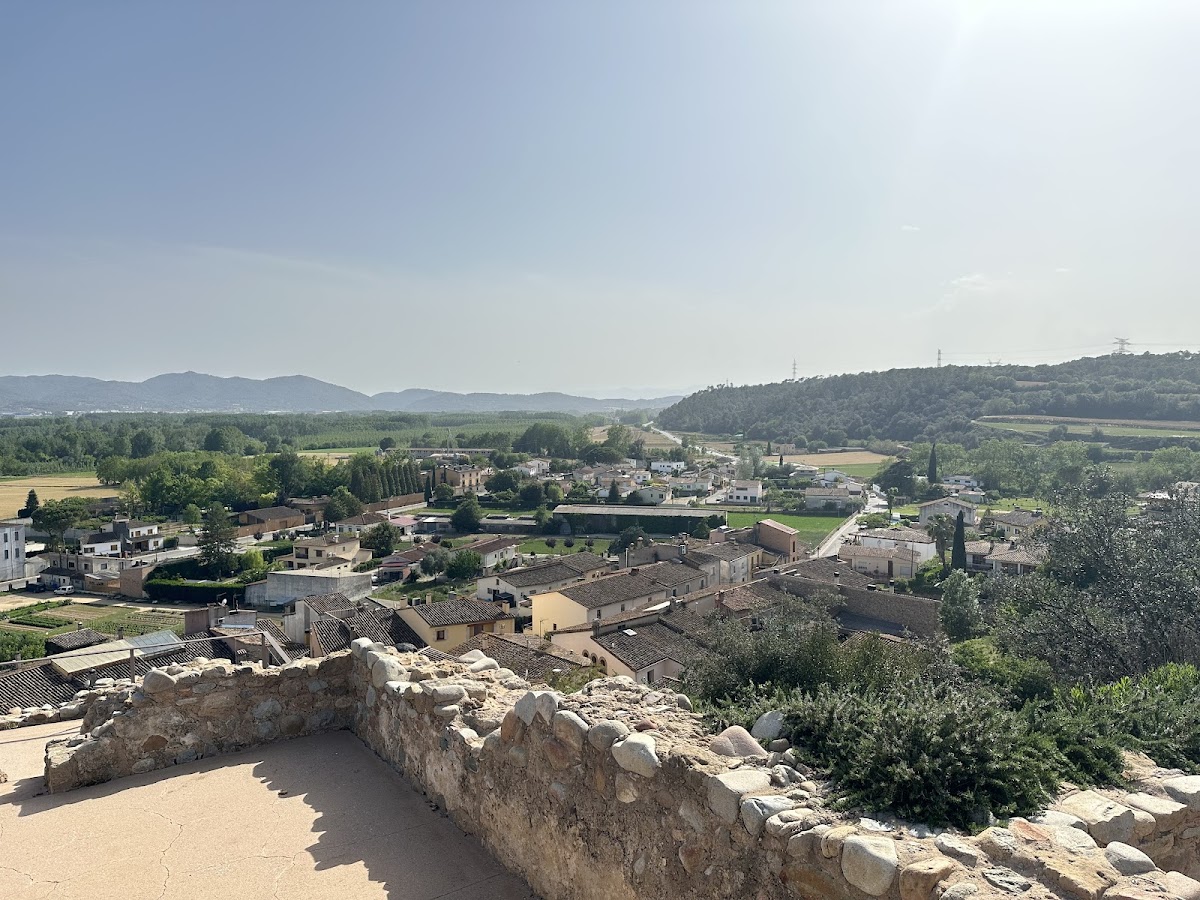
The ruins of the Castell de Cervià occupy a hill within the village, with an overall layout shaped by the natural slopes and contours of the terrain. The castle was constructed directly atop a bed of clayey conglomerate rock, requiring the builders to cut and level portions of the outcrop to create three distinct terraces used for different parts of the fortress. This adaptation to the uneven ground resulted in ongoing structural challenges, including stability problems and some slippage over time.
Among the surviving elements, a prominent circular keep tower stands out. Measuring approximately 6.5 meters in diameter, this tower was built using sizable rounded stones arranged in straight horizontal layers and held together with mortar. This construction technique provided strength while making use of available local materials. Surrounding the keep are sections of wall and rooms, including a notably large hall on the south side measuring around 3.8 by 8 meters. This room is enclosed on three sides and likely served important functions within the castle’s interior.
Different construction phases are visible across the ruins. Some walls feature roughly dressed stones combined with ashlar blocks—carefully cut stones—used especially at corners and doorways to reinforce openings. The castle’s perimeter takes on a polygonal shape, designed to follow the natural layout of the hilltop. Portions of the defensive walls date to different periods, preserving at least two lines of fortification. The earliest walls include the northern section, which retains narrow openings (loopholes) used for archers to defend the castle while remaining protected. The eastern wall shows signs of having ended abruptly at what was probably the original main gate, although remaining traces are incomplete.
A significant refurbishment during the 14th century introduced a major transformation in the castle’s defenses. The northern walls were reinforced and in some areas rebuilt with a notably thicker base featuring a sloping external surface called an escharpe, designed to better withstand cannon fire and artillery emerging in late medieval warfare. On the south side, new walls enclosed a smaller area than before, possibly reflecting a shift toward more compact fortifications. These walls also likely incorporated the construction of a stepped ramp providing controlled access to the interior.
Within the castle, the terraced arrangement created a hierarchical organization of spaces. The highest terrace housed the circular keep alongside two large halls interpreted as the castle’s oldest core structures. The middle terrace contained principal rooms, while the lowest terrace, accessible via stone stairs, opened onto a large courtyard or bailey and contained several smaller rooms likely used for storage or service purposes. While earlier floors consisted mainly of compressed earth, the last phase of use in the 14th and 15th centuries introduced flooring made from mortar, a type of plaster that provided a hard and durable surface.
Toward the lower terrace, a large square pit filled with rubble and debris covers much of the area. This feature appears to have been created at the end of the castle’s occupation or soon after it was abandoned. The pit destroyed multiple adjoining rooms as well as a western retaining wall, indicating a substantial demolition effort that greatly altered the site’s original configuration.
Today, the remains remain heavily weathered and partially uncovered, with many structural elements in poor condition. Nevertheless, the surviving walls, tower, and room layouts provide valuable insight into the castle’s long history, construction techniques, and progressive adaptations through centuries of occupation and eventual decline.
Nearby sites