Castell d’Hostalric: A Historic Medieval Fortress in Spain



Visitor Information
Google Rating: 4.4
Popularity: Medium
Google Maps: View on Google Maps
Official Website: www.turismehostalric.cat
Country: Spain
Civilization: Unclassified
Remains: Military

History
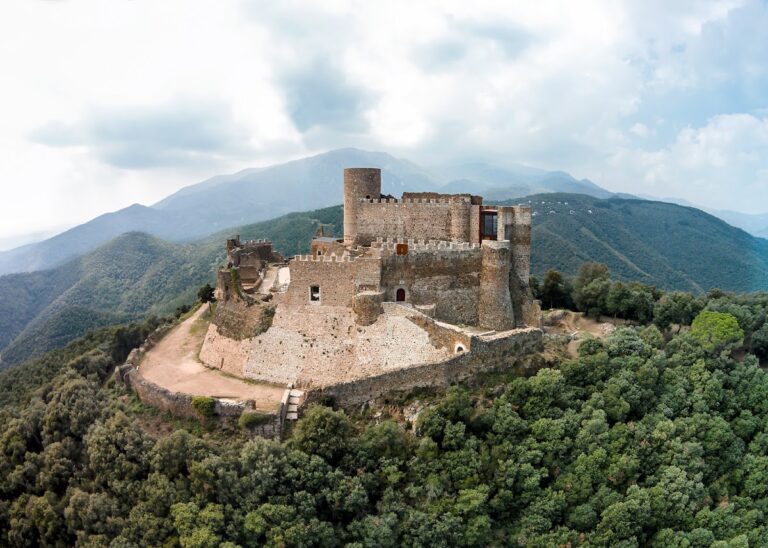
The Castell d’Hostalric stands in the municipality of Hostalric in Spain and was originally established by medieval builders in the 12th century. Its foundations rest upon an earlier Iberian settlement, utilizing the natural summit of a volcanic cone formed from basaltic rock.
In the Middle Ages, particularly by the late 1300s, the fortress served as the administrative center of the Viscounty of Cabrera. During this time, Viscount Bernat IV de Cabrera commissioned the enclosing walls around the town, adding four fortified gates to control access. Rather than aiming for grandeur, the castle was primarily constructed as a practical residence and defensive stronghold for the local rulers.
The fortress faced significant conflict in the late 17th century when French forces, under the Duke of Noailles, destroyed much of the stronghold in July 1695. Reconstruction began shortly after, guided by military engineer Josep Chafrion, who initiated partial rebuilding efforts. Early 18th-century military tensions prompted further modifications: in 1712, Francisco de Santa Cruz enhanced the defenses in support of the Austrian claimant Charles during the War of the Spanish Succession. Between 1719 and 1754, a comprehensive military fortress emerged under the direction of Pròsper de Verboom for King Philip V, reflecting evolving defensive needs.
Hostalric gained renewed strategic significance during the Peninsular War (1808–1814), particularly during the siege of Girona from January to May 1810, when the castle served as a supply base and withstood French attacks. The fortification continued its military function with an assigned governor and permanent garrison well into the 20th century. Eventually, it passed into municipal ownership and was repurposed beyond its military use.
Recognition of its historical value culminated with the site’s designation as a Monument of Historical Interest in December 1963. Restoration began several years later, with archaeological investigations undertaken in the 1990s that explored the castle’s ancient pathways.
Remains
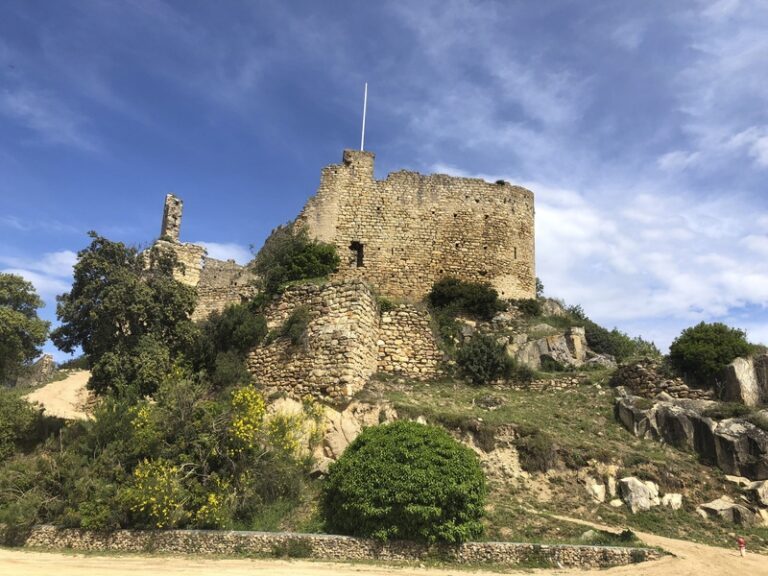
The Castell d’Hostalric is perched atop a volcanic cliff composed of dark basalt, overlooking the convergence of the Tordera River and Arbúcies stream. The fortress and its surrounding walls were built primarily from the basalt quarried locally from the volcanic cone, which lends them a rugged and durable character.
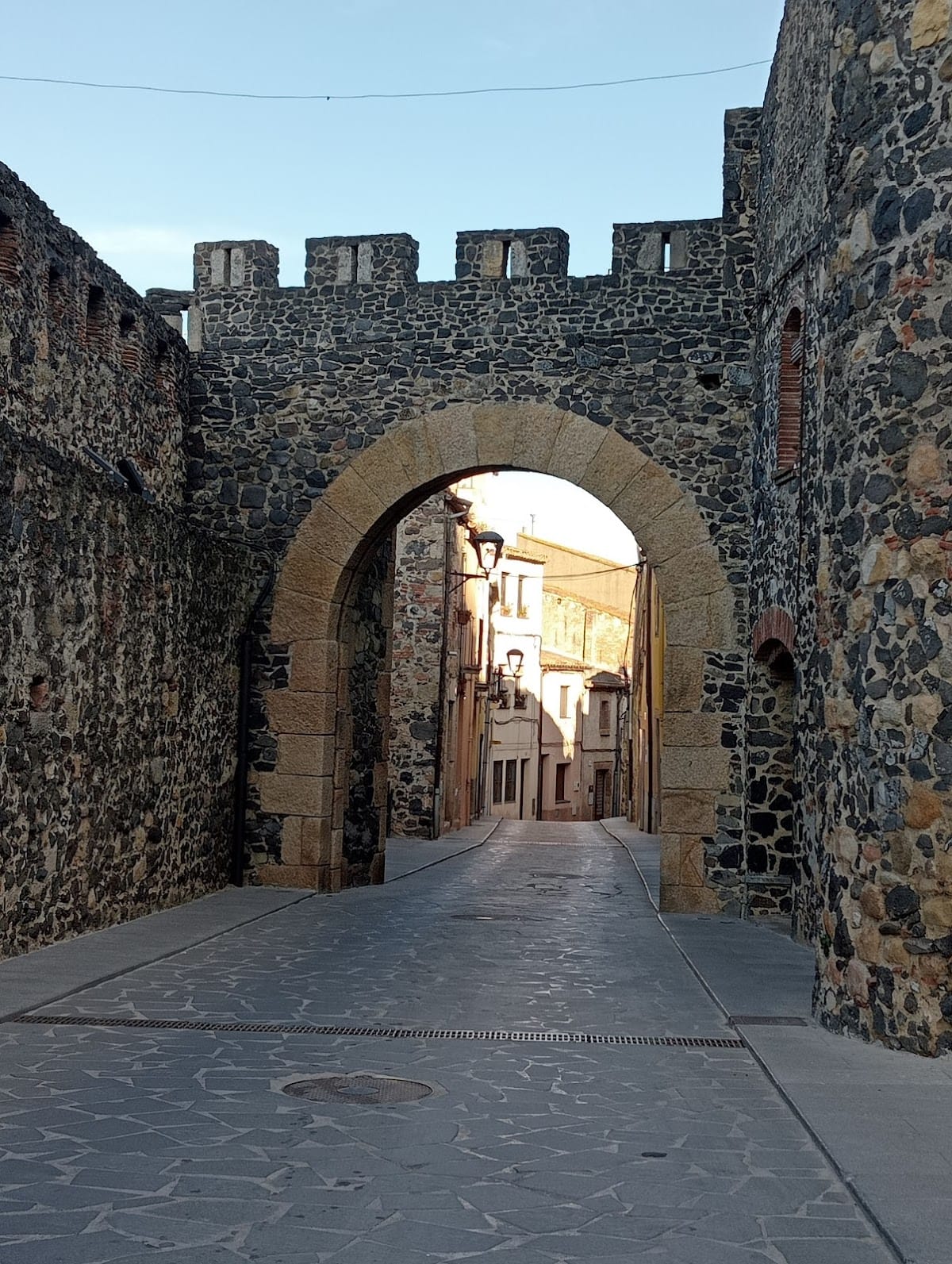
About 600 meters of the medieval town walls have endured, especially along the northern and western edges. Among these, the Portal de Barcelona gate has been reconstructed since 1969, featuring a semicircular arch made from wedge-shaped stones, or voussoirs, and defended by battlements. This gate is flanked by a circular tower and adjacent wall sections, although its current position is slightly displaced from where it originally stood.
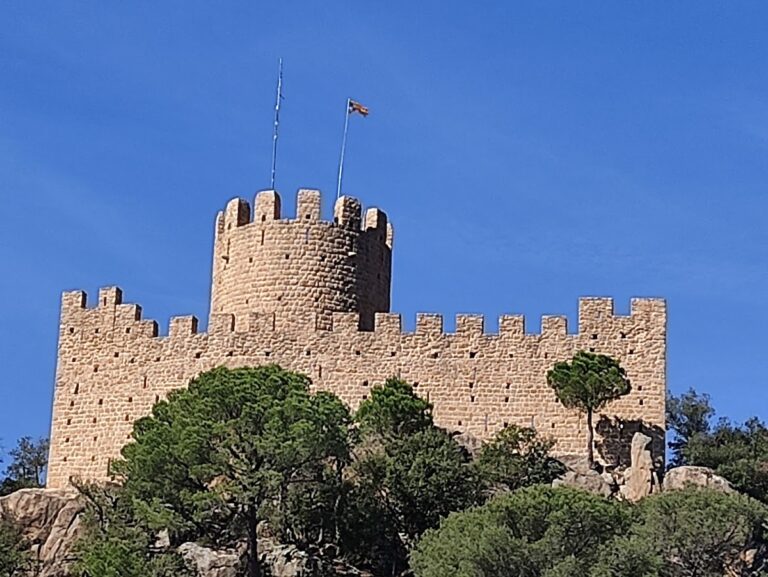
Surrounding the walls are several semicylindrical defensive towers, including ones known as Torre dels Bous, Torre dels Cabrera, Torre d’Arenes, Torre Baylina, Torre d’en Caís, and Torre Tuies Negres. Particularly prominent is the Torre d’Ararà, also called the Torre dels Presos, dating from the 14th to 15th centuries. This taller tower features a marked sloping base (or scarp) and openings called machicolations—stone projections with holes allowing defenders to attack enemies below. Originally, this tower had several wooden floors above a vaulted ground level and controlled access to the main entrance road.
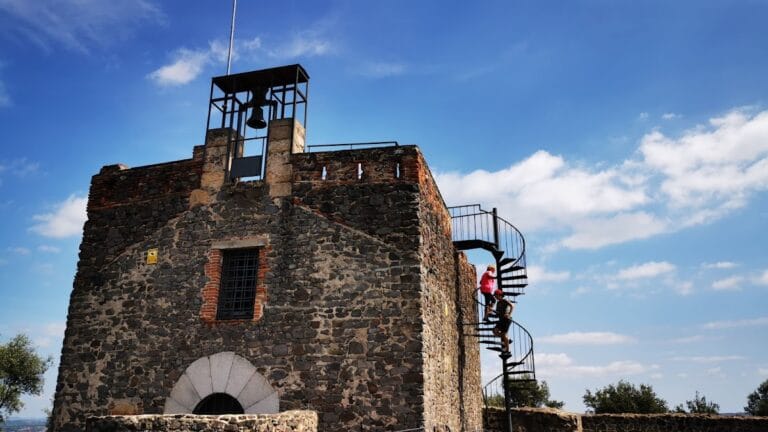
The Torre dels Frares, constructed in the 13th century and recently restored, stands as the tallest tower, rising 33 meters. Internally, it contains three floors with dome-shaped vaults (curved ceilings). Access to its middle floor was possible from the wall walkway, with a spiral staircase embedded within the wall connecting to upper levels. This tower shows evidence of multiple building phases and was named after a former nearby Franciscan monastery.
Near the old convent building, now serving as the town hall, the Torre del Convent appears as a smaller circular tower with two interior floors. It is distinct in its unfinished construction compared to other towers of the fortress.
All the towers are constructed using carefully shaped basalt stones arranged in circular layers up to the height of their vaulted ceilings, which were built using wooden frameworks and contained hatches for moving between floors. The masonry of the Torre dels Frares is notable for employing larger stones than those used in other towers.
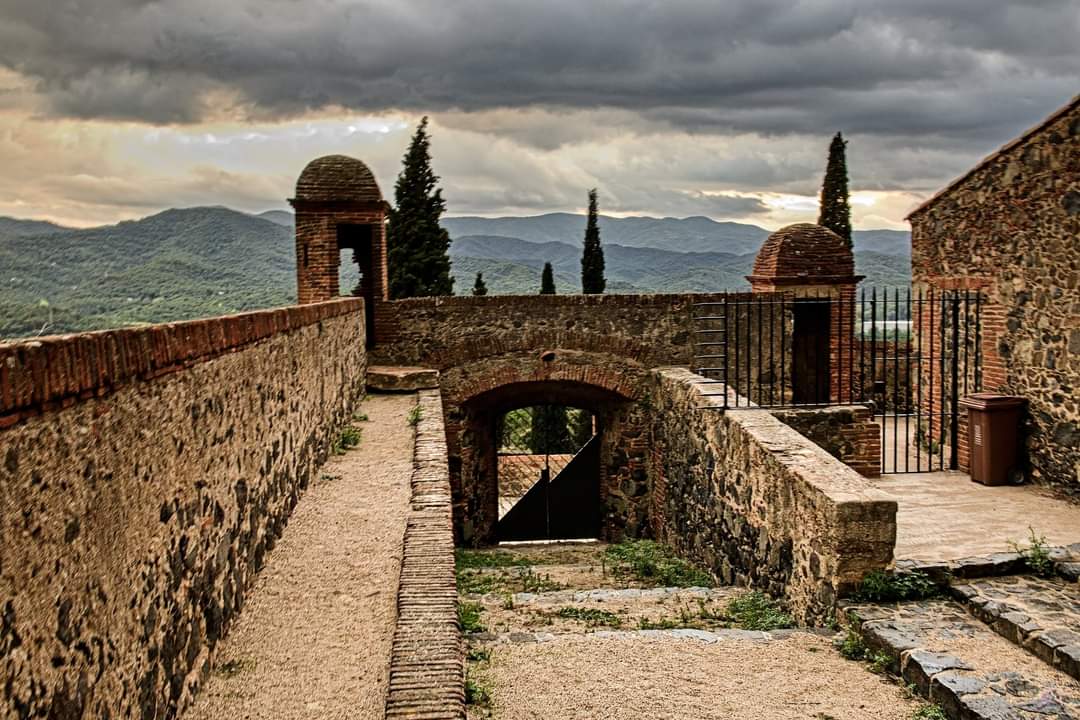
Beyond the medieval walls, the fortress features three bastions—angular defensive projections—along with a protective moat and a ravelin, which is a triangular outwork placed before the curtain walls to absorb attack. These defensive elements are connected by a fortified walkway that leads from the town to the fortress. This path dates to the late medieval period and was once flanked by two now-lost round towers, with only small wall fragments surviving today.
Elements remaining from the 18th-century fortress include a subterranean entrance, known as the Santa Tecla bastion, the main powder magazine where gunpowder was stored, a bastion nicknamed the “dent de serra” (sawtooth), and an open parade ground called the plaça de les armes.
Only small traces survive of the original medieval castle structure itself. The fortress as it stands today reflects centuries of military adaptation, with earthworks reinforced by masonry and lime mortar, highlighting the evolving art of fortification from the 17th through the mid-18th century.
Nearby sites