Castel Thun: A Medieval Fortress and Noble Residence in Italy


Visitor Information
Google Rating: 4.6
Popularity: Medium
Google Maps: View on Google Maps
Official Website: www.buonconsiglio.it
Country: Italy
Civilization: Unclassified
Remains: Military

History
Castel Thun is situated in the municipality of Vigo di Ton, Italy, and was built during the medieval period by local feudal powers. The site, originally named Castel Belvesino after the hill on which it stands, first appears in records dating back to 1267 or 1268. Around this time, the Thun family established it as their principal stronghold. The family’s name evolved from the earlier versions Tono or Tonne to the Germanized form Thun, reflecting their cultural and linguistic integration in the region.
Throughout the late Middle Ages, the Thun family significantly expanded their influence across the Noce Valley by acquiring additional castles and jurisdictional control, becoming one of the dominant noble houses in the area. Their power extended through administrative and territorial means rather than through direct military conquest. The castle remained in the family’s possession for centuries, undergoing various episodes of damage and reconstruction.
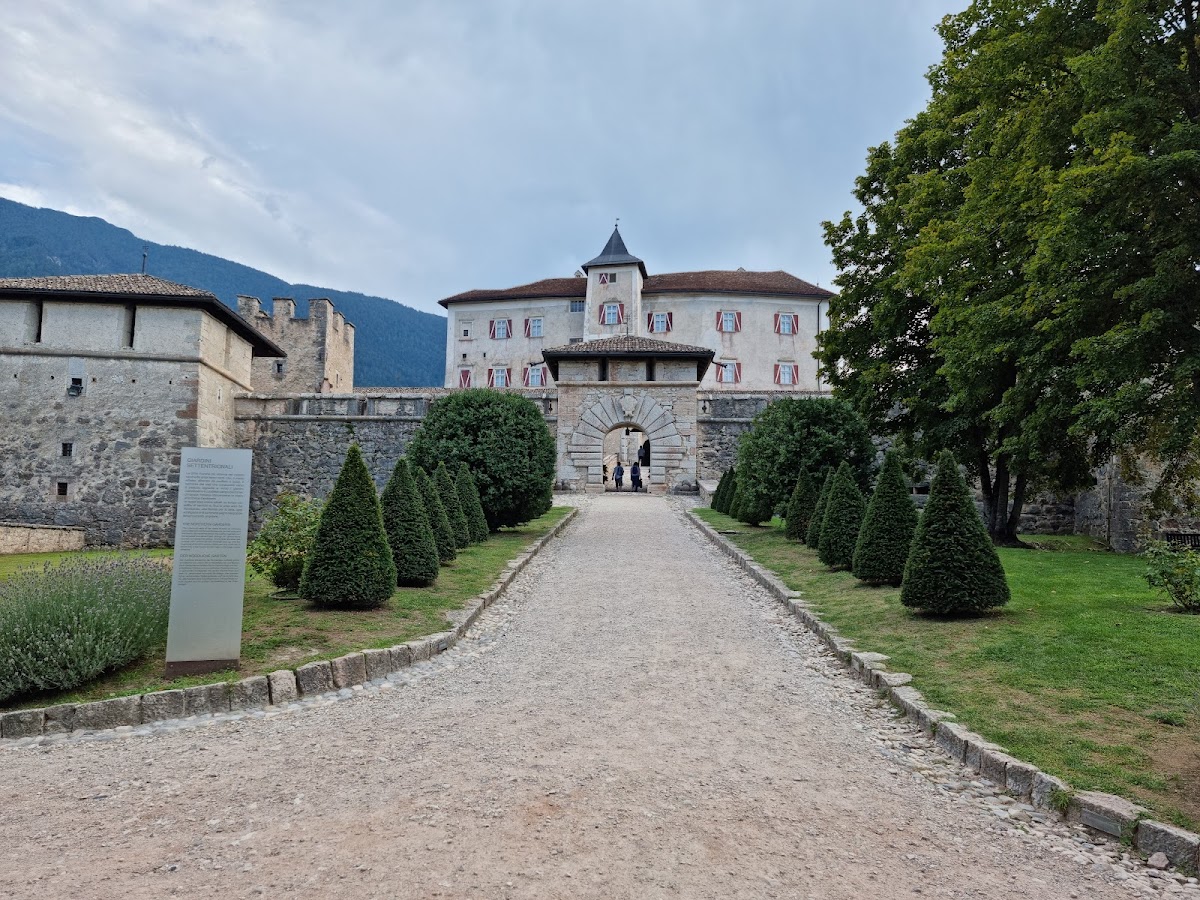
A notable event occurred in 1569 when a fire claimed the life of Sigismondo (also known as Zikmund) Thun, an important figure who served as an imperial orator at the Council of Trent. This fire was one of several that inflicted severe harm to the castle over its history. Following the 16th century, the family carried out significant architectural changes. In 1566, the castle’s main entrance was altered with the addition of a Spanish-style gate, reportedly inspired by Giorgio Thun’s travels to Spain, reflecting the exchange of cultural influences at the time.
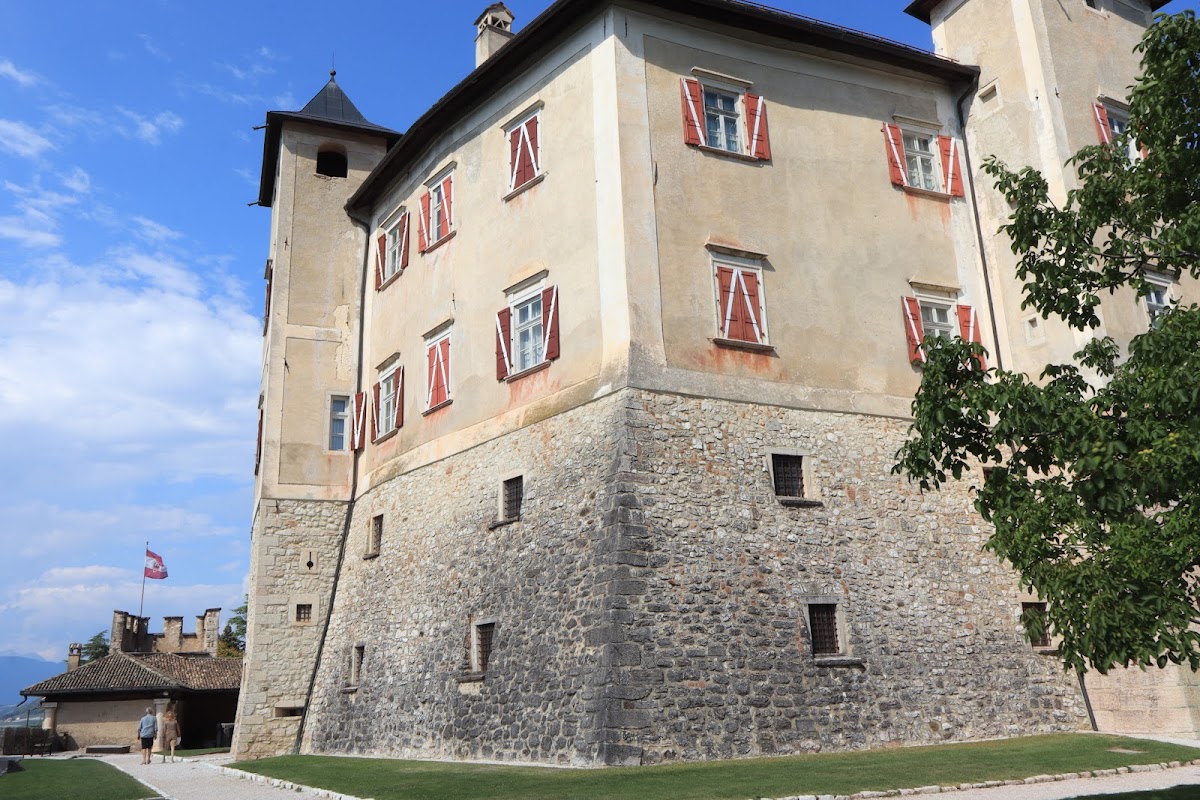
The castle’s importance as a noble residence persisted into the modern era. It underwent a major transformation between 1792 and 1794, shifting from a medieval fortress to a residence more in line with Renaissance and later tastes. Ownership by the Thun family lasted until 1982, ending with the death of Count Zdenko Franz Thun Hohenstein. A decade later, in 1992, the Autonomous Province of Trento acquired the property, initiating an extensive restoration and historical documentation project that extended over nearly two decades.
Since 2010, Castel Thun has been publicly accessible as part of the Castello del Buonconsiglio museum network, which includes several other castles in the region. The castle also played a diplomatic role when it hosted the signing of the Euregio Tirolo-Alto Adige-Trentino foundation act in 2011, symbolizing regional cooperation among three neighboring territories.
Remains
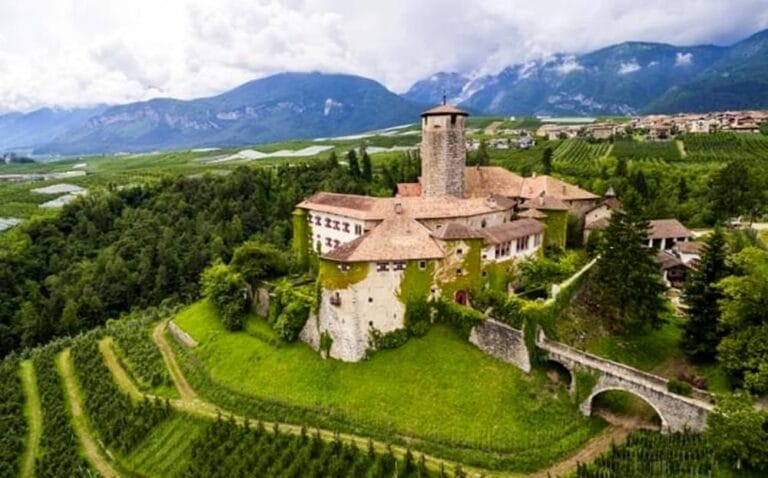
Castel Thun occupies a commanding position on the Belvesino hill, overlooking the village of Vigo di Ton and the valley below. Its layout runs approximately along a north-south axis, adapted to fit the natural shape of the terrain. The complex retains the essential characteristics of a medieval fortress, including thick defensive walls, multiple towers, and protective earthworks, signifying its original military function.
The castle’s fortifications feature massive bastions primarily located on the south and west sides, designed to resist artillery and firearms that developed from the 16th century onward. During this period, enhancements such as artillery ramps and earthworks were added to improve defense. By around 1600, the castle was equipped to mount as many as thirty cannons on its ramparts, demonstrating its military readiness despite its function evolving toward a noble residence.
One of the most distinctive architectural elements is the Spanish Gate, built in 1566. This entrance includes stylistic details inspired by Moorish design, a reflection of the influence brought back by Giorgio Thun from Spain. Access to the castle was controlled by a drawbridge crossing a moat, typical of defensive strongholds designed to hinder attackers.
Within the castle, renovations in the late 18th century transformed parts of the interior to suit more comfortable and refined living. Among the most notable interior spaces is the Bishop’s Room (Stanza del Vescovo), dating from the 17th century. This room is remarkable for its elaborate paneling made from Swiss pine, a coffered ceiling, and a stove covered with majolica tiles, combining decorative artistry with practical features for warmth.
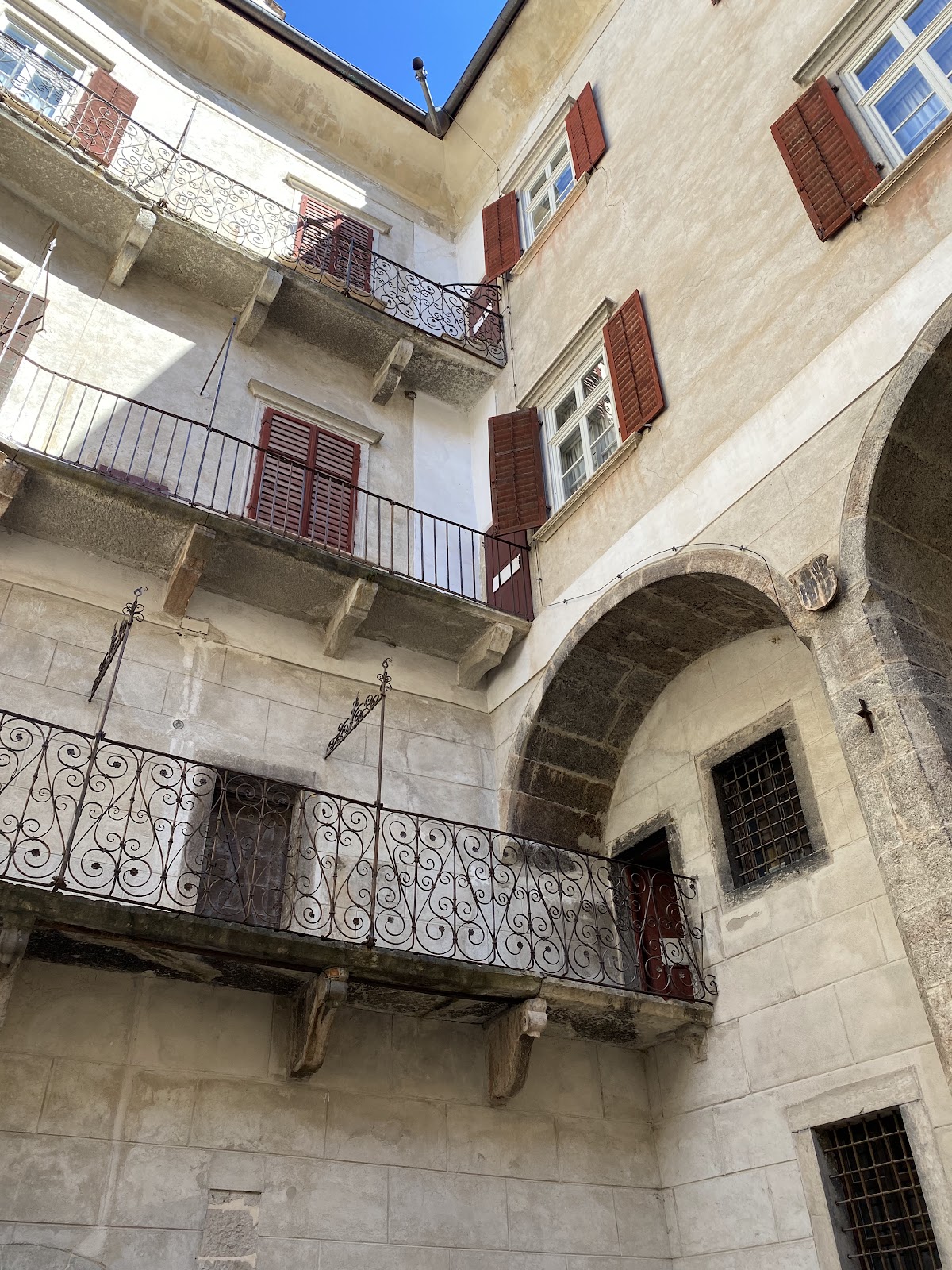
The castle’s preservation state is exceptional. Original furnishings remain in place, along with a carefully preserved family archive and a rich library, both cataloged during the comprehensive restoration process in the late 20th century. These elements provide a continuous historical narrative of the site’s use from its medieval origins through to the modern period. The courtyard, typical of fortified residences of the time, continues to convey the character of a noble seat designed for both defense and residence.
Overall, Castel Thun stands as a well-maintained example of a medieval fortress adapted over centuries into a Renaissance residence, bearing witness to the enduring presence and influence of the Thun family in this part of northern Italy.
Nearby sites