Castel Beseno: A Medieval Fortress in Trentino, Italy



Visitor Information
Google Rating: 4.8
Popularity: Medium
Google Maps: View on Google Maps
Official Website: www.buonconsiglio.it
Country: Italy
Civilization: Unclassified
Remains: Military

History
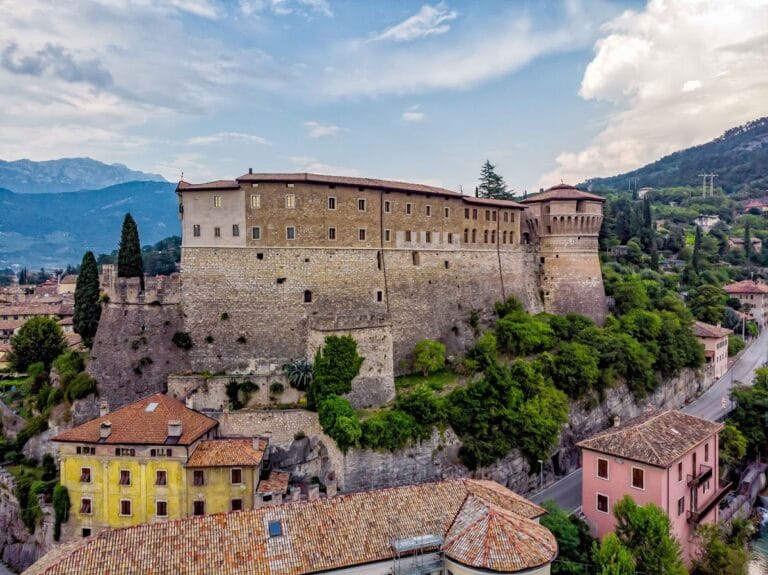
Castel Beseno, situated in the municipality of Besenello in modern Italy, was constructed by medieval builders as a strategic stronghold overseeing the Vallagarina valley. Its commanding hilltop location allowed control over important routes, including the passage to Folgaria, making it a vital military and administrative center.
The earliest recorded mention of the fortress dates back to the 12th century when it was held as a fief by the Counts of Appiano. The castle served as the residence of their vassal family, the Da Beseno. Over time, ownership became split between two branches of the Beseno family, led by Enghelberto and Odolrico, whose internal conflicts contributed to a decline in the castle’s prominence and the deterioration of nearby Castel Pietra.
By the 13th century, portions of Castel Beseno came under the influence of the Trentino church following a series of purchases and donations, although the Beseno families maintained overall control. In the 14th century, significant restoration and consolidation occurred under Guglielmo II da Castelbarco, who revitalized the fortress after periods of decline.
The mid-15th century marked an important military chapter when Marcabruno II Castelbarco managed the castle during the tense confrontations between Venetian forces and the Tyrolean defenders. This period included the 1487 Battle of Calliano, where Venetian troops faced a decisive defeat, and their commander, Roberto Sanseverino d’Aragona, died by drowning in the nearby Adige River.
Following a destructive fire in the 16th century, Castel Beseno underwent extensive rebuilding. This phase transformed it from a primarily medieval fortress into a fortified residence adapted for the use of firearms, while still preserving its defensive capabilities. The modifications reflected changing military technology and needs.
In the late 18th century, the castle demonstrated its strategic resilience by withstanding a lengthy siege by Napoleonic forces. Austrian reinforcements eventually arrived, forcing the French troops to retreat.
With the establishment of a more peaceful political environment in the 19th century, Castel Beseno lost its military role. The fortress gradually fell into neglect and abandonment. During this period, part of the castle was dismantled, including the demolition of a tower in 1957 for reasons linked to road safety. The site was also left uncovered to avoid taxation on enclosed properties.
In 1973, the castle was donated to the Autonomous Province of Trento by the Von Trapp family. Restoration work began, and since 1988, Castel Beseno has been accessible to the public as part of the provincial museum network. Notably, in 2000, the castle hosted an exhibition that recreated the historical backdrop of the Battle of Calliano, highlighting its role in regional military history.
Remains
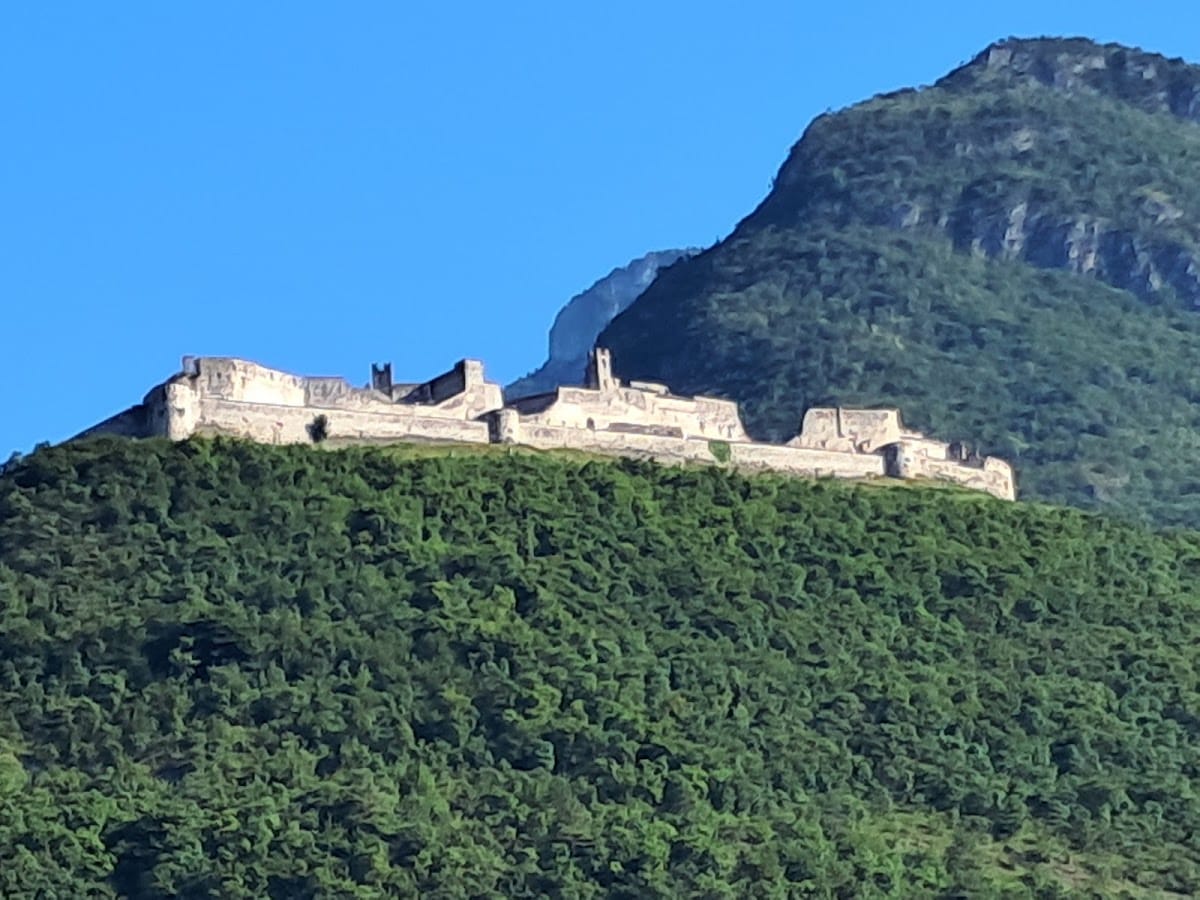
Castel Beseno occupies the entire summit of a limestone hill with an elliptical shape approximately 250 meters in length and 50 meters in width. The fortress presents an approximately triangular layout, punctuated by bastions at each corner. These bastions were designed to provide defensive coverage from multiple directions, a reflection of evolving military architecture aimed at protecting against attacks from all sides.
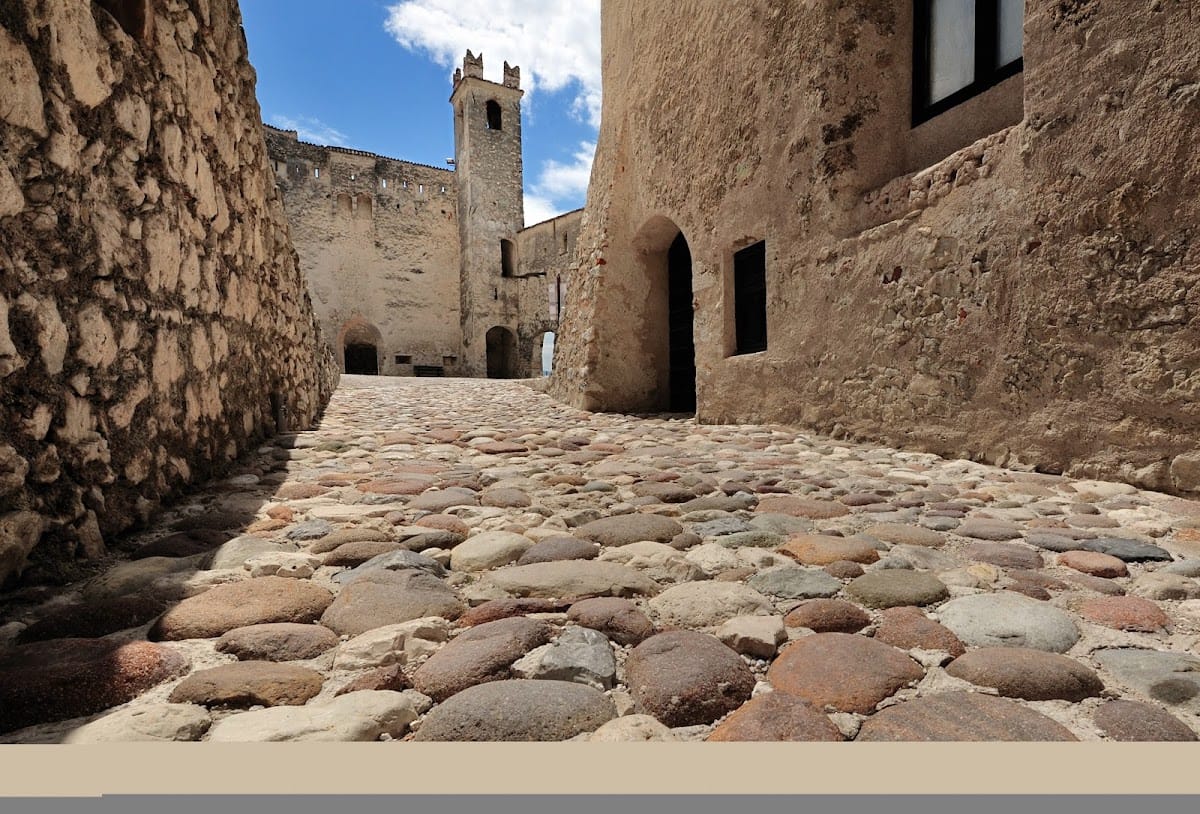
The castle complex includes expansive internal spaces featuring fortified gates that controlled access, as well as courtyards enclosed by massive stone walls constructed using traditional medieval masonry techniques. Within the walls are cellars and cisterns, indicating provisions for storage and water supply essential during sieges.
Although many of the frescoes inside once decorated the castle walls, the majority have suffered extensive weathering damage over the centuries. Nevertheless, their remnants suggest rich decorative efforts that would have enhanced the interiors.
Constructed predominantly from stone and mortar, the fortress was adapted during the 16th century to accommodate firearms, an update that shaped some of its defensive structures. This period also saw the transformation of the castle into a fortified residence, blending residential comfort with military function.
Restoration efforts carried out in the 20th century have helped preserve much of the castle’s structure and appearance. While some parts were lost or removed before these restorations, the overall condition of Castel Beseno today is good, allowing visitors to appreciate its scale and design. Its elevated position affords wide views of the Vallagarina valley below and the Rio Cavallo, highlighting the strategic importance of its original placement.
Access to the castle is possible from the town of Besenello and via the state road SS350, which connects Folgaria and Val d’Astico, tracing historical routes that the fortress once guarded.
Nearby sites