Castel Corno: A Medieval Lookout Castle in Italy
Site at a Glance
- Rating
- 4.4
- Popularity
- Very Low
- Country
- Italy
- Primary era
- Medieval
- Eras represented
- Medieval, Early Modern
- Civilizations
- Holy Roman Empire
- Site type
- Military
- Remains
- Castle
On this page10 sections
History
Castel Corno is a partly ruined castle in Italy, near Lenzima, a hamlet of Isera, whose history probably began in the tenth century and whose construction was recorded as ending in 1178. Built as a rocky lookout stronghold, it occupied a position above the Adige Valley and later became involved in the struggles among local noble families and the prince-bishops of Trent.
Early lords and the Prince-Bishopric of Trent
The Signori di Castelcorno were established in the area by the tenth century and were related to the lords of Lizzana and Brentonico. The castle is first documented in 1178. From 1234 to 1242, contemporary chronicles name Aldrighetto di Toblino as its lord.
The Castelbarco family later held Castel Corno after receiving the fief from Mainardo of Neuhaus, Prince-Bishop of Trent. A prince-bishop was a bishop who also exercised secular territorial authority. Mainardo held that office from 1349 to 1360, during a period when control of fortified territories formed part of the political structure of the region.
Fifteenth-century conflict and Lichtenstein control
In 1456, Marco da Caderzone attempted to capture Castel Corno on behalf of the Lodron family. The Lodron then expelled the Castelbarco family from Noarna and Castellano, created the Castellano-Castelnuovo fief, and conquered Castel Corno after the Castelbarco family refused to recognize the Prince-Bishop of Trent. A fief was a territory or jurisdiction granted by a superior lord to a subordinate lord in return for allegiance and service.
After the Castelbarco-Castelcorno family became extinct in 1499, Udalrico Lichtenstein, Prince-Bishop of Trent, granted the castle to his brother Paolo. Paolo’s family retained control until 1762. This Lichtenstein family was distinct from the House of Liechtenstein.
Decline, wartime damage, and investigation
Around 1700, Castel Corno returned to the Prince-Bishop and began to decline. It was sold to the municipality of Lenzima in 1897 and became municipal property of Isera in 1928. During the First World War, the European-centered conflict of 1914 to 1918, the castle served as an Austrian observation and artillery position and suffered various forms of damage.
From 1987 until the early 2000s, the Civic Museum of Rovereto carried out extensive historical research at Castel Corno. The work reconstructed the exact plan of the complex and classified its rooms according to function. Castel Corno is an Italian national heritage property.
A local legend associates the castle with the knight Corrado of Seiano, who supposedly stayed there and fell in love with Berta, its beautiful castellan. A castellan was the official or lord responsible for administering and defending a castle. According to the story, Berta was transformed into a stone statue during their wedding, while a curse declared that Castel Corno would remain cursed forever.
Remains
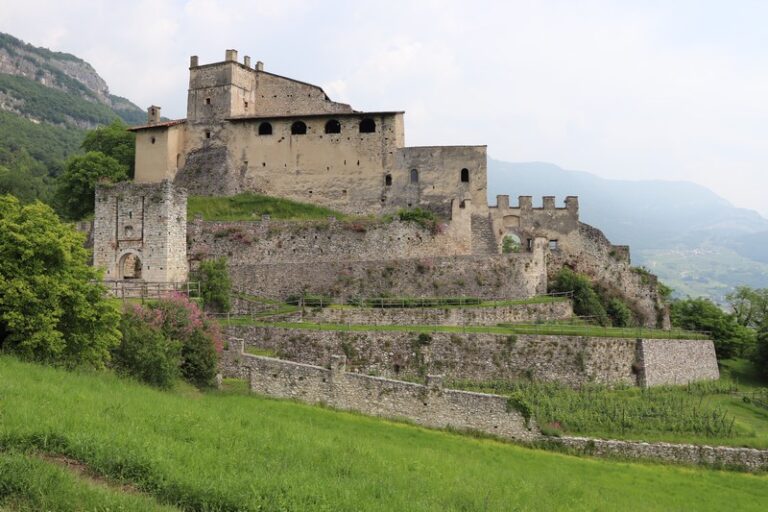
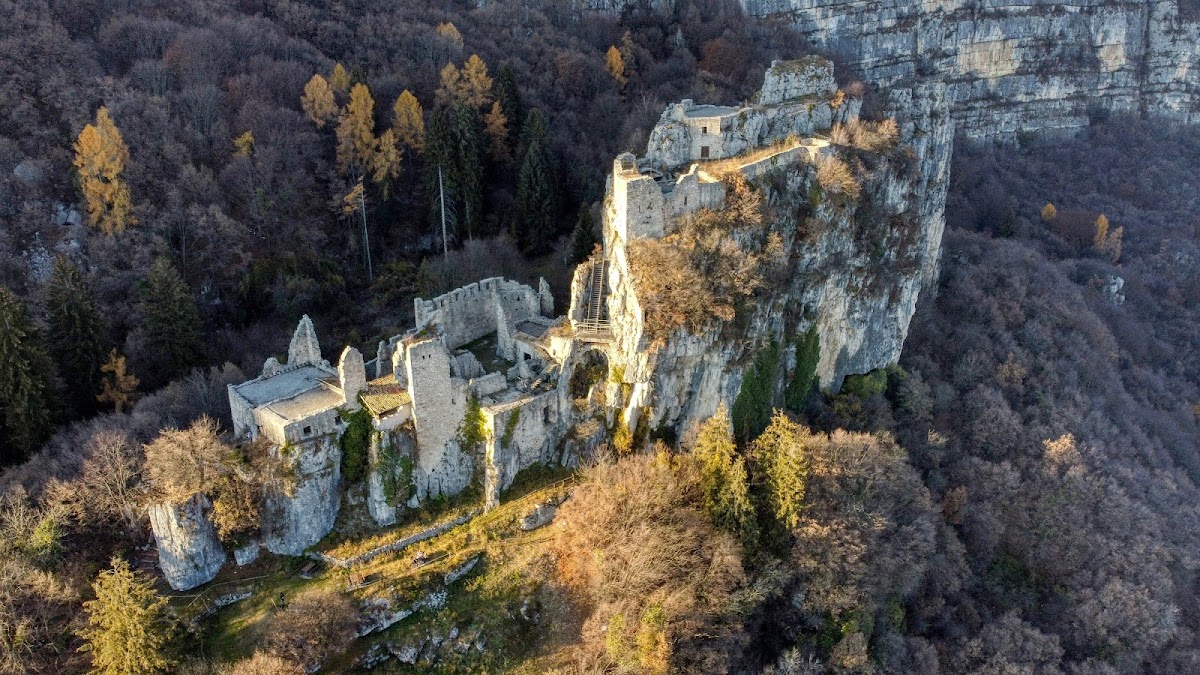
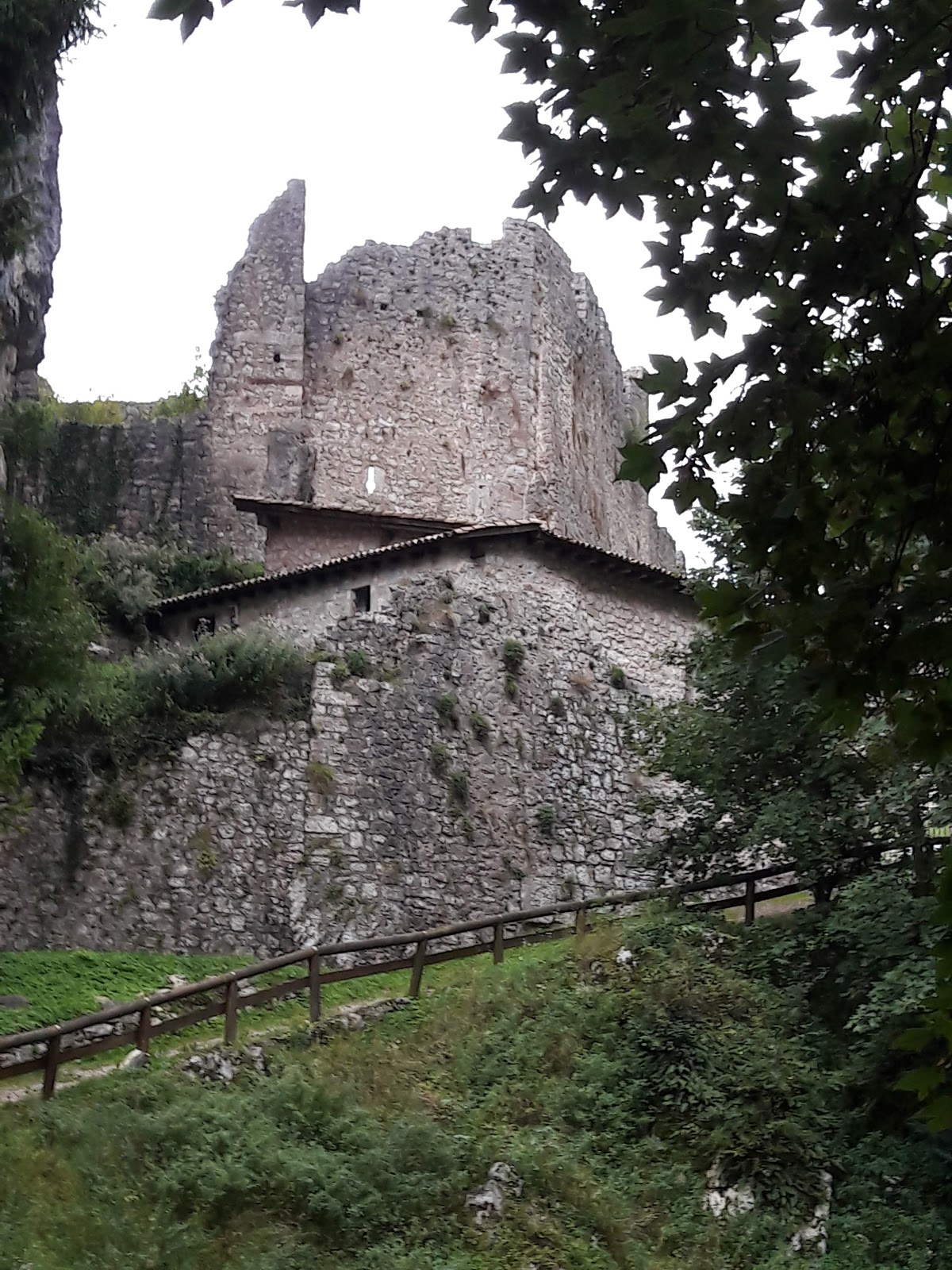
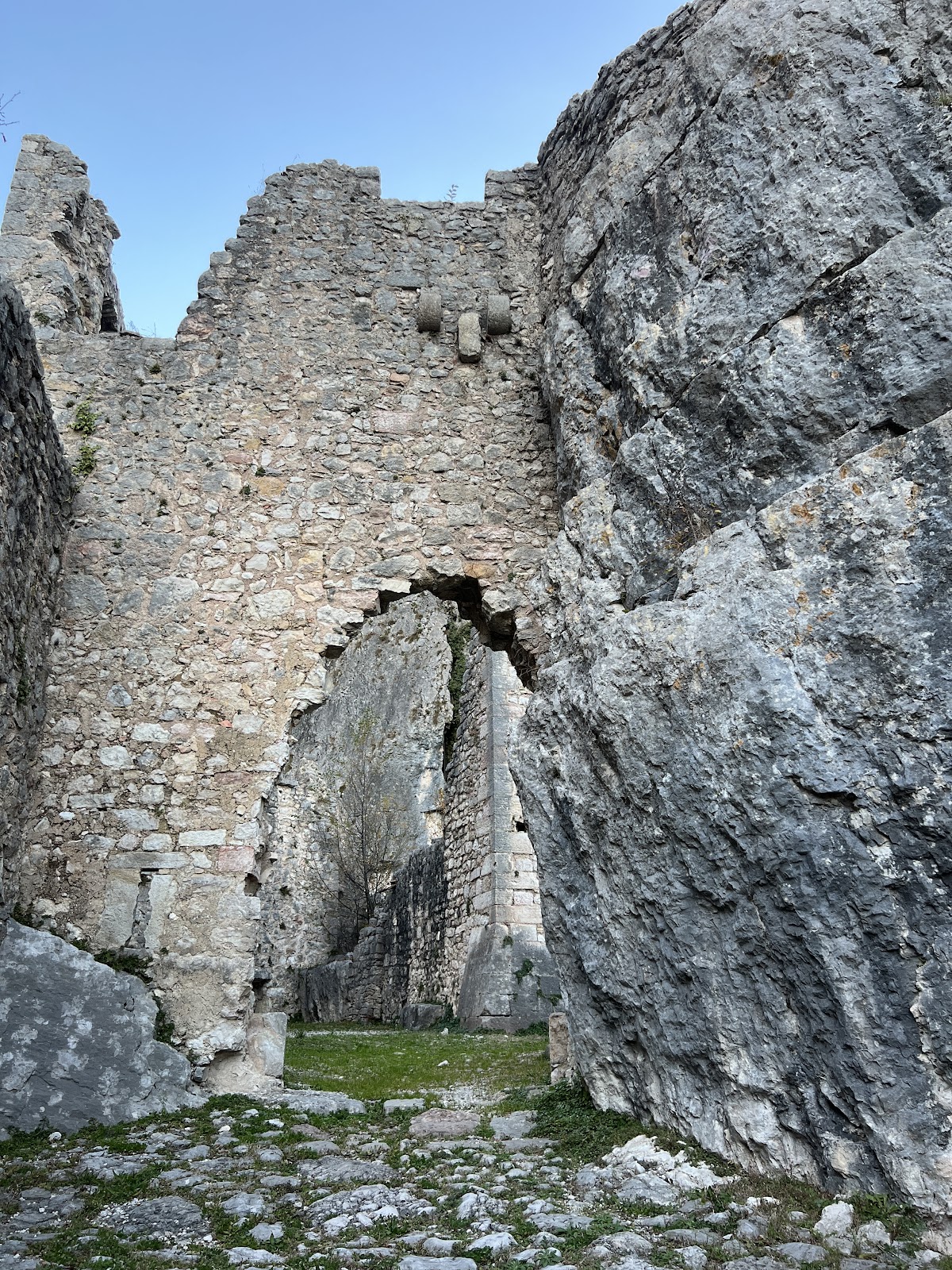
Castel Corno forms a partly restored, partly ruined complex closely integrated with the landform of Monte Biaena, a mountain in the area of Isera. Although its sections can initially appear dispersed, the castle is a unified and compact structure covering approximately 2,300 square metres. The upper castle occupies about 1,450 square metres, while the lower castle covers approximately 850 square metres. The upper section is older, and the lower section was added later.
Fortified complex
Upper and lower castles
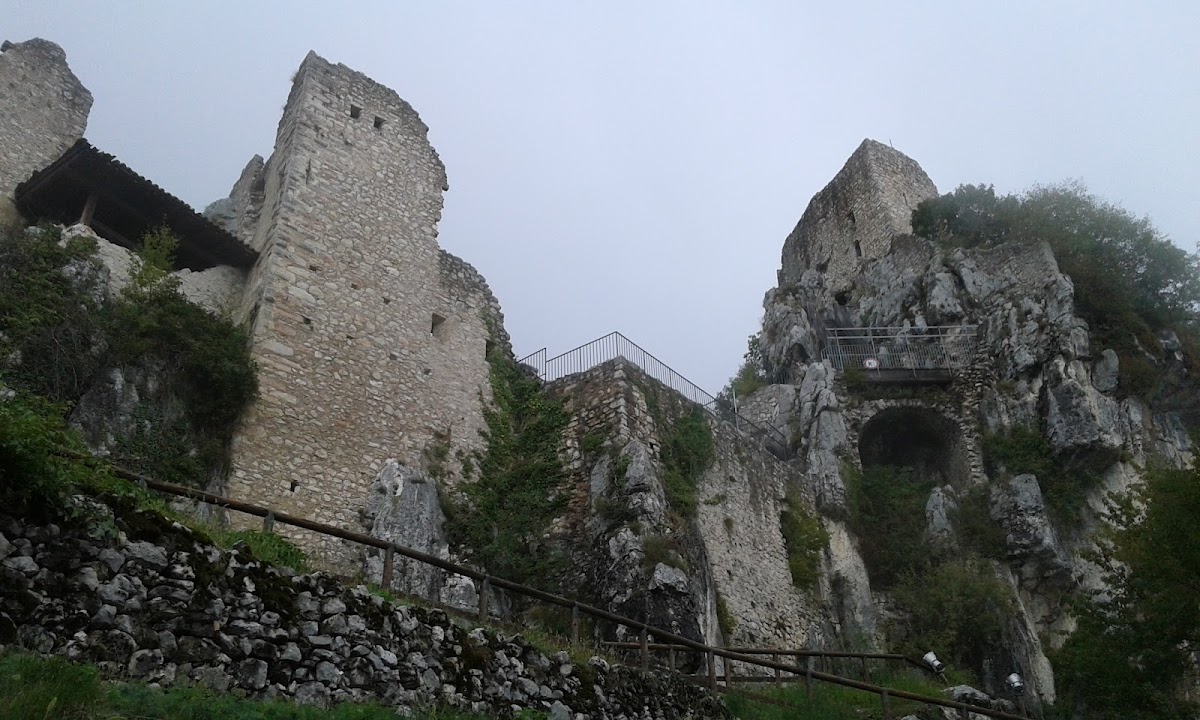
The castle is divided into an older upper castle and a more recent lower castle. Together they form the main compact structure of the stronghold, whose remains are partly restored. Research by the Civic Museum of Rovereto reconstructed the complex’s plan and assigned its rooms to different functions.
Gates, patrol walkway, and courtyard tower
The rocky stronghold was designed primarily as a lookout and had neither a moat nor a drawbridge. Entry required passage through three gates arranged uphill. A patrol walkway, a passage along a fortification used by defenders to observe approaches and move around the defended perimeter, reinforced the defenses. A tower was built in the middle of the courtyard during the sixteenth century.
Position above the Adige Valley
Terraces and controlled routes
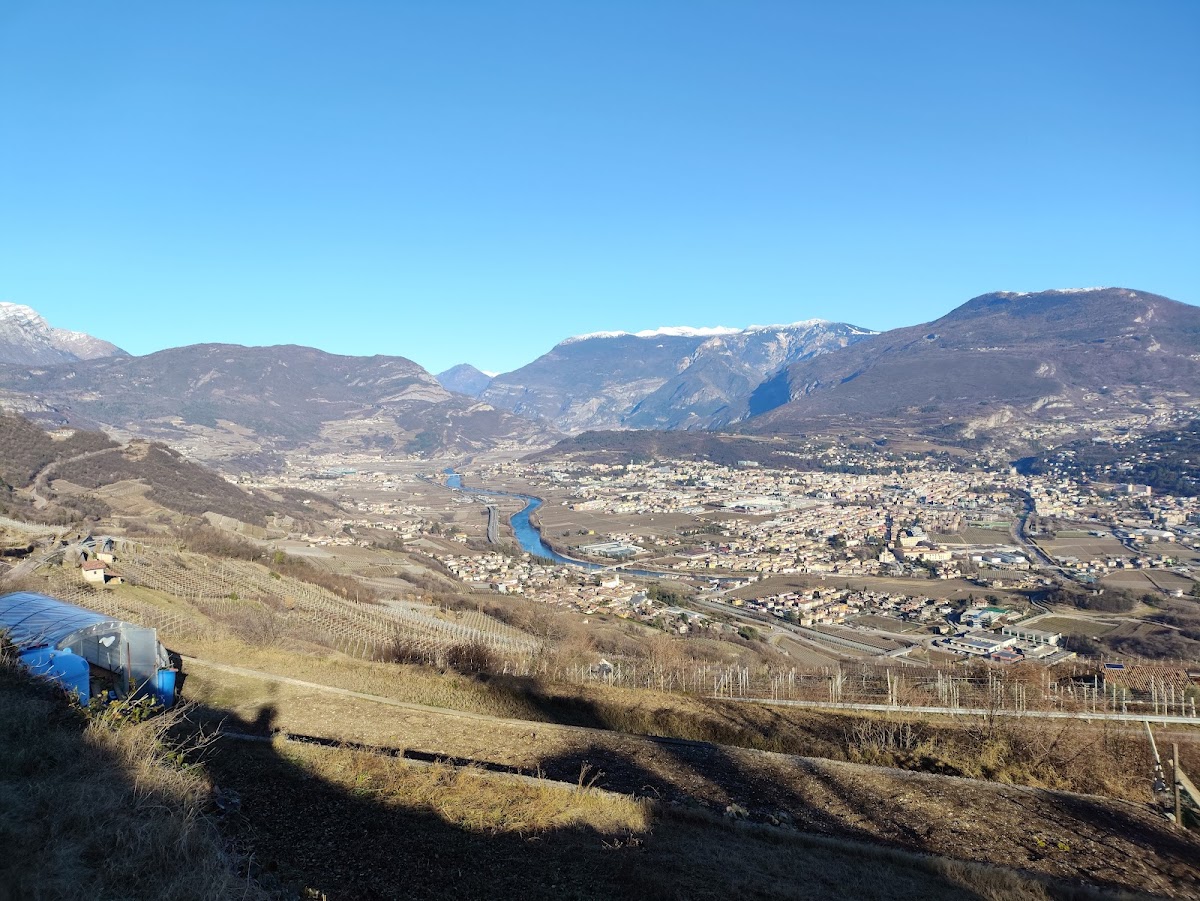
Two terraces face the Adige Valley. From this elevated position, Castel Corno could control two important routes used during its period of prominence, the Adige River and the road running beside it. The castle stood at an elevation of 846 metres and was difficult to see from the valley.
Its concealed position made the stronghold suitable mainly for possible sieges rather than frequent battles. When the Republic of Venice occupied Vallagarina in the fifteenth century, Castel Corno was among the few places in the area not attacked because it held little interest for Venetian objectives.
Nearby sites