Burg Sommeregg: A Medieval Hill Castle in Carinthia, Austria




Visitor Information
Google Rating: 4.5
Popularity: Medium
Google Maps: View on Google Maps
Official Website: www.sommeregg.at
Country: Austria
Civilization: Medieval European
Remains: Military

History
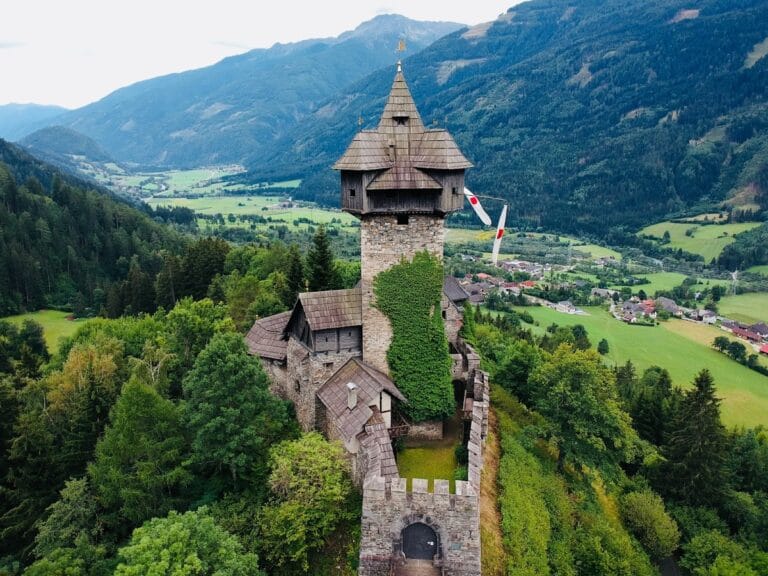
Burg Sommeregg is a medieval hill castle situated near Seeboden in Carinthia, Austria. It stands at 749 meters above sea level in the foothills of the Nock Mountains. The castle likely originated in the 12th century, with the earliest known record mentioning a Witemarus de Sumereke in 1187. It was built by local nobility serving under the Counts of Ortenburg, who controlled large estates in Upper Carinthia.
Initially, the castle functioned as the residence and administrative center for the lord and burgrave, who were ministeriales—knightly officials tasked with military defense and managing local peasants. In 1275, Burg Sommeregg gained regional significance when it hosted the marriage contract between Euphemia of Ortenburg-Hardegg and Count Albert I of Gorizia, reflecting its role in noble alliances.
After the Ortenburg family line ended in 1418, the castle passed to the Counts of Celje. They appointed local noble families such as the von Hallegg and von Graben to oversee the estate. In 1442, Andreas von Graben married Barbara von Hallegg and acquired the burgraviate as a hereditary fief from Count Frederick II of Celje. This event established the Sommeregg district court’s independence from Ortenburg authority.
Following the assassination of the last Celje count in 1456, the Habsburg dynasty inherited the Ortenburg lands. The von Graben family retained their feudal rights under Habsburg rule, with Virgil von Graben succeeding Andreas in 1463. In 1487, Hungarian forces led by King Matthias Corvinus captured and destroyed the castle during their campaign against the Habsburgs. Virgil von Graben later rebuilt the fortress, resulting in an irregular layout.
The von Graben male line ended due to inheritance issues, and the lordship passed through heiress Rosina von Graben von Rain to the Bavarian Lords of Rain zu Sommeregg in the early 1500s. In 1550, Christoph Khevenhüller purchased the estate, and his family held it until 1628. Afterwards, the merchant Hans Wittmann acquired the property.
In 1651, Countess Katharina von Lodron took ownership, marking the transition from feudal tenure to private possession by the Lodron family. They maintained the castle until 1932. The 1848 peasant emancipation ended the castle’s manorial functions, leading to gradual decline, though it remained inhabited. Storm damage in the 1930s further affected the structure until restoration efforts began in 1969.
Remains
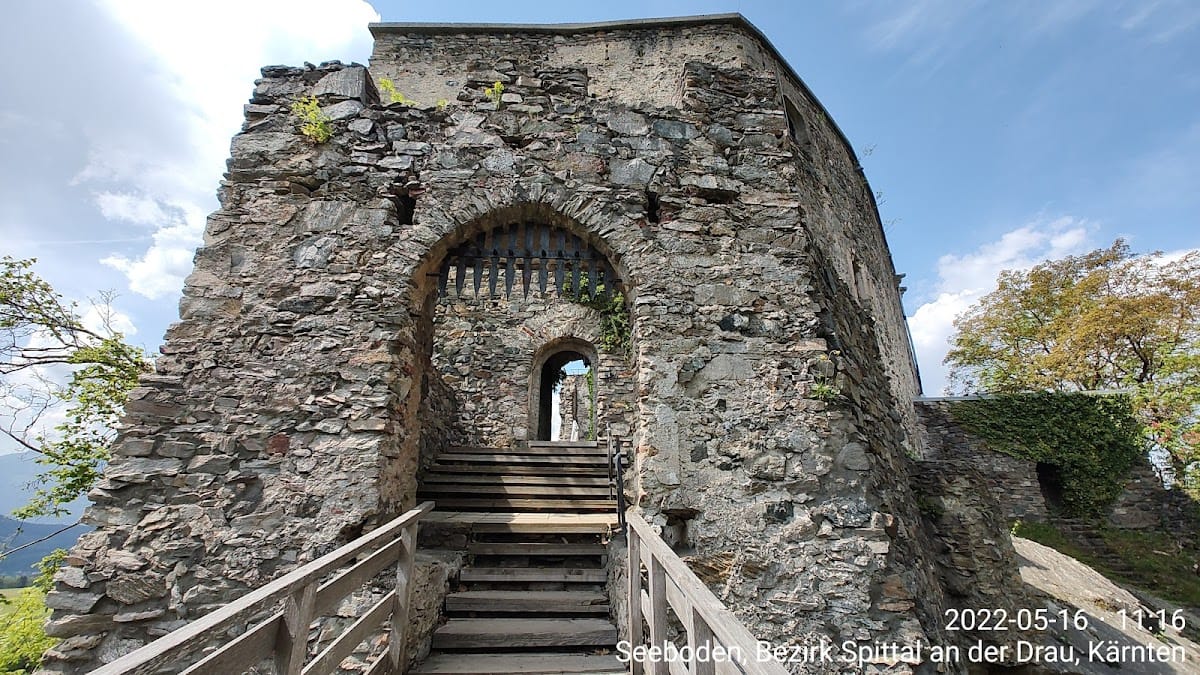
Burg Sommeregg is a hill castle typical of the Millstätter Berge region, positioned on a prominent hilltop above the village of Schloßau. Its current layout reflects reconstruction after destruction in 1487, resulting in an irregular ground plan. Only one round tower from the original medieval structure survives.
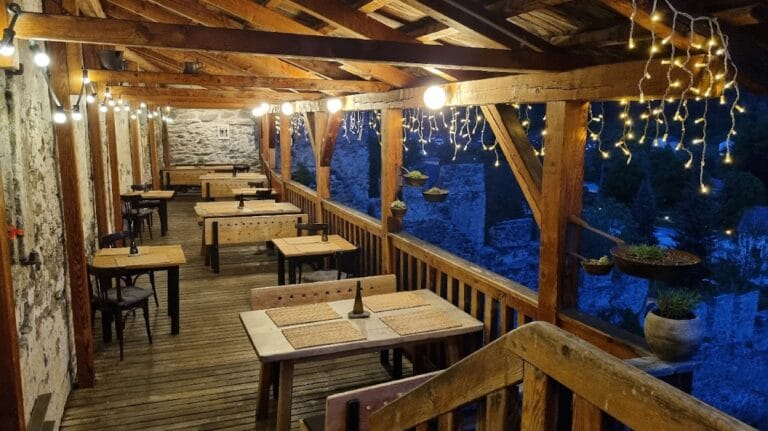
The castle’s lower floors and terraces now accommodate a restaurant, while the upper floor houses a torture museum. This museum contains about 70 historically accurate replicas of medieval and Inquisition-era instruments, including thumbscrews, stretching racks, Spanish boots, nail chairs, and pillories. It ranks among the largest collections of its kind in Central Europe.
An external wooden staircase leads to the castle roof above the museum, which serves as a viewing platform. From here, visitors can see panoramic views extending to the Dobratsch and Karawanks mountain ranges on clear days.
The castle’s location and design reflect its historical role as a fortified administrative center. It oversaw a lordship territory defined by natural boundaries such as the Millstätter See, Seebach, Lieser, Pleßnitzgraben, Tschiernock, and Tangerner Bach. The fortress remains preserved and in situ, combining medieval heritage with later adaptations.
Nearby sites