Brampton Turret 48A: A Roman Watchtower on Hadrian’s Wall in Cumbria, England


Visitor Information
Google Rating: 4.7
Popularity: Very Low
Google Maps: View on Google Maps
Official Website: www.english-heritage.org.uk
Country: United Kingdom
Civilization: Roman
Remains: Military

History
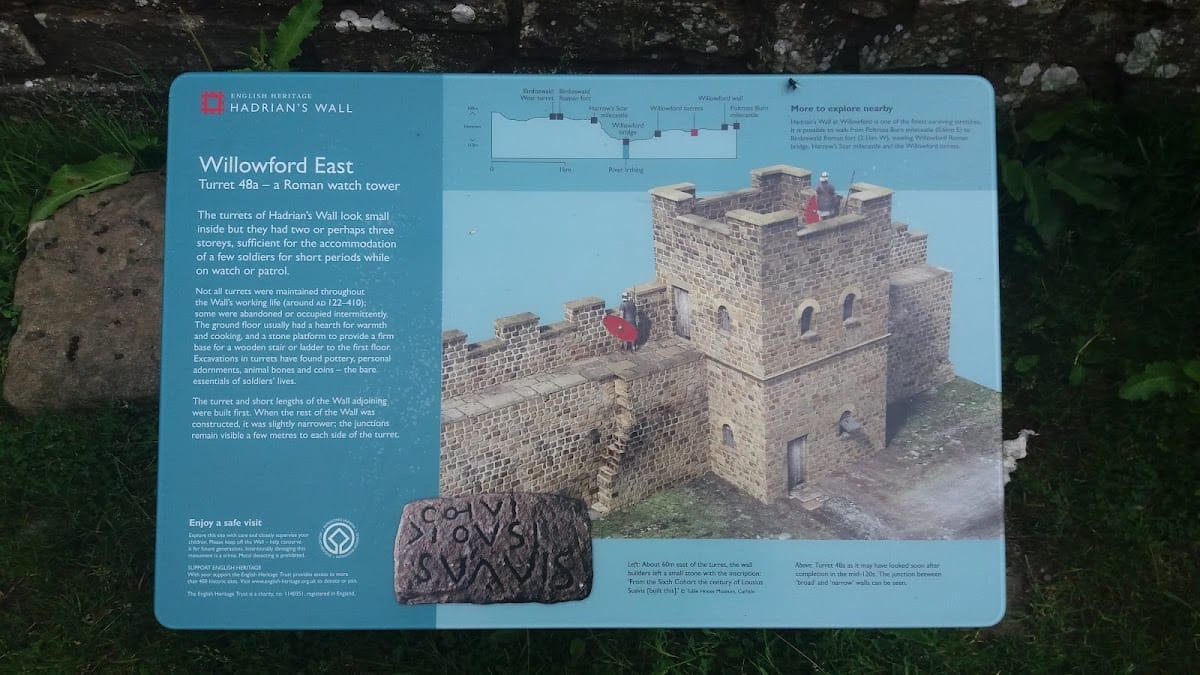
Brampton Turret 48A is located near Upper Denton in the Brampton area of Cumbria, England. It was constructed by the Romans as part of Hadrian’s Wall, a defensive frontier built in the early 2nd century CE under Emperor Hadrian. The turret formed a small watchtower positioned about one-third of a Roman mile west of Milecastle 48, serving as a lookout point along the wall.
The turret was likely manned by soldiers from the nearby milecastle garrison. Archaeological evidence shows it was occupied for a period sufficient to support activities such as metalworking, indicating a functional role beyond simple observation. There are no records of specific military events or named individuals connected to this turret.
After the Roman withdrawal from Britain in the early 5th century, the turret fell out of use and was abandoned. No later historical phases or significant reuse have been documented at the site. The name “Willowford East” is a modern designation linked to its location near the River Irthing and the nearby Willowford area.
Remains
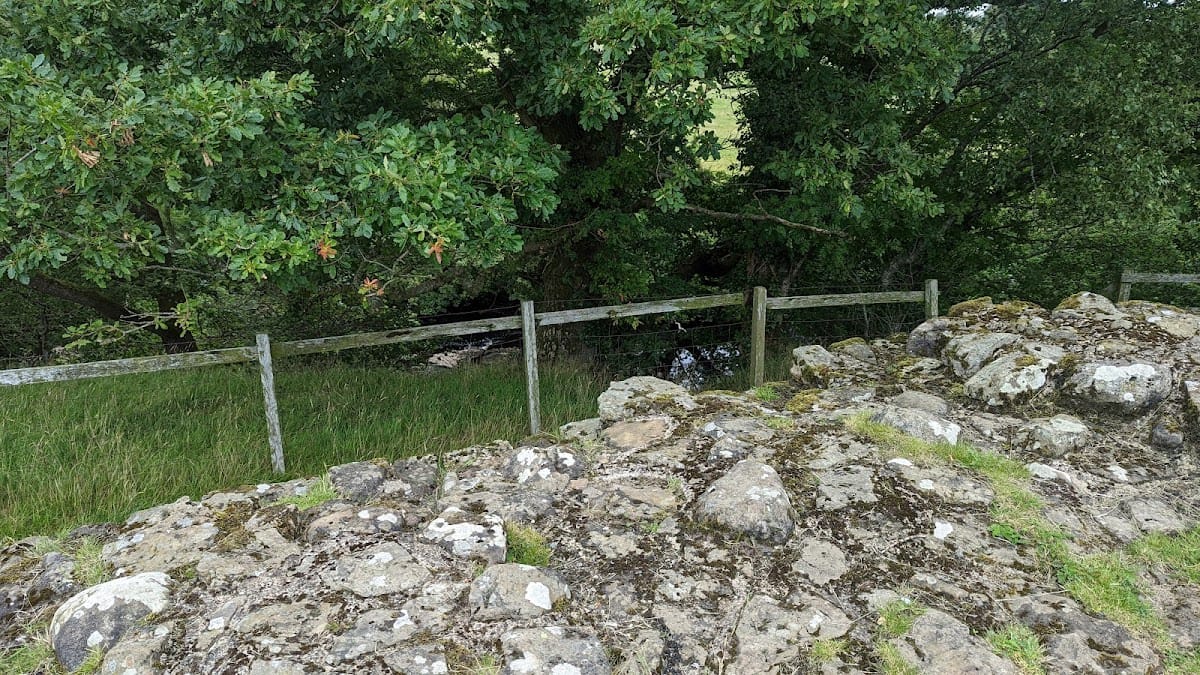
Brampton Turret 48A is situated on a river terrace on the south bank of the River Irthing. The structure measures about 4.1 metres across and was built using stone masonry typical of Roman military architecture along Hadrian’s Wall. The north wall survives up to 1.3 metres high, while the east, west, and south walls stand between five and seven courses of stone.
The turret’s entrance is located in the southwest wall. Inside, excavations uncovered several hearths, which suggest the space was used for heating and cooking. Evidence of bronze and ironworking was also found, indicating that the soldiers stationed here engaged in metalworking tasks.
The remains were excavated in 1923 and later cleared and partially rebuilt in 1951–1952. This conservation work stabilized the masonry, allowing the turret’s walls to remain visible above ground today.
Nearby sites


