Banks East Turret: A Roman Observation Post on Hadrian’s Wall


Site at a Glance
- Rating
- 4.5
- Popularity
- Low
- Country
- United Kingdom
- Primary era
- Classical
- External website
- Open
- Eras represented
- Classical
- Civilizations
- Roman
- Site type
- Military
- Remains
- Wall
On this page6 sections
History
Roman frontier service
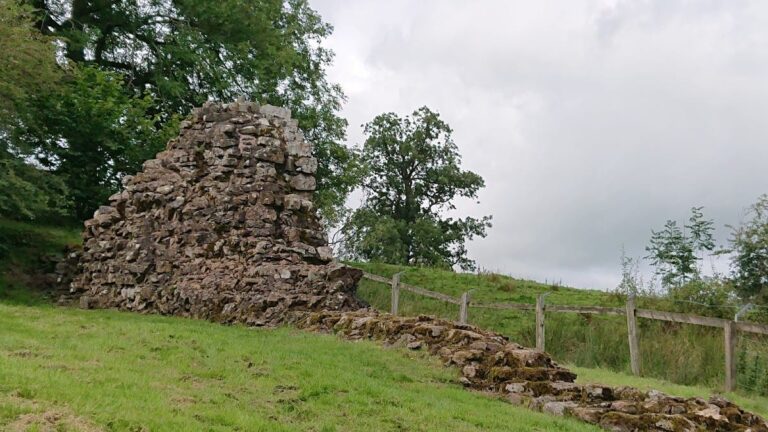
Banks East Turret, also known as Turret 52A, is a Roman fortified observation and garrison structure in the United Kingdom. Built around the beginning of the 2nd century as part of Hadrian’s Wall, it belonged to the Roman frontier system across northern England. The turret was one of two associated with Milecastle 52, a small fortification placed at an interval along the Wall, and probably housed part of the milecastle’s garrison.
The two turrets linked to Milecastle 52 stood approximately one-third and two-thirds of a Roman mile west of the milecastle. Banks East Turret remained in use from around the beginning of the 2nd century until at least the end of the 3rd century. Its position formed part of a wider defensive arrangement in which small posts supported the larger milecastles and forts along the frontier.
Earlier signalling post and modern protection
Nearby Pike Hill Signal Tower belonged to an earlier stage of Roman military organisation. It predates Hadrian’s Wall and was used to send signals to forts along the Stanegate, an east-west Roman road running south of the later Wall between Corbridge and Carlisle. The tower was later incorporated into the frontier landscape and continued in use into the 4th century.
Banks East Turret was excavated in 1933. The following year, it became the first section of Hadrian’s Wall placed under the guardianship of the Ancient Monuments department, the government body responsible for placing nationally important archaeological monuments under official protection.
Remains
Turret and wall
Banks East Turret stands beside the modern road east of Banks village, about 170 metres west of Pike Hill Signal Tower. Excavation revealed the remains of an earlier Turf Wall abutting the turret’s east wall. This was an earth-and-turf frontier barrier that was later replaced in this area by more durable stonework.
The turret’s entrance was on its southeast side. Along the northwest wall, the remains of two hearths and a low bench survive. The walls have been consolidated and restored, reaching a maximum height of 1.75 metres.
Pike Hill Signal Tower
Most of Pike Hill Signal Tower was destroyed when the modern road was built. A fragment of its southeast wall survives south of the road, measuring 2 metres long and 0.8 metres wide. The remaining structure lies at an angle of 45 degrees to Hadrian’s Wall.
The tower’s very deep foundations indicate that it was built to rise higher than the surviving remains. Its elevated form supported its signalling role, allowing warnings and requests for reinforcements to be communicated by fire or smoke to other Roman military posts.
Nearby sites