Arches Sénéquier: The Roman Aqueduct of Fréjus

Visitor Information
Google Rating: 4.4
Popularity: Very Low
Google Maps: View on Google Maps
Official Website: www.frejus.fr
Country: France
Civilization: Roman
Remains: Infrastructure

History
The Arches Sénéquier, located in Fréjus, France, are the remains of a Roman aqueduct built to supply water to the ancient city of Forum Julii, the Roman predecessor of modern Fréjus. Constructed around the middle of the 1st century AD, this aqueduct was part of a larger water system designed to support the city’s growth and prosperity.
The aqueduct drew water initially from the Foux de Montauroux springs and was later supplemented by the Siagnole source, making it a “bicéphale,” or two-headed, system. This extended water network, known as the Mons to Fréjus aqueduct, originally stretched over 41.5 kilometers. Its reliable water supply was crucial for the development and daily life of Forum Julii, sustaining its population and public amenities.
The aqueduct remained in use for approximately 305 years, as shown by the thickness of carbonate deposits found inside its channel. These deposits accumulated gradually, indicating continuous operation through much of the Roman period.
In the late 19th century, parts of the ancient aqueduct were repurposed to meet modern needs. In 1892, a 40-centimeter diameter asbestos-cement pipe was installed within sections of the old channel to provide water to Fréjus and the nearby town of Saint-Raphaël.
Recognized as a historical monument since 1886, the Arches Sénéquier and the broader aqueduct system have been the subject of detailed archival research and archaeological fieldwork. These studies have revealed multiple phases of construction and adaptation, reflecting the aqueduct’s long and complex history from Roman times through to modern interventions.
Remains
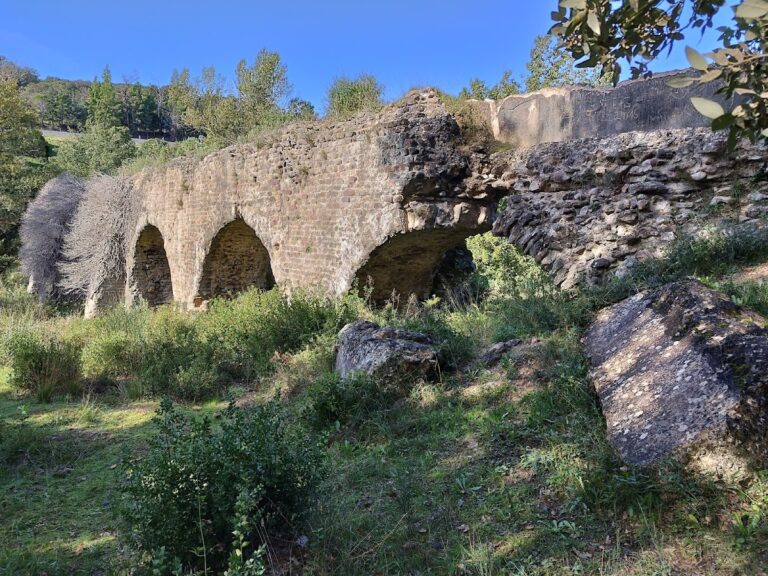
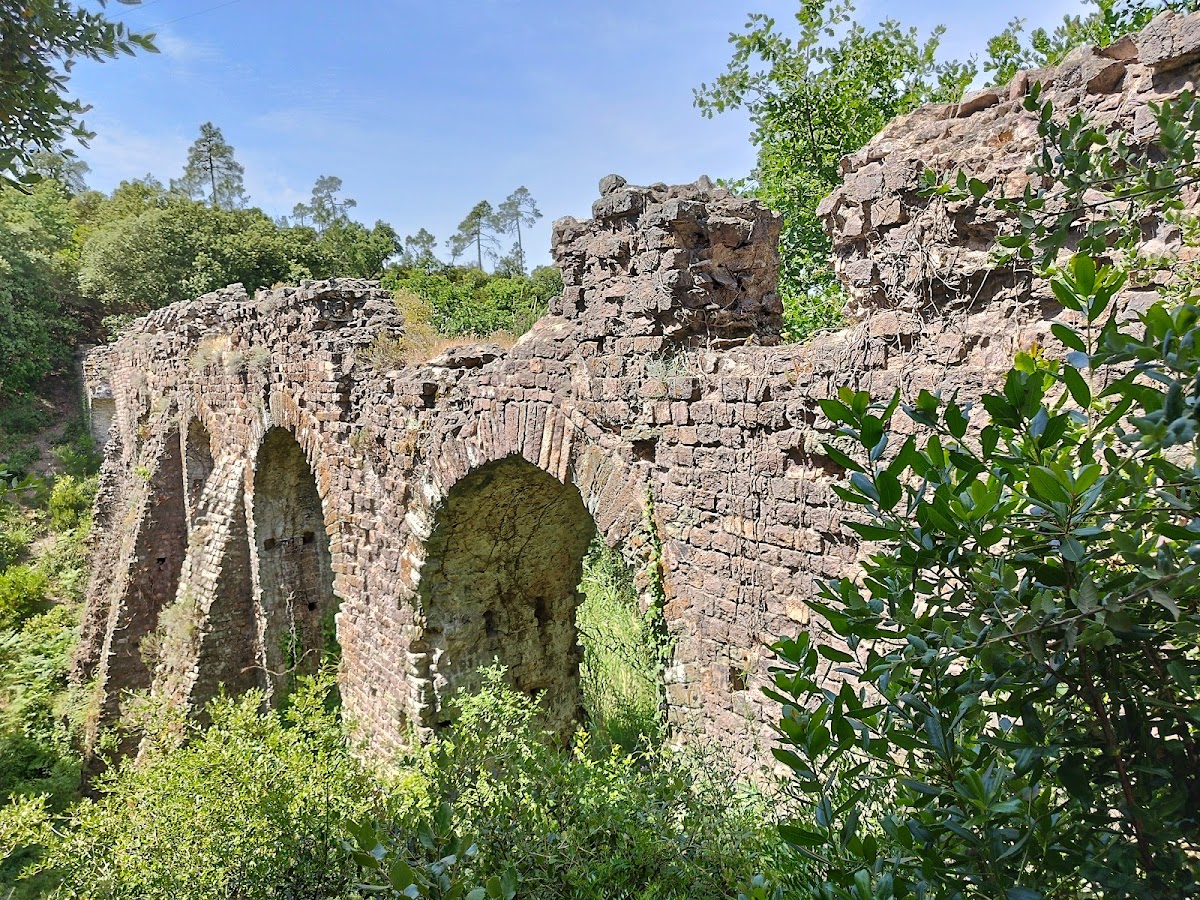
The Arches Sénéquier consist of a double aqueduct bridge featuring six visible arches that span a small valley through which a tributary of the Reyran river flows. This structure is part of the aqueduct’s route near Fréjus, where the water channel crosses valleys on bridges, while most of the aqueduct elsewhere runs underground. The channel itself measures about 1.6 meters in height and 0.7 meters in width, dimensions that align with Roman engineering standards, specifically a width of two Roman feet.
Constructed primarily from local materials, the aqueduct employs Roman lime mortar mixed with coarse aggregates, a form of concrete known as “béton romain.” To ensure water tightness, builders used a specialized waterproof mortar called “tuileau,” made by combining crushed brick fragments with lime. This technique helped maintain the integrity of the channel and prevent leaks.
The aqueduct’s design is notably rustic, lacking decorative elements except for a damaged bas-relief bust found near the arches of La Bouteillère, which symbolized Roman authority. The channel inside the aqueduct accumulated significant carbonate deposits, a process called “calcairo-sclérose,” which built up at a rate of about one millimeter per year. These deposits required regular cleaning to keep the water flowing and to avoid excessive weight that could threaten the bridges’ stability.
Besides the Arches Sénéquier, the aqueduct included other notable bridges such as the Pont de Sainte-Croix, which originally had 86 arches, as well as the Pont de la Moutte and Pont du Gargalon. These structures allowed the aqueduct to maintain a steady gradient across the varied terrain.
Today, the Arches Sénéquier remain in a ruined yet imposing state, standing amid the hills and dense vegetation of the Reyran valley. The site is accessible by footpaths and retains its historical character within a natural environment, preserving the legacy of this ancient water system.
Nearby sites