Aquae Calidae: Ancient Thermal Baths and Sanctuary near Burgas, Bulgaria


Visitor Information
Google Rating: 4.5
Popularity: Medium
Google Maps: View on Google Maps
Official Website: www.aquae-calidae.com
Country: Bulgaria
Civilization: Byzantine, Ottoman, Roman
Remains: Sanitation

History
Aquae Calidae, meaning “warm waters,” is located near present-day Burgas, Bulgaria. The site began as a Thracian sanctuary during the first millennium BC, dedicated to the Three Nymphs. These deities were associated with the healing mineral springs that attracted worshippers seeking cures and spiritual benefits.
In the 4th century BC, the area was visited by Philip II of Macedon, indicating its regional significance. The Romans established the first thermal baths around 72 BC amid the Third Mithridatic War. Under Emperor Trajan (98–117 AD), the settlement expanded as Anchialos became an administrative center. A road station named Aquae Calidae was founded nearby, linking the site to Constantinople and other cities via the Via Pontica road.
During the reign of Septimius Severus (209–211 AD), the baths hosted the Severia Nymphaea games for three years, with similar events held under emperors Geta and Caracalla. The sanctuary and baths underwent restoration and enlargement in the late 4th or early 5th century.
In the 6th century, Emperor Justinian I fortified the city with thick walls to protect it from barbarian attacks. This defense ensured the safety of visitors to the healing baths. The settlement became involved in medieval conflicts, including the Bulgarian-Byzantine wars. In 705 AD, Khan Tervel incorporated the site into the Bulgarian realm.
The city suffered a major blow in 1206 when Latin Emperor Henry captured and burned it during campaigns against Bulgaria. Although the baths were later restored, the city never fully recovered its former status. During Ottoman rule, Sultan Suleiman the Magnificent was treated for gout at the baths in 1562. He commissioned a new bathhouse, or hamam, built on the ruins of the older pools.
Archaeological excavations began in 1910 under Bogdan Filov. Since 2008, extensive digs and restorations have uncovered thermal spas, city walls, and gates. The site was declared an archaeological reserve in 2011, preserving its historical legacy.
Remains
The site covers approximately 10 square kilometers, with a fortified area of about 2 square kilometers. Excavations have revealed a complex of ancient thermal baths originally constructed in the 1st century BC. These baths were expanded during Roman rule, notably under Emperor Trajan, who added at least two large swimming pools.
The baths and sanctuary were located near a Roman road station called Aquae Calidae, part of the Via Pontica network connecting the Black Sea coast to Constantinople and other cities. The road station served travelers and pilgrims visiting the healing springs.
City fortifications built under Emperor Justinian I in the 6th century include walls about five meters thick. These defensive structures protected the settlement and its baths from barbarian invasions. Excavations have uncovered parts of these walls and the north gate.
Archaeologists have found over 4,000 coins dating from the 5th to the 13th centuries, along with jewelry and everyday objects. T
The Ottoman-era bathhouse constructed by Suleiman the Magnificent in the 16th century remains preserved on the site. This hamam was built atop the ruins of earlier pools and continues to illustrate the long tradition of healing baths at Aquae Calidae.
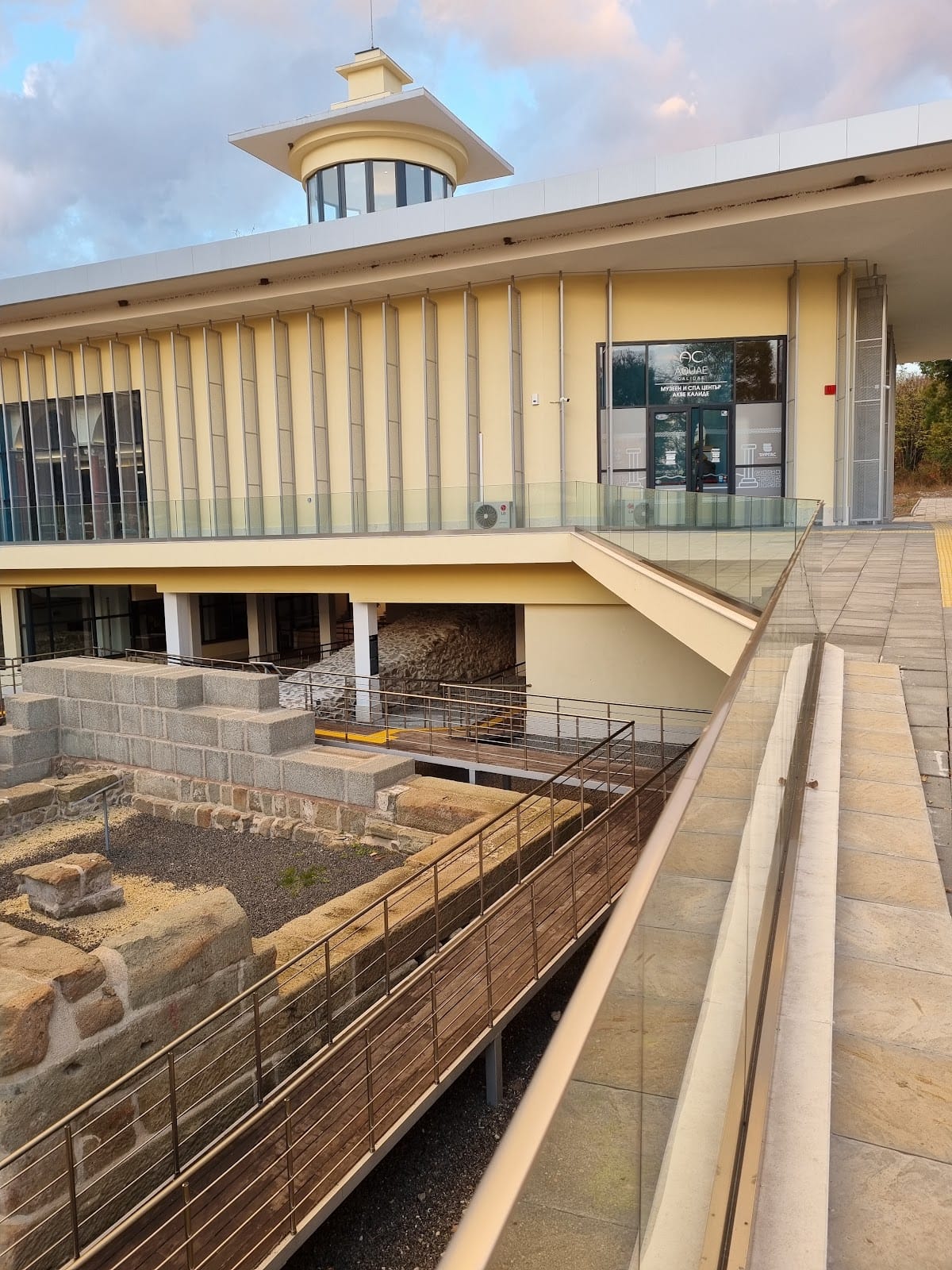
By 2010, about 3,800 square meters of the site had been uncovered, including the baths, city walls, and gates. A museum complex opened in 2015 features the restored Suleiman bath, mineral water fountains, and an open-air stage with a glass floor showcasing the excavations below.


