Roman Thermae Varna: A Roman Bath Complex in Bulgaria



Site at a Glance
- Rating
- 4.4
- Popularity
- Medium
- Country
- Bulgaria
- Primary era
- Classical
- External website
- Open
- Eras represented
- Classical
- Civilizations
- Roman
- Site type
- Sanitation
- Remains
- Baths
On this page9 sections
History
Roman Thermae Varna is a Roman bath complex in Bulgaria, built toward the end of the 2nd century AD at ancient Odessus. Archaeological research attributes its construction to Roman legionaries who came to the former Greek colony. The baths became an important public institution in a city whose wealth and cultural life grew under Roman influence.
Odessus under Roman rule
Odessus became part of the Roman Empire in AD 15 and was incorporated into Moesia, a Roman province covering parts of the lower Danube and the eastern Balkans. The city retained a degree of local autonomy, including the right to mint its own coins. As Moesia’s principal port and an important economic and cultural centre, Odessus was strongly shaped by Roman customs and institutions.
The thermae served more than a bathing function. Their palaestra, an exercise and social space, provided a place where the city’s men gathered to discuss public affairs as well as to pursue athletic and recreational activities. The baths therefore formed part of the civic life of Odessus during the period of its Roman prosperity.
Construction and later Roman use
The complex operated until approximately the end of the 3rd century. Coins minted under Emperor Septimius Severus, who ruled from AD 193 to 211, support the proposed construction date. The latest coins recovered from the baths belong to the reign of Emperor Tacitus in AD 275, providing evidence for the latest documented phase of their use.
Reuse and archaeological recognition
In the 14th century, the ruins were adapted for craftsmen’s workshops. They later became the citadel, or inner fortification, of the Varna fortress. During the Ottoman period, the complex served as a powder magazine with three towers and an outer section of the inner fortress. That outer section was demolished under the Treaty of Adrianople, which followed the Russo-Turkish War of 1828–1829. Until the end of Ottoman rule and after Bulgarian liberation, the underground spaces were used as a prison known as Ichkale.
Ernst Kalinka, an Austrian researcher, identified the ruins as an ancient building in 1906. The Czech-Bulgarian archaeologists Karel and Hermann Škorpil helped stimulate scholarly interest in the remains and supported their preservation. Excavations by the Varna Archaeological Museum, directed by the Bulgarian archaeologist Milko Mirchev from 1959 to 1971, exposed the principal part of the building. Further archaeological work has refined understanding of its purpose and construction period.
Roman Thermae Varna is regarded as an important monument of ancient architecture in the Bulgarian lands and as evidence of Odessus’s cultural flourishing, wealth, and prosperity during the 2nd and 3rd centuries. It is among the largest Roman thermae in the European part of the Roman Empire, the largest preserved Roman baths in the Balkans, and the fourth-largest preserved Roman thermae in Europe. In 1968, the complex was designated a national monument of culture in architecture and construction.
Remains
Layout and construction
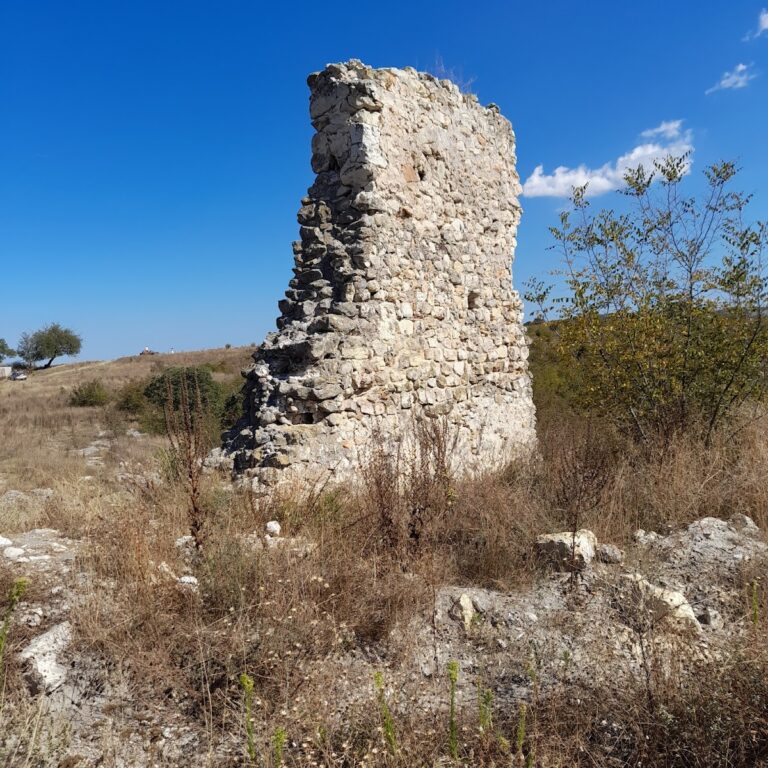
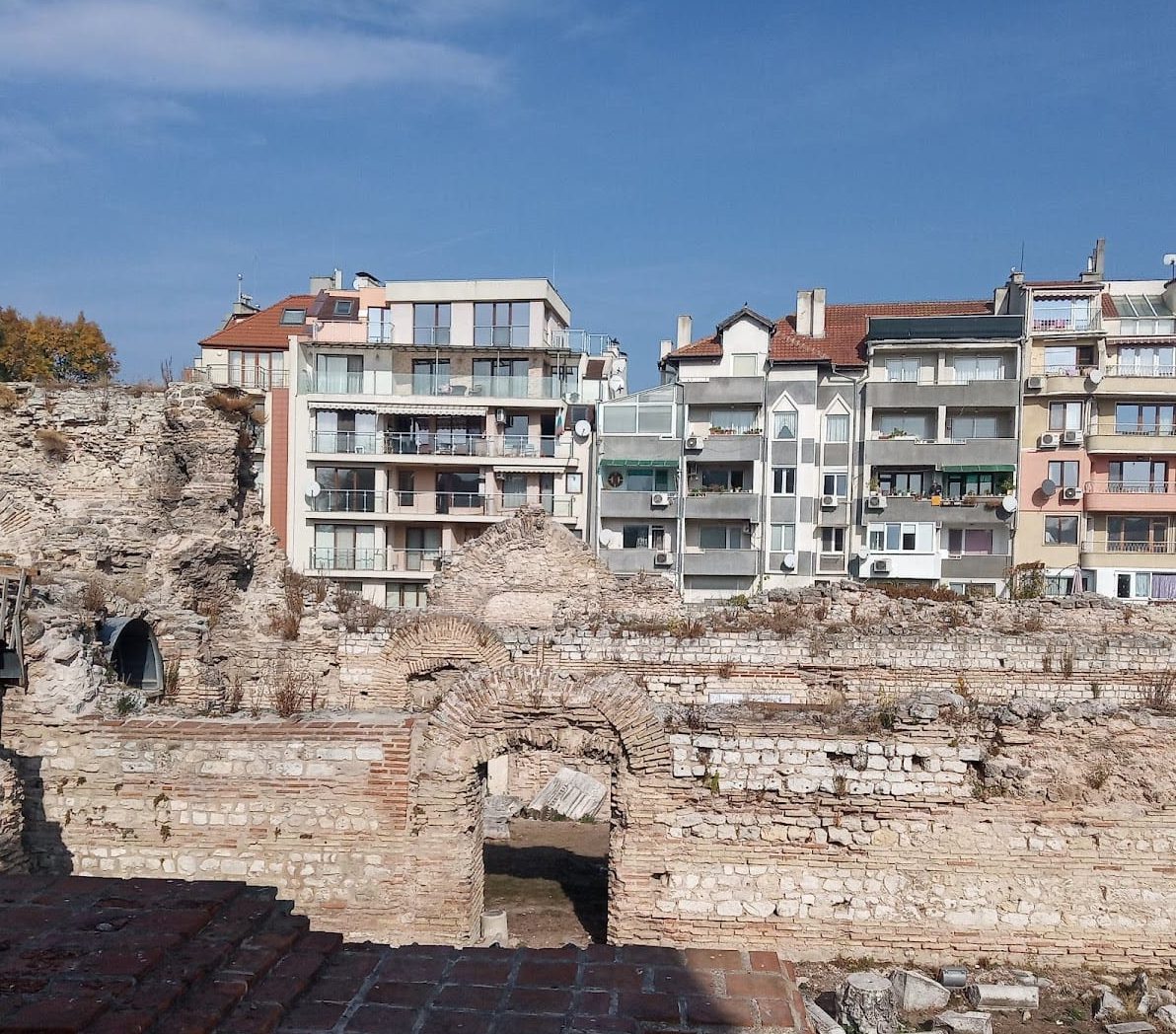
The remains occupy approximately 7,000 square metres in the southeastern part of modern Varna, near the port, at the intersection of San Stefano Street and Han Krum Street. The symmetrical complex was built from red brick and stone, while stone blocks formed its stairs and vaults. Its vaulted structures rose to an estimated 20 to 22 metres. The highest surviving element is an approximately 18-metre Roman tower that originally formed part of the western wall of the apodyterium, the changing room.
Two entrances on the northern side led to vestibules designed to shield the changing rooms from cold air. The same side contained a colonnaded palaestra connected to the main hall by a staircase. The southern facade held a large central hall for hot bathing, while other heated rooms occupied the southern side of the plan.
Bathing rooms and heating
The bathing suite included an apodyterium, a frigidarium for cold bathing, a tepidarium for warm bathing, and a caldarium for hot bathing. Gymnasia, relaxation rooms, auxiliary rooms, and latrines completed the facilities. The heating system used a hypocaust, a Roman arrangement in which hot air circulated through cavities beneath floors and behind wall surfaces. A double floor rested on vertical clay pipes, allowing heated air to pass underneath. Additional heat moved through spaces between the walls and their marble coverings before rising through special cavities.
Water supply and service spaces
A praefurnium, or heating chamber, supplied heat for the water and air. Beneath the northern palaestra stood a large water tank. Water passed from it through stone channels to the boiler and then through ceramic pipes to taps and basins. A sewer system ran below the floors. Galleries along the eastern and western walls provided areas for storing fuel, while an underground gallery extended through the complex. The southernmost branch of its western section continues beneath a modern street.
The thermae were built beside warm mineral springs. A neighbouring pool draws water from the same spring that supplied the baths in antiquity and continues to use it in Varna. Parts of the complex also remain beneath present-day streets, and additional ancient buildings and artefacts are believed to survive beneath nearby houses and churches.
Sculpture and religious evidence
Marble columns and sculpture decorated the bathing complex. Excavations recovered a statue pedestal associated with Claudius Aquila, together with statues of Hercules, Victoria, and Mercury. These works probably adorned the halls and contributed to their ceremonial appearance. Fragments of marble window frames decorated in the form of Hercules’s club were also found. Hercules was associated here with protective powers and the springs that supplied the baths.
Inscriptions indicate that a sanctuary dedicated to Asclepius and Hygieia occupied the northwestern part of the thermae. Asclepius was the Greek and Roman god of medicine, while Hygieia was associated with health and sanitation. Their presence connected the bathing complex with religious ideas about healing and bodily well-being.
Nearby sites