Santapau Castle: A Historic Fortress in Licodia Eubea, Italy


Visitor Information
Google Rating: 4.4
Popularity: Very Low
Google Maps: View on Google Maps
Country: Italy
Civilization: Unclassified
Remains: Military

History
Santapau Castle is situated on Monte Castello near the town of Licodia Eubea in Italy. Its origins date back to the Late Roman and Early Byzantine periods, when an initial fortress was established on the site using masonry techniques visible in underground chambers. This early construction reflects the strategic efforts of those civilizations to fortify key positions in Sicily.
The original Byzantine fortress experienced destruction during the period when the Arab Emirate controlled Sicily. Following this, the site underwent significant reconstruction under the Angevin dynasty in the late 13th century, specifically during the rule of Charles I of Anjou. At this time, the castle was known in Latin documents as Castrum Licodiæ. This phase marked the transformation of the fortress into a medieval stronghold aligned with Angevin authority.
Ownership of the castle changed hands among noble families over the following centuries. In 1392, the Santapau family from Catalonia acquired the castle, and it gradually came to bear the family name. Later, in 1615, through marriage, the property was transferred to the Ruffo di Calabria family, who maintained possession until feudal rights were abolished in 1812. The castle’s role primarily centered on defense and territorial control, overseeing movement across the surrounding areas from its elevated vantage point.
In 1693, a powerful earthquake severely damaged the structure, destroying much of the fortress. Only some towers, sections of the enclosing walls, and the subterranean galleries survived this event. Following the end of feudal rule, the castle became state property and was eventually managed by the local municipality. Throughout its history, Santapau Castle served as a key defensive site due to its strong and commanding position.
Remains
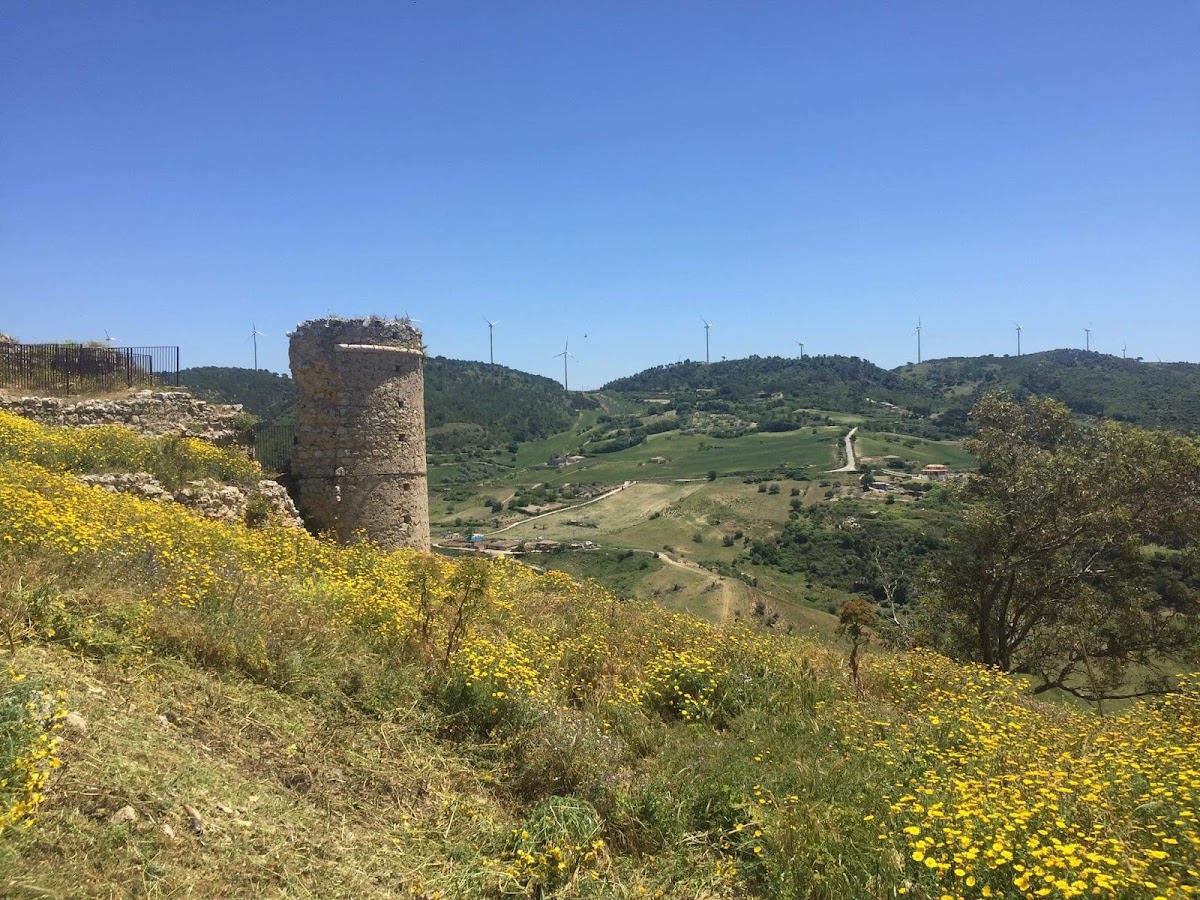
The ruins of Santapau Castle spread across a pentagonal layout constructed on uneven, rocky terrain. This positioning results in noticeable height differences within the site. The fortification included six round towers, two of which stand side by side to reinforce the main entrance situated at the highest point of the site. These features illustrate the castle’s original purpose of strong defense.
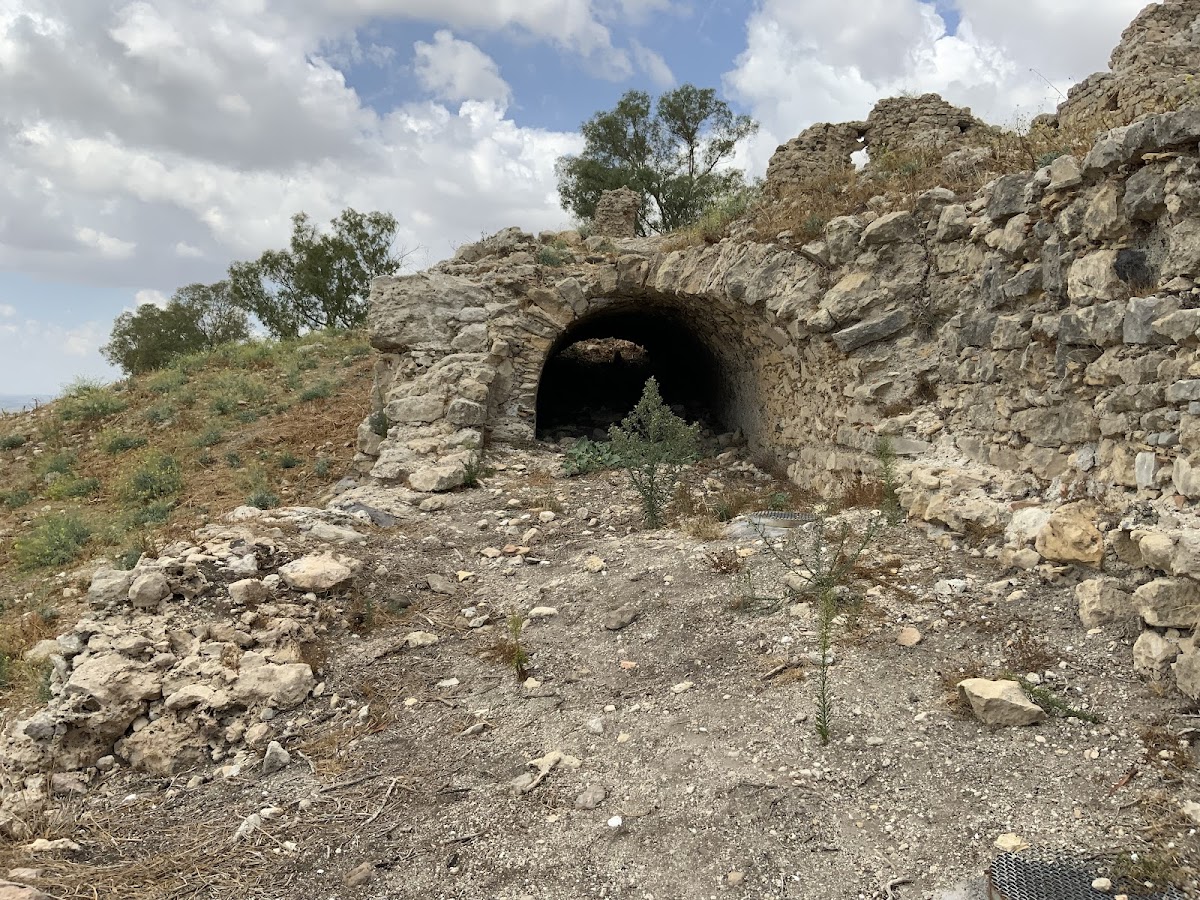
Surrounding the castle is a massive system of walls and lookout towers built to hinder attacks from lower ground. The surviving walls and towers continue to convey the imposing character of the fortress. The site also contains extensive subterranean elements, such as vaulted chambers and galleries beneath the surface, which were constructed using masonry techniques characteristic of the late Roman and Byzantine eras.
Due to the collapse of some galleries and the accumulation of rubble over time, the precise uses of many internal rooms remain uncertain. However, the existing underground structures further reflect the complex and purposeful design of the fortress in its early stages.
Today, these remains exist as a visible record of the castle’s architectural and defensive significance and continue to illustrate the multi-layered history embedded in the site’s construction and use.
Nearby sites