Donnafugata Castle: A Neo-Gothic and Neoclassical Noble Residence in Sicily


Site at a Glance
- Rating
- 4.5
- Popularity
- High
- Country
- Italy
- Primary era
- Modern
- Eras represented
- Early Modern, Modern
- Civilizations
- Italian, Kingdom of Sicily, Spanish
- Site type
- Domestic
- Remains
- Castle
On this page13 sections
History
Early traditions and the feudal estate
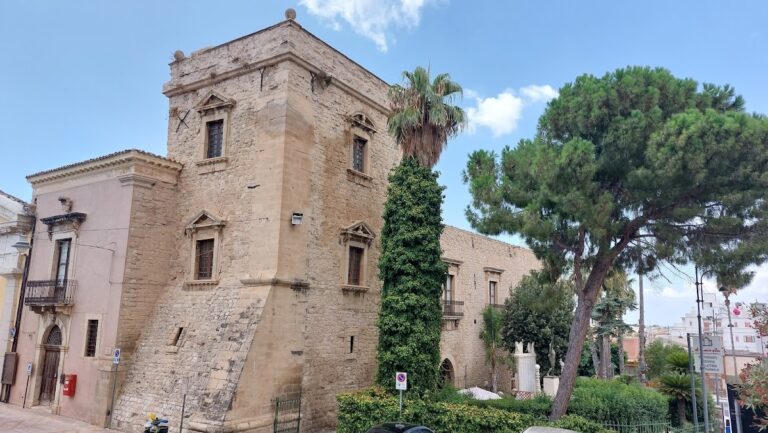
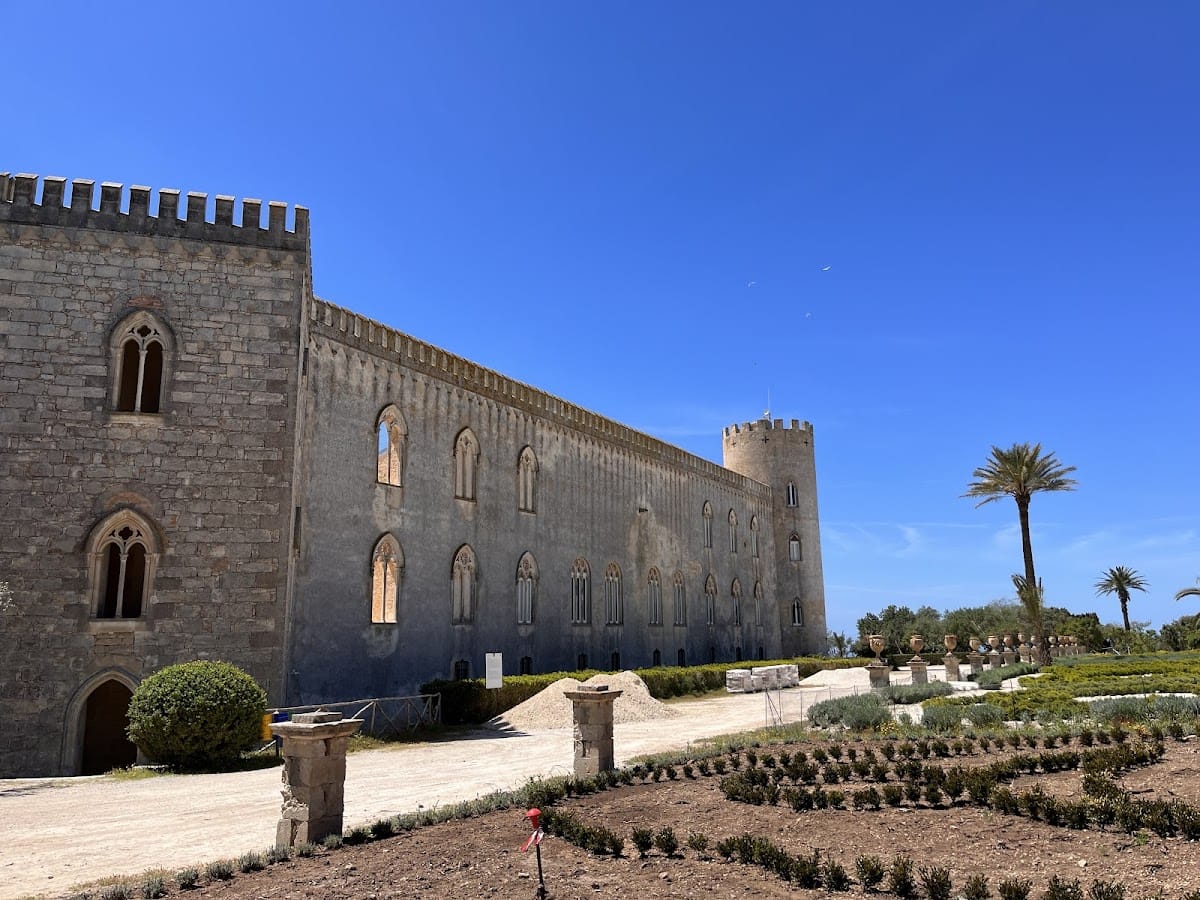
Donnafugata Castle is a historic noble residence in Italy, in the territory of Ragusa, Sicily. Although tradition connects the site with the fourteenth century, the present building is principally a late-nineteenth-century estate combining Neo-Gothic forms, which revive medieval architectural features, with neoclassical design.
The earliest construction is traditionally attributed to the Chiaramonte, the powerful Sicilian family that held the county of Modica during the late medieval period. It may have been built over a thirteenth-century tower, but the castle’s history before the eighteenth century has no firm confirmation. Its supposed connection with Bernardo Cabrera and a fifteenth-century episode involving Bianca of Navarre belongs chiefly to a later legend. Cabrera, remembered in this tradition as a senior judicial and administrative official of the Kingdom of Sicily, is said to have confined the queen while seeking to marry her and claim the Sicilian crown. The building, however, postdates the events associated with this story.
In 1648, the Donnafugata Bellio-Cabrera feudal estate, a landed property controlled by a noble family and often containing agricultural or fortified facilities, was acquired by Vincenzo Arezzo-La Rocca, Baron of Serri or Serre. He converted it into a fortified farm. The property later developed first into a neoclassical country residence and then into the Neo-Gothic castle seen today.
The nineteenth-century residence
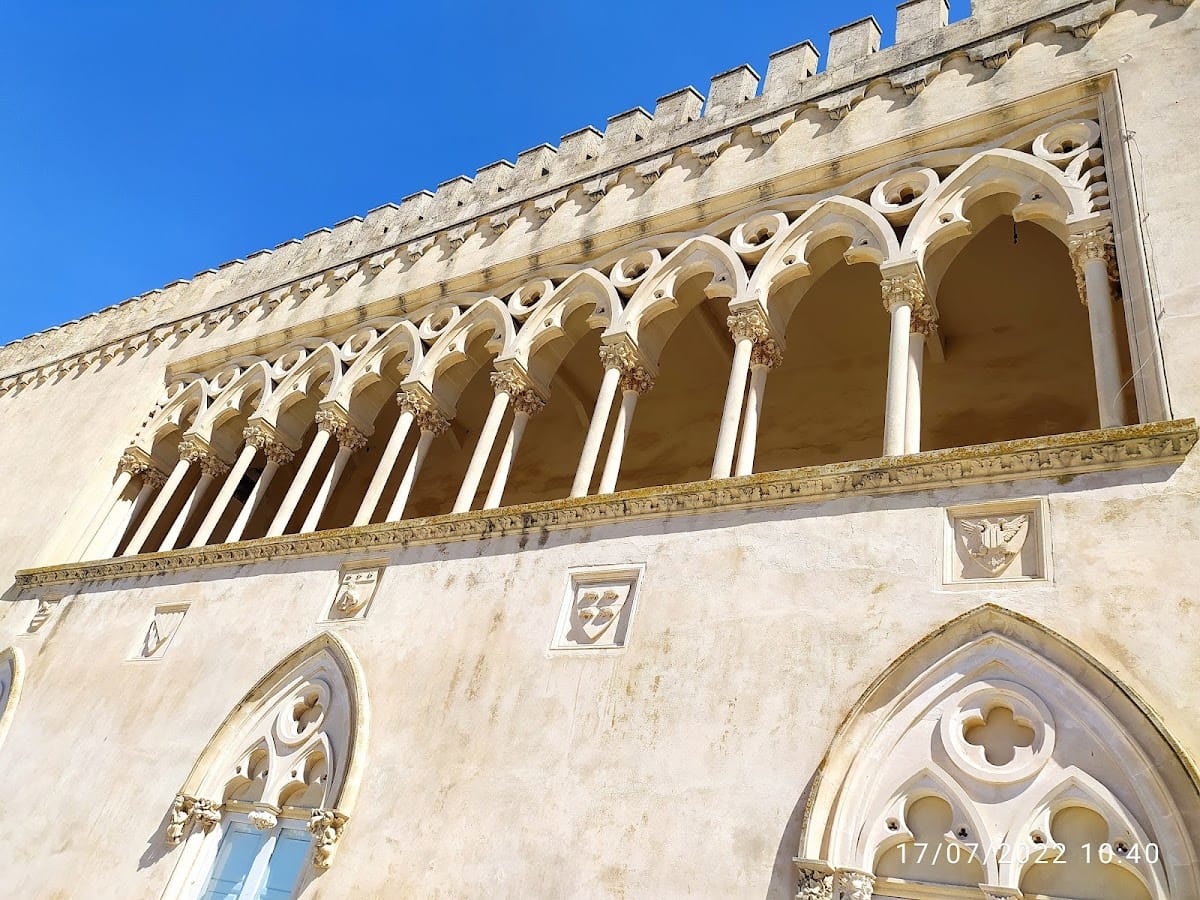
Most of the existing construction dates from the nineteenth century and is associated with Baron Corrado Arezzo de Spuches. A scholar, politician, philanthropist, and connoisseur of the arts, he added the loggia on the principal façade, whose elegant trefoil arches became a defining feature of the residence.
The estate passed through several generations of inheritance before reaching Clementina Paternò di Manganelli, widow of Viscount Gaetano Combes de Lestrade. Later matrimonial and succession connections linked the residence with the Sicilian branch of the Grasso family, traditionally known as the Grasso of Donnafugata or the Grasso Princes of Donnafugata. Corrado Arezzo de Spuches and Viscount Combes de Lestrade both lived at the residence; Combes de Lestrade is described as a diplomat, historian, and sociologist.
Name, legend, and modern preservation
The name Donnafugata has several proposed explanations. One derives it from the Arabic Ayn al-Sihhat, meaning “Source of Health,” later adapted linguistically in Sicilian as Ronnafuata. Another connects it with the idea of an “escaped woman,” referring to the Bianca of Navarre legend. A separate tradition associates the name with Maria Carolina, queen of Ferdinand IV, who was reportedly held under house arrest from 1811 to 1816 at the Santa Margherita di Belice palace on the orders of Lord William Bentinck, the British military governor of Sicily. Neither tradition provides a confirmed explanation for the castle’s name or early history.
After years of neglect and abandonment, the Municipality of Ragusa purchased the castle in 1982. Extensive restoration subsequently made the residence usable again and secured the surviving building and park as a historical complex.
Remains
Main residence
Donnafugata Castle is an imposing three-storey residence covering more than 7,500 square metres and crowned by two lateral towers. Its eclectic architecture combines Neo-Gothic and neoclassical elements. A monumental staircase made from local pitchstone leads into the building. This dark stone is characteristic of the Ragusa area, which is rich in bitumen and mineral oil.
Rooms and interior decoration
The castle contains more than 120 rooms, many of which retain period furnishings and original furniture. Each room was arranged for a distinct function and given its own decorative scheme. The music room includes trompe-l’oeil paintings, a technique that creates the illusion of three-dimensional objects or architectural elements.
Reception halls
The large Hall of Coats of Arms displays the blazons of Sicilian noble families together with two antique suits of armour. In the Hall of Mirrors, stucco decoration covers the interior. The picture gallery contains neoclassical paintings associated with the school of Luca Giordano.
Bishop’s Apartment and the Navarre bedroom
The so-called Bishop’s Apartment contains Boulle furniture, a highly decorated French style using contrasting veneers, metal, and tortoiseshell effects. It was reserved for a high-ranking prelate identified as a member of the Arezzo family in the eighteenth century.
A bedroom traditionally identified with the Princess of Navarre remains associated with the Bianca of Navarre legend. Its attribution is chronologically implausible, but the room preserves the connection between the interior and the story attached to the castle.
Monumental park
An extensive monumental park surrounds the castle and covers approximately eight hectares. It formerly contained more than 1,500 plant species, along with a circular temple, a coffee house, and artificial grottoes with false stalactites beneath the temple. These features formed part of a landscaped setting designed to entertain guests.
Dry-stone labyrinth
The park’s dry-stone labyrinth is built from white Ragusan stone, fitted without mortar, and follows a trapezoidal layout modelled on the English labyrinth at Hampton Court. A stone soldier stands at its entrance. Climbing rose hedges once blocked views across the paths and prevented visitors from climbing over the walls.
Playful devices and other features
Several playful devices were commissioned by Baron Corrado Arezzo. One consisted of a sprinkler hidden beneath a seat and activated when someone sat down. Another was connected with a chapel at the far end of the park and released a cloth monk when the chapel was opened. These devices are currently inactive. Empty tombs were also installed as a legendary means of frightening young women.
Entrance ficus
The large ficus at the park entrance has leaves that could be detached and mailed as postcards, adding another unusual designed feature to the estate’s landscaped grounds.
Nearby sites