Vilbel Castle: A Medieval Water Castle in Bad Vilbel, Germany


Visitor Information
Google Rating: 4.6
Popularity: Low
Official Website: www.kultur-bad-vilbel.de
Country: Germany
Civilization: Unclassified
Site type: Military
Remains: Castle

History
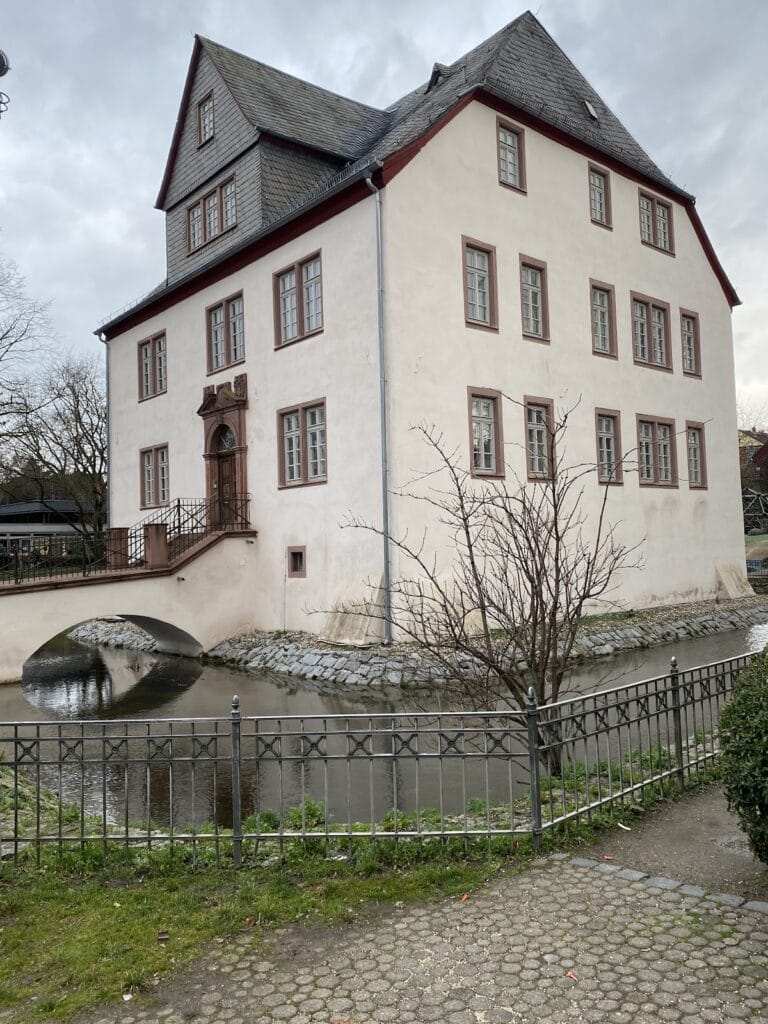
Vilbel Castle is situated in the town of Bad Vilbel, Germany. It was established by medieval Germanic builders on the banks of the Nidda River, reflecting regional defensive architecture typical of the Middle Ages.
The earliest known reference to this site dates back to 774, when a donation document mentioned the location in connection with Lorsch Abbey. Initially, the site likely hosted a motte-and-bailey fortification — a type of castle built with a raised earth mound (motte) and enclosed courtyard (bailey). During the 12th and 13th centuries, the present stone water castle was constructed directly on the Nidda River, possibly replacing the earlier wooden structure. This design positioned the castle amid water defenses, enhancing its protection.
In 1399, Vilbel Castle underwent a major conflict when it was attacked and demolished by Counts Ulrich V of Hanau and Philipp of Falkenstein. This military action responded to the exploits of Bechtram V of Vilbel, the castle’s lord, who had engaged in robberies in the region. Following his capture, Bechtram was executed in 1420. Reconstruction of the castle took place between 1409 and 1414, restoring its role as a fortified residence.
Ownership of the castle passed to the Eppstein family in 1503. Later, from 1590 until the early 19th century, Vilbel Castle served as an administrative center for the Electorate of Mainz. During this period, the castle saw multiple renovations and improvements to its defensive structures, notably in the 16th and 18th centuries.
The castle’s military role ended dramatically in 1796 when French revolutionary troops, led by General Jean-Baptiste Kléber, caused significant damage during the Battle of Friedberg. After this event, the castle remained in a ruined state.
In the mid-20th century, the local municipality of Bad Vilbel acquired the site in 1955. The ruin served as a location for a museum dedicated to local history and well technology until 2017. From 1987 onwards, the courtyard of the castle has been used as a venue for annual theatrical festivals known as Burgfestspiele. Most recently, in July 2024, part of a castle wall collapsed on the less publicly accessible side, and repairs are planned to follow the festival season. Vilbel Castle is now recognized as a protected cultural landmark in Hesse, notable for being a rare surviving example of a water castle from the 15th century in the area.
Remains
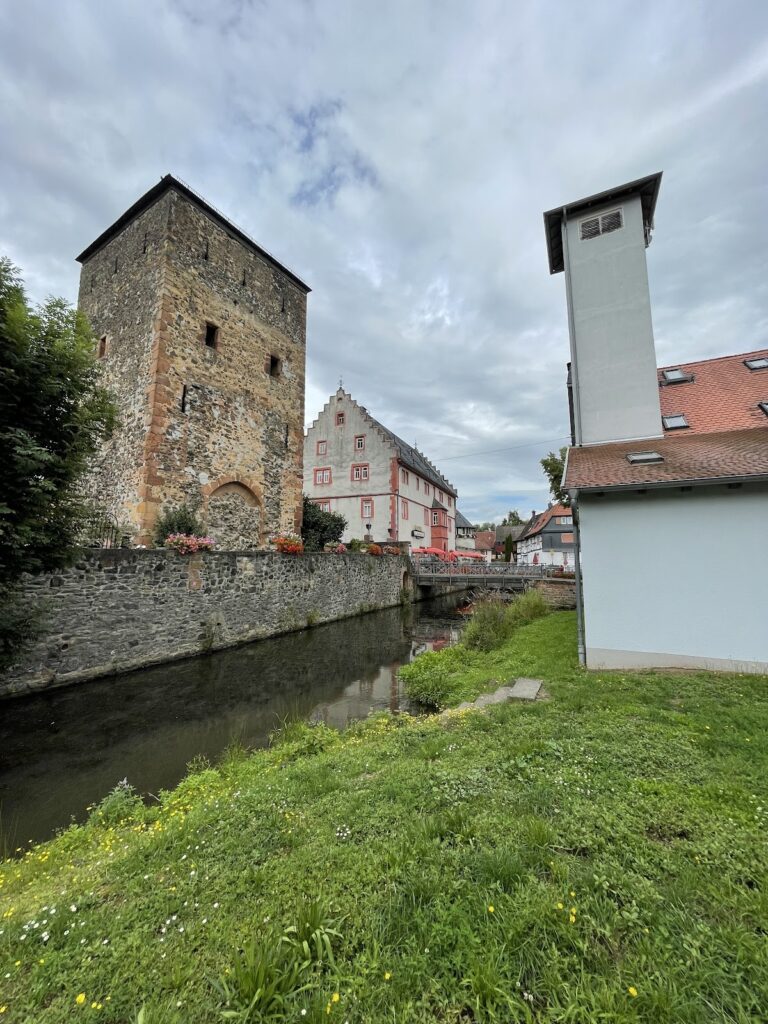
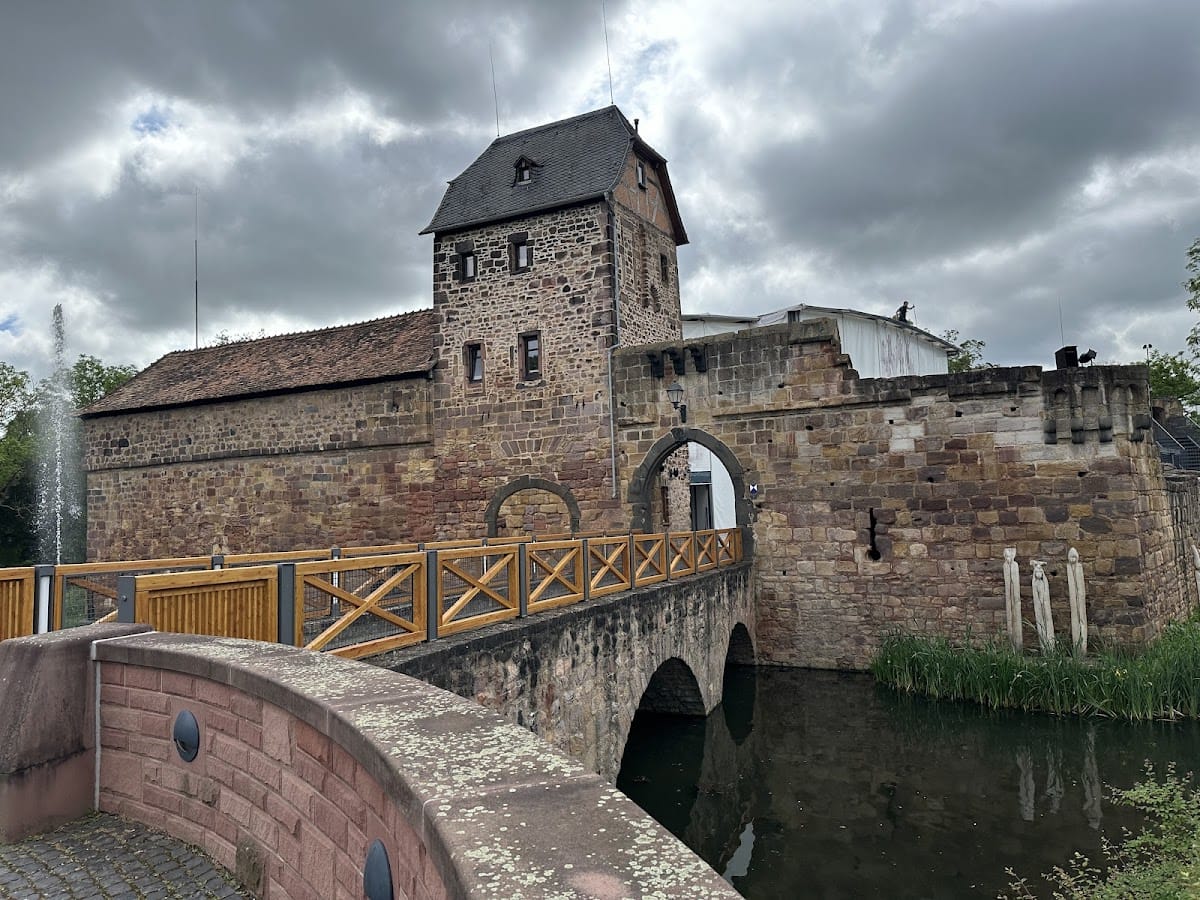
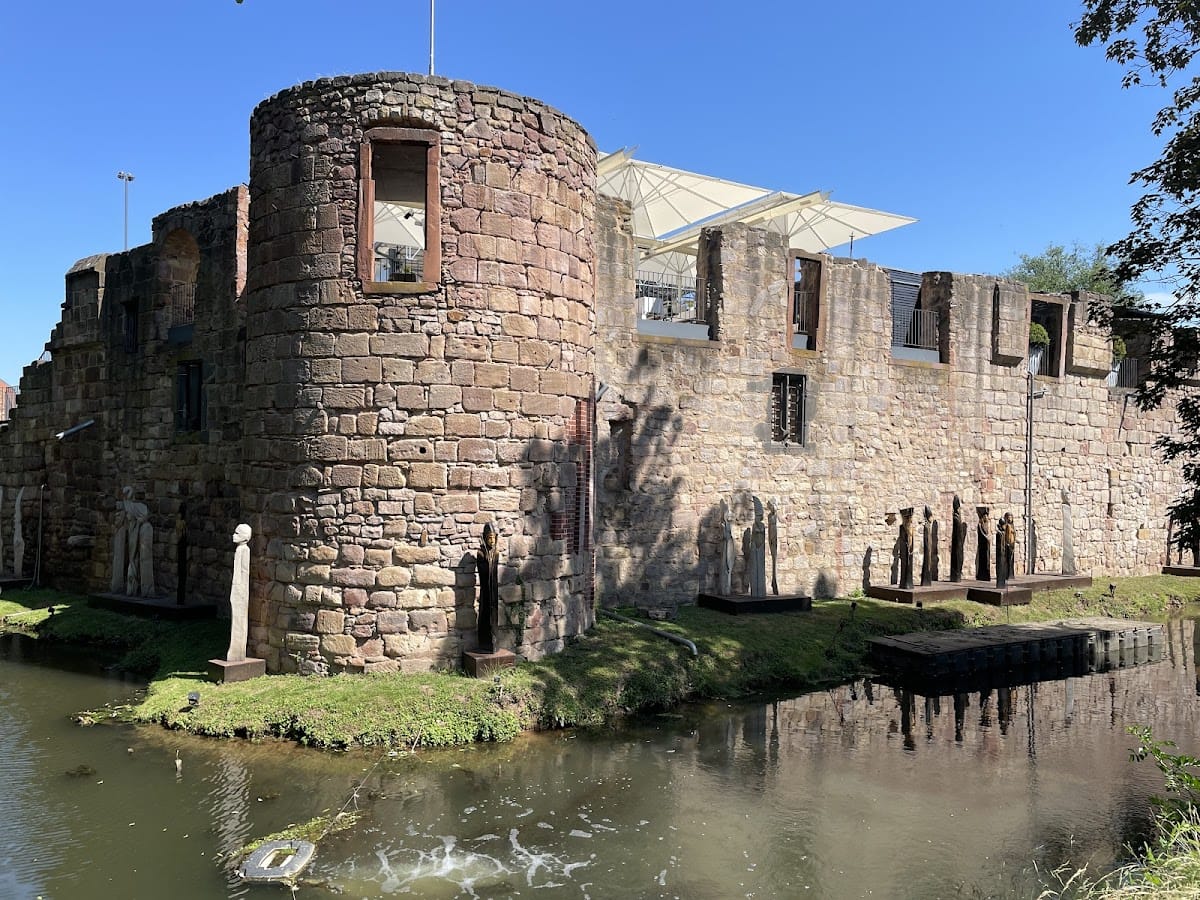
Vilbel Castle’s remains illustrate its design as a water castle built alongside the Nidda River. The structure originally included a moat, a water-filled defensive ditch, which today remains intact and filled with water. Interestingly, medieval records indicate the moat was typically kept dry and only flooded when needed, a strategy that allowed control over its defensive capabilities. In 2006, the moat was re-flooded, which led to damage in the stone masonry and required substantial conservation work to preserve the walls.
The ruins include masonry walls composed of historic stonework that once enclosed the castle grounds and provided fortified defense. The surviving walls are fragmentary but still reveal the castle’s layout and scale. In 2024, heavy rainfall caused part of a corner wall on the more secluded side of the site to collapse, a reminder of the fragility of the structure after centuries of exposure.
The castle’s internal courtyard survives and continues to be used as an open space, serving as the site for cultural activities today. While no decorative elements or inscriptions have been documented, the masonry and water defenses remain visible markers of the site’s medieval origins and later modifications.
Overall, Vilbel Castle stands as a distinctive example of a water castle with its moat and wall remains offering insights into construction and defensive methods from the medieval period through its later adaptations before its ruinous state following the late 18th century battle damage.
Nearby sites