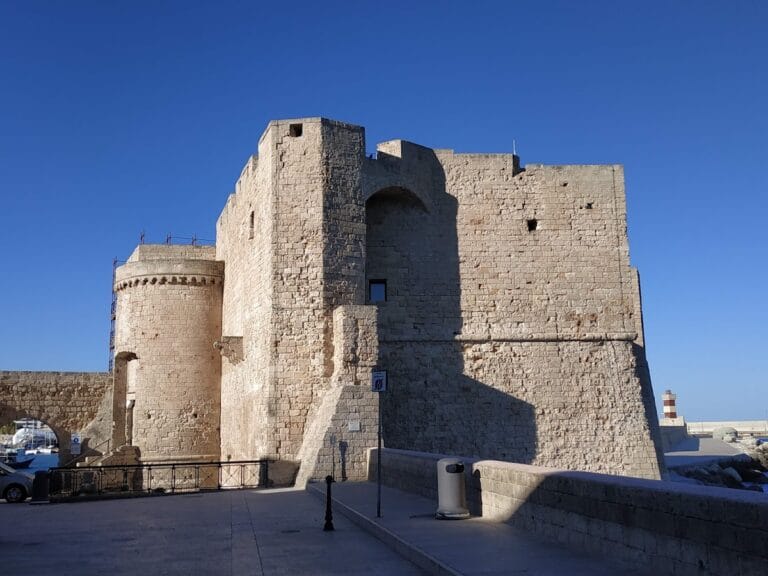
Conversano Castle: A Norman Fortress and Aristocratic Residence in Italy


Site at a Glance
- Rating
- 4.6
- Popularity
- Medium
- Country
- Italy
- Primary era
- Medieval
- Eras represented
- Medieval, Early Modern, Modern
- Civilizations
- Kingdom of Naples, Norman, Spanish
- Site type
- Military
- Remains
- Castle
On this page14 sections
History
Conversano Castle is a Norman fortress and aristocratic residence in Conversano, Italy, reconstructed in the eleventh century over earlier defensive remains. Its military history began on a site that may already have held a building during the Gothic War, the sixth-century conflict between the Eastern Roman Empire and the Ostrogothic kingdom in Italy. The Norman phase incorporated parts of the megalithic walls of the ancient city of Norba and established the castle’s long association with the Hauteville family, a Norman dynasty that created lordships in southern Italy and Sicily.
Norman foundations and the counts
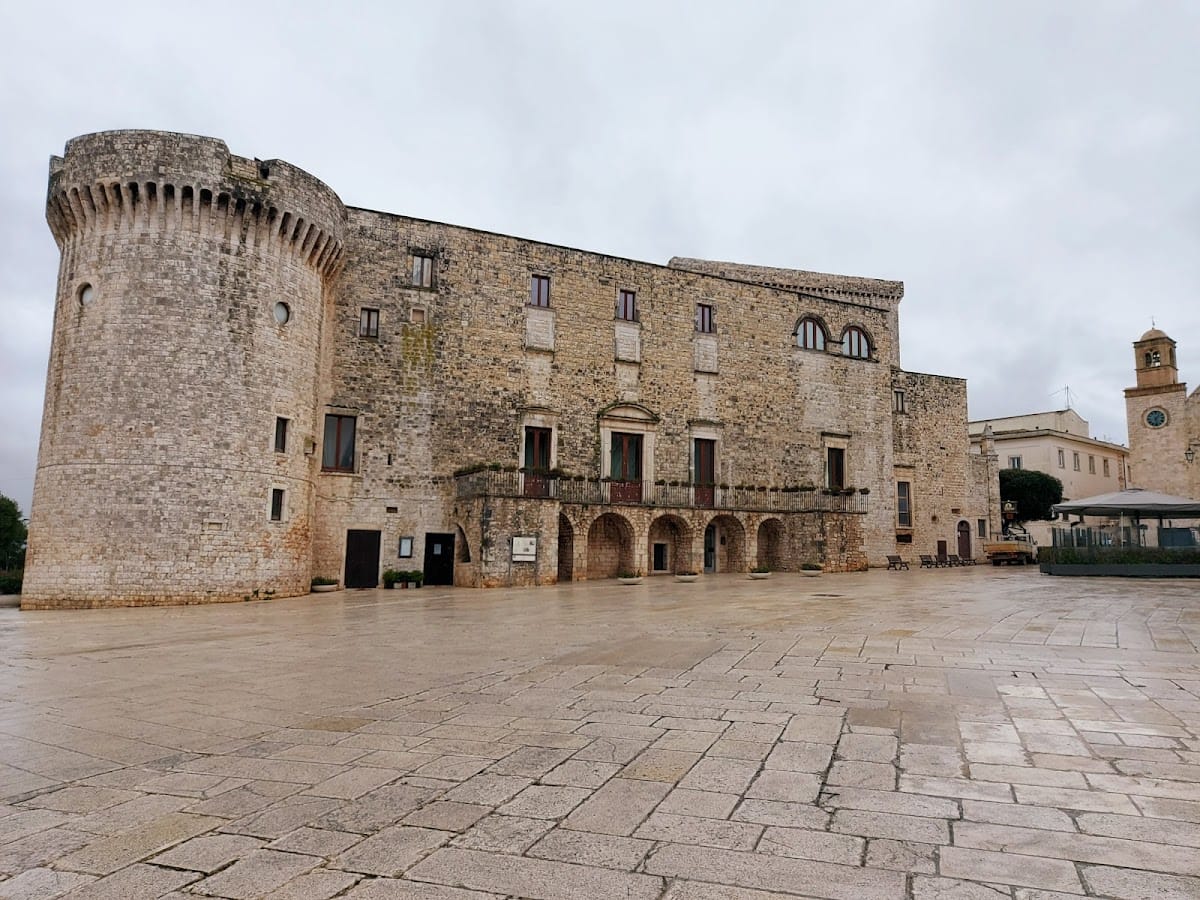
From the Norman period onward, the castle served for almost seven centuries as the residence of the Counts of Conversano, feudal rulers whose title and authority were linked to the town. Major medieval and Renaissance expansions enlarged the original stronghold. A high circular tower was added on the northern side during the later medieval period. Tradition attributed this work to the Counts of Luxembourg, while heraldic evidence connects it with the Del Balzo-Orsini-Acquaviva lineage and Giulio Antonio Acquaviva.
The castle’s original military character gradually changed as its owners adapted it into an aristocratic residence. Alterations during the fifteenth and seventeenth centuries reshaped the complex, while the Acquaviva family strengthened its defenses in response to the development of artillery warfare.
The Acquaviva period
The polygonal defensive tower was added during the later fifteenth century under Count Andrea Matteo Acquaviva, who ruled Conversano from 1481 to 1511 after succeeding Giulio Antonio Acquaviva. Political conflict soon tested the castle’s defenses. After Andrea Matteo sided with the French, Spanish troops commanded by Gonzalo Fernández de Córdoba besieged and captured Conversano in 1503.
In the seventeenth century, Count Giangirolamo II Acquaviva d’Aragona invited Paolo Domenico Finoglio, a Neapolitan painter, to Conversano. Between 1642 and 1645, the count commissioned Finoglio’s extensive cycle based on Jerusalem Delivered, Torquato Tasso’s epic poem about the First Crusade. The paintings were intended to enhance the authority and prestige of the Acquaviva house, reinforcing the castle’s transformation from a military stronghold into a noble residence.
Baroque alterations and modern use
Countess Dorotea Acquaviva commissioned the present entrance and related works in 1710. The monumental late-Baroque portal marked a later phase in the castle’s development, while construction continued through the late nineteenth century. These changes added to a complex whose medieval defensive elements remained combined with residential and ceremonial spaces.
After a series of restorations, part of the castle became the municipal art gallery. Ownership remains divided between public and private interests. The municipality of Conversano holds the public section, while some wings, including the bridal chamber, remain privately owned. The castle is identified as a medieval military structure and is in fair condition.
Remains
Conversano Castle has a trapezoidal plan and occupies the highest point of the hill on which Conversano stands, overlooking the surrounding territory toward the sea. It borders Largo della Corte, a large irregular square historically associated with the civic life of the city. Limestone forms the main building material, and the complex combines an eleventh- or twelfth-century fortified core with later towers, entrances, courtyards, apartments, and gallery spaces.
Norman core and medieval towers
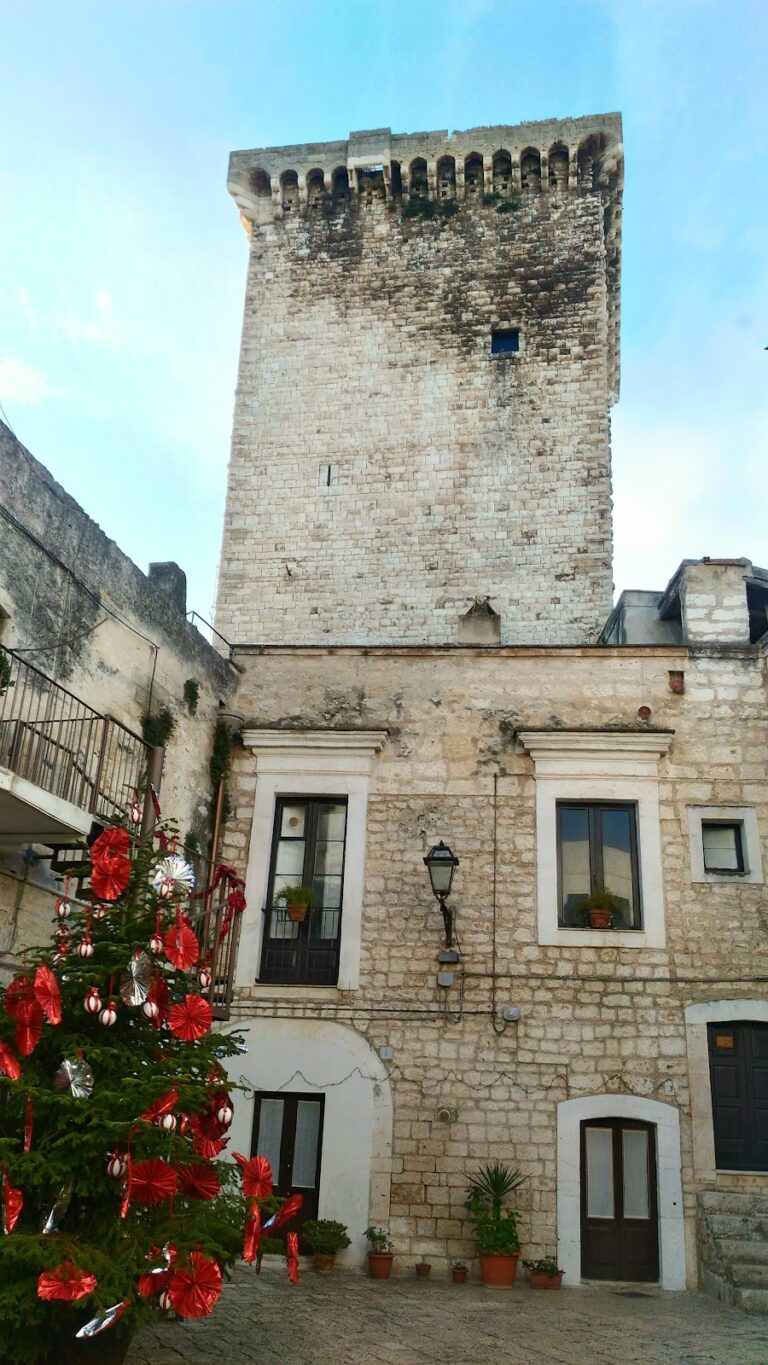
Torre Maestra
The oldest surviving elements include three massive square towers dating from the eleventh or twelfth centuries. The Torre Maestra, or Main Tower, belongs to the Norman phase and rises over pre-existing megalithic walls, sections of which remain visible. Approximately 25 metres high, it carries a terrace overlooking the surrounding landscape. Its first room contains a well linked to a local legend in which a figure known as Guercio threw women who refused the droit du seigneur into it. The original Norman core also preserves a fresco of Saints Cosmas and Damian on the entrance vault, together with surviving ogival and circular windows elsewhere in the complex.
Northern cylindrical tower
A large cylindrical tower stands at the northern corner, where the acropolis ridge becomes steeper. It may have replaced an earlier square tower whose traces survive in the castle plan. Several levels divide the tower, which functioned as an external defensive rampart. Its parapet is supported by corbels, and later openings were made in the parapet for cannons. High on the wall, an emblem combines the arms of the Acquaviva and Orsini families.
Artillery defenses and entrance works
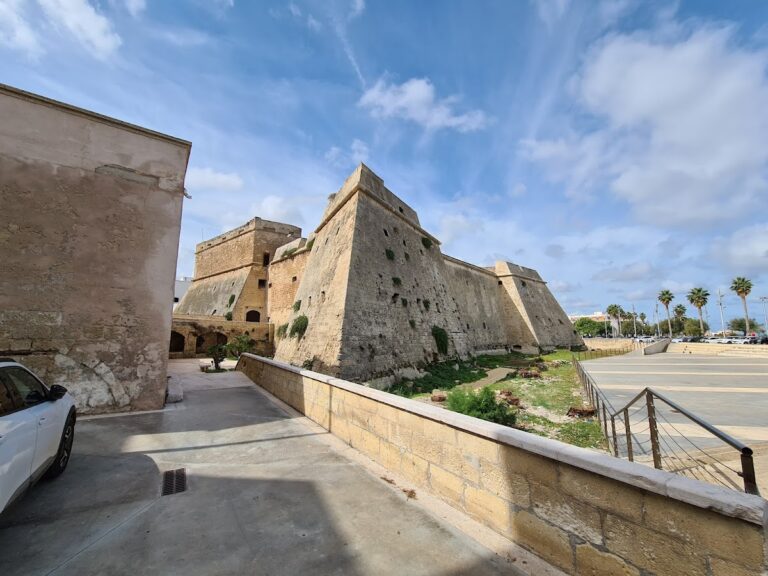
Polygonal tower
The polygonal tower has twelve sides and a comparatively low, compact form. Its lower wall is an inclined scarpa, a sloping defensive base designed to make artillery attacks more difficult and deflect projectiles. Narrow openings along the sides accommodated gun muzzles, while further guns could be positioned at the top and fired through breaks above the parapet. Inside, a round cistern is surrounded by a corridor fitted with drains. Two raised courses of masonry are associated with the tower’s late-fifteenth-century construction.
Entrance and inner court
The present entrance opens onto Piazza della Conciliazione rather than Piazza Castello. Built in 1710, its monumental late-Baroque portal is set directly into the wall. It leads into an inner courtyard with a portico and loggia on two sides and gives access to a late-Renaissance porch. An internal gallery runs around the atrium, linking the entrance area with the castle’s residential spaces.
Residential interiors and paintings
Lordly apartments and bridal chamber
Some rooms in the former lordly apartments retain furnishings from the sixteenth and seventeenth centuries. The privately owned bridal chamber contains scenes from the Old Testament painted by Paolo Domenico Finoglio, preserving part of the decorative program created for the Acquaviva residence.
Municipal art gallery
The municipal art gallery occupies part of the castle and displays Finoglio’s large paintings illustrating episodes from Jerusalem Delivered. The gallery therefore remains integrated into the historic complex, while the castle as a whole continues to include both publicly held areas and privately owned wings.