Château de Lordat: Medieval Feudal Castle in France


Site at a Glance
- Rating
- 4.4
- Popularity
- Low
- Country
- France
- Primary era
- Medieval
- External website
- Open
- Eras represented
- Medieval
- Civilizations
- Unclassified
- Site type
- Military
- Remains
- Castle
On this page12 sections
History
Château de Lordat is a medieval fortress in Lordat, France, whose construction probably dates to the ninth or tenth century. It is one of the oldest and largest feudal castles of the upper County of Foix and represents medieval military architecture in the Ariège Pyrenees. A local tradition places an earlier fortress here in the Roman period and attributes its commission to Crassus, described as Caesar’s lieutenant.
Early medieval origins
Lordat was first recorded in 970 as the administrative center of a ministerium, an early medieval administrative district. A castrum, meaning a fortified settlement or castle complex, was mentioned at the site in the eleventh century. These references place Lordat within the developing network of fortified lordships that controlled the upper Ariège landscape.
The site was associated with the counts of Carcassonne before entering the sphere of the counts of Foix. In 1034, Bernard, Count of Carcassonne, ceded Lordat to his younger son Roger, who became the first Count of Foix. In 1229, the Count of Foix surrendered Lordat and other strongholds to the king of France under the Treaty of Meaux.
Cathar occupation and royal control
Around 1244, during the Albigensian Crusade, a campaign in southern France against the Cathars, Château de Lordat was occupied by Cathars. The Cathars belonged to a Christian dissident movement persecuted by the Catholic Church. At the end of the thirteenth century, the king of Aragon seized the castle and demanded its destruction.
Abandonment and preservation
The Lordat family remained influential with the counts of Foix for a long period, but the castle was abandoned during the Wars of Religion. In 1582, Henry IV ordered its dismantling, after which it progressively fell into ruin. A description from 1672 called the castle ruined and abandoned and recalled its earlier use as a prison for “libertines and other people of bad life.”
The Lordat family appears to have retained ownership of the lands of the Lordadais until at least the nineteenth century. An anecdote preserved in a 1896 account by the Barbe family concerns three Lordat brothers, known by the nicknames Lordat-Mass, Lordat-Horse, and Lordat-Visit. In the story, Lordat-Visit hid inside an old clock to evade the father of a young woman.
Château de Lordat was classified as a French historic monument on 18 September 1923. Its owners signed an emphyteutic lease with the Communauté de communes des Vallées d’Ax on 23 March 1996. This type of long-term lease grants use and management rights while ownership remains with another party, and the agreement was later extended.
Consolidation and enhancement works began in 1999. From 2001, the Communauté de communes des Vallées d’Ax carried out masonry “crystallization,” a conservation method that stabilizes existing walls and ruins without fully rebuilding them. A specialist assessment in 2012 and 2013 led to further plans to secure and preserve the enclosure. Work in 2015 focused on the southern postern, residential buildings, inner gate, and open-backed tower. After the end of the birds-of-prey demonstration activity held from 2002 to 2015, the castle was reoriented in 2016 as a cultural and heritage site in the Ariège valley.
Remains
Promontory and defensive layout
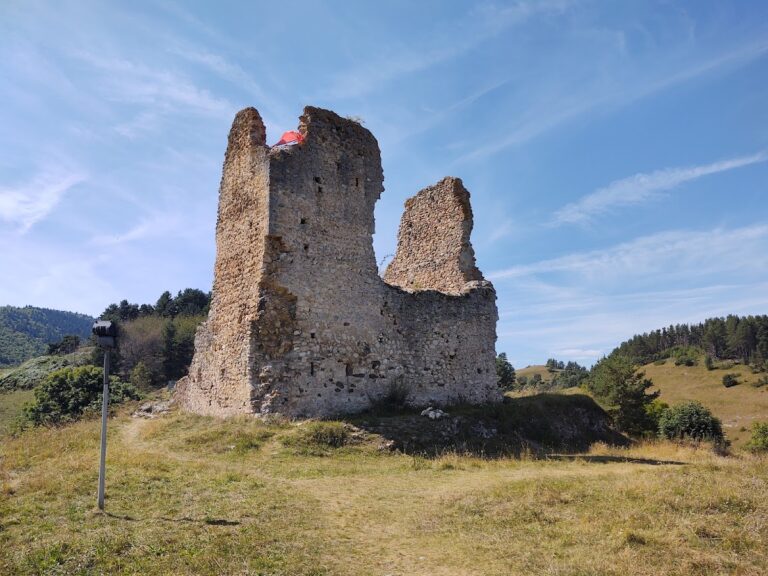
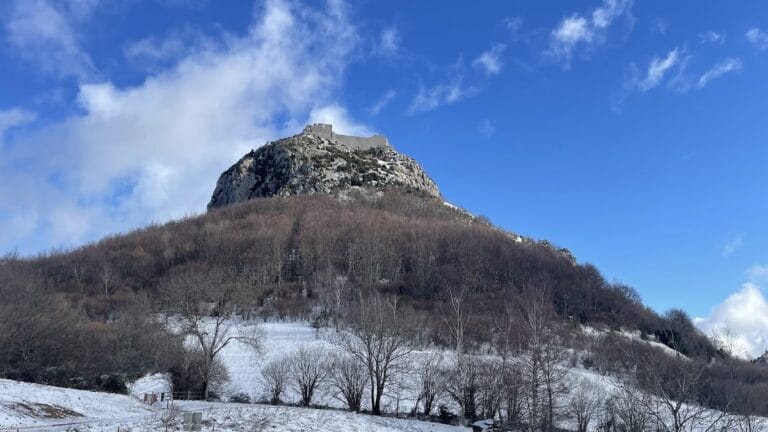
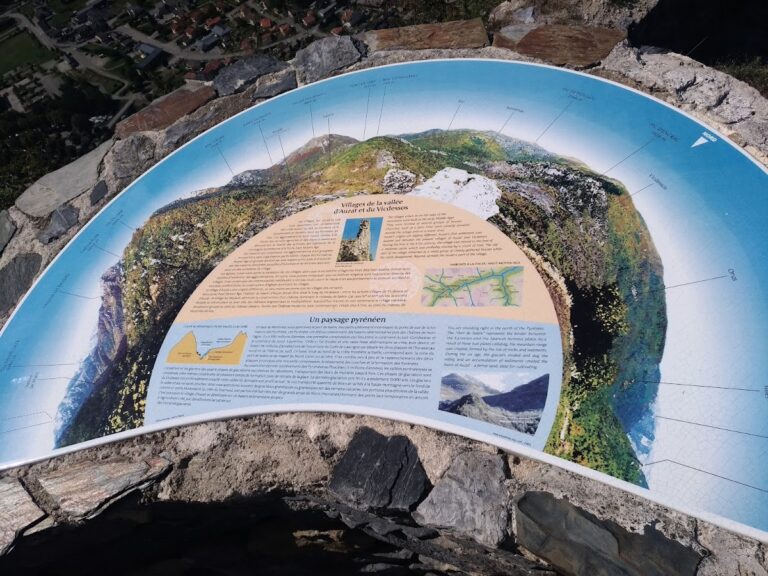
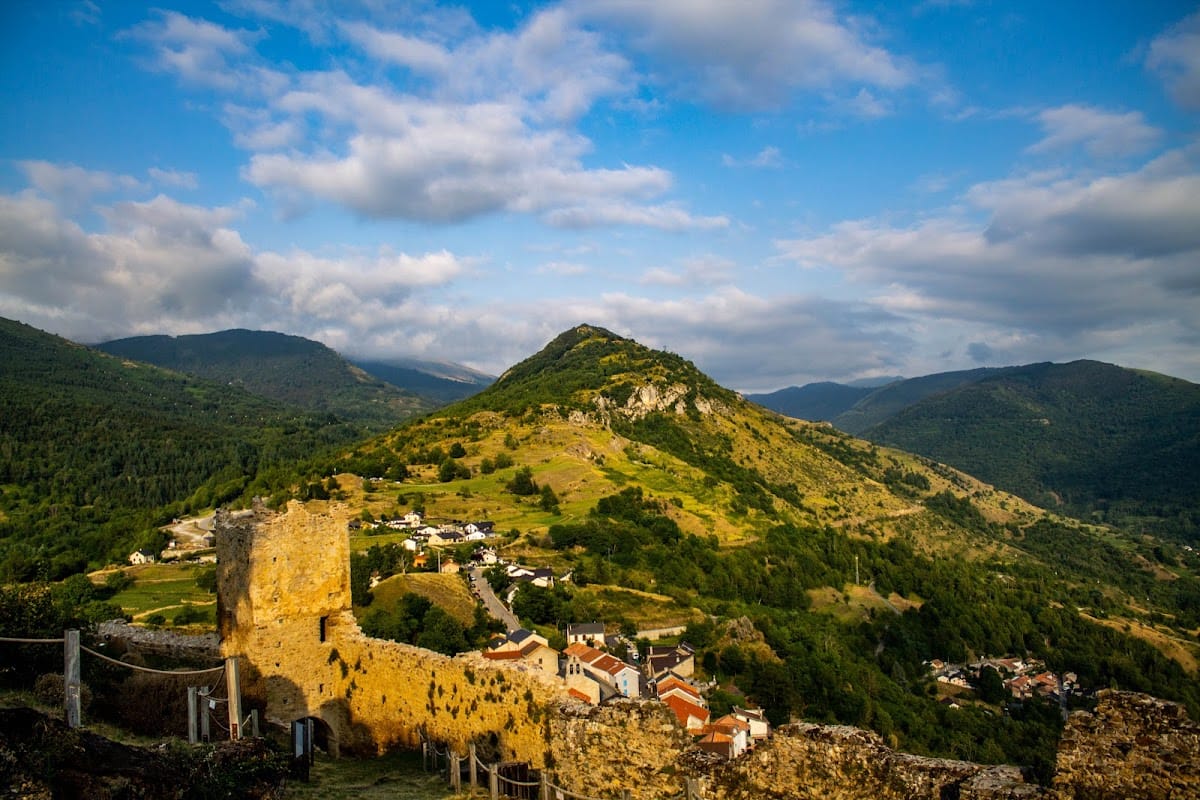
The castle survives as a ruin on a strategic limestone promontory 965 metres above sea level. Its walls overlook the Sabarthès, or upper Ariège valley, from a height of about 400 metres. The fortress follows the shape of the mountain in an elliptical plan about 100 metres long and 65 metres wide, covering approximately 5,500 square metres. The northern and western approaches are described as impossible, while the eastern side is bordered by the remains of a thick wall built from very large blocks.
Enclosures and entrances
Eastern defenses
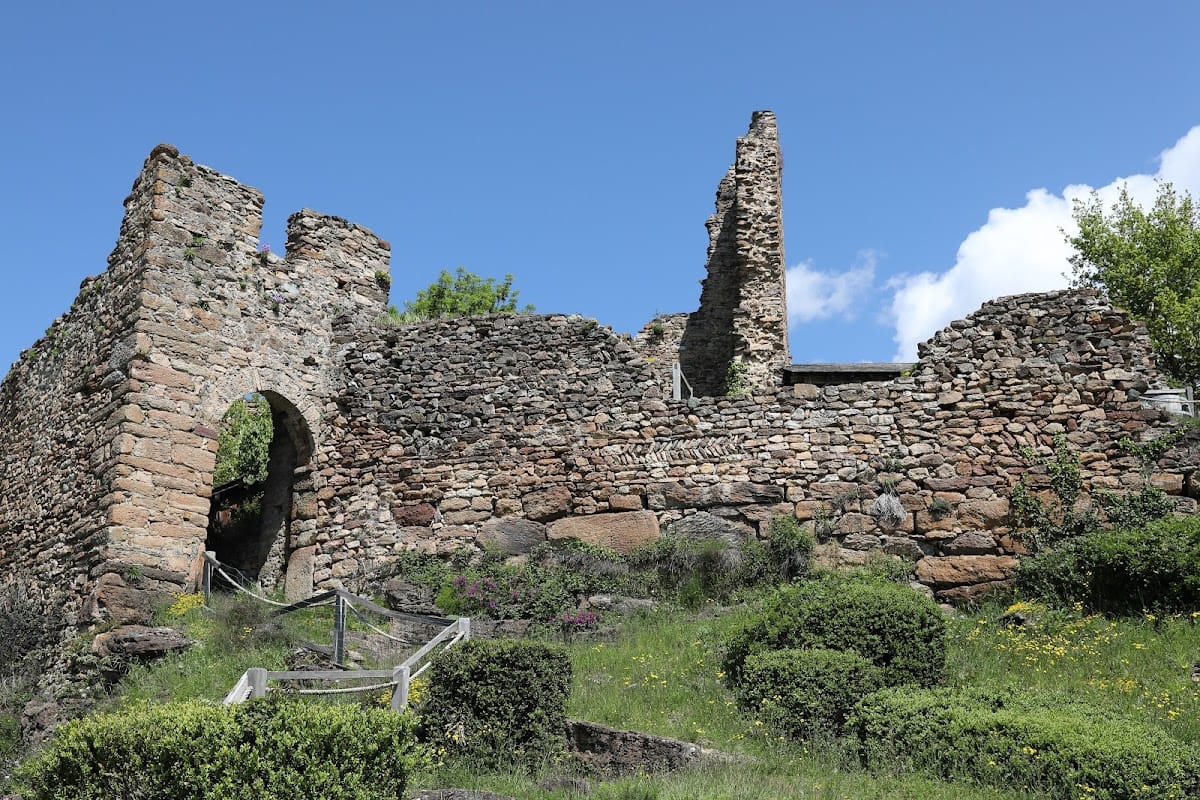
Two defensive enclosures protect the eastern side of the fortress. The first links two eastern towers and includes opus spicatum, a masonry technique in which stones or bricks are arranged in a herringbone pattern. This work survives from roughly three or four metres above ground level.
Gates and passages
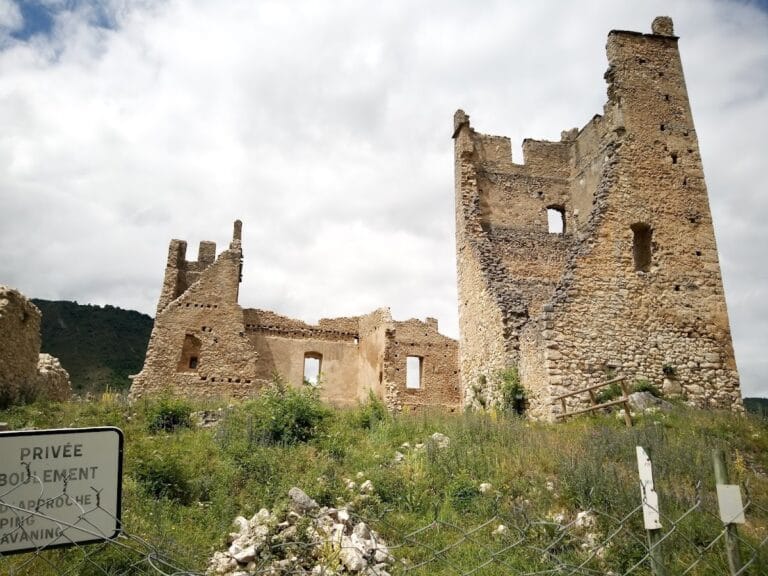
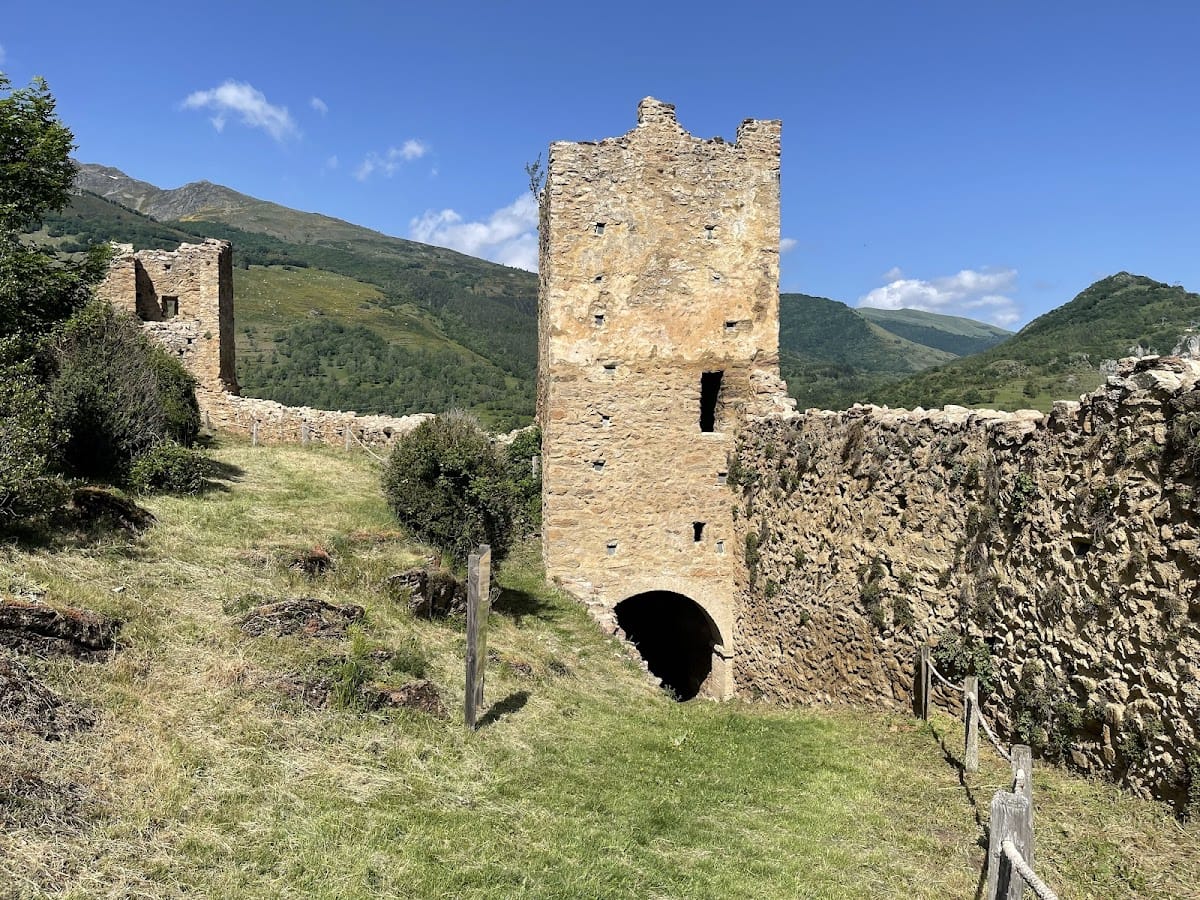
On the northern side, the first enclosure joins and merges with the second above a cliff more than 50 metres high. The entrances to both enclosures pass through towers and contain zigzagging defensive passages, or chicanes. The square tower protecting the entrance retains its original appearance. The southern postern, inner gate, and open-backed tower were consolidated during the work carried out in 2015.
Interior buildings
Northern residential buildings
Inside the northern enclosure are the remains of a cistern and several residential buildings. The walls of these domestic structures contained openings with horseshoe-shaped arches, linking the surviving residences to the defensive framework around them.
Central keep and surrounding buildings
At the center of the fortress are the remains of four buildings beside the keep. The keep itself had four storeys and the thickest walls in the entire fortress, making it the most heavily built element of the surviving central group.