Chřenovice: A Gothic Bergfried Castle Ruin in Czechia
Site at a Glance
- Rating
- 4.5
- Popularity
- Low
- Country
- Czechia
- Primary era
- Medieval
- External website
- Open
- Eras represented
- Medieval
- Civilizations
- Holy Roman Empire, Kingdom of Bohemia
- Site type
- Military
- Remains
- Castle
On this page6 sections
History
Chřenovice is a Gothic castle ruin in Czechia, founded before 1289, probably around 1280, by Léva of Janovice. Its position above the Sázava River made it a fortified medieval seat, and its defensive system was strengthened during the fifteenth century.
Foundation and Medieval Owners
After the middle of the fourteenth century, Chřenovice belonged to the brothers Milota and Bernart of Chřenovice. The Lords of Janovice, the Zručtí of Chřenovice, and the Lords of Říčany later held the castle. These changing owners connected it with several noble families active in the region.
At the beginning of the fifteenth century, the Prague burgher Hanuš Otlinger acquired Chřenovice. Soon after 1414, he sold it to the Kutná Hora burgher Kunrát Náz. Kunrát’s family remained associated with the castle for several decades, and Jan Náz of Chřenovice, its last recorded descendant there, is mentioned in 1474. Around that time, he sold the castle to the Lords of Říčany.
Reconstruction and Abandonment
The castle was reconstructed during the fifteenth century, when its defenses were reinforced by an advanced bastion. After the Lords of Říčany incorporated Chřenovice into their Ledeč estate, the castle was abandoned. It was listed as deserted in 1545 and subsequently survived as a ruin.
In the modern period, the remains were damaged during the construction of a dance floor. Chřenovice has been protected as a cultural monument of the Czech Republic since 1963.
Remains
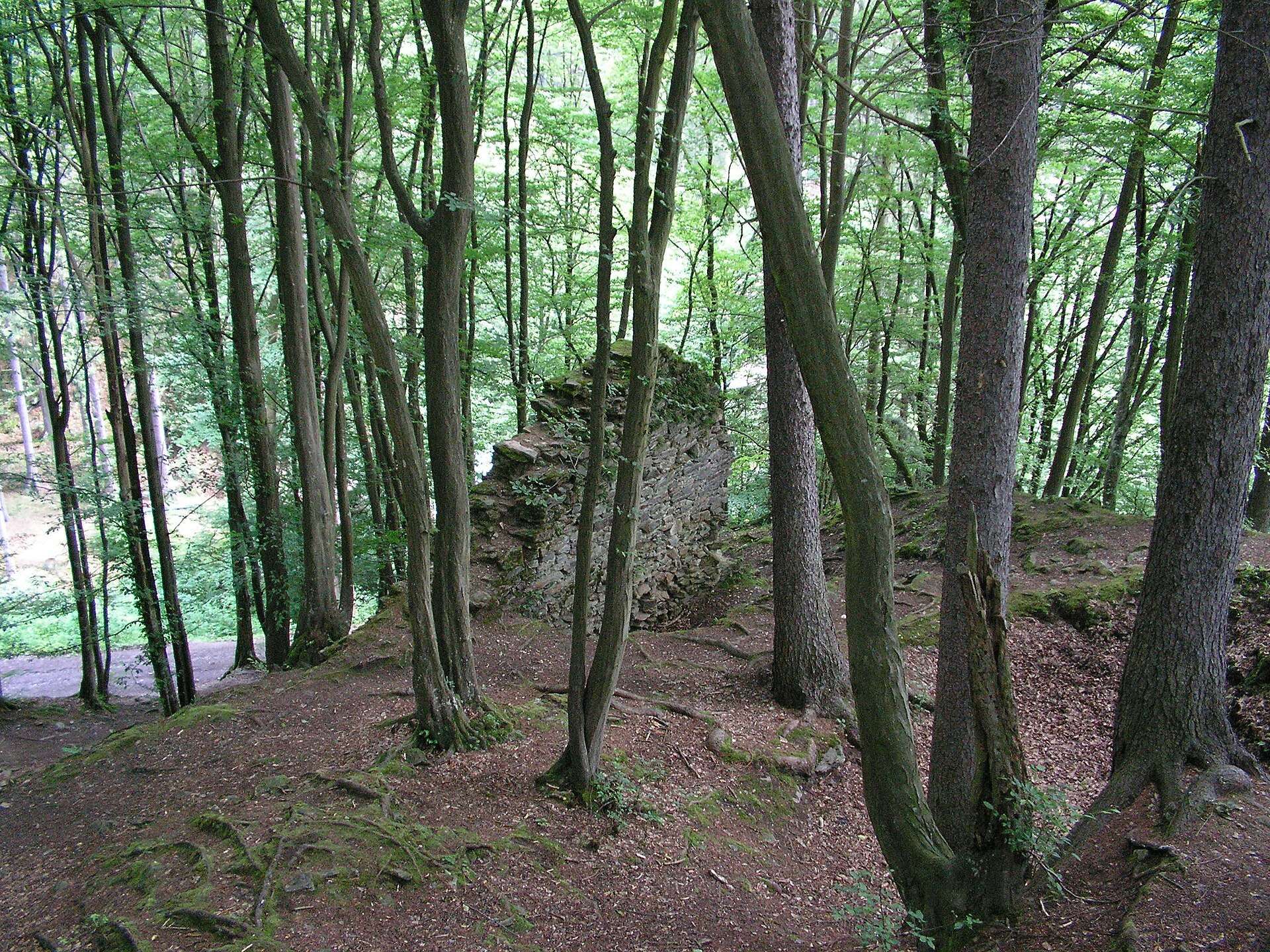
Chřenovice stands on a promontory above the right bank of the Sázava River, at approximately 370 metres above sea level and about four kilometres from Ledeč nad Sázavou. Two ditches cut across the neck of the promontory. Beyond them, the castle core follows an approximately triangular plan, with its defenses arranged around the enclosed area.
Castle Core and Bergfried
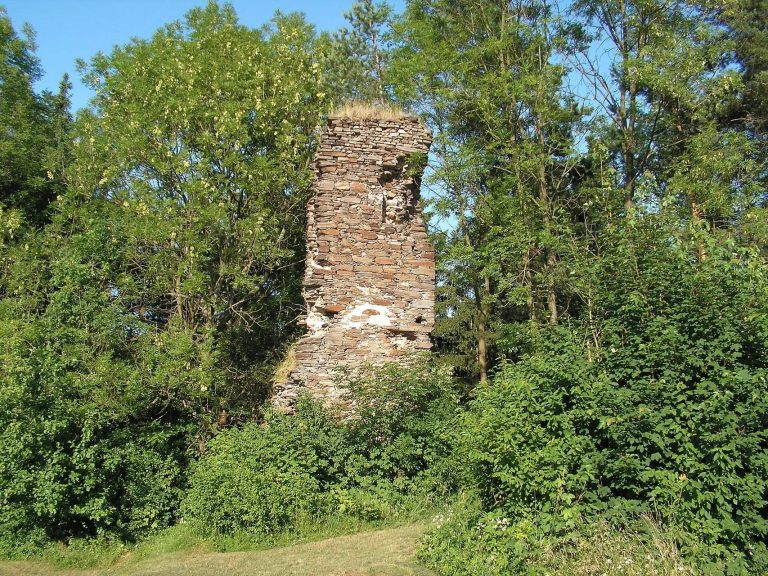
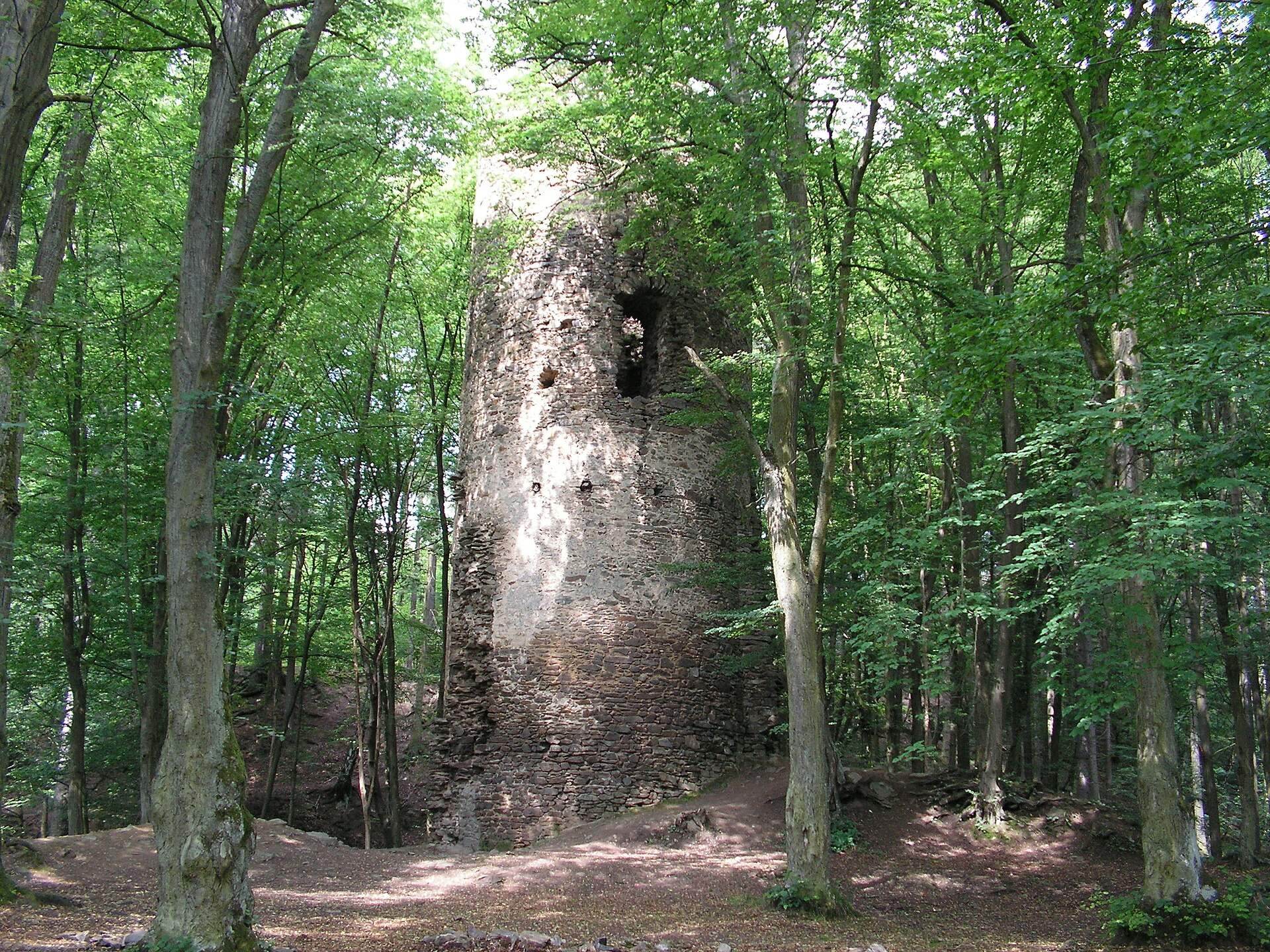
A round bergfried, a strong defensive tower intended chiefly for military use, occupied the northwestern corner of the core and was originally joined to the enclosing wall. The gateway lay in the wall below it. The tower’s walls are about 2.5 metres thick at ground level, and the surviving structure rises to 20 metres. Its original entrance was a vaulted opening approximately 12 metres above the ground. The masonry imprint shows that the enclosing wall carried battlements with merlons, the raised sections between openings, finished with small roofs.
The palace stood at the opposite, southeastern corner of the castle core. The northeastern side was further protected by an outer defensive wall, a secondary fortification line outside the main wall. During a later building phase, the entrance gate was moved into this section.
Advanced Bastion
The fifteenth-century advanced bastion consisted of a square tower enclosed by a wall. Parts of its masonry survived until the nineteenth century, after which the bastion disappeared completely.