Arch of Cabanes: A Roman Honorific and Funerary Monument in Spain


Site at a Glance
- Rating
- 4.4
- Popularity
- Low
- Country
- Spain
- Primary era
- Classical
- Eras represented
- Classical
- Civilizations
- Roman
- Site type
- Civic
- Remains
- Arch
On this page6 sections
History
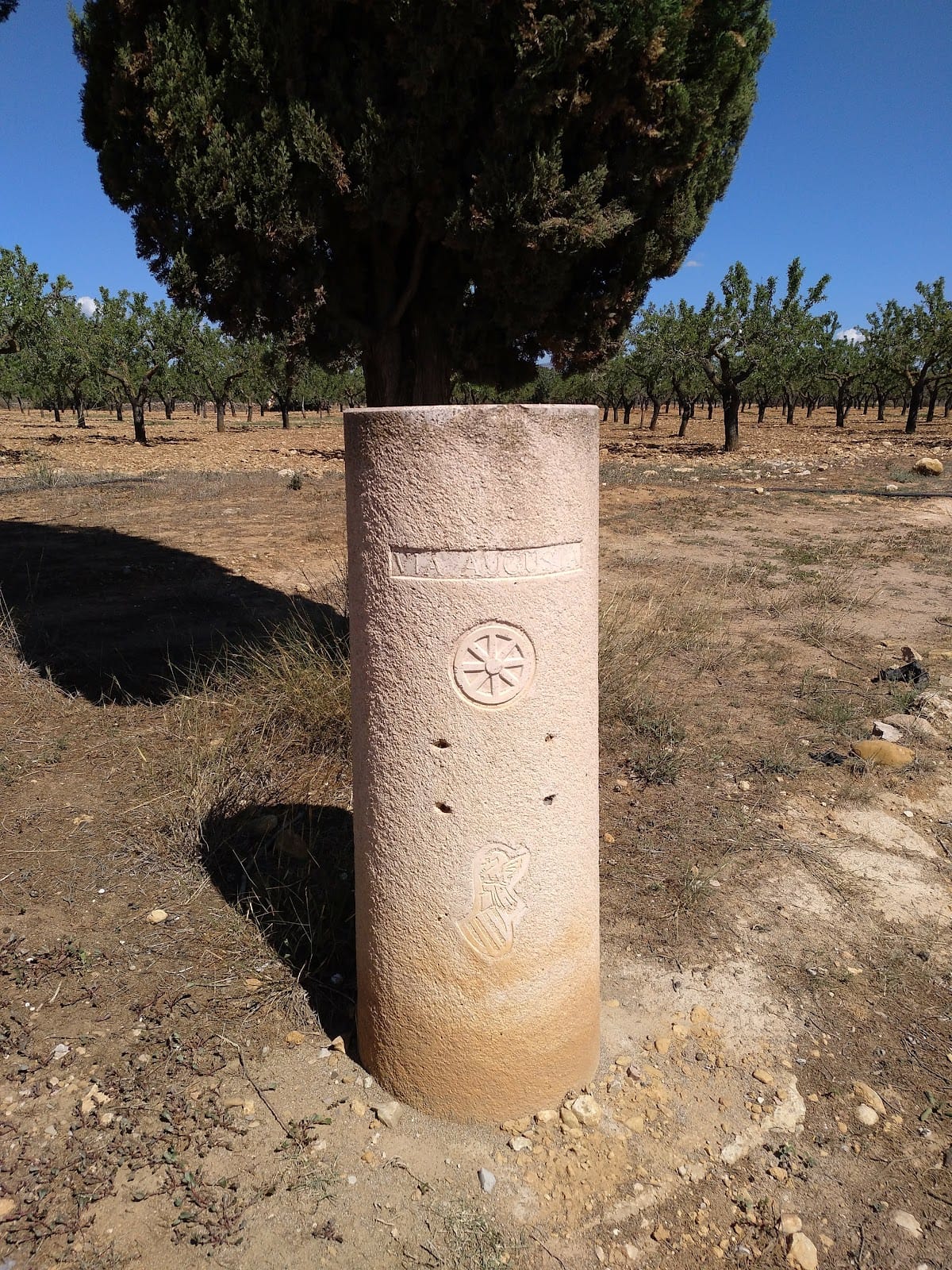
The Arch of Cabanes is a second-century Roman triumphal arch in Spain, located near Cabanes in Castellón. Built beside the Via Augusta, the major Roman road along the eastern Iberian Peninsula, it probably served as a privately erected honorific and funerary monument connected with a rural villa. Pottery and coins found at its base, together with similarities to other monuments of the period, support its second-century date.
Roman and Medieval Context
The arch stands away from a Roman city or administrative boundary, a setting that supports its association with a rural estate rather than with an urban civic center. Its position beside the Via Augusta placed it along an important route linking Roman settlements and territories. The monument is mentioned in a Carta Puebla, a medieval charter regulating a community’s settlement and privileges, issued in 1243.
Protection and Conservation
In 1873, the provincial monuments commission redirected the road running beneath the arch to reduce further deterioration. Spain declared the monument a Historic-Artistic Monument forming part of the National Artistic Treasures in 1931. It later underwent several remodeling and conservation programs. The Municipality of Cabanes approved a Special Protection Plan for the Roman road and arch in 2004, and a further Master Plan was prepared in 2020 by a multidisciplinary team led by the architect Jaime Prior y Llombart.
Remains
Setting and Surviving Form
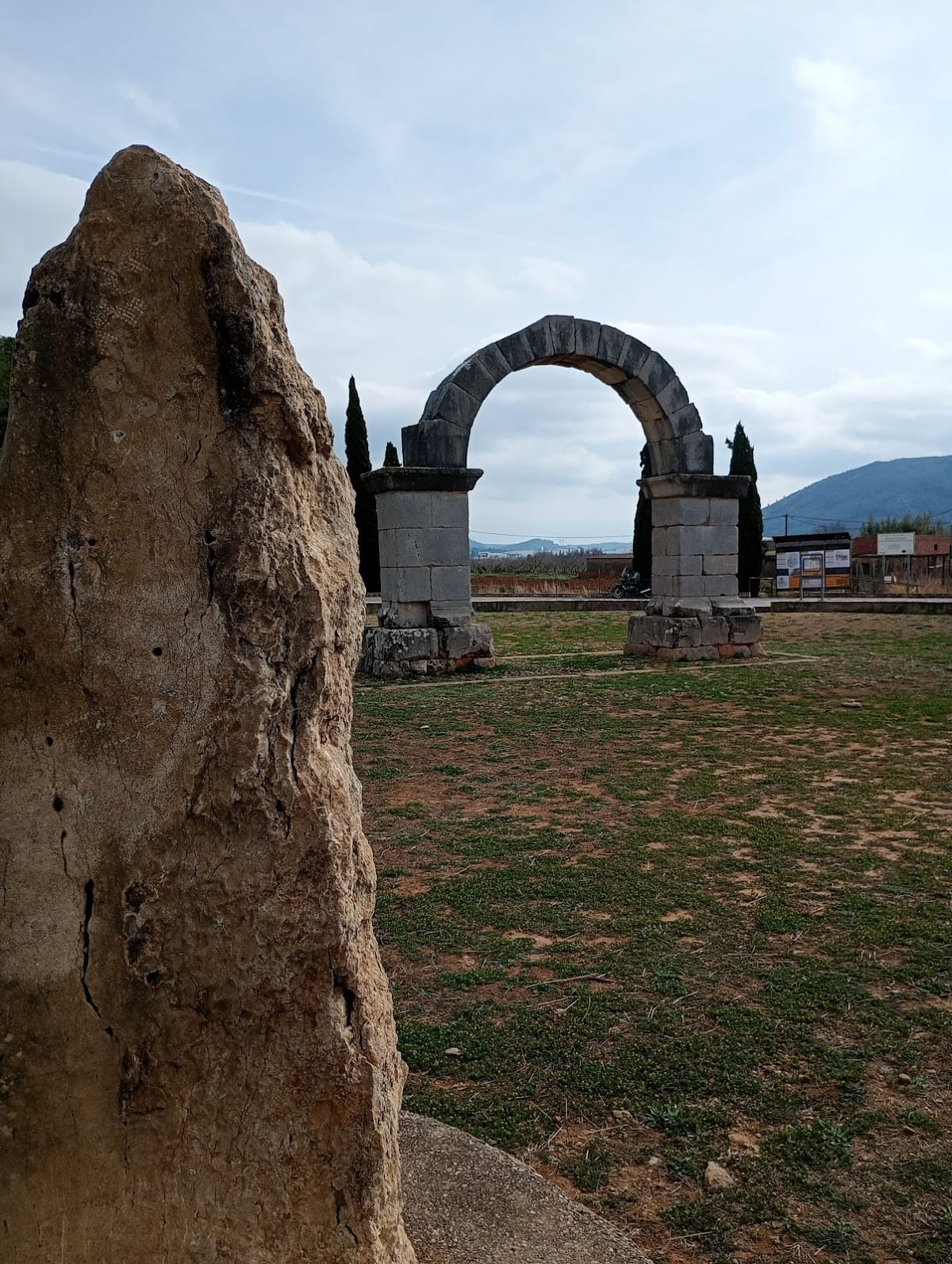
The monument stands approximately 2 kilometers from Cabanes, beside the Via Augusta and the modern CV-157 road, on the plain named after the arch. It is about 5.8 meters high and 6.92 meters wide. The ruined structure survives chiefly as two square piers and the archway, with the upper architectural composition no longer intact. The piers have moulded bases, imposts, upper elements, and plinths. An impost is a support or moulded springing element from which an arch rises.
Materials and Archway
The arch was built from limestone on a foundation of granite ashlar blocks laid without mortar. Its semicircular opening is formed by fourteen wedge-shaped masonry blocks, known as voussoirs, arranged radially. The surviving decoration consists of mouldings on the imposts and plinths. The monument belongs to the widespread group of simple arches found throughout the Roman world.