Vordingborg Castle: A Medieval Danish Fortress and Royal Residence
Visitor Information
Google Rating: 4.4
Popularity: Low
Official Website: www.danmarksborgcenter.dk
Country: Denmark
Civilization: Medieval European
Site type: Military
Remains: Castle

History
Vordingborg Castle is located in the municipality of Vordingborg, Denmark, and was originally constructed by the medieval Danish kingdom. The site’s use dates back to the early 12th century, with an established noble estate and a cemetery indicating a settled community, likely centered around a church associated with the estate. Around 1160, King Valdemar I, known as Valdemar the Great, founded the castle as a defensive fortress and a strategic base for military raids targeting the German coastline.
Following Valdemar I’s reign, his successor King Knud VI expanded and strengthened the castle during the late 12th century. This period marked a significant transition as the original earthworks were replaced with a sturdy brick wall made of monk bricks, reflecting the adoption of new building techniques. Alongside these defensive improvements, a new brick church, St. Andrew’s Church, was constructed just north of the castle, illustrating the site’s growing religious and administrative importance. The castle courtyard was raised using earth from the old ramparts, and a stone building called the palatium, believed to have been the king’s residence, was added.
In the late 14th century, King Valdemar IV, known as Valdemar Atterdag, undertook extensive rebuilding that transformed the castle into a formidable stronghold. The fortifications were expanded to include up to nine large defensive towers and twelve smaller half-towers, all connected by a curtain wall nearly 800 meters long and approximately eight meters high. Around this time, the castle became a political hub, hosting important peace treaties in 1365 and again in 1435, which involved the powerful Hanseatic League and neighboring rulers. Valdemar Atterdag also reinforced the castle’s status by establishing it as the site of the royal archive and treasury, housed within the Goose Tower.
Despite its medieval prominence, the castle’s military relevance declined as warfare evolved to involve cannon fire, for which Vordingborg was not modernized. During the mid-17th century Swedish wars, the fortress was overtaken without resistance, leading to substantial demolition of its structures. Subsequently, between 1671 and 1673, a Baroque-style palace was built on the site for Prince George, son of King Frederick III. However, Prince George never lived there, and the palace itself was demolished by the mid-18th century, with building materials repurposed in other nearby estates and in Copenhagen’s Frederiksstaden district.
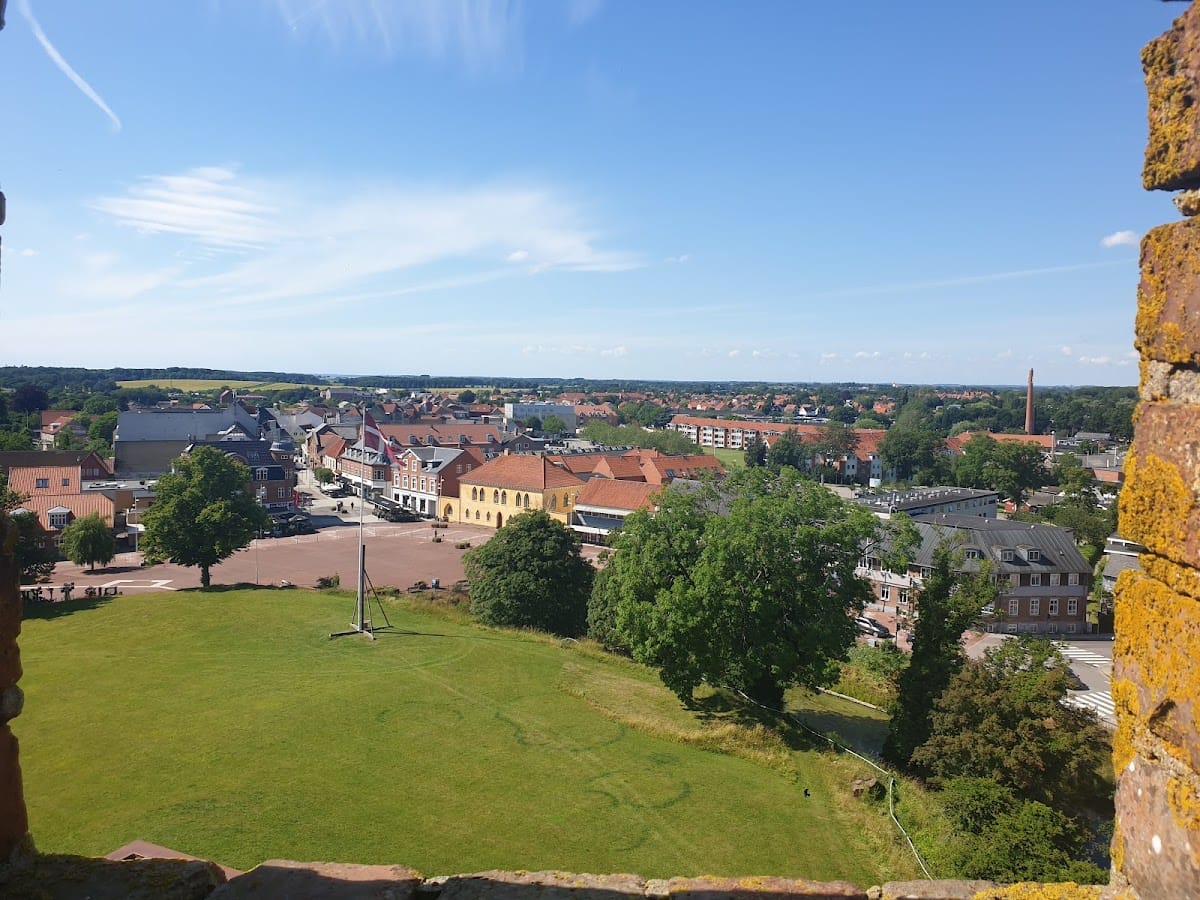
Archaeological exploration began in 1889 and has continued sporadically through the 20th century, gaining new momentum from 1995 under the direction of Museum Sydøstdanmark. These investigations have uncovered collapsed towers, medieval boats, and various artifacts, enriching understanding of the castle’s construction phases, daily use, and decline. Today, Vordingborg Castle is recognized not only as a medieval fortress but also as a center of Danish royal power and naval ambitions in the Baltic Sea region throughout the Middle Ages.
Remains
Vordingborg Castle occupies a roughly trapezoidal area covering about four hectares, originally surrounded by defensive walls and water features arranged to maximize protection. Its earliest known layout included a small enclosure measuring approximately 30 by 40 meters, fortified by a ring-shaped earth mound and moat. No permanent buildings survive from this initial phase, yet archaeological evidence confirms the early importance of the location.
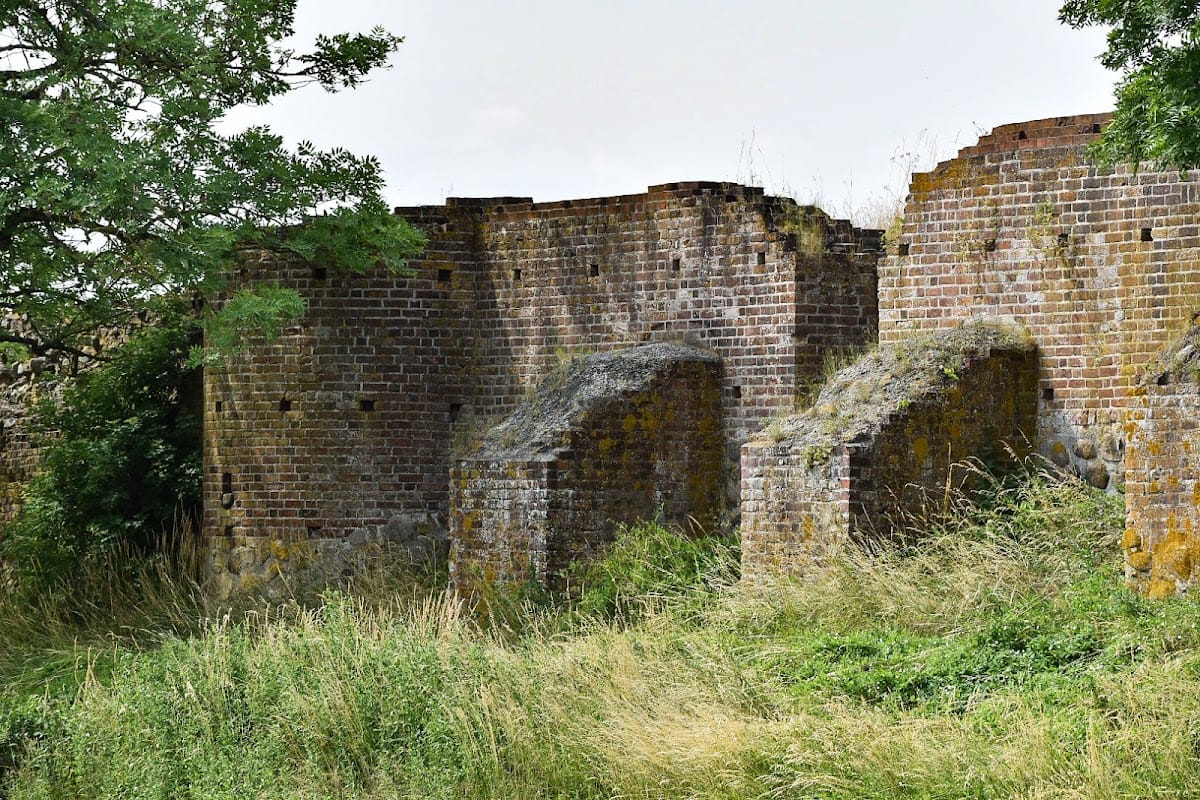
Under King Knud VI’s rule, the castle’s defenses were rebuilt using brick, a relatively new material at the time made from large, shaped ‘monk bricks’. The earthworks were replaced by a durable brick ring wall encircling the inner bailey. Along the southern curtain wall stood the palatium, a stone building about 30 meters long, interpreted as the king’s residence. The castle courtyard was raised by repurposing earth from earlier fortifications, enhancing its defensibility.
By the late 14th century, the castle complex had grown substantially. An inner bailey with a trapezoidal shape enclosed the older palace structure, now integrated into an imposing 800-meter-long curtain wall roughly four meters thick and eight meters high. This outer wall was punctuated by nine large towers and twelve half-towers, which together formed a formidable defense system. Beyond the inner bailey lay an outer enclosure protected by a 730-meter-long ring wall featuring shell-shaped towers, adding another layer of fortification.
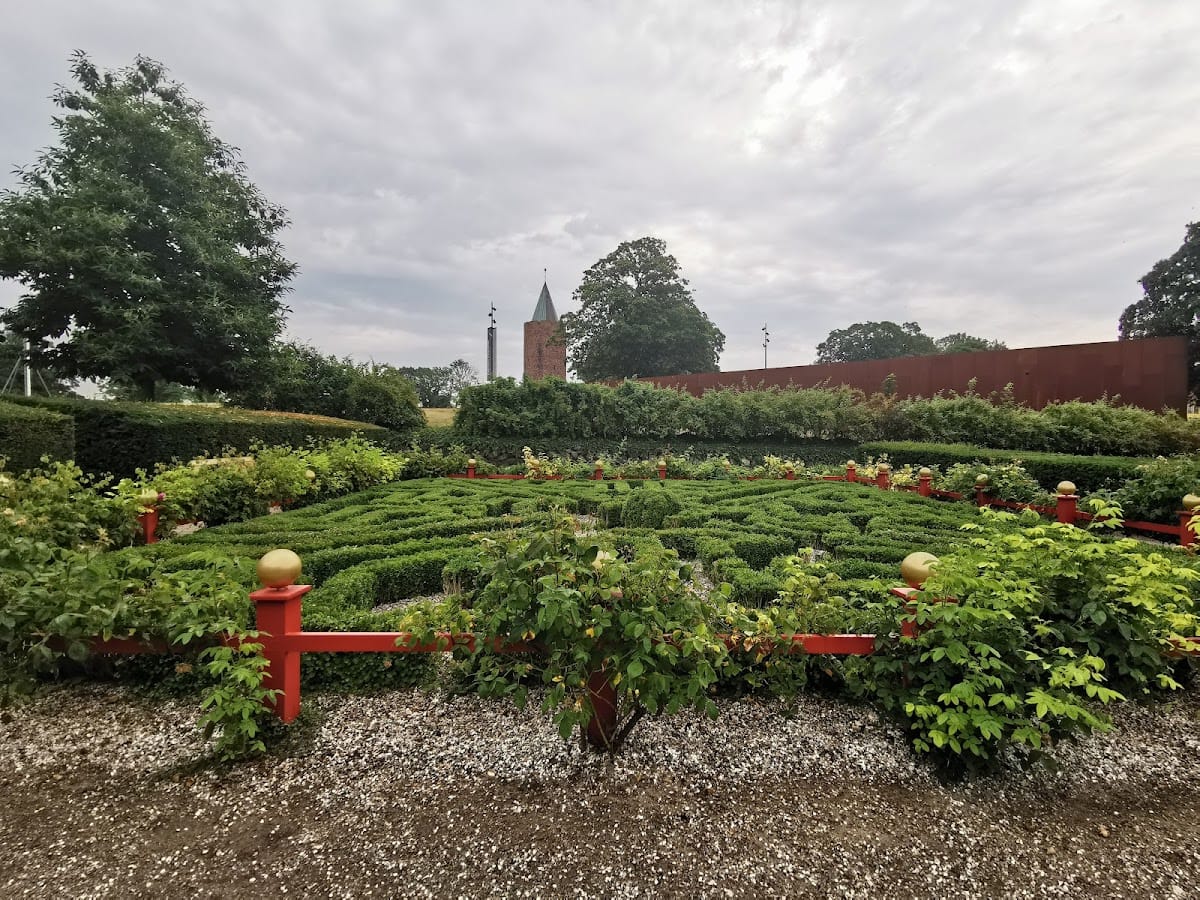
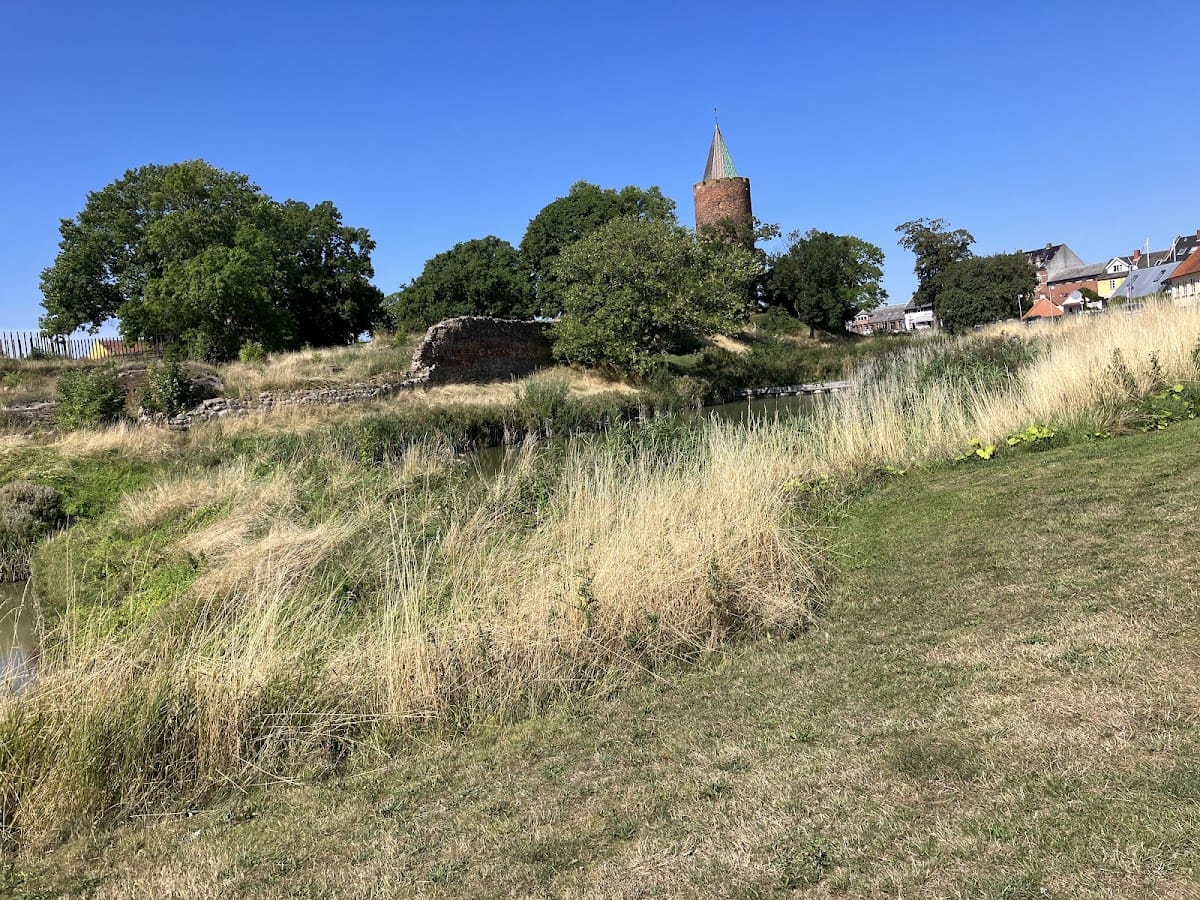
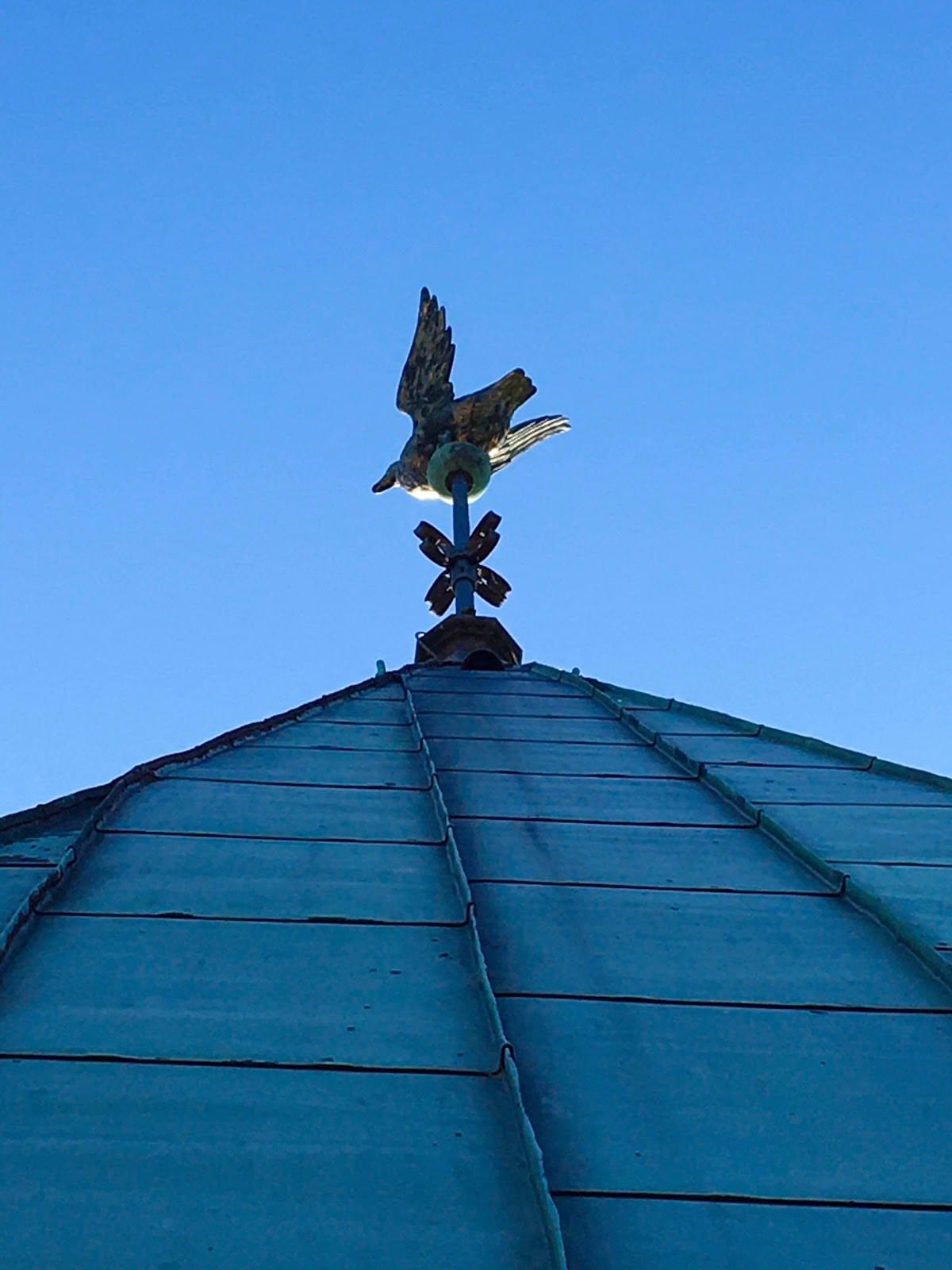
Among the towers, the Goose Tower stands out as the most significant and best preserved. Reaching 26 meters in height, it served multiple roles including housing the royal archive and treasury during Valdemar Atterdag’s time. While the golden goose statue atop its spire is a modern addition from 1871 and not medieval, the tower itself was recognized as Denmark’s first protected historic monument as early as 1808.
The castle was surrounded by moats and artificial lakes, a water defense system supported by substantial engineering. Archaeologists have dated oak piles found in the castle’s dam structures to 1189, indicating advanced water management techniques intended to control water levels around the fortress. Adjacent to the castle was St. Andrew’s Church, constructed of brick in the late 12th century. This church was later replaced by a chapel dedicated to Mary, which held relics granted by Pope Urban V in 1364, underscoring the castle’s religious significance.
Excavations have also uncovered the remains of a medieval wooden rowing boat from around 1400, known as the Vordingborg boat. Measuring six meters long, it likely was used for fishing or transportation within the castle’s moat, providing insight into the everyday life and operations within the fortress. Today, the castle site includes revitalized ruins with water-filled moats and a museum that interprets the site’s complex history, preserving the visible legacy of Denmark’s medieval power and heritage.
