Volissos Castle: A Byzantine and Genoese Fortress on Chios Island


Visitor Information
Google Rating: 4.5
Popularity: Low
Google Maps: View on Google Maps
Official Website: chios.gr
Country: Greece
Civilization: Unclassified
Remains: Military

History
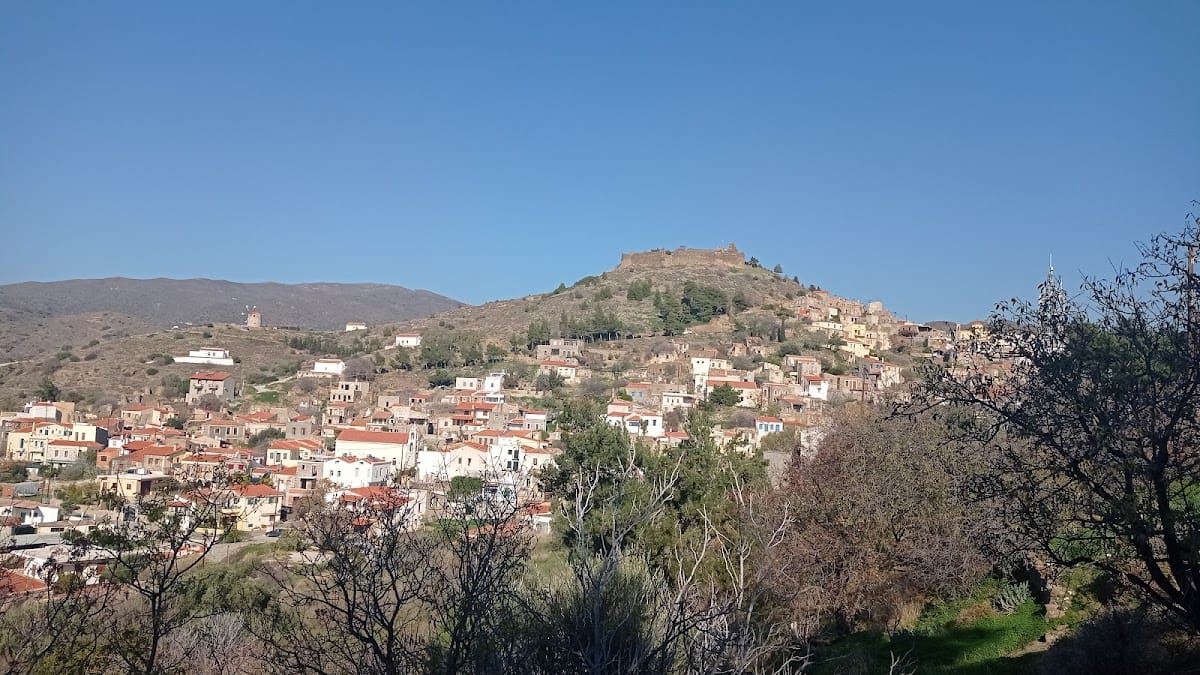
Volissos Castle is situated in the municipality of Amani on the Greek island of Chios. Its origins are traditionally linked to the Byzantine Empire, suggesting a foundation in the early medieval period.
According to local tradition, the castle’s initial construction dates back to the 6th century AD, possibly under the command of the Byzantine general Belisarius during Emperor Justinian I’s reign. Although archaeological or documentary proof from before the 11th century is lacking, this early date reflects the strategic importance placed on Chios to defend against invasions during the Byzantine era. By the 12th century, the castle had clearly become a notable military site, as it is mentioned by the historian Anna Komnene in her work “Alexiad,” indicating it had a recognized role within the island’s defensive network.
After the Byzantine period, the island of Chios fell under Genoese control in the 14th century. The Genoese undertook substantial reconstruction of the castle during the 15th and early 16th centuries, responding to the growing threat of the Ottoman Empire’s expansion. These efforts significantly strengthened the fortress, enabling it to guard the northwestern region of the island. The castle was integrated into a coordinated system of coastal watchtowers, connected by secret tunnels, which allowed early warning and communication against incoming naval threats. Later, changes during the Ottoman period saw parts of the castle damaged or dismantled, with stones reused for other constructions, reflecting shifts in political control and military priorities.
Remains
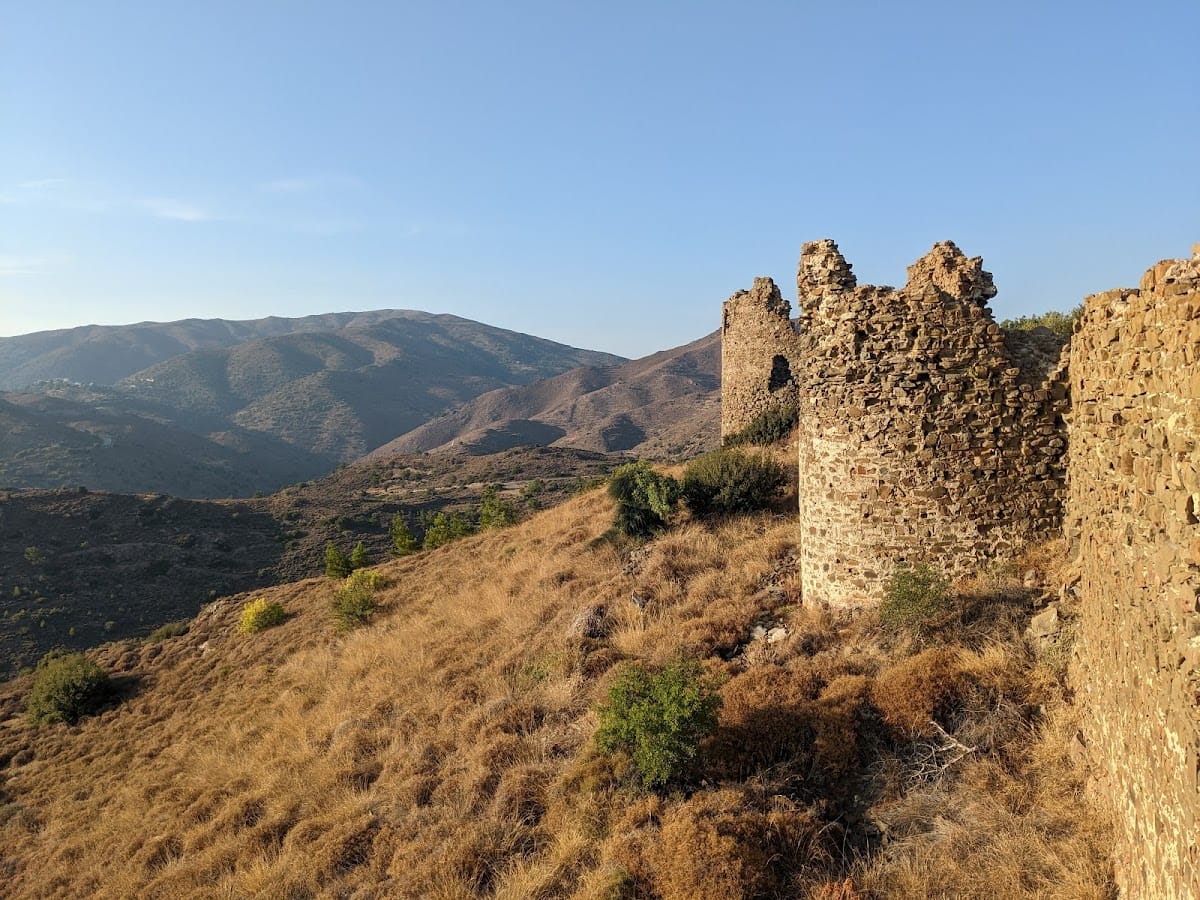
Volissos Castle occupies the summit of a hill, covering roughly 65 by 70 meters with a distinctive five-sided, polygonal shape. The walls are constructed from a dark, copper-rich local stone, set firmly with mortar or smaller stones filling the gaps. This choice of materials gives the fortress a characteristic heavy and somber appearance. Surrounding the perimeter are seven towers, including one uniquely horseshoe-shaped tower among several round ones. These towers originally rose to heights between six and seven meters, although some have suffered partial destruction or were adapted during later periods.
The main entrance of the castle lies on its eastern side. This gateway, about three meters tall and just over a meter wide, is now partially obstructed by debris fallen from nearby towers—an indication of structural wear through time. Additional defense was provided by a secondary wall, known as a proteichisma, built a short distance below the main fortification. This lower wall, standing about one meter tall today, added an extra barrier against attackers aiming to breach the fortress.
Inside the walls, the castle contained essential military features including cisterns for water storage, a prison, and barracks for soldiers. These facilities reveal the fortress’s primary role as a garrison and stronghold rather than a civilian settlement. Although the northern side of the castle has been heavily ruined, the eastern and western sections still retain significant structural elements, despite some deterioration and stone removal, especially during Ottoman rule. This blend of defensive design and internal infrastructure reflects the castle’s enduring function as a military installation guarding Volissos and the surrounding territory.

