Torre de Romilla: A Medieval Muslim Tower near Chauchina, Spain

Visitor Information
Google Rating: 4.5
Popularity: Very Low
Google Maps: View on Google Maps
Official Website: rinconesdegranada.com
Country: Spain
Civilization: Medieval Islamic, Roman
Remains: Military

History
The Torre de Romilla is located near the municipality of Chauchina in Spain and was built by the Muslim inhabitants of Al-Andalus during the early Islamic period. It stands within the area historically known as Soto de Roma, close to the Genil River and about 20 kilometers from Granada.
The tower originated as part of a network of rural settlements called alquerías, which were small Muslim farming communities established in the early centuries of Islamic rule in the Iberian Peninsula. These towers gained greater administrative and territorial significance during the Almohad dynasty in the 12th and 13th centuries, serving as centers for managing agricultural production and collecting taxes within their districts.
Constructed between the 13th and 14th centuries, the Torre de Romilla had a dual purpose. It functioned defensively and provided refuge for local peasants and their harvests during military campaigns by Castilian forces. These campaigns aimed to disrupt the supply lines of the Nasrid Kingdom of Granada, the last Muslim stronghold in the region.
Historical records mention the tower in several notable events. In 1431, the chronicler Álvaro de Luna documented that the tower was set on fire. It later endured attacks in 1462 led by Miguel Lucas de Iranzo, a Castilian nobleman, and again in 1490 during the final years of the Reconquista. Following the fall of Granada in 1492 and the subsequent expulsion of the Moriscos, the Muslim converts to Christianity, the Soto de Roma area became largely depopulated.
After this depopulation, the lands including the tower were incorporated into the Crown’s direct holdings, known as the “Real Sitio,” and remained under royal ownership for over three centuries. Ownership later passed to prominent figures such as Ricardo Wall, who received the estate as a gift from King Charles III, then to Manuel Godoy, and eventually to Sir Arthur Wellesley, the Duke of Wellington, who was granted the lands in 1812 in recognition of his role in the fight against Napoleonic forces.
In the 20th and 21st centuries, the lands surrounding the tower were gradually sold in parcels. A notable recent event involved a 2011 land exchange with the municipality of Chauchina, which led to legal disputes over ownership. Beyond its historical and military significance, the tower also holds cultural importance as a childhood play area for the renowned poet Federico García Lorca, who referenced the Soto de Roma in his literary works.
Remains
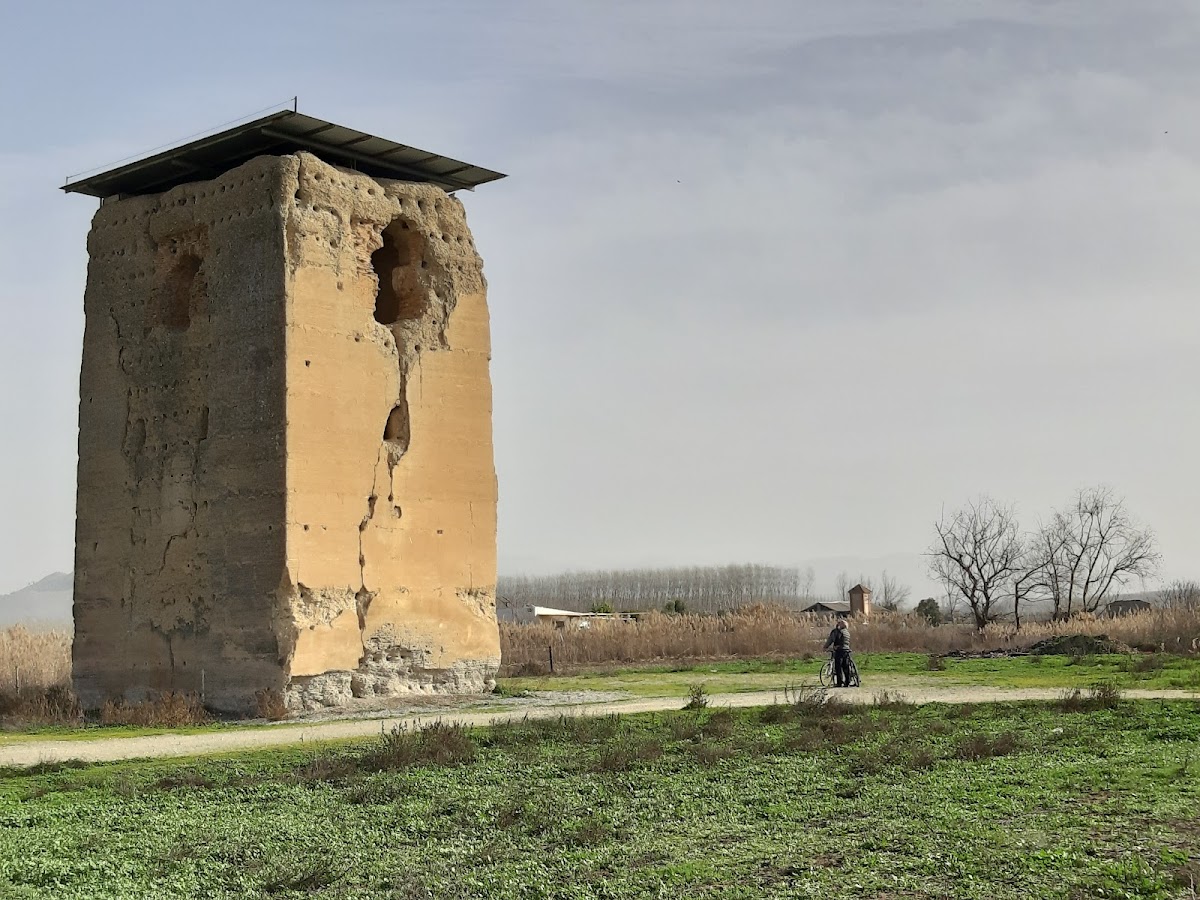
The Torre de Romilla is a rectangular tower with a nearly square base measuring approximately 9.45 by 7.10 meters. It currently rises to about 14 meters in height, although originally it stood at least two meters taller. The tower’s construction primarily features masonry combined with a very hard form of rammed earth, known as tapial, which is a mixture of gravel, soil, and lime. Bricks were specifically used to frame the doors, windows, and staircases, highlighting a combination of materials suited for both durability and function.
The tower is organized into three floors, each covered by a barrel vault—a curved ceiling structure that provides strength and support. Above these floors lies a terrace, which likely once featured battlements, or almenas, that would have served defensive purposes. The terrace also included drainage gargoyles designed to channel rainwater away from the structure, protecting the walls from erosion.
An underground cistern, or aljibe, is located beneath the tower, excavated below ground level to collect and store water. This feature was essential for sustaining inhabitants during sieges or periods of isolation.
Defensive elements are evident in the design, with several narrow vertical openings called arrow slits, or aspilleras, positioned on the east, south, and west sides of the first floor. These allowed defenders to observe and shoot arrows while remaining protected. The second floor contains one window centered on each facade, providing light and ventilation.
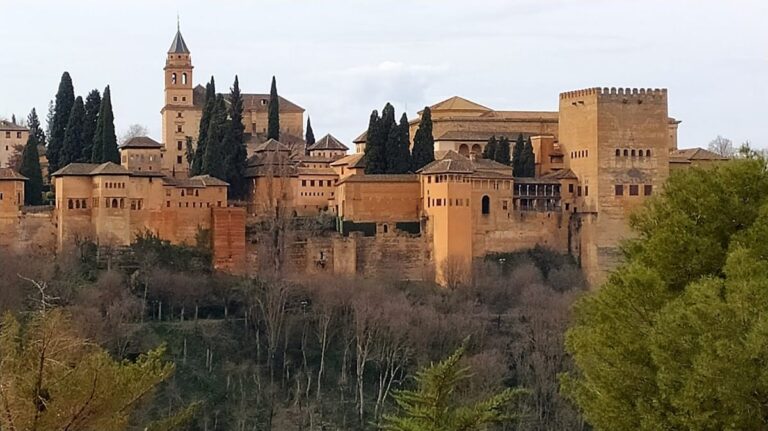
The main entrance is situated on the east side, elevated about two meters above the base. This height served to protect the tower from flooding and made direct access more difficult for attackers. The tower’s location also allowed it to maintain visual communication with the Alhambra palace complex and the Castle of Moclín, indicating its role in regional surveillance and defense networks.
Today, the Torre de Romilla stands as a well-preserved example of rural Muslim military architecture from the late medieval period, retaining its essential structural features and offering insight into the defensive strategies and rural life of Al-Andalus.
Nearby sites