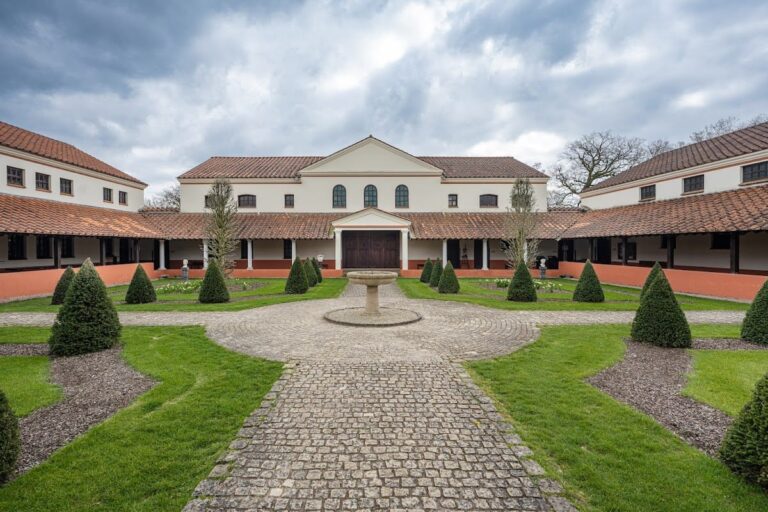
Ricciacum Archaeological Site: A Roman Vicus near Dalheim, Luxembourg
Table of Contents




Visitor Information
Google Rating: 4.5
Popularity: Very Low
Google Maps: View on Google Maps
Official Website: www.monuments.lu
Country: Luxembourg
Civilization: Celtic, Roman
Remains: City

Context
The Ricciacum Archaeological Site is situated near the contemporary town of Dalheim in southeastern Luxembourg, occupying a gently inclined plateau within the Moselle river basin. This region is characterized by fertile soils and a temperate climate, conducive to settlement and agriculture. Strategically positioned close to the modern border with Germany, Ricciacum lay along vital communication routes connecting the Roman provinces of Gallia Belgica and Germania Superior, facilitating movement and exchange across imperial frontiers.
Archaeological investigations have established that Ricciacum’s primary occupation occurred during the Roman period, spanning from the 1st to the 4th centuries CE. The site functioned as a vicus—a civilian settlement often associated with military infrastructure—reflecting its role in regional administration and logistics. Excavations reveal multiple phases of construction and rebuilding, indicative of evolving social and administrative structures. By the late 4th century, the settlement experienced gradual decline, with no stratigraphic evidence of abrupt destruction or violent abandonment.
Systematic archaeological work at Ricciacum commenced in the 19th century and has continued intermittently into the present day. The extant remains include building foundations, street layouts, and a range of artifacts that illuminate the settlement’s urban organization and everyday life. Conservation efforts prioritize the stabilization of exposed masonry and the facilitation of scholarly access, while ongoing research seeks to situate Ricciacum within the broader context of Roman frontier systems in northwestern Europe.
History
The archaeological site of Ricciacum near Dalheim, Luxembourg, presents a continuous occupation sequence beginning with a pre-Roman Celtic settlement and evolving into a Roman vicus strategically located along a major imperial road. Its historical trajectory reflects the broader political, military, and administrative developments within Gallia Belgica and the Roman Empire’s northern provinces. The site’s significance derives from its role as a civilian center linked to imperial infrastructure, enduring through periods of stability, conflict, and transformation until its decline in late antiquity amid Germanic incursions and shifting imperial control.
Ricciacum’s position near the border of Gallia Belgica and Germania Superior placed it at a crossroads of cultural and military interaction. The vicus functioned as a hub for travelers, merchants, and pilgrims, integrating into the Roman provincial network. Its fortunes were closely tied to imperial policies, frontier security, and economic vitality, with archaeological and epigraphic evidence documenting its development, resilience, and eventual contraction by the early 5th century CE.
Late La Tène Period (Pre-Roman Celtic Settlement)
Prior to Roman annexation, the site of Ricciacum was occupied by a Celtic community during the Late La Tène period, as demonstrated by numerous recovered artifacts characteristic of this cultural horizon. Although the precise spatial organization and extent of this early settlement remain obscured due to extensive Roman construction overlaying earlier layers, the presence of these material remains situates Ricciacum within the network of tribal societies inhabiting pre-Roman Gaul. These groups engaged in regional trade, craft production, and ritual activities, contributing to the cultural landscape of the Moselle basin.
Roman Foundation and Early Development (circa 17 BCE – 1st century CE)
Following the Roman conquest of Gaul, Ricciacum was established circa 17 BCE as a vicus associated with the construction of the Via Agrippa, a principal Roman road engineered under Marcus Vipsanius Agrippa. This route connected Lyon to Cologne, passing through major urban centers such as Divodurum (modern Metz) and Augusta Treverorum (modern Trier). Ricciacum’s location at a road junction midway between these cities facilitated its emergence as a roadside settlement serving logistical and commercial functions.
Early settlement structures comprised elongated wooden strip houses with stone cellars, arranged parallel to the road in a pattern typical of Roman road stations. The vicus rapidly acquired economic importance by catering to travelers and merchants, integrating into the provincial infrastructure of Gallia Belgica. This development reflects Roman strategies to consolidate territorial control and enhance communication across the empire’s northern frontiers.
Urban Expansion and Public Building Phase (1st century CE – early 3rd century CE)
In the aftermath of the Batavian revolt (69–70 CE), Ricciacum underwent significant urban transformation. The main thoroughfare was widened from approximately seven to ten meters, and wooden buildings were systematically replaced by stone constructions, signaling a transition toward a more permanent and substantial settlement. Archaeological evidence attests to the erection of prominent public structures, including a large theater, a complex of temples, and public baths, collectively elevating Ricciacum’s status beyond a mere roadside station.
The temple precinct comprised at least three temples, with two large stone edifices dating to circa 130 CE constructed atop earlier ambulatory-style temples from the late 1st century CE. Dedications and votive offerings found within the precinct indicate worship of a diverse pantheon, including Roman deities such as Minerva, Mercury, and Jupiter, alongside Celtic figures like Epona. Additional dedications to Fortuna, Ceres, Vesta, Victoria, and Nemesis further illustrate the religious plurality of the site. The theater, initially featuring stone outer walls and wooden seating, was later upgraded with stone seating tiers by the late 2nd century CE, accommodating approximately 3,500 spectators—more than twice the estimated population of the vicus. The public baths, constructed at the turn of the 1st and 2nd centuries CE, included a frigidarium with a basin, a tepidarium heated by a hypocaust system, and a colonnaded courtyard. These facilities underwent multiple renovations, reflecting the settlement’s prosperity and integration into Roman urban culture during this period of relative imperial stability.
Late Roman Period and Germanic Attacks (mid-3rd century CE – early 5th century CE)
The mid-3rd century CE marked a period of instability as Germanic tribes launched incursions into Roman territories, including the region encompassing Ricciacum. Archaeological layers reveal widespread fire damage and destruction consistent with these attacks. Despite significant devastation and a decline in population, the vicus remained inhabited into the early 5th century CE, demonstrating resilience amid frontier pressures.
Post-destruction phases involved repair and rebuilding of structures. Notably, in the early 4th century CE, the main road junction was fortified with a burgus—a small military fortification—constructed using large stone blocks salvaged from the disused theater’s seating. The theater ceased its original function following the 3rd-century damage, and the public baths were destroyed by fire in the mid-4th century CE without subsequent reconstruction. A late antique cemetery near the present-day parish church of Saints Peter and Paul exhibits Frankish cultural influences, indicating continued occupation and evolving social dynamics. Epigraphic evidence from a dedication altar references a barbarian attack (“vi barbarorum”) that damaged the baths’ portico, providing rare contemporary documentation of the period’s conflicts.
Archaeological Research and Modern Rediscovery (17th century – present)
The site of Ricciacum was first documented in the mid-17th century by Jesuit scholar Alexander Wiltheim in his studies of Roman monuments in Luxembourg. Systematic archaeological investigations began in the mid-19th century during the construction of the Drei-Kantons-Straße (now N13), conducted by the Société archéologique de Luxembourg. Initial interpretations mistakenly identified the site as a Roman military camp; subsequent research clarified its civilian nature as a vicus.
Private collectors, notably Ernest Dupaix, conducted excavations focused on the temple district in the 19th century, recovering significant artifacts now housed in museums. From 1977 onward, the National Museum of History and Art of Luxembourg undertook extensive excavations targeting the vicus center, temple precinct, and, following its discovery in 1985, the theater. Employing modern archaeological techniques such as aerial photography, geomagnetic surveys, and ground-penetrating radar, researchers have produced detailed maps of the settlement’s layout. In 2016, a regional archaeological research center was established on site to coordinate ongoing study and conservation, ensuring the protection and scholarly examination of Ricciacum’s ancient heritage.
Daily Life and Importance by Period
Late La Tène Period (Pre-Roman Celtic Settlement)
During the Late La Tène period, the area of Ricciacum was inhabited by a Celtic community typical of the cultural milieu of pre-Roman Gaul. Material culture recovered from the site includes numerous Celtic artifacts indicative of regional trade and ritual activity. Although the settlement’s precise layout remains unknown due to later Roman overbuilding, it likely consisted of small hamlets organized around kinship groups and tribal leadership. Subsistence activities would have centered on mixed farming, supplemented by craft production and localized exchange networks. The diet probably included cereals, domesticated and wild animals, and gathered fruits, consistent with contemporaneous communities in the Moselle basin. Clothing was likely made from wool and linen, fashioned into tunics and cloaks. Religious practices involved ritual offerings to local deities, though no dedicated structures have been identified at Ricciacum from this period.
Roman Foundation and Early Development (circa 17 BCE – 1st century CE)
With the establishment of Ricciacum as a Roman vicus, the population diversified to include Roman settlers, indigenous Gauls, and possibly veterans or their descendants. Social organization reflected emerging stratification, with nuclear family units and gender roles aligned with Roman provincial norms. Men engaged in trade, crafts, and local administration, while women managed domestic affairs and small-scale production. Housing consisted of strip houses with shops or taverns facing the street and gardens or workshops at the rear. Wells and ovens provided essential water and food preparation facilities.
Economic life revolved around servicing travelers and merchants along the Via Agrippa, with inns, taverns, and workshops operating at the household level. Agricultural production in the surrounding countryside supported the settlement’s food supply. Diet incorporated cereals, bread, olives, fish, and locally produced wine, reflecting Roman culinary influences. Clothing followed provincial Roman fashions, including tunics, cloaks, and leather sandals. Religious life combined Roman and indigenous elements, with early shrines likely present but not yet monumentalized.
Urban Expansion and Public Building Phase (1st century CE – early 3rd century CE)
During this period, Ricciacum’s population grew to an estimated 1,500–2,000 inhabitants, comprising local elites, artisans, merchants, and religious officials. Social hierarchy is evidenced by the construction of public buildings and private stone houses. Inscriptions attest to civic magistracies, though no formal municipium status is recorded. Economic activities diversified to include pottery, metalworking, and textile production within workshops. The widened main street hosted shops and taverns, indicating a vibrant commercial environment catering to travelers and pilgrims.
Domestic interiors featured mosaic floors and painted walls, with household layouts including courtyards, kitchens, and storage rooms. Transportation relied on carts and pack animals along the road network. The construction of monumental public amenities—the theater, temple complex, and baths—reflects a flourishing civic culture. Religious life was syncretic, with temples dedicated to Roman gods such as Minerva, Mercury, and Jupiter alongside Celtic deities like Epona and Rosmerta. Festivals and rituals likely attracted pilgrims, enhancing Ricciacum’s regional religious significance. Public baths and the theater functioned as social centers, fostering community interaction and cultural activities.
Funerary Practices and Roadside Sanctuaries
Funerary remains associated with Ricciacum include cremation and inhumation graves located in cemeteries adjacent to the vicus, consistent with Roman settlement patterns that placed burial grounds along main roads. Excavations have identified two grave monuments and approximately 40 cremation graves plus two inhumations in the Hossegronn valley, dating from the late 1st century CE onward. Additional cemeteries likely existed along the vicus’s principal roads, as suggested by numerous Roman-era gravestones recovered from surrounding fields during the 18th and 19th centuries.
Near Buchholz, a small ambulatory temple was excavated directly adjacent to the Roman road. This roadside sanctuary was dedicated to Mercury, the Roman god of commerce, and likely his Celtic consort Rosmerta, as indicated by inscriptions and fragmented statues. The temple’s location and design suggest it served travelers and traders, reflecting the religious practices intertwined with commerce and travel in the region.
Late Roman Period and Germanic Attacks (mid-3rd century CE – early 5th century CE)
The mid-3rd century CE saw demographic decline and social disruption due to repeated Germanic incursions. Despite destruction and population loss, the settlement persisted into the early 5th century. The community adapted by fortifying the road junction with a burgus, reflecting a shift toward militarized defense and reduced urban complexity. Social organization likely became more defensive, with local leaders overseeing repairs and security.
Economic activity contracted but continued at the household level, supported by agriculture in the surrounding region. The destruction of public baths and cessation of theater use indicate diminished civic amenities. Domestic spaces were likely simplified, with less emphasis on decoration. Transportation focused on the fortified junction, facilitating military and limited commercial movement. Religious practices evolved under Frankish influence, as evidenced by late antique cemeteries exhibiting mixed Roman and barbarian burial customs. Christianization may have begun to influence local rituals, though pagan cults persisted. Ricciacum’s role shifted from a prosperous vicus to a frontier settlement navigating imperial decline and cultural transformation.
Remains
Architectural Features
At its zenith in the late 2nd to early 3rd century CE, Ricciacum encompassed approximately 35 hectares on a gently sloping plateau. The settlement’s layout centered on a main road segment of the Via Agrippa, with long, narrow parcels arranged perpendicular to the street. Initial buildings dating from the late 1st century BCE to early 1st century CE were wooden structures with stone cellars. These were progressively replaced by stone constructions during the reign of Emperor Vespasian in the latter half of the 1st century CE. The vicus included residential, commercial, and craft workshop spaces, with gardens, wells, and ovens located in the rear sections of parcels, though these rear areas remain only partially excavated.
Destruction layers from the 3rd century CE document damage from Germanic incursions. Despite this, the settlement was rebuilt and occupied into the early 5th century CE. Around the early 4th century CE, a fortified post (burgus) was constructed at the main street intersection using large stone blocks salvaged from the disused theater seating. The architectural remains thus record phases of growth, destruction, and adaptation over several centuries.
Key Buildings and Structures
Vicus Residential and Commercial Quarter
Excavations conducted between 1977 and 1986 in the central quarter along the main street revealed typical vicus structures dating from the late 1st century BCE onward. Buildings were arranged in long, narrow plots with strip houses oriented by their narrow side to the street. These houses featured shops or taverns at the front, often with a covered portico providing sheltered access. Initial wooden buildings with stone cellars were replaced by stone constructions in the late 1st century CE. Numerous craft workshops have been identified within this area, indicating active economic production. Wells (pëtzer) were common on all parcels and served as the sole water source on the plateau. Gardens and ovens were located in the rear parts of the parcels, though excavation of these areas has been limited.
Temple District
The temple precinct, situated near the vicus center, was first partially uncovered in the 19th century. It includes the remains of an octagonal temple and at least four additional cult buildings, revealed through aerial photography and excavations conducted from the late 20th century. Two large stone temples dating to around 130 CE were excavated between 1986 and 1998, constructed atop two older ambulatory-style temples from the late 1st century CE. The precinct covers a substantial area, with temples built primarily of stone masonry. Numerous votive offerings and statues dedicated to deities such as Minerva, Mercury, Jupiter, and the Celtic goddess Epona were recovered. While the exact dedications of the temples remain uncertain, the diversity of cult buildings indicates a complex religious zone serving both local inhabitants and travelers.
Theater
The Roman theater is located on a steep slope known as “Fielsgaart” north of the plateau. Constructed in the first quarter of the 2nd century CE on a former stone quarry, its initial phase featured stone outer walls with wooden seating and stage structures. Renovations at the end of the 2nd century CE replaced wooden seating with stone rows, and corner walls were reinforced to withstand hillside pressure. The first two seating rows, with the front row added in the early 3rd century CE, included armrests and backrests, representing the earliest known example of such features in Gaul. The theater’s seating capacity was approximately 3,500 spectators, exceeding the vicus’s population. Altars found in the orchestra area indicate multifunctional use, including cultic activities. A destruction layer from the late 3rd century CE contains fire debris and a skeleton exhibiting signs of violent death, likely a victim of Germanic attacks. Subsequently, the theater ceased its original function, and stone blocks from the upper seating were repurposed in the 4th century CE to construct the burgus on the plateau. The theater area remained in use until the 5th century CE, though its function during this later period is unclear.
Public Baths (Thermen)
The public baths are situated near the theater, with initial Roman walls discovered during road works in 1962 and 1978. Excavations in 2003–2004 and 2008–2009 uncovered several rooms, including a frigidarium with a basin and a tepidarium equipped with an underfloor heating system (hypocaust). The baths featured an open courtyard surrounded by a colonnaded portico, which likely housed stone cult statues found during excavations. Constructed probably at the end of the 1st or beginning of the 2nd century CE, the baths underwent several remodeling phases during their long use. They were destroyed by fire in the mid-4th century CE and were not rebuilt. A dedication altar recovered from the destruction layer bears an inscription referencing a barbarian attack (vi barbarorum) that damaged the baths’ portico, providing rare epigraphic evidence of the period’s conflicts.
Burial Grounds
Several burial areas have been identified around Ricciacum. In the small valley called Hossegronn, ground plans of two grave monuments and about 40 cremation graves plus two inhumation graves date from the second half of the 1st century CE. A late antique cemetery with strong Frankish influence lies near the present-day parish church of Saints Peter and Paul, dating to the 4th century CE. Additional large cemeteries likely existed along the vicus’s main roads. Numerous Roman gravestones found in the 18th and 19th centuries in fields around Dalheim are now preserved in the National Museum of History and Art.
Milestones
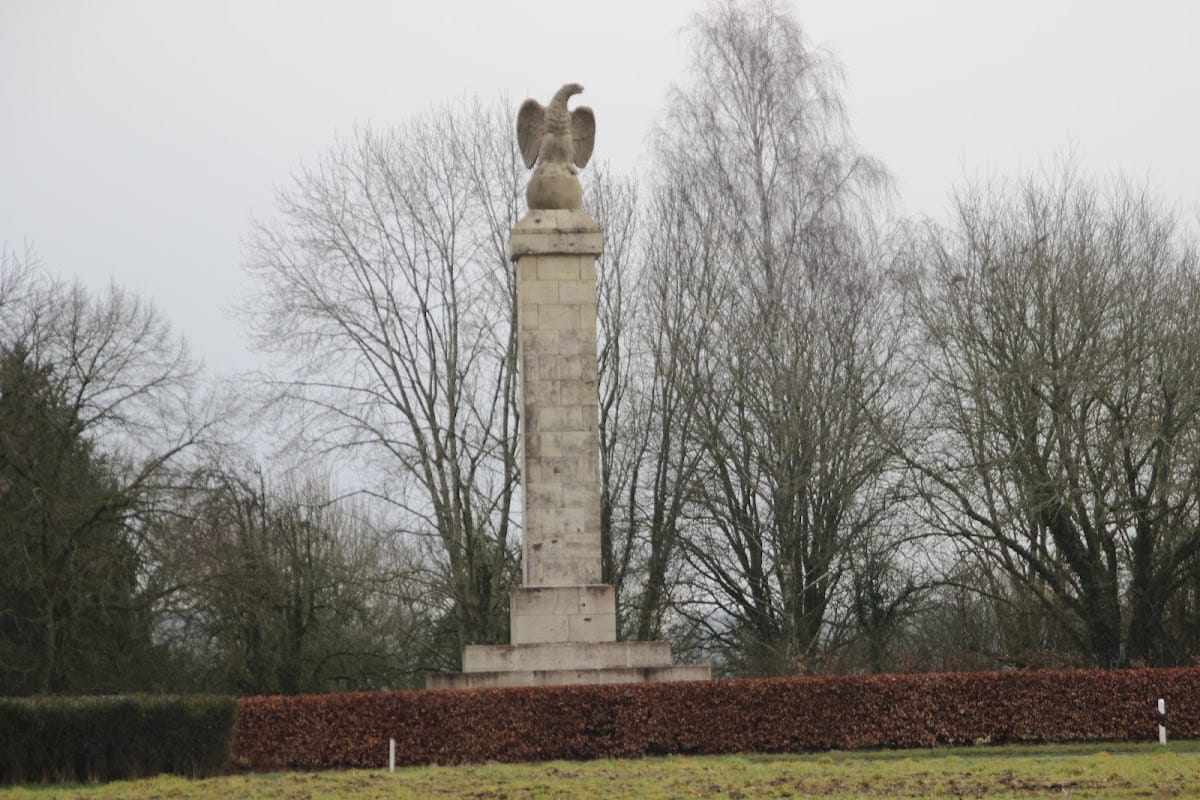
Two fragmented Roman milestones were discovered near Dalheim. One, found between 1870 and 1900 southwest of Dalheim, dates to the reign of Emperor Philip the Arab (244–249 CE). The other, found in 1934 near the road CR 153 in the Buchholzer Wald, bears inscriptions from Emperor Hadrian’s time around 121 CE. These milestones mark the vicus’s location along the Via Agrippa and its connection to imperial road networks.
Roadside Sanctuary in Buchholz
Along the Roman road near Buchholz, an ambulatory temple measuring approximately 8 by 7.5 meters was excavated. Discovered in 1934, it lies directly adjacent to the Roman road leading toward Trier. The sanctuary contained two heavily fragmented stone statues: a seated figure of Mercury, the Roman god of merchants, and a female deity likely identified as Rosmerta, Mercury’s Celtic companion. An inscription fragment naming Mercury was also found. The temple’s ambulatory design and location indicate its function as a roadside shrine serving travelers and traders.
Fortified Post (Burgus)
Constructed around the beginning of the 4th century CE, the burgus fortified the main street intersection within the vicus. It was built using massive stone blocks repurposed from the disused theater’s seating. The burgus represents a small military fortification integrated into the civilian settlement’s layout. Its remains include substantial masonry walls, though the full extent of the structure is not completely excavated.
Archaeological Discoveries
Excavations at Ricciacum have yielded a variety of artifacts spanning from the Late La Tène period through late antiquity. Pottery finds include locally produced and imported amphorae and tableware, recovered primarily from domestic quarters and workshop areas. Numerous inscriptions have been uncovered, including dedicatory altars in the temple precinct and the baths, some referencing specific deities and historical events such as barbarian attacks. Coins from various imperial reigns, including Philip the Arab and Hadrian, have been found along the main road and within settlement layers.
Tools related to craft production and agriculture have been discovered in workshop zones. Domestic objects such as lamps and cooking vessels appear in residential contexts. Religious artifacts include statuettes, altars, and votive offerings dedicated to Roman and Celtic deities like Minerva, Mercury, Jupiter, Epona, Fortuna, and Rosmerta. These finds were concentrated in the temple district, roadside sanctuary, and theater orchestra area, reflecting the religious practices within the vicus.
Preservation and Current Status
The site’s remains vary in preservation. The theater’s stone seating and outer walls survive in partial but substantial condition, with some areas stabilized to prevent further collapse. The temple district’s foundations and cult buildings are preserved mainly as masonry ruins, with some architectural elements exposed. The vicus residential quarter’s stone foundations and cellar walls remain visible in excavated areas, though wooden superstructures have not survived. The public baths’ rooms and hypocaust system are fragmentary but identifiable.
The fortified burgus walls survive as masonry ruins, though incomplete. Burial grounds are primarily known from subsurface remains and recovered grave monuments. The roadside sanctuary in Buchholz retains foundation outlines and fragmented statuary. Conservation efforts have focused on protecting exposed masonry and preventing erosion. Excavations continue under the supervision of Luxembourg’s heritage authorities, with some areas stabilized but left unexcavated to preserve stratigraphy. Vegetation and agricultural activity pose ongoing challenges to site preservation.
Unexcavated Areas
Significant portions of the vicus, especially the rear parts of residential parcels with gardens, wells, and ovens, remain only partially excavated. Large cemeteries along the main roads are known from surface finds and historic records but have not been fully explored. The full extent of the temple precinct beyond the excavated cult buildings is not completely mapped. Geophysical surveys and aerial photography suggest additional buried structures within the plateau and surrounding slopes.
Modern development and conservation policies limit extensive excavation in some areas. The establishment of a regional archaeological research center in 2016 aims to coordinate future investigations, balancing research with preservation. Planned excavations focus on clarifying the vicus’s urban layout and the relationship between military and civilian structures, but large-scale digs remain constrained by site protection measures.
Nearby sites