Gutenberg Castle: A Historic Fortress in Liechtenstein


Visitor Information
Google Rating: 4.5
Popularity: Medium
Official Website: www.burg-gutenberg.li
Country: Liechtenstein
Civilization: Medieval European
Site type: Military
Remains: Castle

History
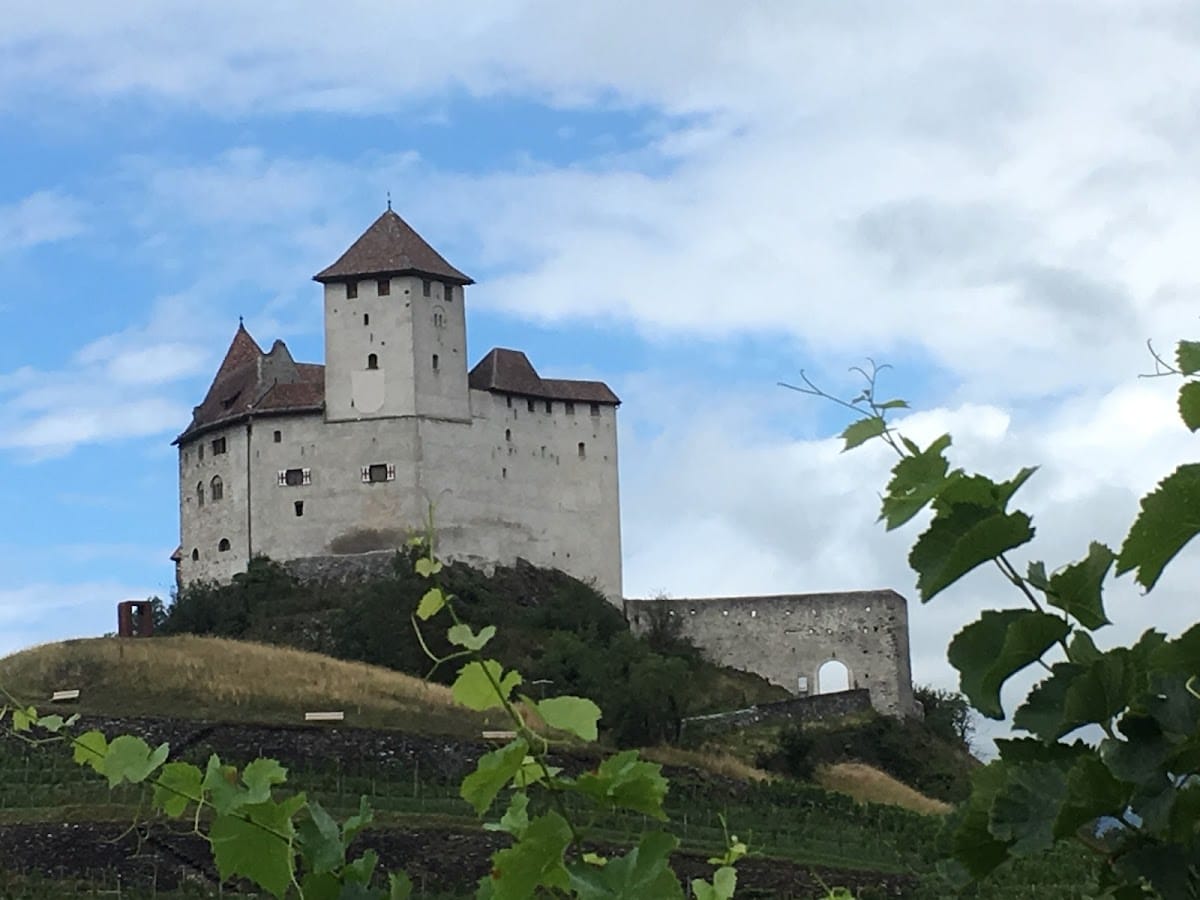
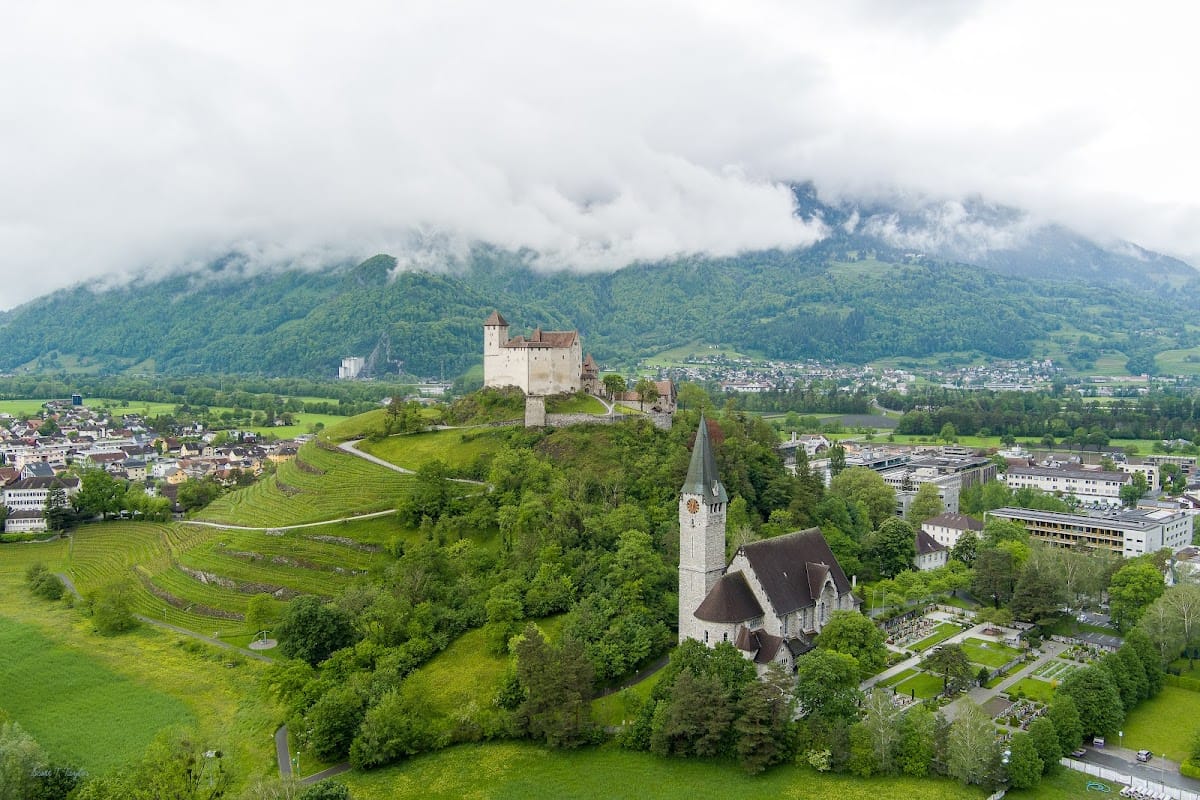
Gutenberg Castle stands on a 70-meter-high isolated rock hill in Balzers, the southernmost municipality of Liechtenstein. The site has been occupied since the Neolithic era, with early inhabitants leaving behind pottery from the Rössener culture around 4400 BCE. Initially, the hill served as a place of worship before a medieval church and cemetery were established there.
In the early 12th century, the cemetery was abandoned and replaced by a circular defensive wall. During the same century, a main tower was built by raising the keep and adding battlements, marking the castle’s transformation into a fortified stronghold. The noble Frauenberg family from Graubünden, Switzerland, owned the castle throughout the 12th and early 13th centuries.
After Heinrich von Frauenberg died in 1314, the castle passed to the House of Habsburg. The Habsburgs used it as a border watchpost to monitor the nearby Swiss cantons. The fortress suffered damage during the Swabian War in 1499. Emperor Maximilian I later ordered repairs and strengthened its defenses. A drawbridge existed until 1537 but was destroyed by a storm and never rebuilt.
From the 17th century onward, Gutenberg Castle lost its military importance. It endured several fires and was still inhabited around 1750. However, a major fire in Balzers in 1795 caused significant damage, and stones from the castle were repurposed for rebuilding the town. The ruins were acquired by the municipality in 1824 and sold to Princess Franziska of Liechtenstein in 1854.
Between 1905 and 1912, architect Egon Rheinberger restored the castle. He reconstructed the main buildings based on surviving remains and added new structures, including a chapel, a chaplain’s house, and a smithy. After Rheinberger’s death in 1936, the castle was rented for events and sold in 1951 to private owners, among them actress Medea de Novara. The government of Liechtenstein purchased the castle in 1979 for use as a museum and state venue, with the last private resident retaining living rights until 2001.
Remains
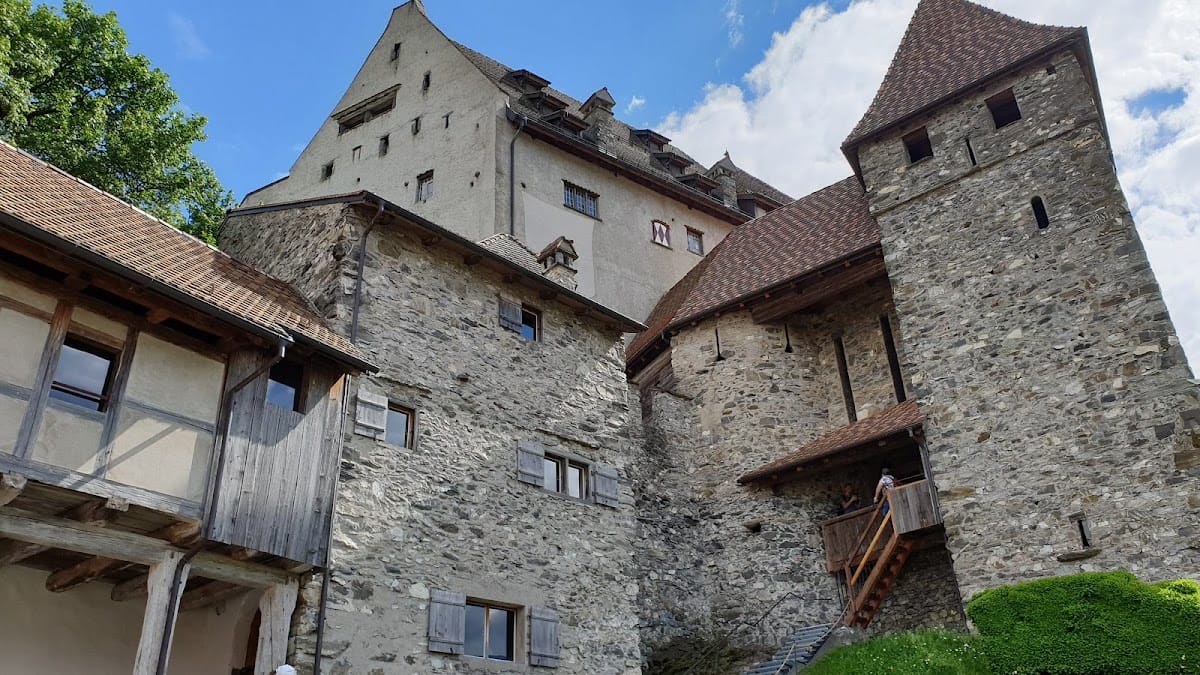
Gutenberg Castle occupies a roughly circular area atop a steep rock hill overlooking the Rhine valley. The original medieval fortification consisted of a ring wall encircling the former church site. The main tower, built in the 12th century, features battlements with merlons, the upright sections of the defensive parapet.
Archaeological excavations uncovered foundations that include a dry stone wall dating to the late Iron Age and masonry from Roman times. Roman coins found on site, dated around 350 CE, suggest a military presence before the medieval period. These earlier layers indicate the hill’s long-standing strategic importance.
The castle once had a drawbridge, destroyed by a storm in 1537 and never replaced. The 20th-century restoration by Egon Rheinberger carefully reconstructed the main buildings using the original ruins as a guide. Rheinberger also added a chapel, a chaplain’s residence, and a smithy, furnishing the interiors with period-appropriate items.
Today, the castle’s main tower, ring wall, and additional buildings from the restoration remain well preserved. The chapel includes an adjoining rose garden, both reconstructed and accessible during summer. The bailey, or outer courtyard, remains open throughout the year. Numerous archaeological finds, such as bronze figurines and Neolithic pottery, continue to highlight the site’s cultural and historical significance.
Nearby sites