Fortress of Babylon: A Byzantine Stronghold in Old Cairo
Visitor Information
Google Rating: 4.4
Popularity: Low
Google Maps: View on Google Maps
Country: Egypt
Civilization: Byzantine, Roman
Remains: Military

History
The Fortress of Babylon is located in Old Cairo, within the Cairo Governorate of Egypt, near the Mar Girgis metro station. It was originally built in the 2nd century AD by the Roman Emperor Trajan during the period of Roman control over Egypt. This fortress was distinct from an earlier fortress mentioned by the ancient historian Strabo, which stood south of the Palace of Shams near the present-day Babylon Monastery.
In the 4th century, the fortress underwent significant restoration and expansion under Emperor Arcadius. It became a key Byzantine military stronghold in Egypt, housing a garrison of about 4,000 soldiers. The fortress was strategically important as the last Byzantine bastion in Egypt during the early Muslim conquests.
Starting in May 640 AD, Muslim forces led by Amr ibn al-As laid siege to the fortress. The siege lasted around seven months, ending with the fortress’s fall on 9 April 641 AD. This event marked a turning point in the Muslim conquest of Egypt and the introduction of Islam into the region. The fortress was heavily defended by thick walls and moats filled with Nile water, making it a difficult target.
During the siege, negotiations took place involving the Byzantine governor Cyrus of Alexandria, also known as Muqawqis, who agreed to pay tribute to the Muslim forces. However, the Byzantine Emperor Heraclius rejected this agreement, leading to continued fighting until the fortress was captured. After its fall, Amr ibn al-As founded the city of Fustat nearby to serve as a military and administrative center for the new Arab rulers.
Following the conquest, the fortress area became home to several Christian and Jewish religious sites, including the Hanging Church, Saint George Church, and a Jewish temple. The fortress was also known by the name “Qasr al-Sham’,” or Palace of the Candle, a title derived from a monthly tradition of lighting a candle on one of its towers to signal the sun’s movement.
Remains
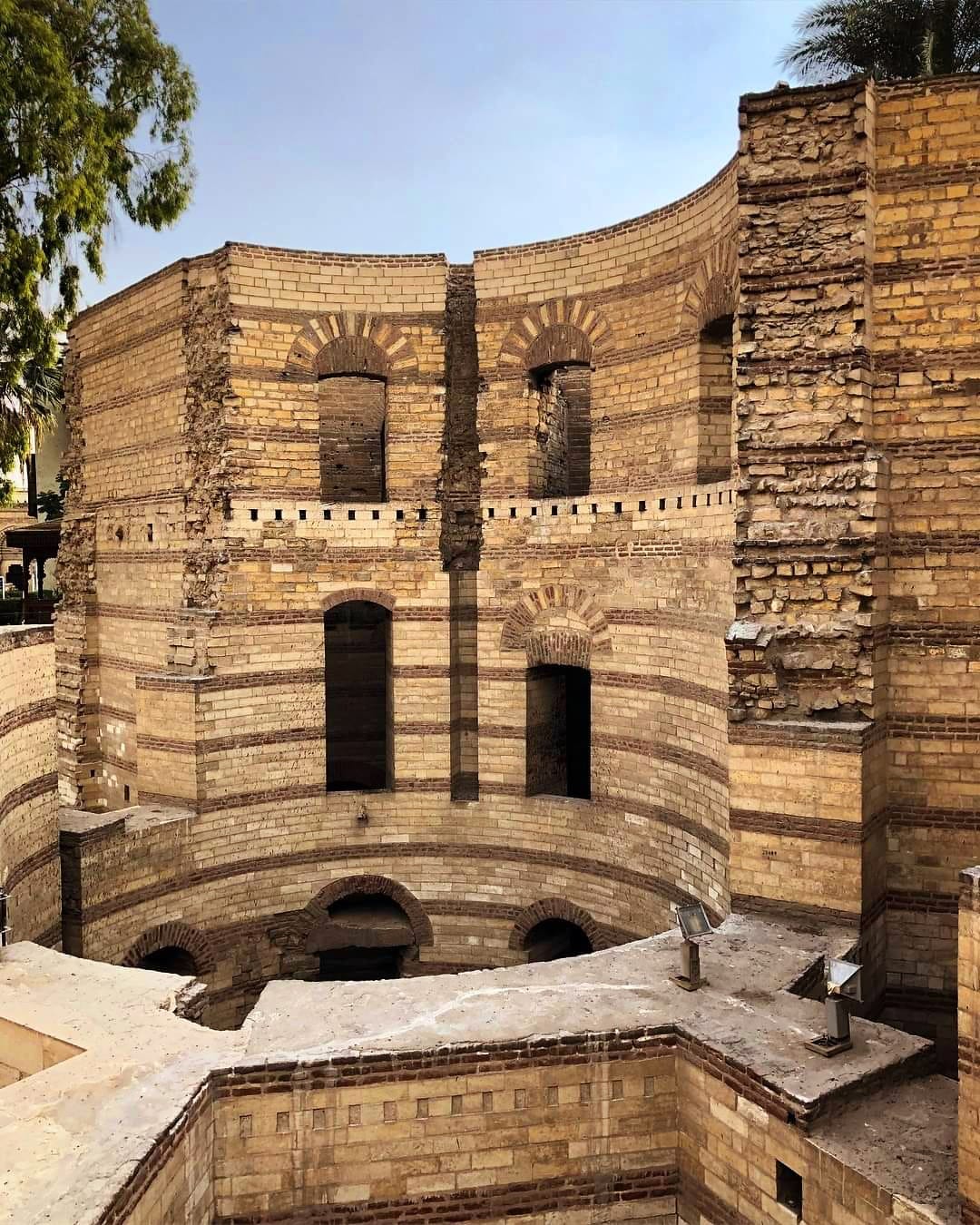
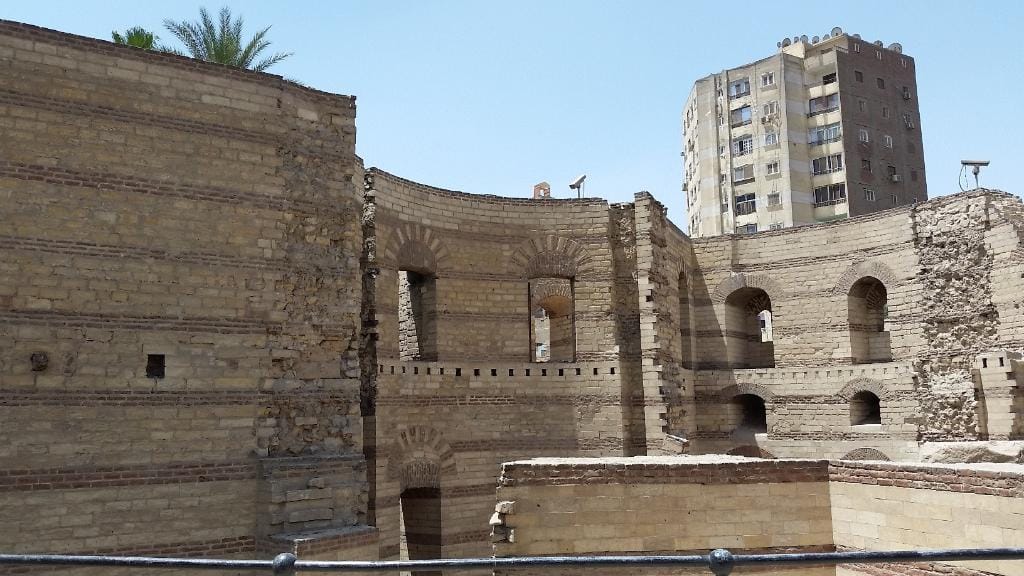
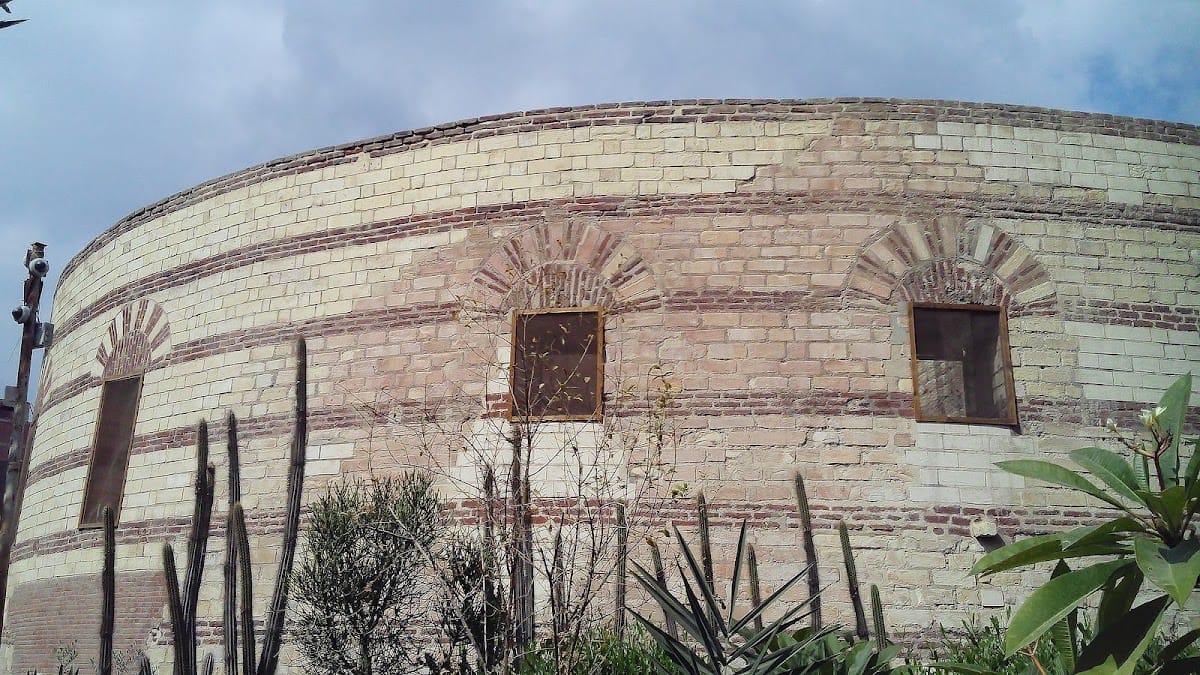
The fortress covers roughly half a square kilometer in what is now Old Cairo. Its walls were built using stones taken from ancient Egyptian temples, combined with red bricks measuring about 30 by 20 by 15 centimeters. The walls are approximately 2.4 meters thick and reach heights of up to 18 meters, reinforced by numerous towers and bastions.
Among the surviving structures, the northern gate stands out, flanked by two large towers. One of these towers now supports the Hanging Church, also known as al-Muqattam Church. The fortress was surrounded by moats filled with water from the Nile, which enhanced its defensive strength.
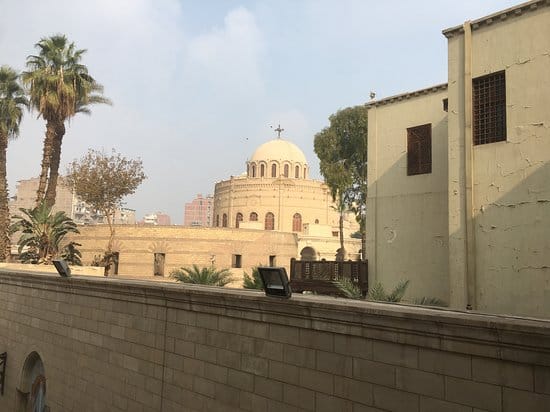
Defensive measures included iron grates placed in the moats to hinder attackers and the use of catapults, known as mangonels, by the defenders. Over time, several churches and religious buildings were constructed on or near the fortress walls, including Saint George Church, Abu Serga, the Virgin Mary Qasriya al-Rihan, the Monastery of Saint George for nuns, and Saint Barbara, alongside a Jewish temple.
Today, the most prominent visible remains are the northern gate and its flanking towers. These features reflect the fortress’s role as one of the strongest Byzantine military installations in Egypt during its time.