Flint Castle: A Medieval Fortress in Wales
Visitor Information
Google Rating: 4.6
Popularity: Medium
Google Maps: View on Google Maps
Official Website: cadw.gov.wales
Country: United Kingdom
Civilization: Medieval European
Remains: Military

History
Flint Castle, located in the town of Flint in Wales, United Kingdom, was built by the English monarchy during the late 13th century as part of the campaign to assert control over the region. Construction began in 1277 under King Edward I, who sought to establish a chain of fortresses in North Wales after his military incursions into Welsh territories.
During its early years, Flint Castle played a critical military role within what became known as Edward I’s “Iron Ring,” a series of castles designed to encircle and dominate North Wales. Work on the castle continued until around 1284, and it quickly became a focal point in conflicts between the English crown and Welsh leaders. In 1282, Welsh forces led by Dafydd ap Gruffydd laid siege to the castle. Later, in 1294, during the revolt led by Madog ap Llywelyn, the castle’s constable set fire to it intentionally in an effort to prevent it from falling into rebel hands. Repairs and rebuilding efforts followed to restore its defensive capabilities.
Just outside the castle’s outer walls, an English settlement was established as part of a broader strategy to colonize the area after the Welsh Wars. English settlers received land titles, and the new plantation town was protected by a ditch and wooden palisade. The layout of this early town can still be traced in Flint’s street patterns today.
In the late 14th century, Flint Castle gained historical note as the place where Richard II was held captive in 1399 by Henry Bolingbroke before being escorted back to London. Centuries later, the castle was involved in the English Civil War during the 1640s. Initially held by Royalist supporters, it was besieged for three months and ultimately surrendered to Parliamentarian forces in 1647. After its capture, the castle was deliberately damaged, or “slighted,” to ensure it could not be used again for military purposes.
The castle saw further use in the 19th century when part of its outer ward was converted into the county jail for Flintshire, and nearby operations included a quarry. Today, Flint Castle is managed by Cadw, the Welsh government agency responsible for protecting historic sites, preserving the ruins and keeping the site accessible to the public.
During construction, the castle employed approximately 18,000 workers, initially led by Richard L’engenour. From 1280 to 1282, the project was accelerated under James of Saint George, a skilled master mason from Savoy. His influence contributed significantly to the castle’s distinctive and innovative design, which differs from other English fortifications of the period. The role of Constable of Flint Castle was linked by law to the office of Mayor of Flint from 1284 until 1935, with the constable’s residence originally located in the castle’s main keep.
Remains
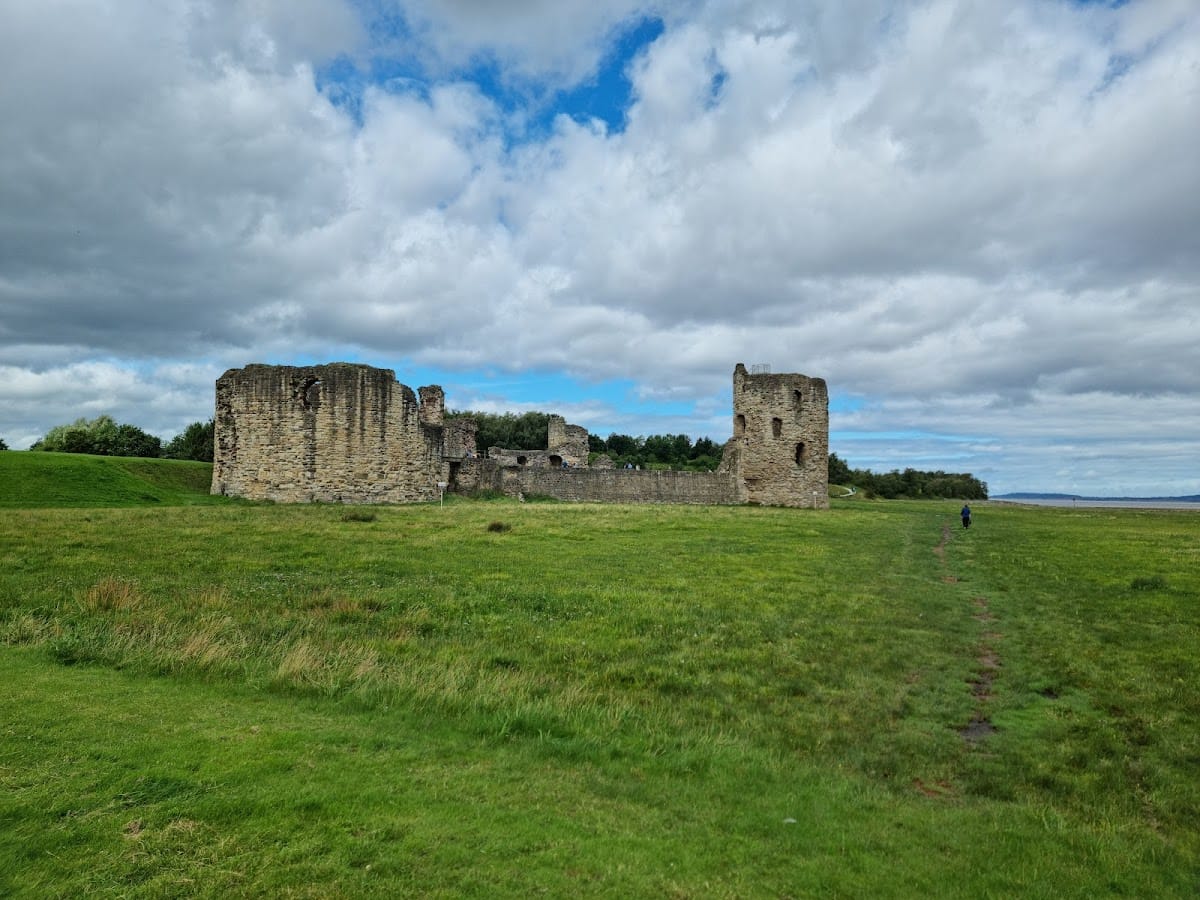
Flint Castle features a distinctive layout organized around an inner courtyard and an outer bailey, which are separated by a tidal moat roughly six meters deep. This moat connects to waterways near the River Dee estuary, enabling transport and supply by river or sea. The two main sections are linked by a gatehouse equipped with a drawbridge, providing controlled access across the moat.
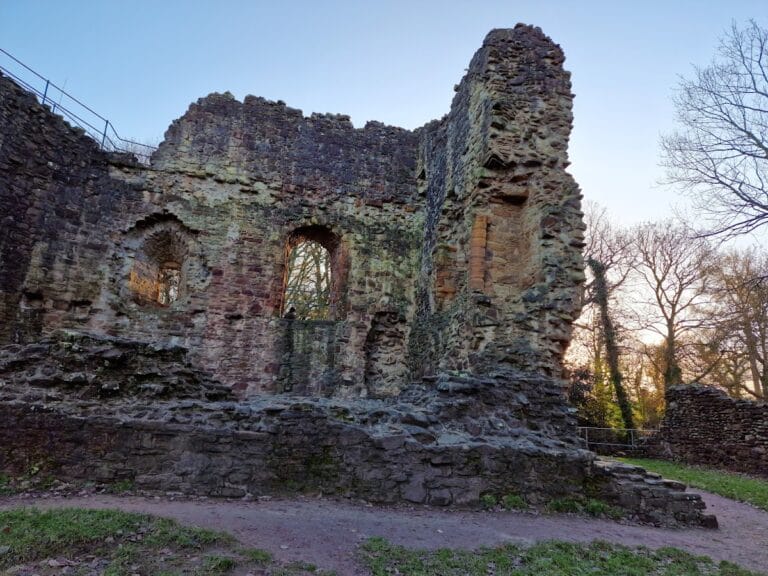
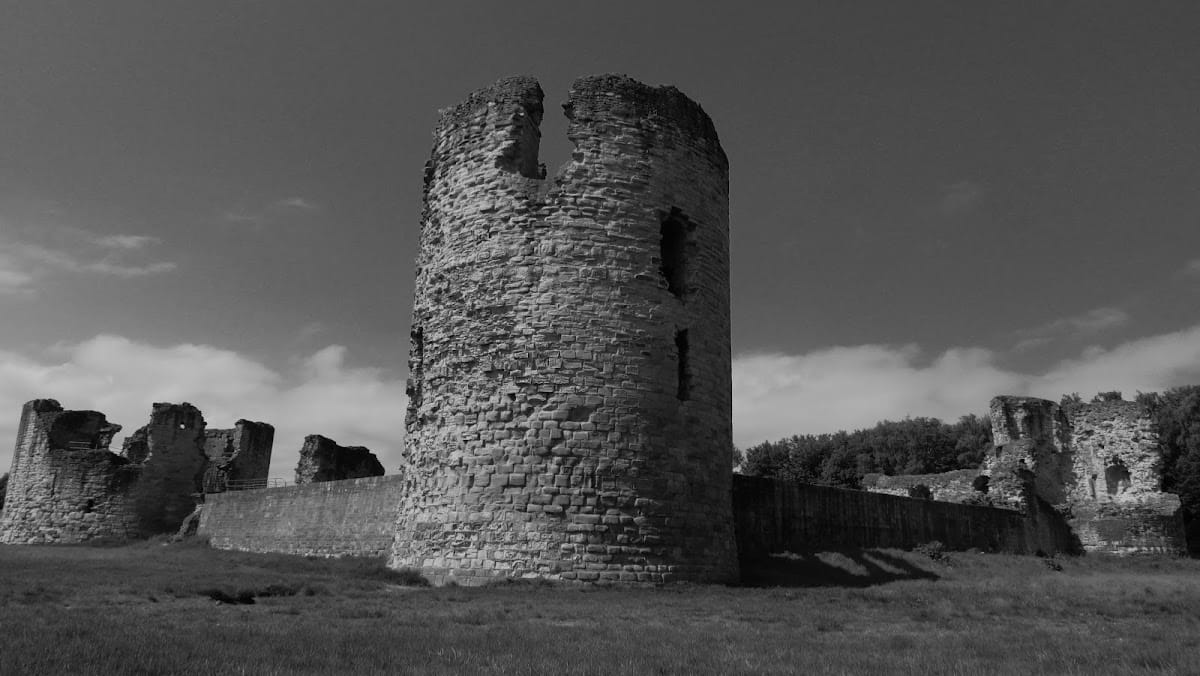
The inner ward is defended by three large round towers positioned at its corners, each reflecting different states of preservation. The northeast tower is notable for retaining two spiral staircases, arrow slits designed for archers, built-in latrines, and fireplaces, indicating its use for both defense and domestic functions. The southwest and northwest towers show remains of staircases and chimneys, though less fully preserved.
A particularly striking feature of Flint Castle is its freestanding, circular keep, also called the donjon, which stands apart from the curtain walls to provide an independent stronghold within the fortification. The keep has exceptionally thick walls, measuring about seven meters thick at the base and tapering to five meters thick higher up. It spans over 21 meters in diameter. Originally, access to the keep was granted by a drawbridge leading into a central chamber on the first floor. Above this were at least one or more floors containing small rooms built within the thick surrounding walls. The keep’s ground floor includes a vaulted passageway that runs around its interior, a structural feature providing strength and circulation. In 1301, a timber gallery was added on top of the keep to accommodate a visit by Edward, Prince of Wales. Surrounding the keep was a dry moat, giving it additional isolation and protection even within the castle grounds.
The castle was primarily constructed from locally sourced Millstone Grit ashlar, a fine-cut stone, along with sandstone. The original external walls of the keep were faced with smooth stonework, which would have given a neat, imposing appearance. Outside the inner ward, the outer bailey contained a defensive wall designed to protect what was then a harbor on the western shore of the Dee estuary.
The gatehouse controlling access across the moat is simpler than those found in some of Edward I’s later castles. It consisted of a fortified structure with a single drawbridge, ports for a portcullis (a heavy grilled door that could be lowered in defense), and thick wooden doors. Unlike future designs by Edward, this gatehouse did not feature twin towers flanking the gateway.
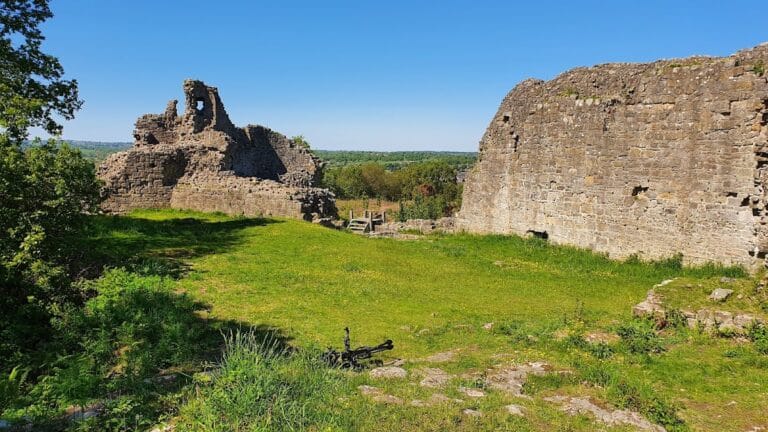
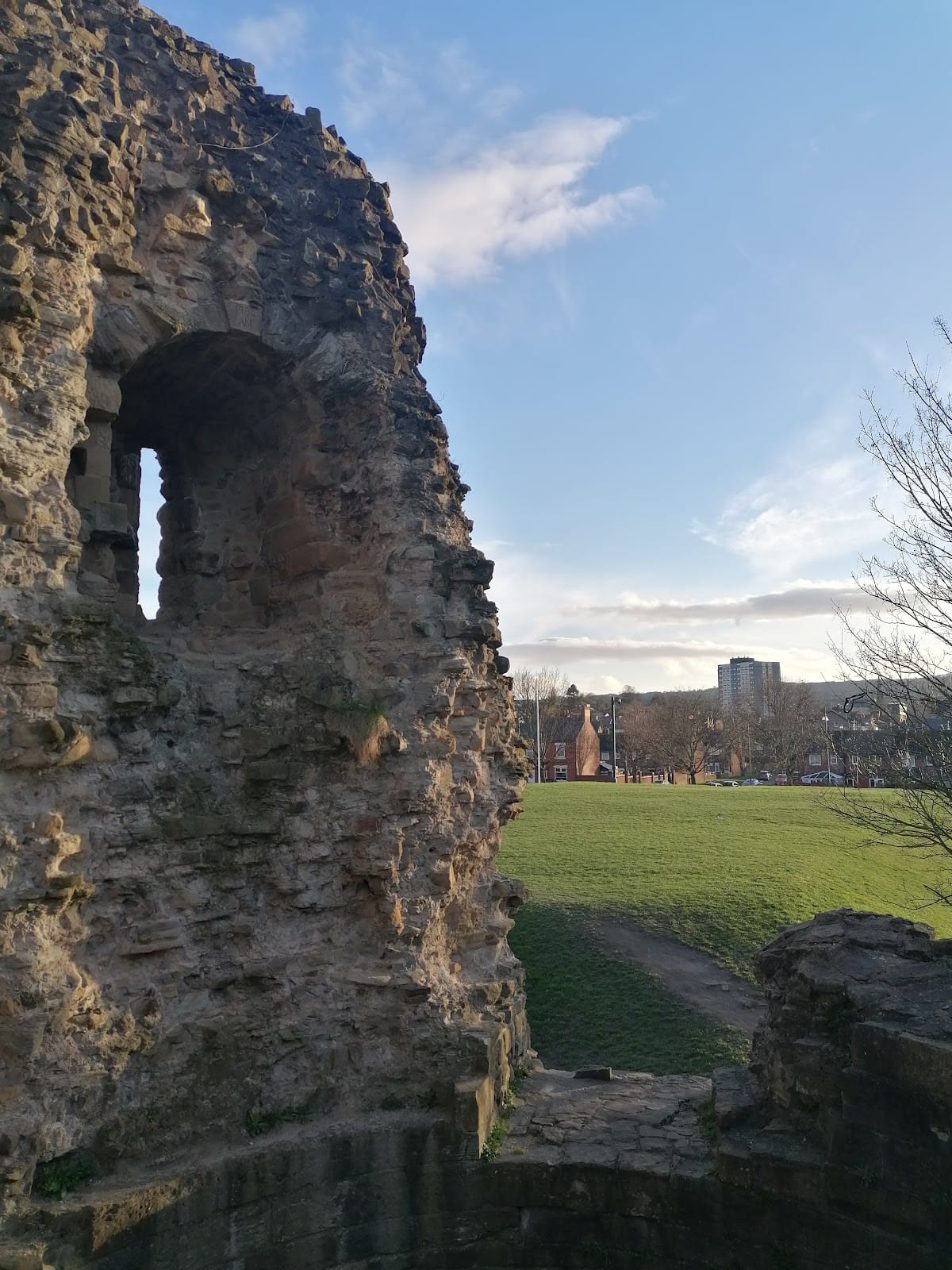
Within the inner ward, archaeological remains indicate the foundations of the great hall—known as the palas—and associated service buildings. These structures would have housed administrative and domestic activities during the castle’s operational period. The curtain walls enclosing the wards mostly survive as low remnants, some of which have been reconstructed to a slight height. These walls include arrow slits for defense, a walkway along the battlements, and latrines on the southern face.
Flint Castle’s design is unique in the British Isles and shows clear influence from castles in Savoy and parts of France, notably the keeps at Aigues-Mortes and Yverdon. This reflects the role of James of Saint George, whose experience with continental fortifications shaped the castle’s innovative features.
Outside the castle, the plantation town was enclosed by a defensive ditch and a wooden palisade built on an earth bank. This protective enclosure has left a visible imprint on the street layout of modern Flint, preserving the outline of medieval defenses.
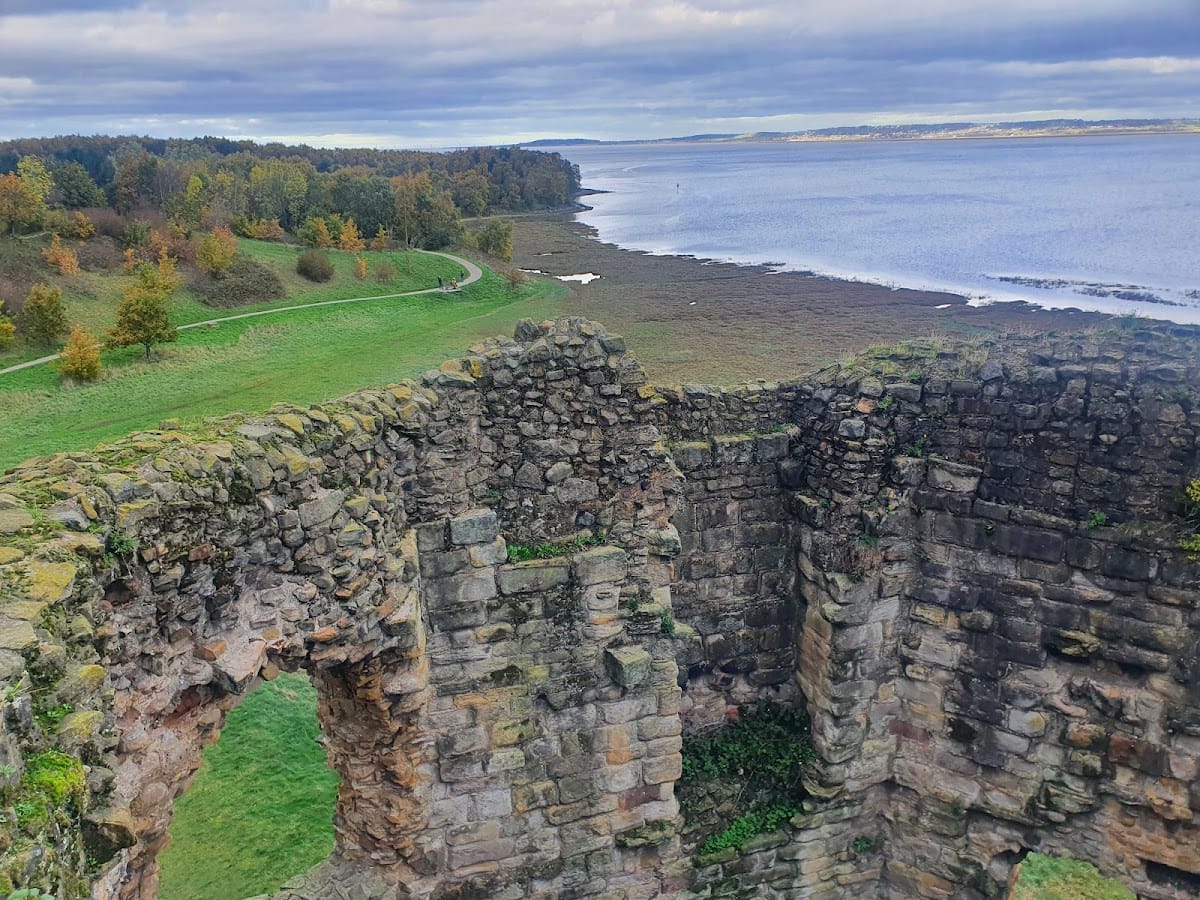
In recent years, a new spiral staircase was installed in the northeast tower, allowing visitors to climb to a viewing platform with sights over the Dee Estuary, demonstrating continued conservation and adaptation efforts.
Nearby sites