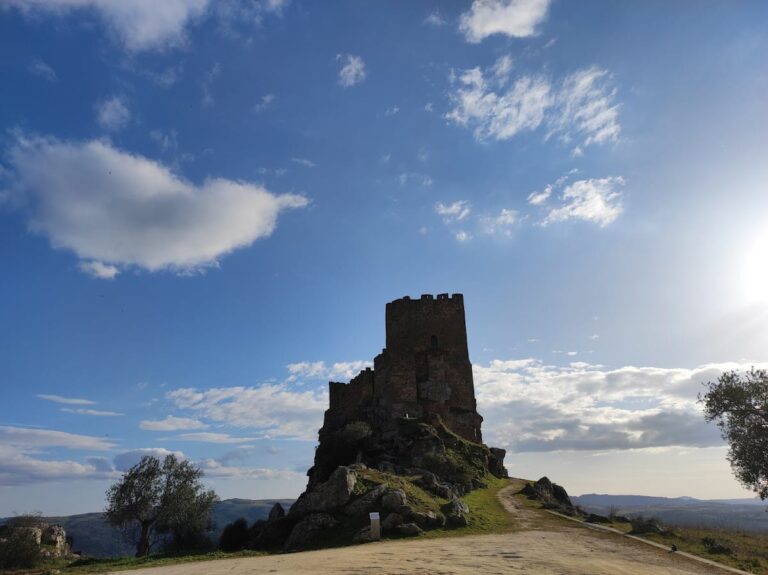
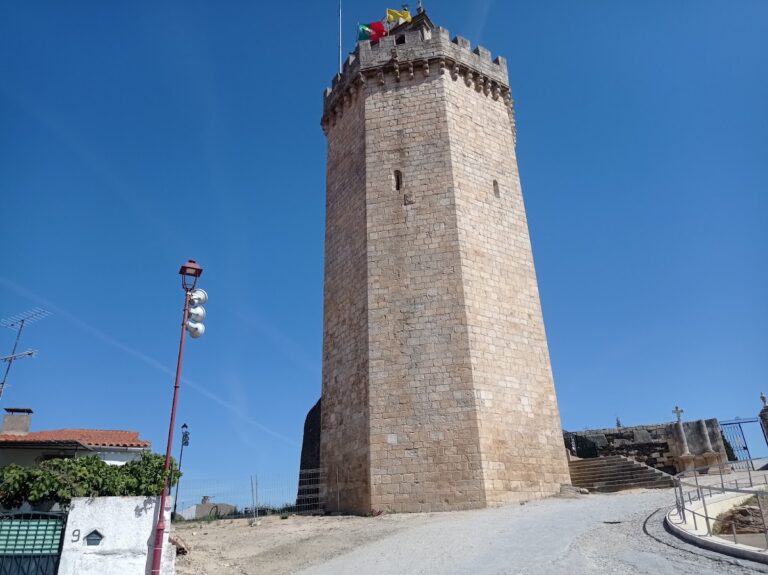
Castle of Penas Róias: A Medieval Fortress in Mogadouro, Portugal
Visitor Information
Google Rating: 4.4
Popularity: Low
Google Maps: View on Google Maps
Country: Portugal
Civilization: Medieval European
Remains: Military

History
The Castle of Penas Róias sits in the municipality of Mogadouro, Portugal. It was originally established by the Knights Templar, a medieval Christian military order, to help defend the northeastern part of what became the Portuguese kingdom.
Before the castle’s medieval foundation, the site shows signs of earlier settlement, likely connected to a local castro (a type of fortified settlement common in the Iberian Peninsula during the protohistoric period). However, this early occupation ended with the Roman invasion, when the settlement was abandoned.
During the period of the Christian Reconquista—the gradual retaking of the Iberian Peninsula from Muslim rule—the area fell first to the Kingdom of León. After the establishment of Portugal as an independent realm with its capital at Coimbra, King Afonso Henriques, who reigned from 1112 to 1185, assigned the Templar Order the task of securing the kingdom’s southern and eastern borders. In 1145, Fernão Mendes de Bragança, lord of the Terra de Bragança, granted lands including Penas Róias to the Templars. This initiated the construction of the castle as part of a broader defensive strategy.
Traditionally, construction of the castle began in 1166 under the leadership of Gualdim Pais, the Master of the Templar Order. Although a damaged inscription on the keep suggests the possibility of dates between 1172 and 1181, and the presence of Gualdim Pais’s name, this cannot be fully confirmed. Under King Sancho I (1185–1211), efforts were made to repopulate the village of Penas Róias, which became its own municipal seat, even as the Templars shifted their attention to other regions further south.
The village is recorded in official inquiries conducted in 1258 and was granted a Foral charter—a medieval document establishing municipal rights—in 1272. This charter was renewed the following year under King Afonso III (1248–1279), confirming the village’s administrative status.
After the Templar Order was dissolved in the early 14th century, King Dinis (1279–1325) transferred their properties, including Penas Róias, to the Order of Christ in 1319. This change likely led to restoration and reinforcement of the castle’s defenses. In 1457, documentation shows that the village and castle were sold to Álvaro Pires de Távora, a local noble.
By the early 16th century, the castle and village were enclosed within defensive walls, as depicted in drawings made by the Portuguese military surveyor Duarte de Armas. King Manuel I issued a new Foral charter in 1512, confirming the settlement’s municipal privileges.
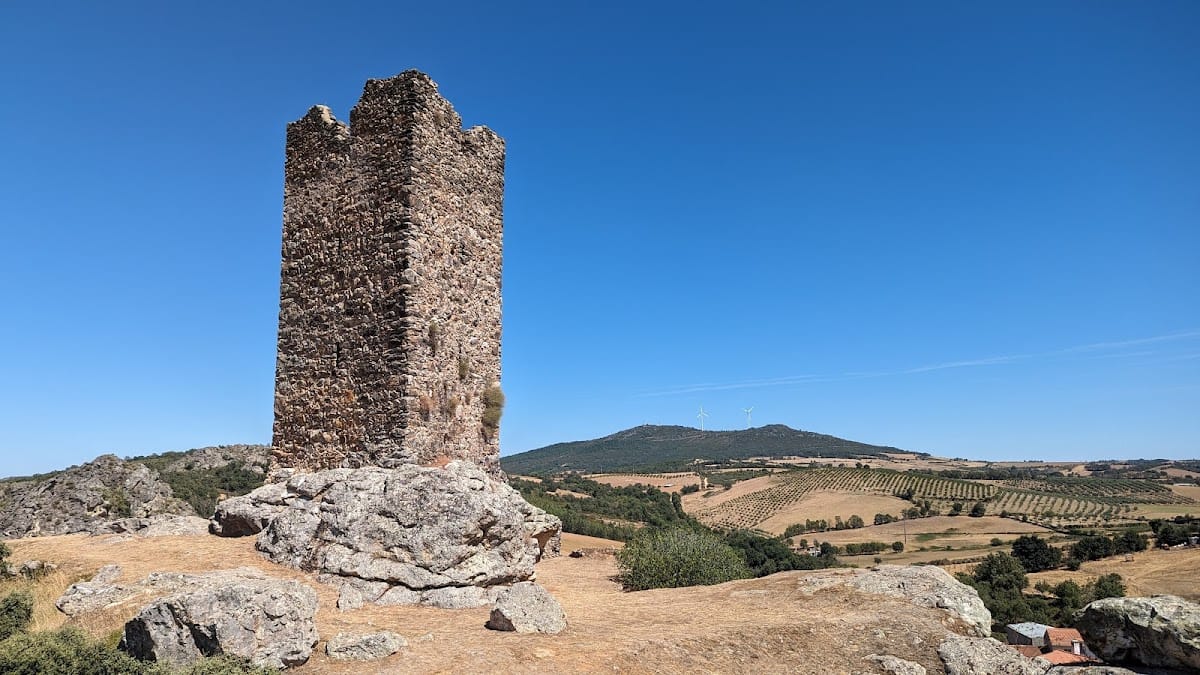
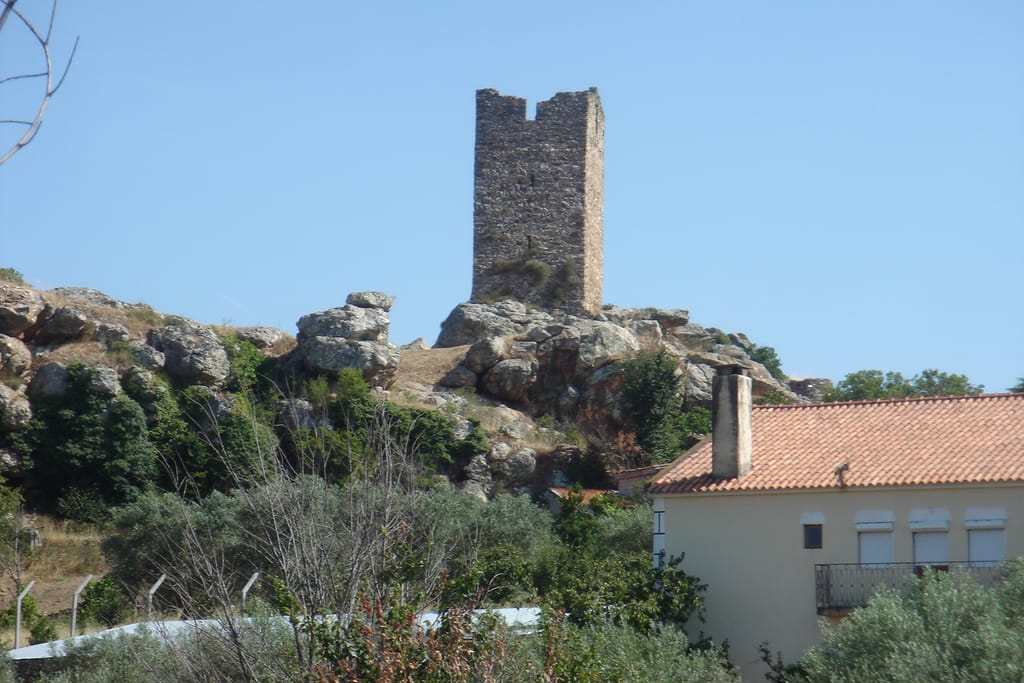
In the 20th century, the castle’s historical value was officially recognized when it was classified as a National Monument in 1945. Archaeological excavations near the site in 1977 uncovered remnants of ancient columns, and stabilization and repair work on the castle’s walls and keep followed between 1977 and 1978. Today, only one tower—closed to the public—and fragments of the medieval walls and turrets remain standing.
Remains
The Castle of Penas Róias showcases Romanesque military architecture, built using local quartzitic schist stone held together with mortar. Its layout includes a central keep and surrounding defensive walls reinforced by four turrets—two with faceted (many-sided) shapes and two cylindrical in form. The castle stands immediately adjacent to the village it once protected.
The central keep, or Torre de Menagem, is a distinctive square tower approximately five meters on each side. This main tower is constructed using simple schist masonry and divides internally into three floors. Two of its exterior facades, facing east and south, feature windows framed in finely cut stone, allowing light inside. The entrance is located on the west face, raised about six meters from the ground, and was originally reachable only by a removable wooden ladder, enhancing its defensibility. Above this door is a lintel carved with a cross pattée—a type of cross associated with the Templar Order—and an eroded inscription. This inscription references Gualdim Pais, the Templar Master associated with the castle’s construction, and notes the year 1166 by using the Hispanic Era calendar.
Near the keep is a small circular tower with a talus base—a sloping lower wall designed to strengthen the structure. This tower is a more recent addition rather than part of the original medieval construction.
Historically, the village was surrounded by a defensive wall connected to the castle. While much of this town wall has been lost over the centuries, archaeological investigations during the 20th century revealed its traces, confirming the existence of a broader fortified enclosure around the settlement. Today, what remains of the castle are fragments of medieval walls and turrets, which have survived in varying conditions. Restoration efforts in the late 1970s focused on consolidating these structures to prevent further loss, preserving the essential features of this medieval fortress.
Nearby sites