Castle of Monzón de Campos: A Historic Fortress in Spain


Visitor Information
Google Rating: 4
Popularity: Low
Google Maps: View on Google Maps
Country: Spain
Civilization: Unclassified
Remains: Military

History
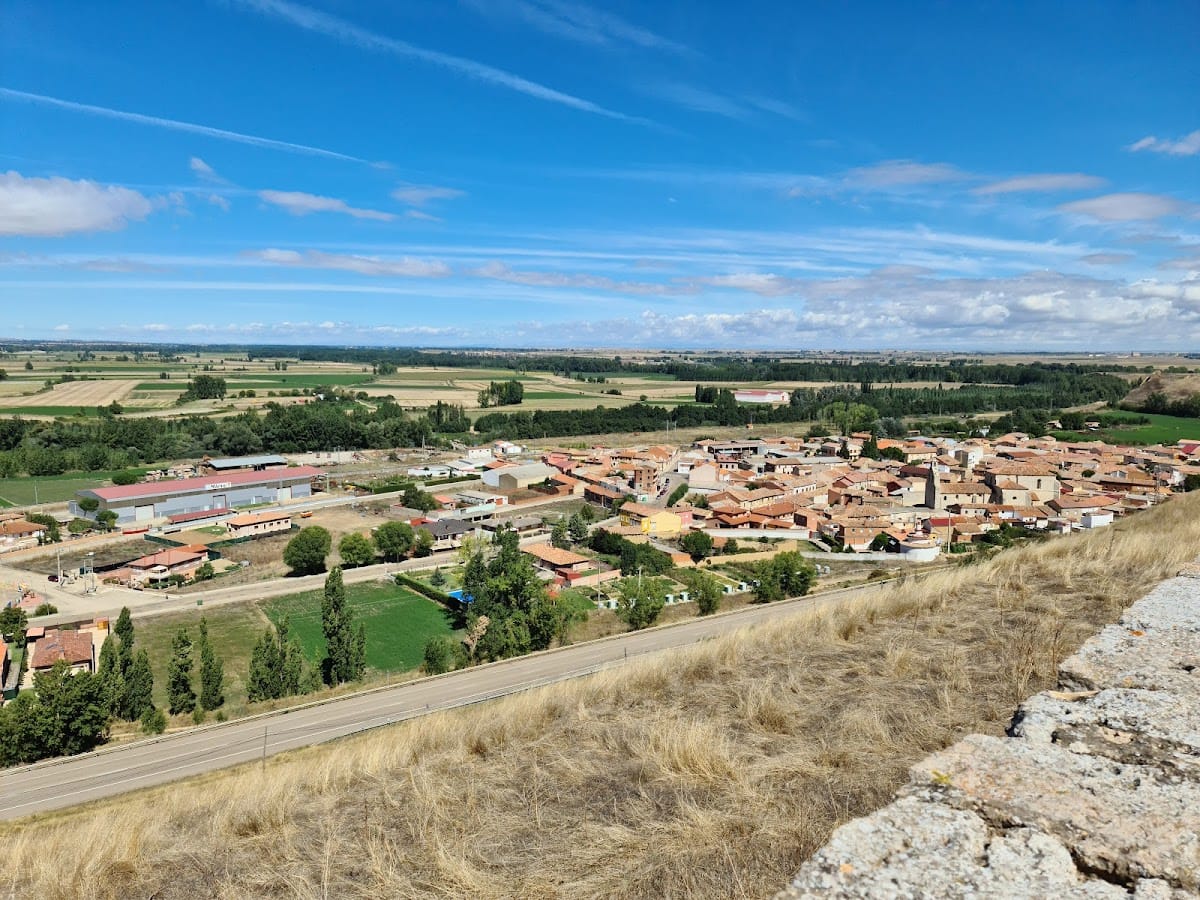
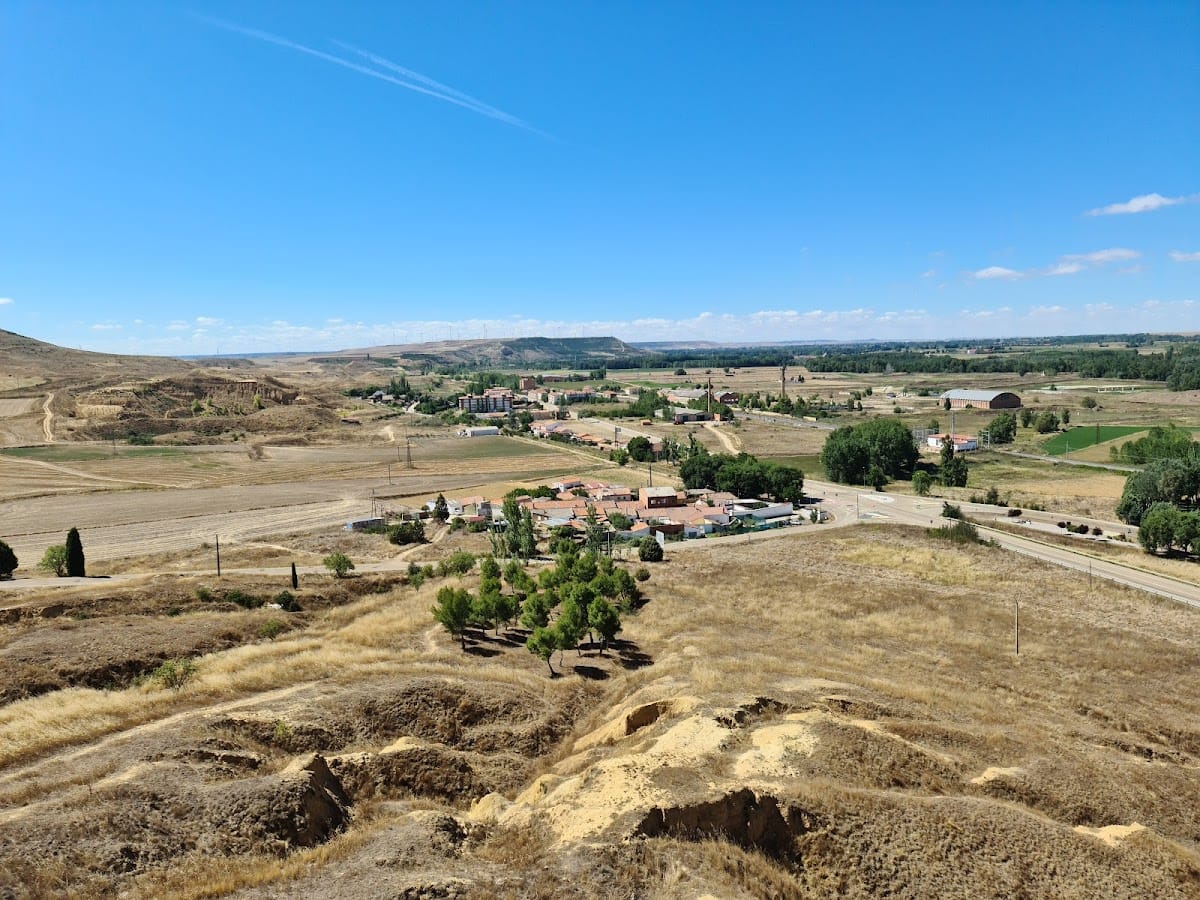
The Castle of Monzón de Campos stands on a hill within the town of Monzón de Campos, Spain. This fortress was originally established by the Christian kingdoms during the 10th century amid efforts to secure and repopulate borderlands between the Kingdoms of León and Castilla. Its foundation followed the important Christian victory at the Battle of Simancas in 939, when King Ramiro II entrusted Ansur Fernández with creating a defensive and administrative center for the new County of Monzón.
During the early medieval period, the castle served as the heart of this county, a region that extended over a large area in eastern Palencia and reached as far north as parts of present-day Cantabria. The site played a significant role in local politics and commerce, acting as a strategic border fortress against neighboring territories such as the County of Castilla. In 1028, the castle is recorded as a refuge for the Vela brothers after they assassinated Count García Sánchez of Castilla. Their presence led to a siege by King Sancho of Pamplona, who ultimately captured and executed them at the castle.
In 1109, the castle gained further prominence when it became the venue for the marriage of Queen Urraca of León and Alfonso the Battler of Aragón. Count Pedro Ansúrez acted as a sponsor for the union, underscoring the fortress’s importance as a noble seat and political stage. Throughout the 12th and 13th centuries, the castle was repeatedly involved in regional disputes, including the civil war between supporters of King Enrique I and Queen Berenguela in 1217. It was also contested during early 14th-century conflicts involving the Infantes de la Cerda and King Fernando IV, reflecting its continued strategic and symbolic value.
For much of its history, the castle remained under royal possession until King Alfonso XI granted it to his favored noblewoman, Leonor de Guzmán. Upon her death in 1352, ownership transferred to Sancho Sánchez de Rojas, who became the first lord of Monzón and Cabia. The Rojas family maintained control, confirmed by King Enrique II, and were later elevated to the title of Marqueses de Poza. In 1419, Juan Rodríguez de Rojas established a hereditary estate (mayorazgo) that included the castle and surrounding town, solidifying its status under this noble lineage.
The castle’s strategic relevance persisted into the early 16th century during the War of the Communities, a popular uprising in Castile. Comunero forces took the fortress without resistance and subsequently used it briefly as a prison. After centuries of military and administrative use, the castle’s role evolved significantly in the modern era. Recognized officially as a National Monument in 1949, it underwent restoration efforts in the mid-20th century and was later adapted as a state-run tourism facility from 1975 to 1988. Notably, in 1978, the castle hosted the founding meeting of the Consejo General de Castilla y León, a regional governing body.
Historical sources from Catalonia add further layers to the castle’s past, suggesting a possible Arab origin dating back to the 10th century. According to these accounts, the fortress was conquered in 1089 by King Sancho Ramírez and handed to the Knights Templar in 1143. The Templars are credited with expanding the castle’s defenses by adding walls, towers, stables, a refectory, and dormitories. It is also recorded that the castle resisted a siege by James II of Aragon in 1309. Later, during the Peninsular War in the early 19th century, it was occupied by French troops under Marshal Suchet before being liberated by Spanish forces in 1814. The castle’s visible exterior today largely reflects renovations made during the 18th century.
A major rehabilitation project lasting from 2001 to 2023 restored the castle’s structure and made it accessible for cultural purposes. Ownership now rests with the Provincial Council of Palencia, ensuring the site’s preservation as a heritage landmark.
Remains
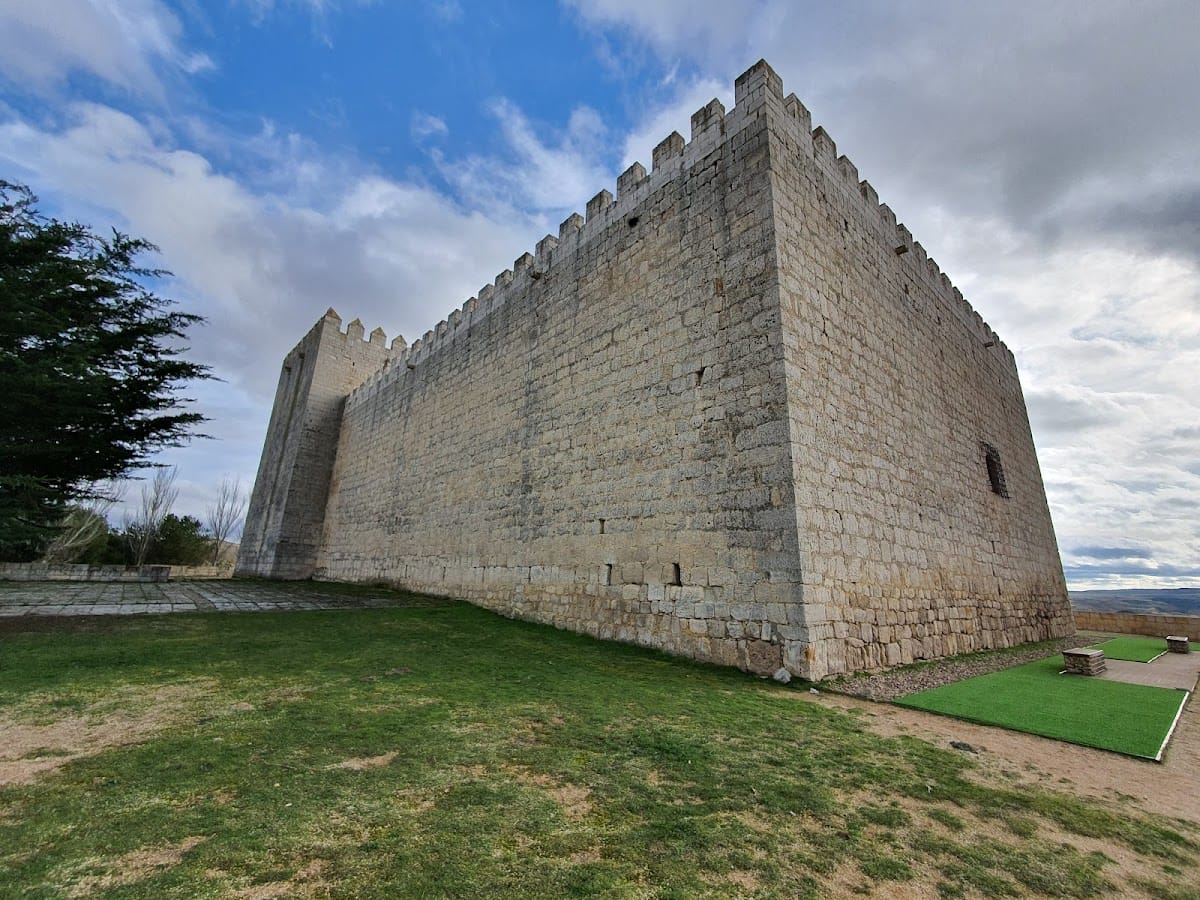
The Castle of Monzón de Campos is built around a strong, square-shaped keep that measures approximately 13 meters on each side. This core structure is believed to be the oldest part of the fortress and exhibits finely cut ashlar stonework—carefully shaped blocks laid in regular courses. The keep’s design features an elevated entrance on the side facing the castle interior, which could be accessed via a raised walkway, likely intended to improve defense. Above this entrance, a machicolated balcony projects outward; machicolations are openings in the floor of the balcony used for dropping objects or firing upon attackers. The keep is also lined with numerous narrow arrow slits arranged at various heights on each of its four walls, providing vantage points for archers. Its roofline is finished with distinctive pyramidal battlements that crown the tower.
Attached to the keep on one side is a trapezoidal enclosure dating from the early 14th century. This outer wall was constructed using rubble masonry, a rougher technique involving irregular stones bound with mortar. Access to this enclosure is gained through a pointed arch that bears the coat of arms belonging to the Rojas family, long-time owners of the castle. The lower section of the northern face of the enclosure contains a series of arrow slits, forming a defensive battery to protect the walls from hostile forces.
Among the castle’s preserved elements is a Romanesque portal originally from the church of Santa Eugenia in the now-submerged village of Cenera de Zalima. This decorative doorway was relocated to the castle during restoration efforts and represents medieval stone carving typical of the Romanesque period, characterized by rounded arches and detailed sculptural work. Another Romanesque doorway at ground level within the keep is not original to the tower but was similarly transplanted from the flooded church of Zenera de Zalima, reflecting the interweaving of local architectural heritage within the castle complex.
Much of the castle’s external look today comes from modifications made in the 18th century, which updated the façade and some structural elements. Restoration carried out in the mid-20th century and further rehabilitation in the early 21st century have preserved these historical layers while stabilizing the building for continued cultural use. The surviving walls, towers, and gateways convey the castle’s role as a fortified seat of power through many centuries, with visible signs of adaptation to evolving military needs and noble residence functions.
Nearby sites