Castle of Castrojeriz: A Historic Fortress in Spain
Visitor Information
Google Rating: 4.5
Popularity: Low
Google Maps: View on Google Maps
Official Website: www.castrojeriz.es
Country: Spain
Civilization: Unclassified
Remains: Military

History
The Castle of Castrojeriz is situated in the town of Castrojeriz, Spain, and originated as a fortified site with roots extending back to Roman times. While some sources attribute its foundation to Julius Caesar in the Roman era, the fortress as it is known today began to take shape in the late 8th century, reflecting its long-standing strategic importance.
During the early medieval period, the castle became a contested military stronghold amid the turbulent clashes between Christian and Moorish forces between the 8th and 9th centuries. Following destruction inflicted by Arab troops, Captain Munio Núñez, leader of the Foramontanos, undertook significant reconstruction of the fortress in 882, restoring its defensive capabilities. Over subsequent decades, the castle continued to be fortified, including enhancements by the Visigoths who expanded its walls to better withstand attacks.
In the 12th century, specifically in 1131, the castle was fully incorporated into the County of Castile, marking a shift in its political and military alignment. Throughout the Middle Ages, the fortress maintained its role overlooking the Camino de Santiago pilgrimage route, defending against incursions from various groups such as Visigoths, Celts, Arabs, and different Christian factions.
A significant historical episode occurred in the mid-14th century when Queen Doña Leonor of Aragón was imprisoned within the castle. Having fled to Castilla y León in 1336, she was ultimately executed at the fortress in 1358. This event highlights the castle’s continued use as a site of both military and political importance.
The castle endured further trials well into later centuries, including damage during the great Lisbon earthquake of 1755, which contributed to its gradual decline. Historically, the area surrounding the castle extended over roughly a kilometer and included numerous religious and social institutions such as churches, convents, hospitals, and inns, indicating its role as a center of community activity as well as defense.
Remains
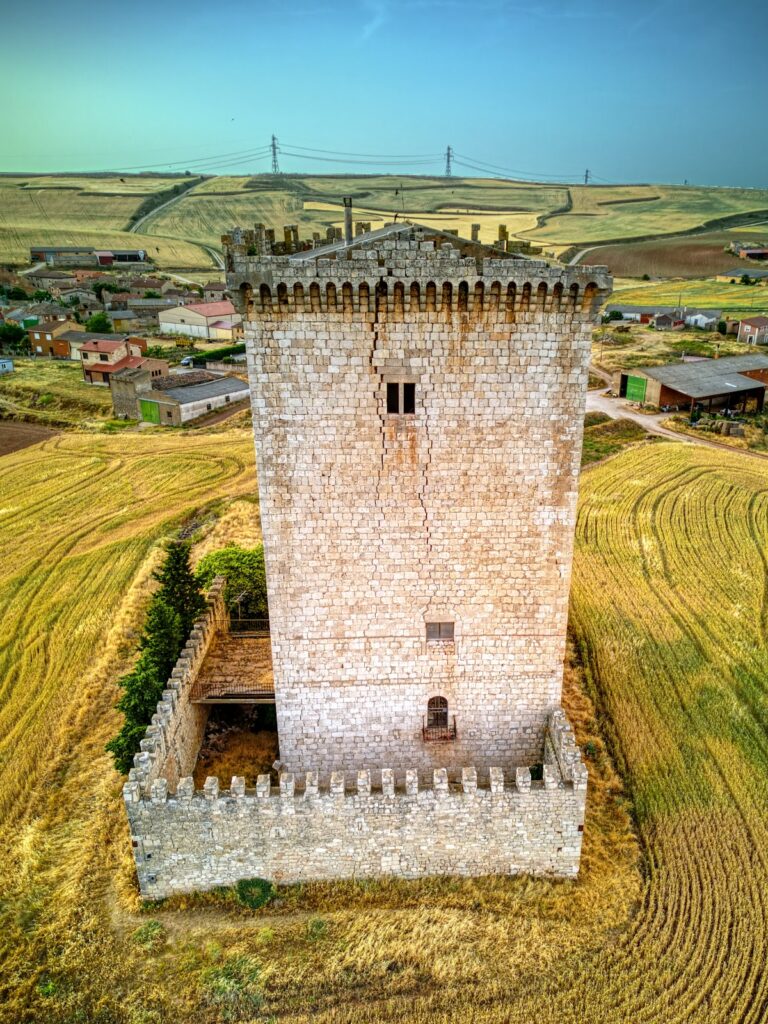
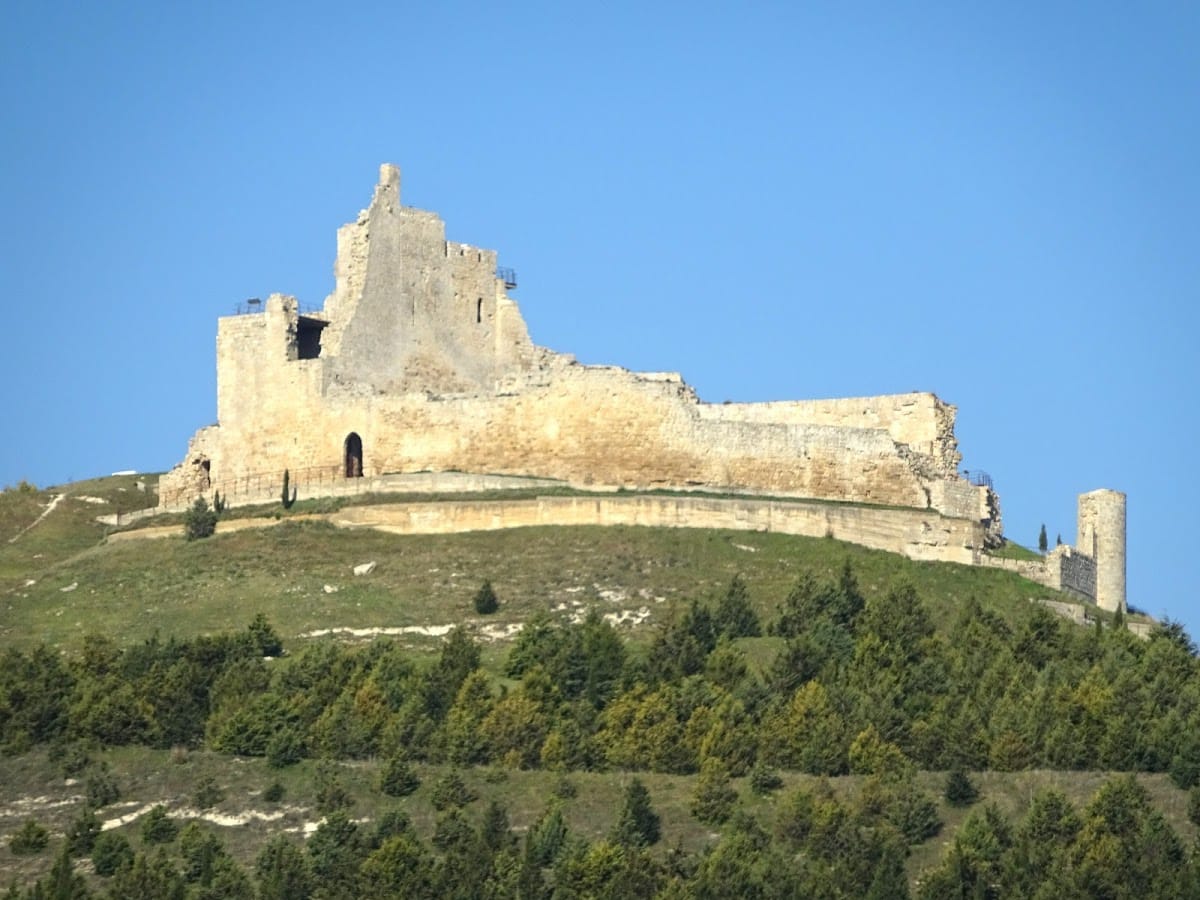
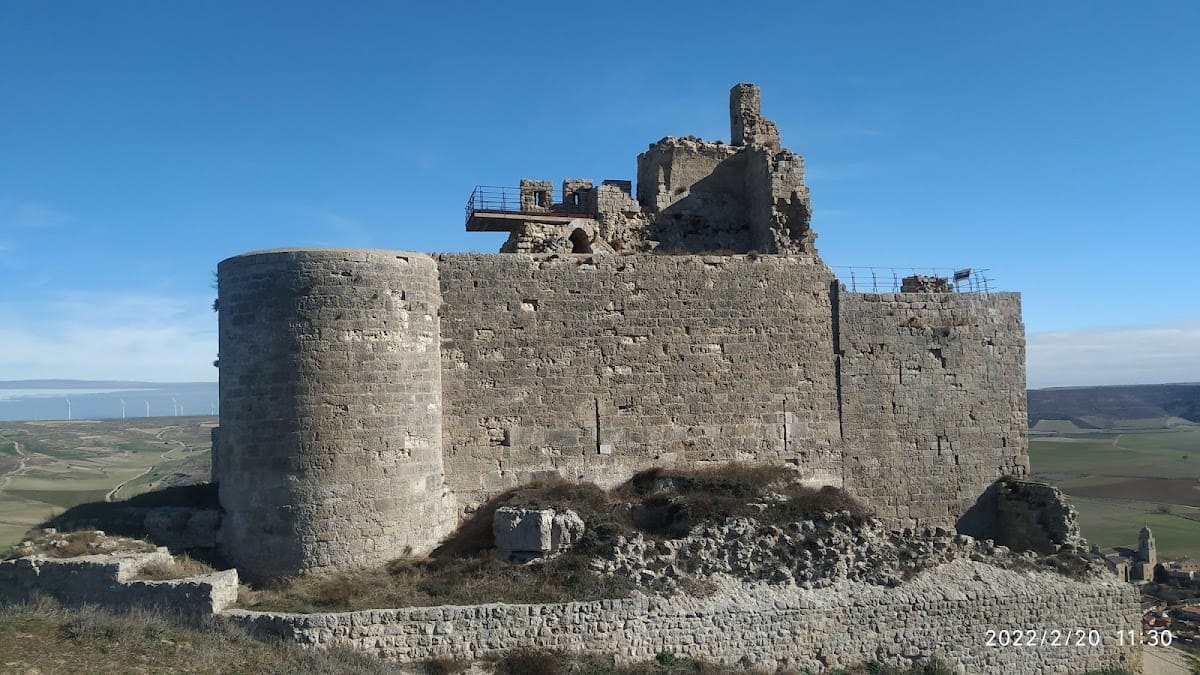
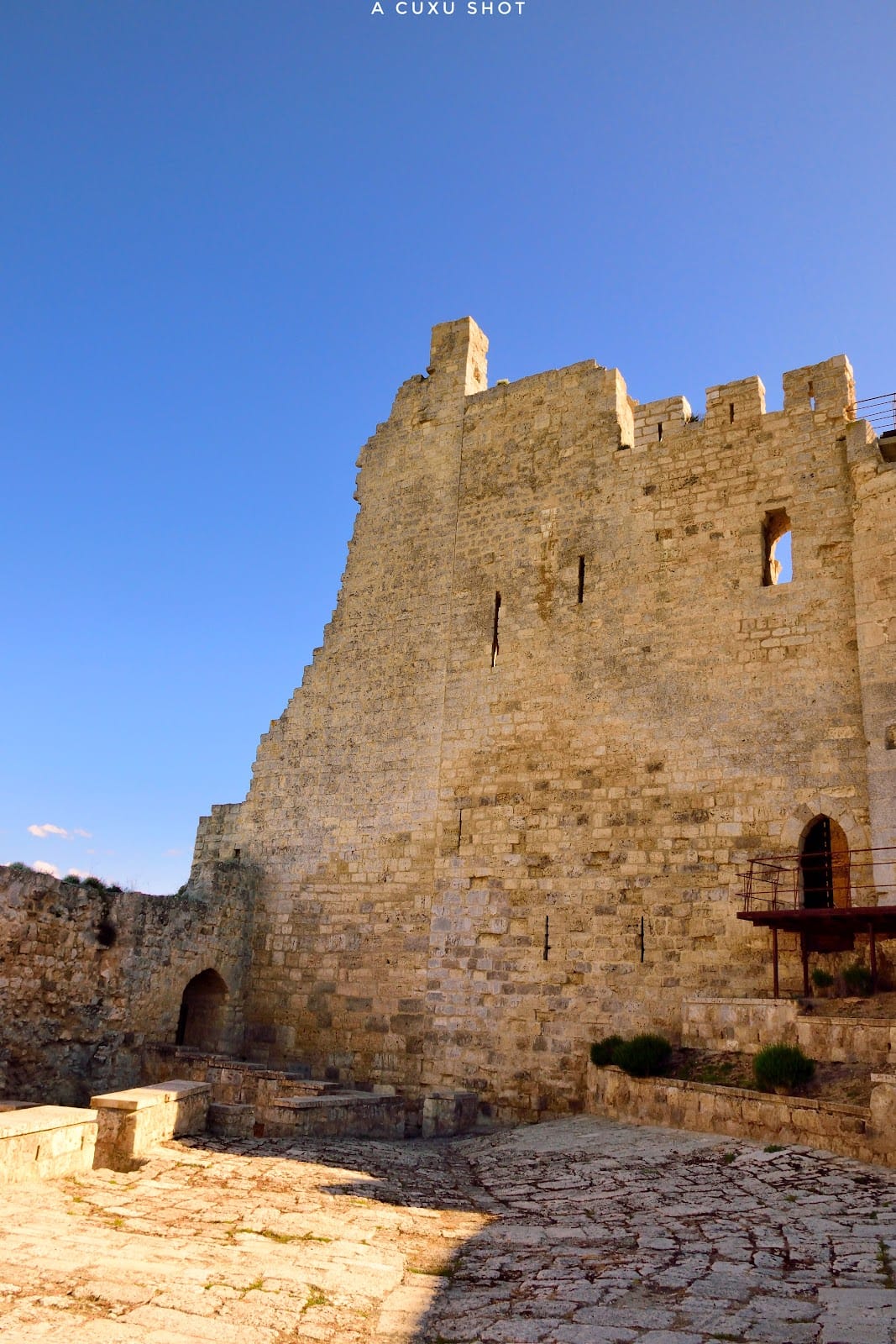
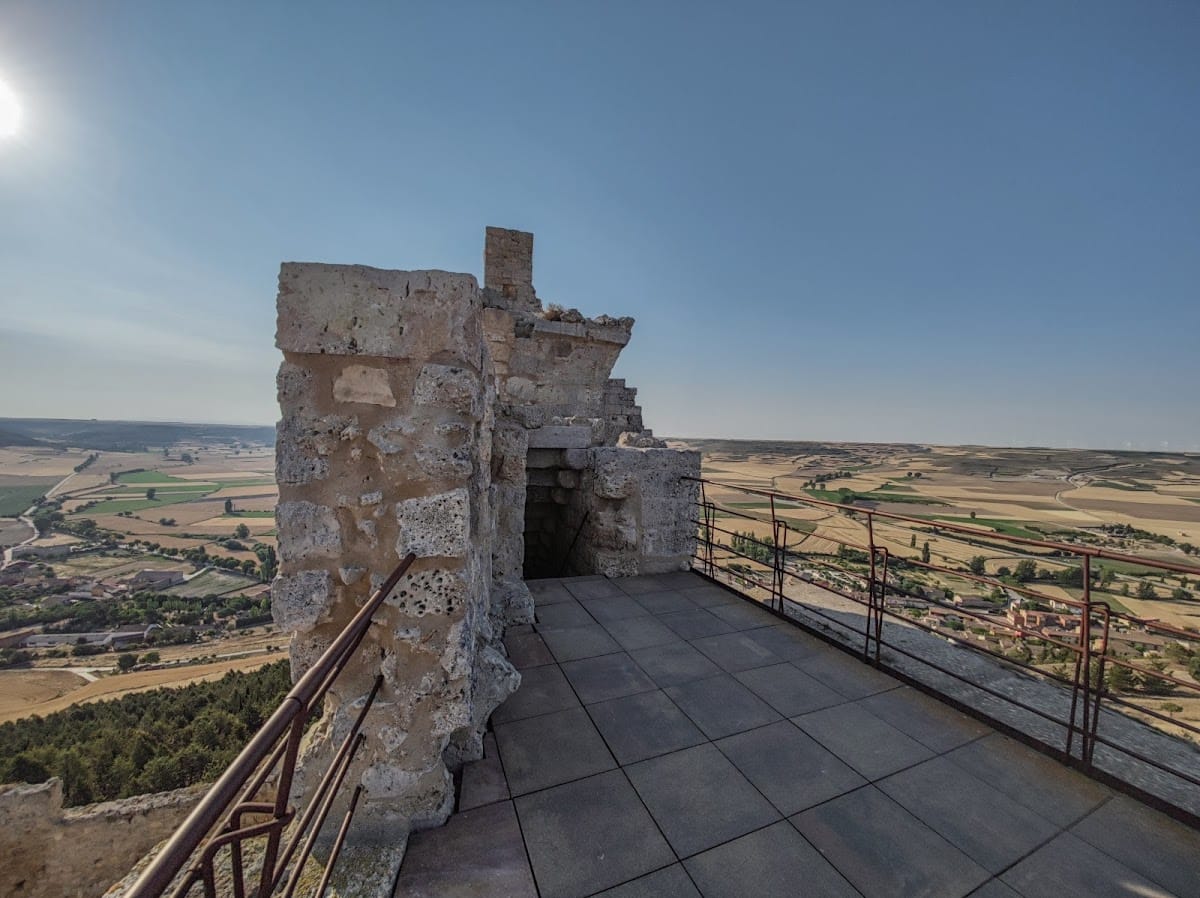
The Castle of Castrojeriz occupies a hillside and is constructed primarily of ashlar stone—carefully shaped blocks—held together with lime and clay mortar, materials chosen for their durability against natural forces like earthquakes and heavy rains. Its layout reveals a fortress designed for defense, featuring thick walls approximately three meters wide and standing seven meters tall. These ramparts contain narrow vertical slits, called loopholes, allowing archers to defend the castle while remaining protected.
Two watchtowers stand on opposite ends of the hill, providing vantage points to monitor for approaching enemies. Inside the fortress, a central open space known as the patio de armas, or courtyard, served as a training ground where soldiers could practice drills and sharpen weapons. The most fortified part of the castle likely included a keep, or torre del homenaje, which functioned as the stronghold within the stronghold. On the western side, a large tower adjoined the main body of the castle, strengthened by a prominent corner bastion referred to as a cubo, enhancing its defensive coverage.
Enclosing these principal sections is a curtain wall, nearly three meters thick, contributing to the structural integrity of the complex. Though the fortress is now in ruins, with roofing entirely collapsed, traces remain visible such as the springing points where vaults once began, indicating the original architectural sophistication. Parts of the castle have undergone restoration efforts aiming to consolidate the deteriorated stonework and preserve its remains for the future. This combination of surviving features offers a tangible glimpse into the castle’s layered history as a military fortress commanding one of northern Spain’s key routes.
Nearby sites