Castillo de los Bazán: A Medieval Fortress in Palacios de la Valduerna, Spain

Visitor Information
Google Rating: 4.7
Popularity: Very Low
Google Maps: View on Google Maps
Country: Spain
Civilization: Unclassified
Remains: Military

History
The Castillo de los Bazán, known also as the Castillo de Palacios de la Valduerna, is situated within the municipality of Palacios de la Valduerna in Spain. This fortress was constructed under the authority of the Bazán family, a noble lineage whose influence reached its height during the late Middle Ages.
Initially built as the residence of the first Viscounts of Palacios, the castle symbolized the power held by the Bazán lordship in the Tierra de La Bañeza region. The structure served as a stronghold and noble home, reflecting the social and political importance of its owners. Over time, as the medieval period waned, the prominence of the fortress diminished along with the Bazán family’s local dominance.
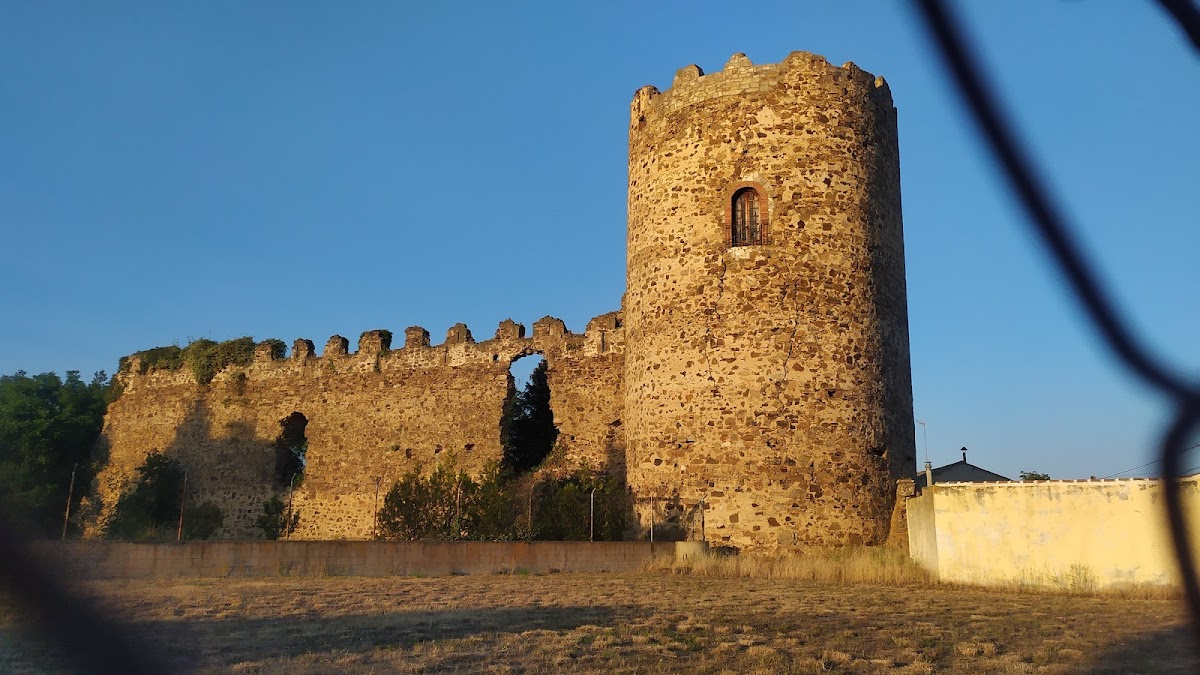
By the mid-18th century, records such as the 1753 Catastro de Ensenada describe the castle as partly in ruins. At this point, its grounds found a new use in small-scale gardening rather than defense or noble residence. In the early 20th century, around 1906 to 1908, architect and historian Manuel Gómez-Moreno documented the site, noting the castle was largely in decay. He identified only two towers — positioned to the northeast and southwest — along with a southern arcade and an eastern door with a pointed arch as remaining elements.
The castle’s cultural and historical value gained recognition in 1949 when it was placed under protection by a national decree safeguarding Spanish castles regardless of their condition. Later restoration efforts in 1982 transformed one tower into a private home. Despite this, the site continues to suffer gradual deterioration and is classified as endangered by Hispania Nostra, an organization dedicated to heritage conservation. The castle remains privately owned and is not accessible to the general public.
Remains
The Castillo de los Bazán was originally designed with an irregular trapezoidal layout covering roughly 600 square meters. Its construction utilized local stone bonded with mortar, while bricks were specifically employed for building the vaulted ceilings inside the towers. This combination illustrates common medieval building practices aimed at achieving structural strength along with the capacity to span curved ceilings known as vaults.
Among the surviving remains, one substantial tower stands out as a habitable structure. This tower’s walls are remarkably thick, measuring about three meters on the lower two floors and narrowing to approximately half a meter on the upper level. The tower can be entered directly from the ground floor, where an internal staircase provides vertical access. Architectural details include two semicircular window arches and a ceiling shaped in a barrel vault—a continuous arch resembling the interior of a barrel cut lengthwise.
The castle featured two distinct entrances reflecting its functional design. The main gate was located on the western side, primarily intended for the lord and his retinue. Although only partially preserved today, this western entrance marks the principal access point. A secondary gate on the eastern side was smaller and served practical purposes, allowing servants and animals to enter separately from the lord’s party.
Aside from the stable tower and fragments of the western wall, the remainder of the castle’s structure has largely fallen into ruin. A southern gallery with a series of arches and an eastern pointed-arch door are among the few other architectural elements recorded by early 20th-century documentation. While the 1982 restoration preserved the tower for residential use, the rest of the complex remains vulnerable to further decay, retaining its status as a significant yet endangered heritage site.
Nearby sites