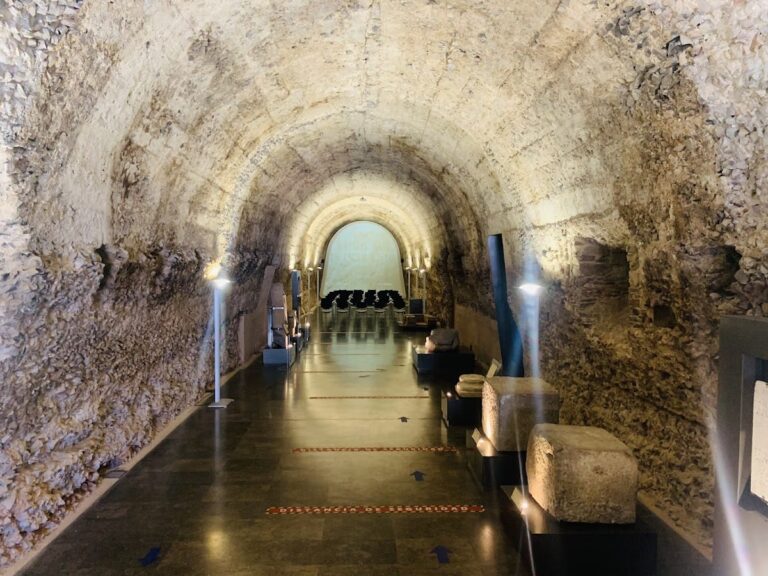
Petavonium Roman Camp: A Roman Legionary Fortress and Civilian Settlement in Spain

Site at a Glance
- Rating
- 4.4
- Popularity
- Low
- Country
- Spain
- Primary era
- Classical
- Eras represented
- Classical
- Civilizations
- Roman
- Site type
- Military
- Remains
- Camp
On this page8 sections
History
Petavonium Roman Camp is a Roman military and urban site in Spain, near Santibáñez de Vidriales in Zamora. Founded around 25 BC during the reign of Augustus, it emerged during the Roman wars against the Astures and Cantabrians, northern Iberian peoples who resisted Roman conquest. The settlement belonged to Hispania Tarraconensis, a Roman province covering much of eastern and northern Spain, and was classified as a civitas stipendiaria, a provincial community subject to tribute, within the conventus Asturum, the administrative and judicial district associated with the Astures.
The Augustan fortress and legionary period
Legio X Gemina was stationed at Petavonium during the campaigns that brought the surrounding territory under Roman control. Its permanent base helped control southern Asturian territory and monitor routes connecting the region with Gallaecia, the Duero Valley, and Lusitania. These routes also carried gold from the mines of Las Médulas. The legion’s presence encouraged Hispanic and Italian settlers to establish rural communities throughout the Vidriales Valley, while the civilian population around the fortress developed into a substantial urban center.
During the second and third centuries AD, Petavonium became one of the largest urban centers in Asturian territory. The civilian settlement grew from the canabae, communities established around Roman military bases, and was also identified in the Antonine Itinerary as a mansio, an official stopping place on the road between Asturica Augusta, modern Astorga, and Bracara Augusta, modern Braga.
Auxiliary garrison and late Roman decline
Legio X Gemina left Hispania in AD 63, and Petavonium subsequently declined. The settlement began to recover under the Flavian dynasty, probably during the reign of Domitian, when Ala II Flavia Hispanorum Civium Romanorum, an auxiliary cavalry unit, occupied the former legionary camp. In the later Roman Empire, possibly from the reign of Diocletian, the cavalry unit was transformed into Cohors II Flavia Pacatiana, an auxiliary infantry unit. The late Roman administrative document known as the Notitia Dignitatum still lists the unit at the end of the fourth century.
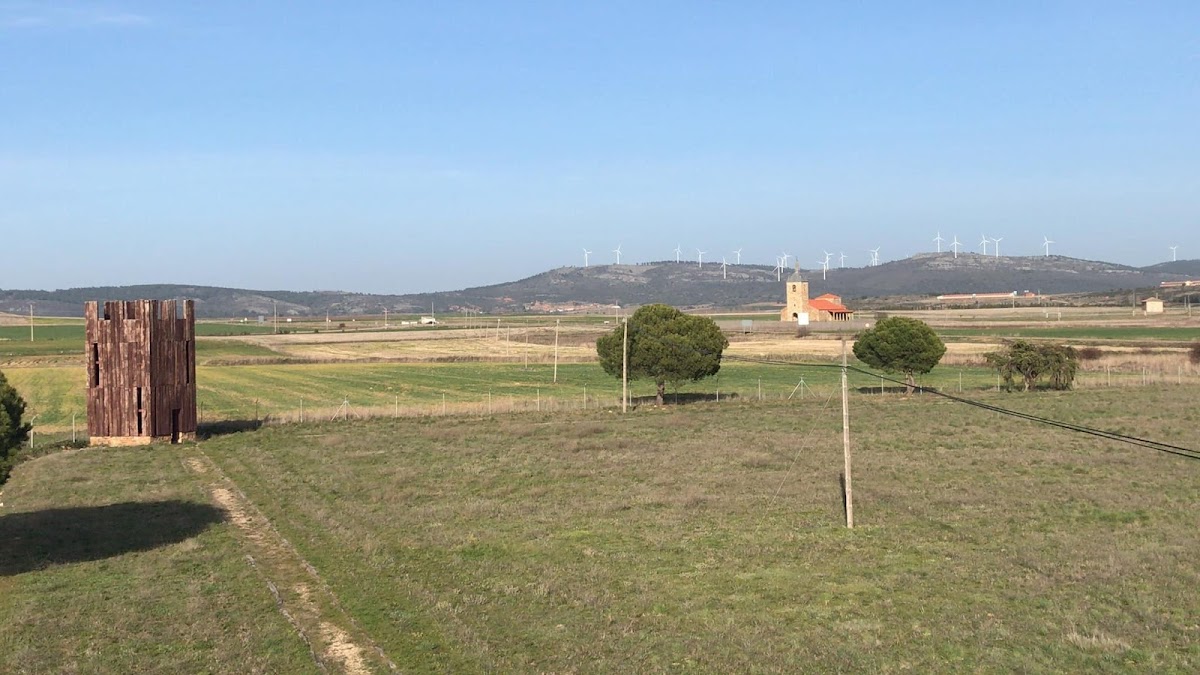
The city was abandoned during the fifth century, probably in connection with the barbarian invasions. Petavonium was declared a Spanish cultural-interest property in 1931. A village called San Miguel stood close to the camp until roughly two centuries ago, when its last inhabitant moved to Rosinos de Vidriales. The nearby church dedicated to the patroness of the Vidriales Valley consequently belongs to Rosinos de Vidriales together with the camp.
Remains
Military enclosures
Legionary camp
The main legionary camp covered approximately 20 hectares. Archaeological material from the military site includes ceramics, coins, weapons, other metal objects, and building materials bearing marks associated with the brickworks of Legio X Gemina. A roof tile from Rosinos de Vidriales carries the inscription stating that Rufus, a soldier of Legio X Gemina, made it.
Later cavalry fort
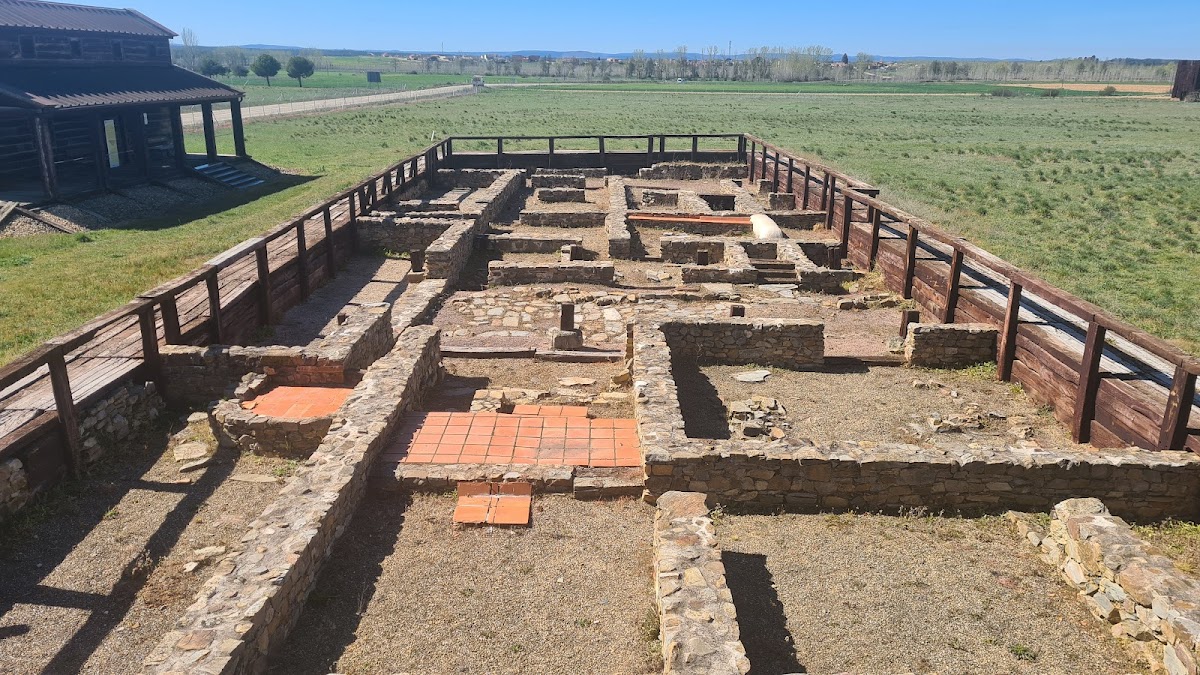
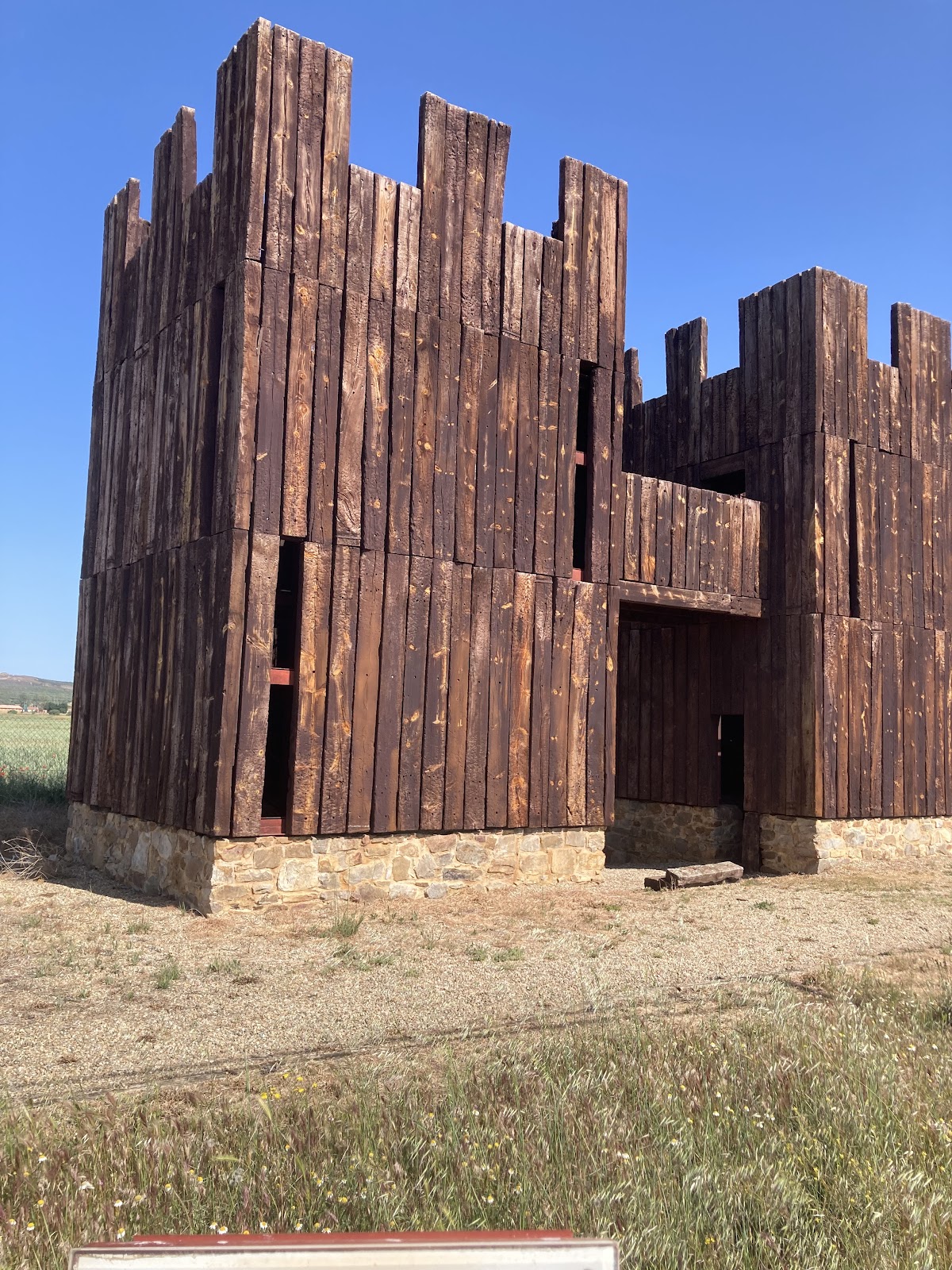
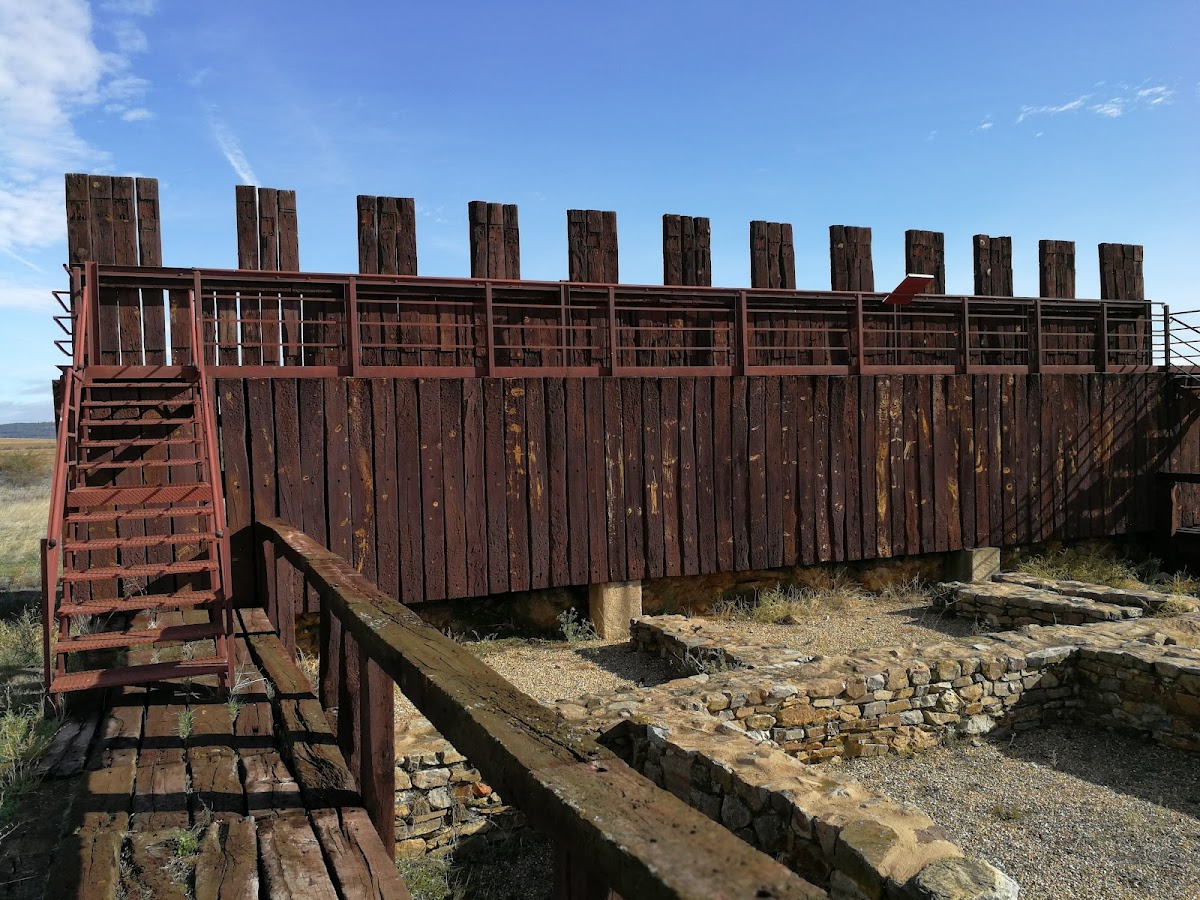
The later castellum alae, or fort for an auxiliary cavalry unit, occupied the interior of the earlier camp. It formed a rectangular enclosure of about 4 hectares, surrounded by a wall and preceded by a ditch covering slightly less than 2 hectares. Surviving elements include several gates, especially the double-opening porta praetoria, as well as parts of the principia, the headquarters complex, and the valetudinarium, the military hospital.
Finds from the camp and fort include coins dating from the first through fourth centuries AD, weapons, common pottery, terra sigillata, fine Roman tableware made in molds, and ceramics from the nearby kiln center at Melgar de Tera. Bricks stamped with the marks of Ala II Flavia Hispanorum and Legio VII Gemina also occur at the site. Legio VII Gemina had cooperated with the cavalry unit in Africa and near Aquae Flaviae, modern Chaves, in northern Portugal.
Civilian settlement
The civilian vicus, or town, developed around the military camp and covered approximately 80 hectares. A fountain of Roman origin survives among the remains of this civilian nucleus. Numerous Roman inscriptions from Petavonium were later reused or built into houses and churches in nearby villages, preserving evidence of the settlement beyond the excavated areas.