Castello di Roccacasale: A Medieval Fortress in Italy



Visitor Information
Google Rating: 4.5
Popularity: Low
Google Maps: View on Google Maps
Official Website: www.borghiautenticiditalia.it
Country: Italy
Civilization: Unclassified
Remains: Military

History
The Castello di Roccacasale is located in the municipality of Roccacasale, Italy. This castle was originally established by the Counts of Spoleto during the early medieval period.
The foundation of the fortress dates back to 925 AD, when the Counts of Spoleto built it strategically to oversee and control access to the Val di Sangro and the Altopiano delle Cinquemiglia. This location allowed the castle to monitor key routes through the region, serving a defensive and administrative purpose.
During the Middle Ages and Renaissance, the castle came under the control of the Cantelmo family. Their tenure lasted several centuries, during which the castle maintained its role in regional governance and defense. Near the end of the 16th century, ownership transferred to the Barons De Sanctis. This family maintained possession of the castle until the early 19th century.
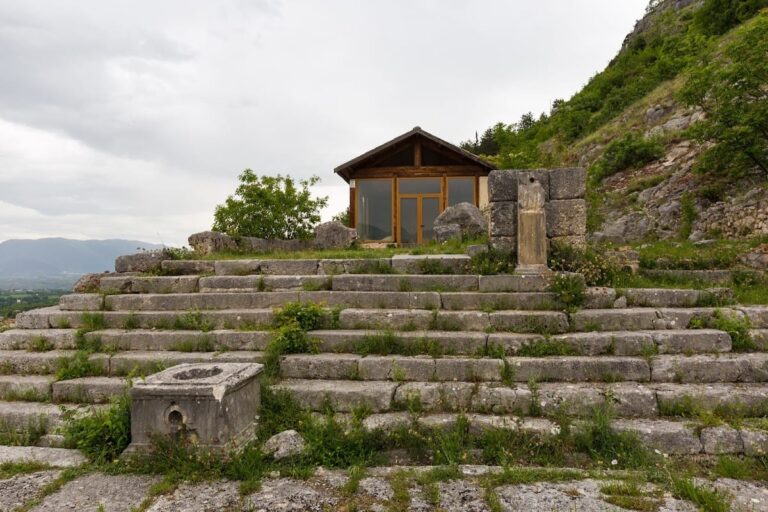
In 1803, the castle’s history was marked by a significant event when French forces destroyed it. The attack ended centuries of continuous occupation and defensive use. After many years of decline, the local municipality initiated restoration efforts in the 1990s. Between 1994 and 1996, the Municipality of Roccacasale undertook work to preserve the ruins and improve access to the site. Later, in 2004, a newly constructed building within the restored area was dedicated to housing the Museum of Documentation and Popular Traditions, thus preserving the cultural memory associated with the castle and its surrounding territory.
Remains
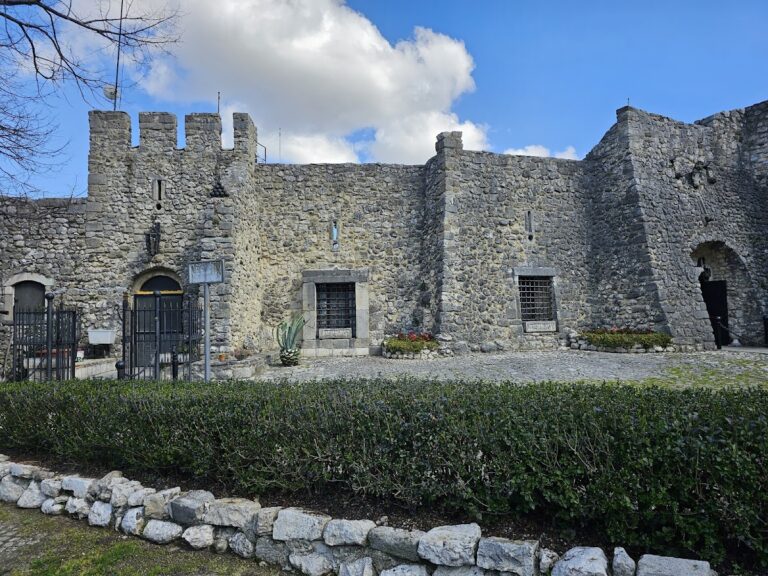
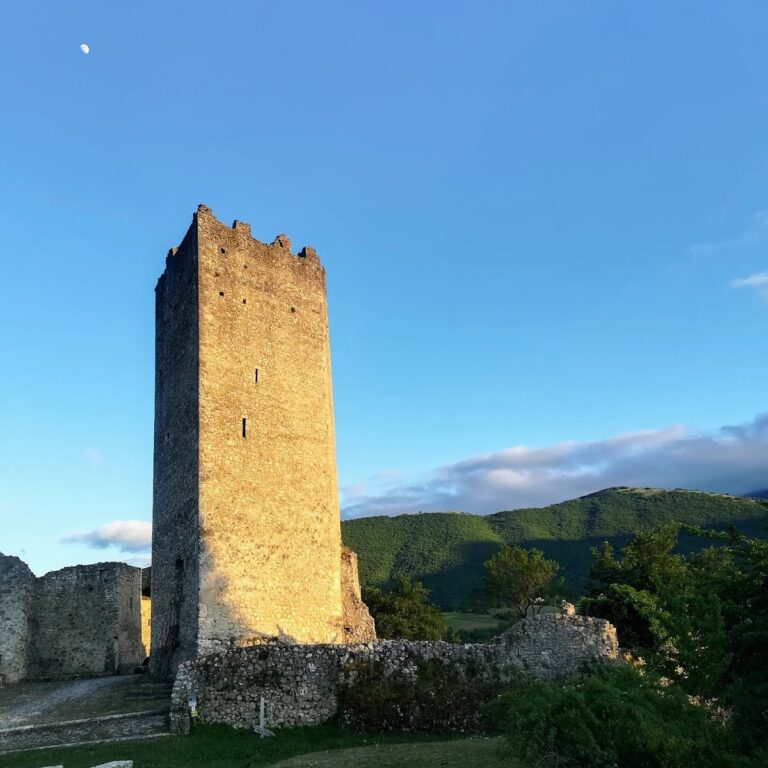
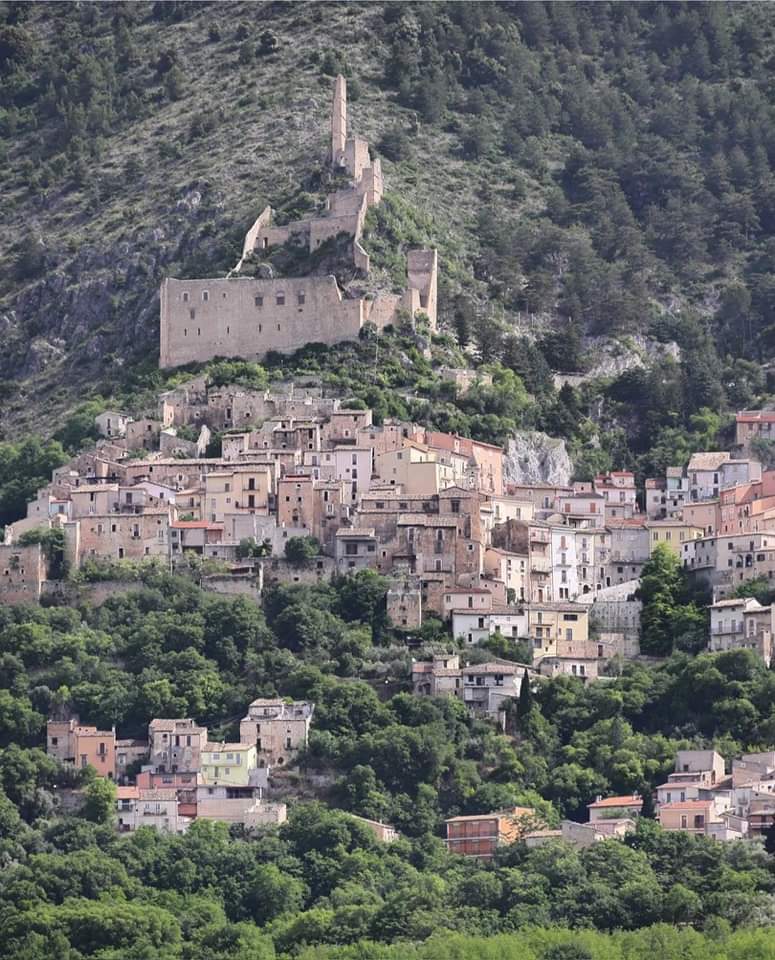
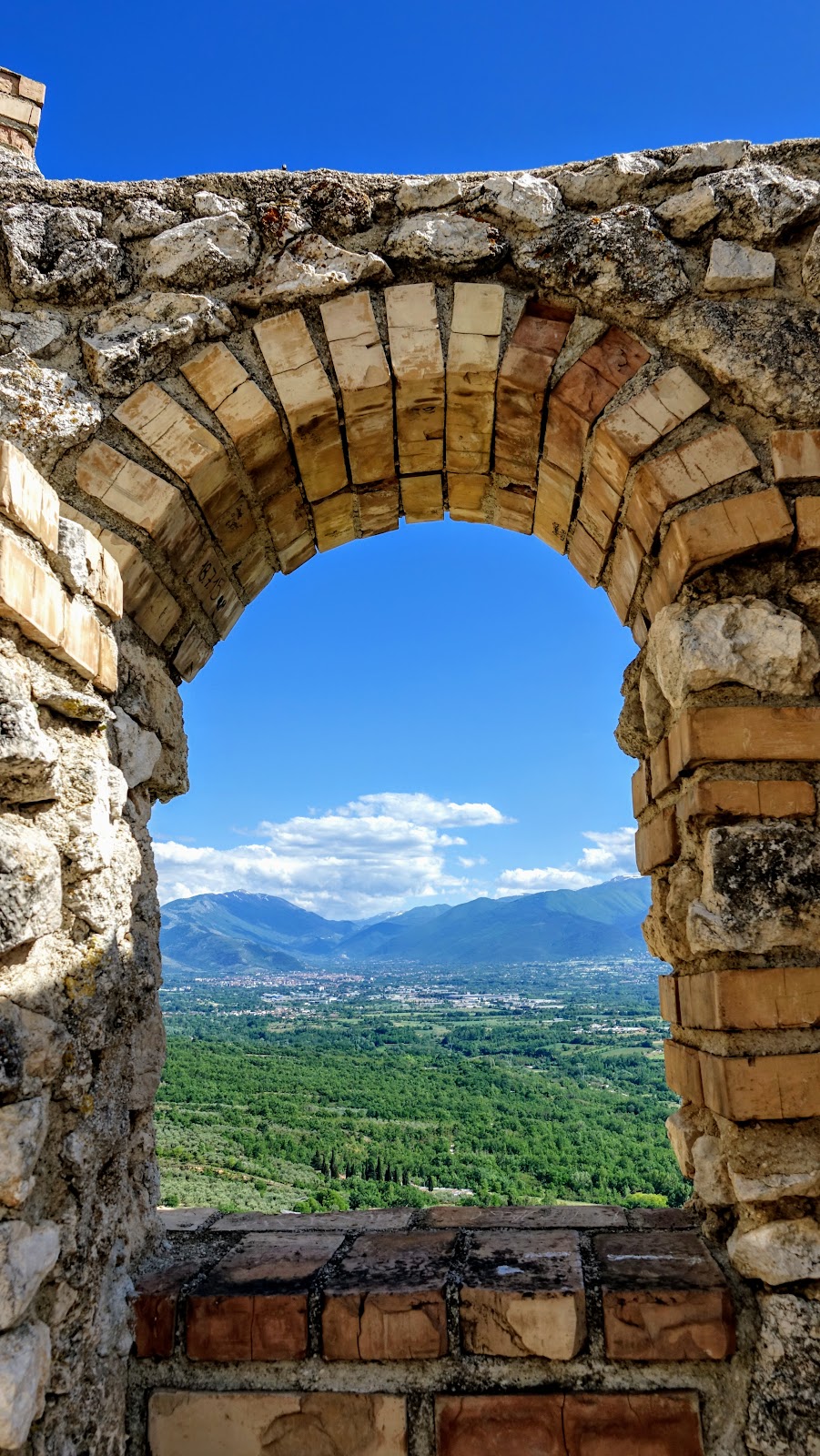
The Castello di Roccacasale exhibits a triangular layout, characteristic of an enclosure-type castle. Its walls form a perimeter that encloses the site on the slopes of Monte Morrone, overlooking a key road linking Popoli Terme to Sulmona. The highest point of the triangle features a spur projecting outward, designed with a trapezoidal shape. Although this defensive structure is partially collapsed, it demonstrates the strategic positioning intended to oversee the surrounding area.
The main access to the castle is located on the side facing the village, positioned downhill. Here, a square tower stands prominently above the entrance gate. Uniquely, this tower lacks an interior side, which may have served to enhance its defensive capabilities by limiting access points.
Within the castle’s enclosure, there are remains of a baronial palace. This is notable because it indicates that the site functioned beyond military defense, serving also as a noble residence. The presence of such residential quarters distinguishes Castello di Roccacasale from other enclosure castles in the L’Aquila province, which typically served purely defensive purposes.
Additional archaeological features include a cistern, used historically for water storage, and the foundations of several other residential buildings scattered within the perimeter walls. These elements reveal that the castle was continuously inhabited and adapted over time to support its occupants’ domestic needs. The preservation of these structures, though partially ruined, provides tangible evidence of the castle’s prolonged use and the daily life that once unfolded within its walls.
Nearby sites