Castello di Rende: A Norman Fortress and Cultural Site in Italy

Visitor Information
Google Rating: 4
Popularity: Very Low
Google Maps: View on Google Maps
Official Website: www.rendecentrostorico.it
Country: Italy
Civilization: Unclassified
Remains: Military

History
The Castello di Rende, located in the municipality of Rende in Italy, was originally built by the Norman civilization. Its construction dates back to 1095 when Bohemund of Tarent established the fortress to defend the city and its population.
The castle was part of a broader defensive plan initiated by Bohemund’s father, Robert Guiscard. This strategy aimed to secure the entire Crati valley, encompassing key towns such as Bisignano, Montalto Uffugo, Rende, and Cosenza. Shortly after its completion, in 1096, the fortress gained military significance as the base from which Bohemund prepared and launched the First Crusade.
Throughout the following centuries, control of the castle changed hands among several influential dynasties. It came under the rule of the Hohenstaufen dynasty, followed by the House of Anjou, then the House of Aragón, and later was managed by the Counts Adorno. Each succession reflected the shifting political and military landscape of southern Italy.
In more recent centuries, the castle transitioned from a military stronghold to a noble residence. Notable families such as the Alarcón y Mendoza and, subsequently, the Magdalone family occupied the structure. The Magdalone family were the last private inhabitants before the castle was repurposed as the municipal seat of Rende, serving this role from 1922 until 2011. Since 2012, the site has hosted the Roberto Bilotti Ruggi d’Aragón Museum of Contemporary Art, which exhibits a private collection of artworks alongside temporary exhibitions.
Remains
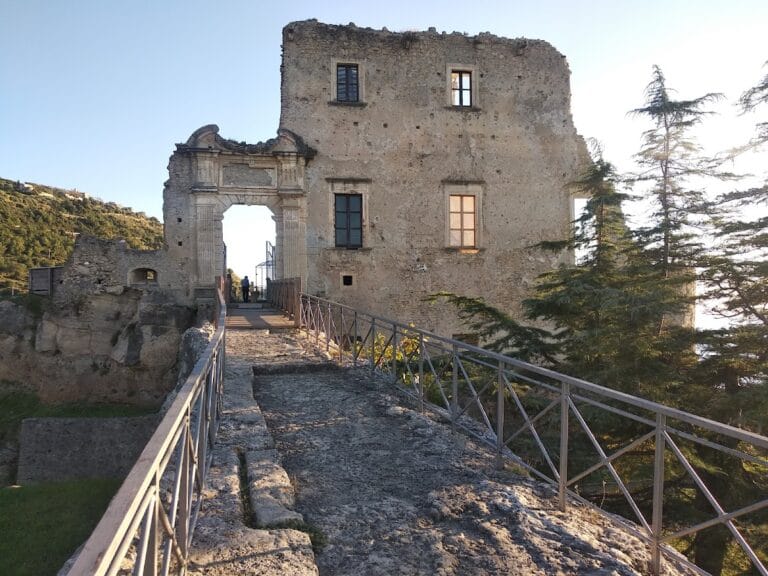
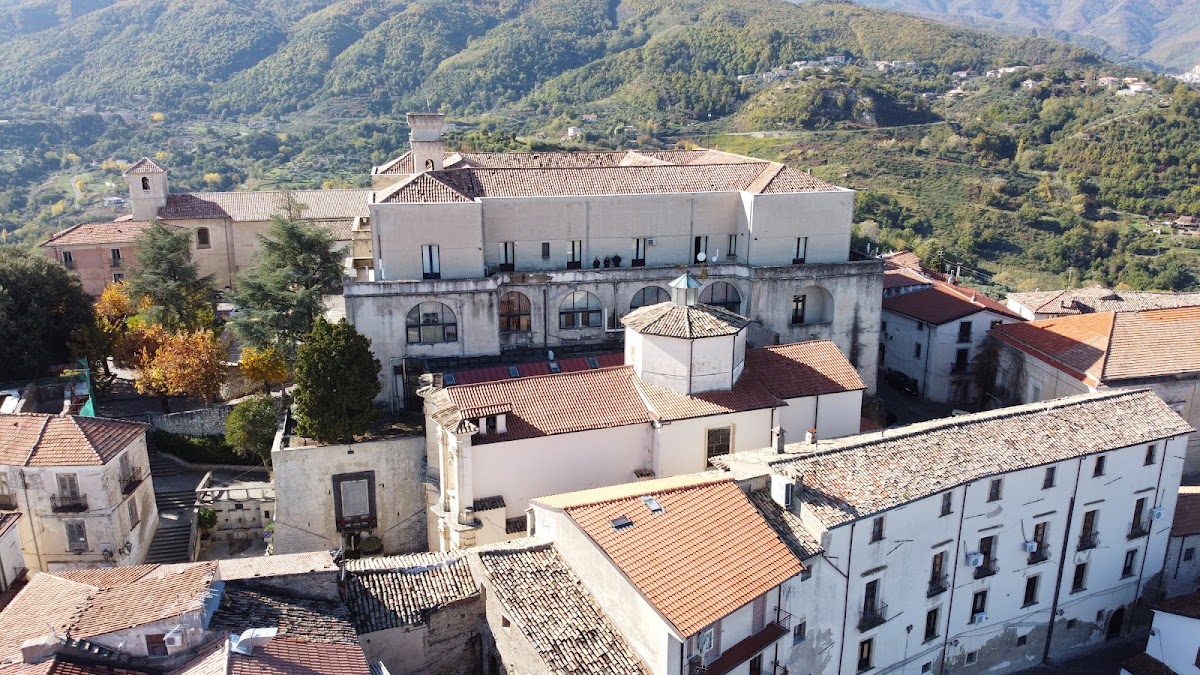
Perched on a hill, the Castello di Rende’s layout reflects its defensive purpose, enhanced by the natural landscape that made access difficult. Its walls, built around 2 meters thick, offered substantial protection, contributing to the fortress’s robust defense. Unlike some other Norman castles such as those at Fiumefreddo and Corigliano Calabro, this castle was not encircled by a moat.
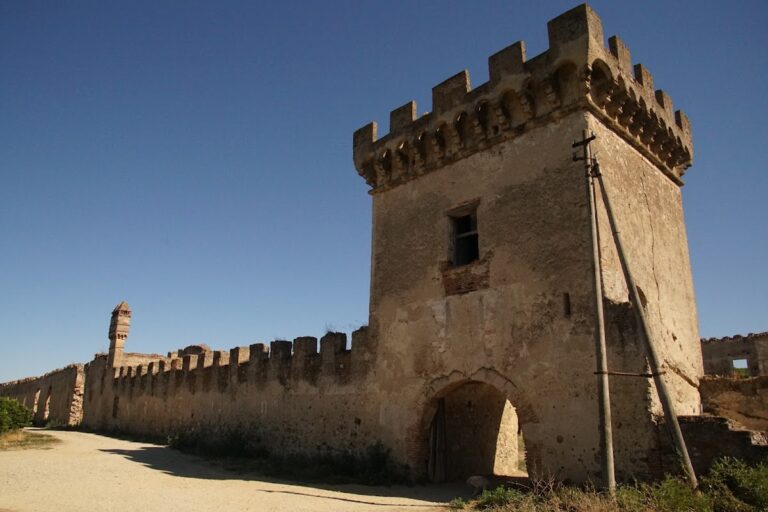
Originally, the castle featured five watchtowers, of which four survive today. These towers contain multiple arrow slits—narrow vertical openings designed to allow defenders to shoot arrows or bolts from crossbows while remaining sheltered. The central tower stands tallest and is flanked by two lateral towers that were especially effective in surveillance and defense. These three towers became an important symbol, as they were depicted on the coat of arms of the city of Rende around 1222 during the inauguration of the Cosenza Cathedral in the presence of Emperor Frederick II.
The castle’s defensive features also include numerous small windows and arrow slits along the battlements, facilitating protection against attackers. Inside the fortress courtyard, there is a large cistern constructed to collect and store rainwater. This feature ensured a reliable water source for those sheltered within the walls during sieges.
Inside the castle, two heraldic coats of arms belonging to the Magdalone and Alarcón y Mendoza families are displayed, marking the noble ownership from past centuries. These emblems remain as visual reminders of the castle’s history as a noble residence following its military use.
Nearby sites