Castello di Decima: A Medieval Fortified Complex in Italy


Visitor Information
Google Rating: 4.5
Popularity: Low
Google Maps: View on Google Maps
Official Website: www.castellodidecima.it
Country: Italy
Civilization: Unclassified
Remains: Military

History
The Castello di Decima is situated within the municipality of Castel di Decima in Italy. Its origins date back to early medieval times when it was constructed as a fortified stronghold along the ancient Roman road Via Laurentina, which connected Rome to Lavinium, now known as Pratica di Mare. The castle occupies a site associated with an earlier urban settlement, identified through archaeological evidence as either Politorium or Tellenae.
Excavations beginning in 1971 revealed an 8th to 7th century BC necropolis southeast of the castle, highlighting the area’s long history prior to the medieval period. The graves showed a unique funerary practice involving the placement of pottery fragments before burial items, which points to ancient cultural traditions. By the 4th century BC, the Romans likely reestablished fortifications here, integrating the site into their strategic defensive network around the region.
The earliest known written record of the site dates to 1081, when it was referred to as “castrum pontis Decimi” and was held by the monastery of St. Paul. Over the following centuries, ownership of the castle passed between religious institutions, including the monasteries of St. Alexius, which leased it to the noble Frangipane family, and later St. Sabbas. This ecclesiastical possession continued until the 16th century, when the castle became part of the holdings of the hospital of Santo Spirito.
In the 18th century, the castle came under the ownership of Cardinal Ludovico Maria Torriggiani, who served as Secretary of State to Pope Clement XIII. Recognizing the significance of the site, the cardinal undertook a major renovation in 1768, reconstructing the castle substantially and giving it much of its present-day appearance.
The fortified complex originally included not just the castle itself but also the casale, or farmhouse, of Perna, which featured an ancient tower, as well as the mill of Malpasso and the tower of Decima. Over time, especially during the Renaissance, the defensive purpose of these buildings diminished, and many were converted for agricultural use.
The tower of Perna dates back to the 11th century, though it was first described as a “castle” in early 16th-century documents. Around this period, alterations were made, including likely reductions in height and the addition of buttresses to support the structure. Ownership of Perna changed hands frequently among noble families such as the Muti, Cardinal Federico Cesi, Pompeo Colonna, the Conti family, the Colonna family, and eventually the Torrigiani family, who integrated it into the expansive Decima estate, which covered nearly 2,500 hectares.
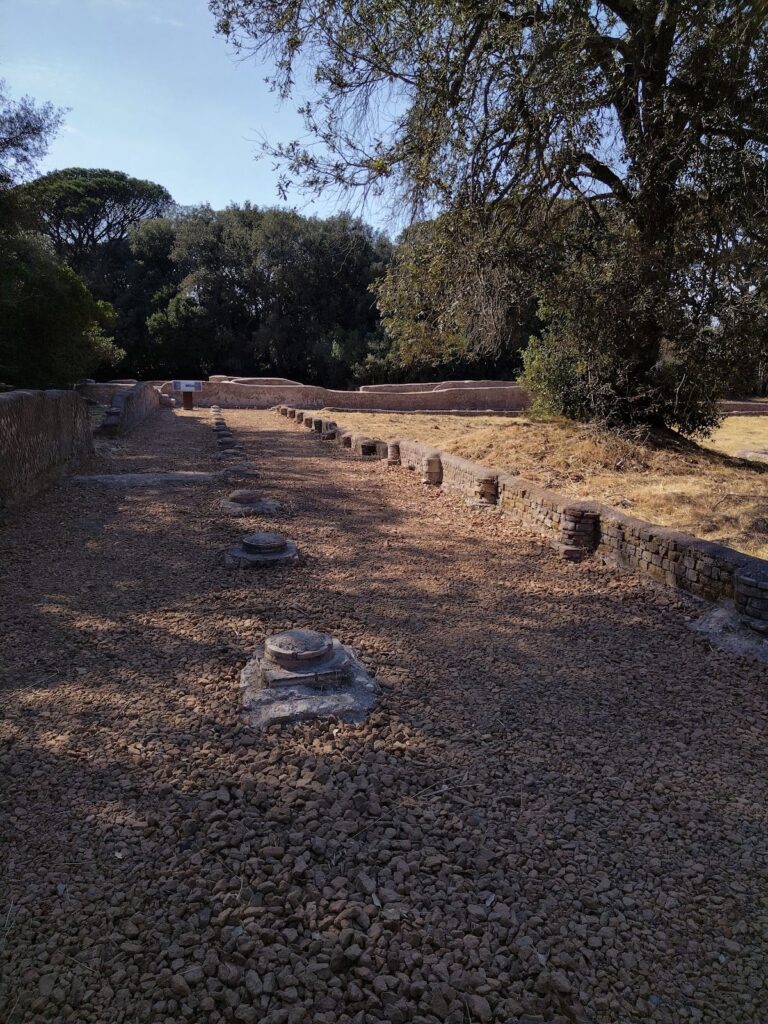
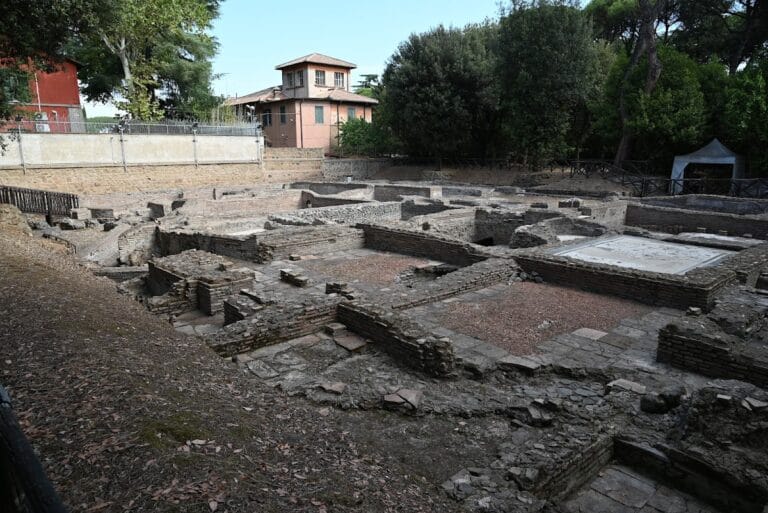
In the 20th century, the estate became the property of the local municipality. In 1977, it was occupied and transformed into an active cooperative farm called “Agricoltura nuova.” Today, the tower of Perna serves a new role as the administrative center for the Decima-Malafede Nature Reserve, with the nearby presence of a visitor center run by the World Wide Fund for Nature (WWF). The site also bears witness to its Roman past through the remains of two ancient Roman villas that once stood near the tower.
Remains
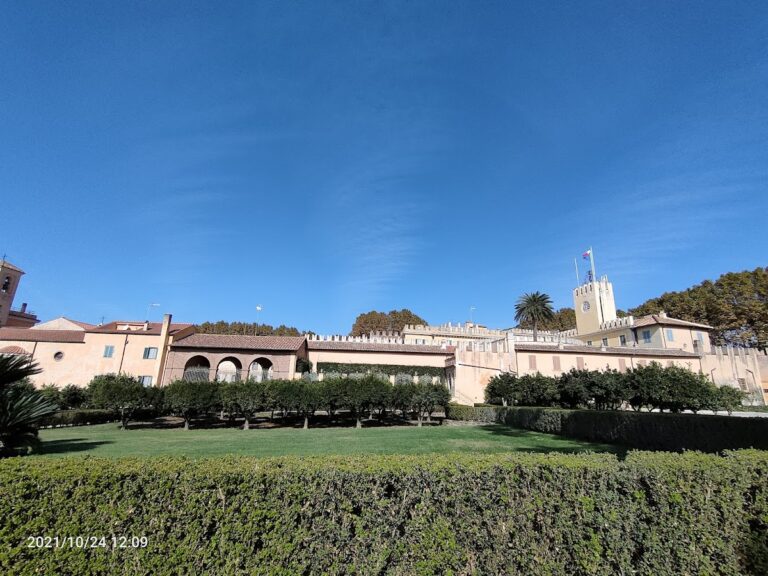
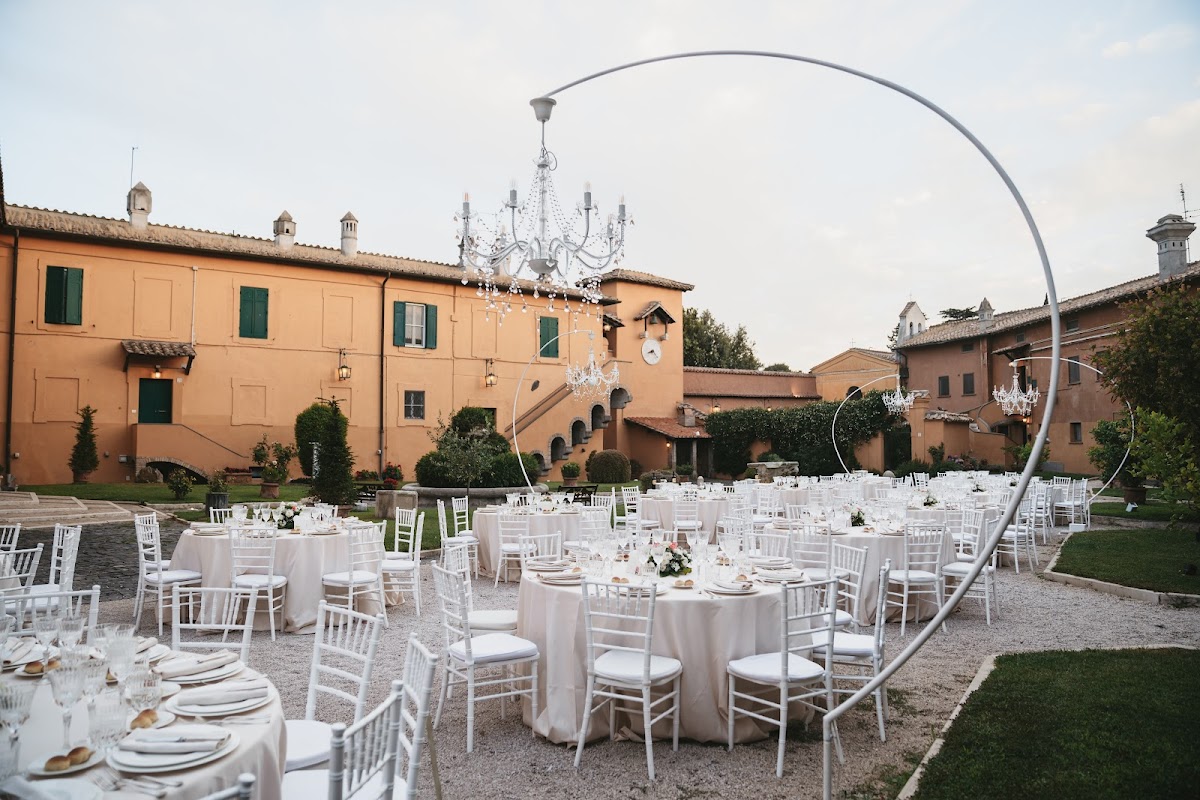
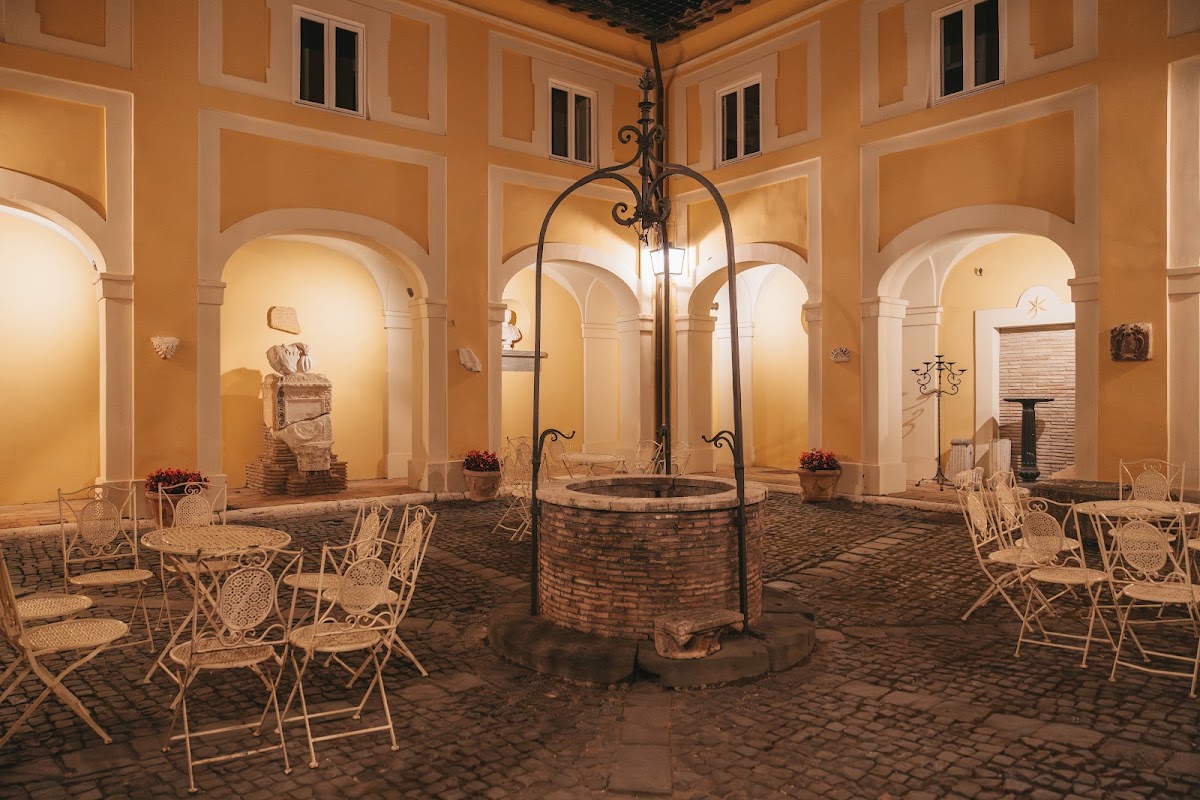
The Castello di Decima is a quadrangular fortified structure, enclosed on all four sides. Its entrance is highlighted by battlements, including a crenellated gateway flanked by a tower that served defensive purposes. At the heart of the castle lies an internal courtyard, which features a circular fountain, providing an open space within the fortress walls.
Inside the castle, visitors find the small church of Sant’Andrea apostolo in Castel di Decima, reflecting the religious dimension intertwined with the fortress’s history. The church’s presence within the castle grounds indicates continuity of worship connected to the site’s long-standing ecclesiastical associations.
The nearby tower or casale of Perna is distinguished by architectural elements dating back to medieval times. The first floor of the tower is supported by cross vaults—arched structures that distribute the weight evenly—which exemplify the construction techniques used during the period. Fragments of medieval decorative work remain embedded near the original entrance door, which historically opened on the first floor rather than at ground level, a design typically intended for defensive security.
During the 16th-century renovations, the tower’s original height was likely lowered, and buttresses were added to reinforce its walls. Standing close to Perna is a chapel likely constructed by at least the 17th century, notable for its plain façade accented with angular pilasters and doorposts made of tuff, a type of volcanic stone commonly used in local architecture.
Today, the tower of Perna continues to serve an official purpose, housing the offices of forest guards responsible for the Malafede park and functioning as the visitor center for the Decima-Malafede Nature Reserve. This adaptive reuse preserves the historical structure while connecting it with contemporary conservation efforts.
The larger fortified complex also included the mill of Malpasso and the tower of Decima. While specific architectural details about these elements are sparse, their inclusion illustrates the multifaceted nature of the site, which combined military, agricultural, and residential functions within its domain.
Nearby sites