Castello di Acri: A Historic Fortress in Southern Italy
Visitor Information
Google Rating: 4.8
Popularity: Very Low
Google Maps: View on Google Maps
Country: Italy
Civilization: Unclassified
Remains: Military

History
The Castello di Acri, also known as Rocca dei Bruzii, is situated in the town of Acri in modern Italy. It was originally constructed by the Bruttii, an ancient people of southern Italy, around the 4th century BCE. This fortress was built to protect and control the border of the territory heavily influenced by Sibari, a powerful city during the era of Magna Graecia, when Greek culture spread throughout southern Italy. Archaeological discoveries in the area, spanning from the Eneolithic period (Copper Age) to the late Bronze Age, suggest that this site held strategic importance long before the castle’s construction.
Under Roman rule, the site was used as a military fortification. This phase is confirmed by a marble inscription unearthed in 1890 bearing the inscription “XII LEGIO,” referring to the Twelfth Legion of the Roman army. Another fragment mentions a small shrine dedicated to Venus, known in Latin as “Sacellum Dedicatam ad Veneri,” indicating the presence of Roman religious activity nearby. Moreover, small mosaic fragments of probable Greek origin found close to the castle reveal a cultural blend consistent with the castle’s location in an area that sat at the crossroads of Roman and Greek influences.
In medieval times, the location was known as “Castel Vetere,” an indication of the castle’s considerable age even then. A 1190 diocesan document refers to the church of Santa Nicola ante ad Castillum, recording it as being within or connected to the castle’s fortified area. This church, which stylistically dates back to the 10th or 11th century CE, now lies just outside what were the castle walls. Another religious site, Santa Maria Maggiore, was part of the castle complex up until at least 1290. During restoration works carried out centuries later, traces of an early Christian temple were found there, highlighting the castle’s role in the spread of Christianity in the region.
The castle’s commanding position atop the summit of a mountain made it a critical stronghold over the centuries. Several historical writers have emphasized its strategic importance in controlling the surrounding territory. In 1999, the discovery of Greek coins embedded within the castle walls, from cities such as Sibari, Thurii, and Crotone, further illustrated the site’s long-standing connection to Magna Graecia and its neighboring city-states.
In the 19th century, the castle came to symbolize the historical identity of Acri. This cultural role was captured in a poem by Vincenzo Julia (1838–1894), who celebrated the castle’s medieval heritage and its place within the landscape of the region.
Remains
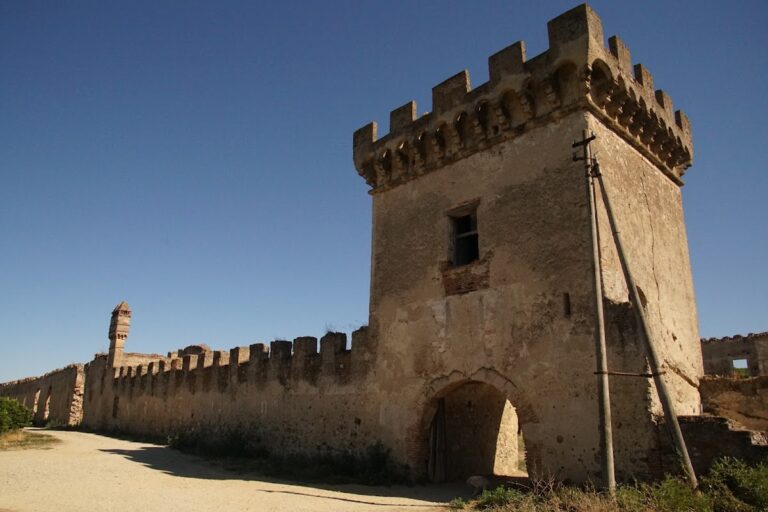
The Castello di Acri was constructed with a trapezoidal layout that enclosed the citadel known as the Pàdia quarter, integrating within its defenses the mother church of Santa Maria Maggiore. Originally, the fortress featured three towers located at the highest points of the structure to oversee the surrounding terrain, while a fourth tower was positioned lower on the walls, overseeing the gate area where a drawbridge or portcullis would have controlled access. The curtain walls, which formed the primary defensive barrier, varied in thickness: those at the upper perimeter were roughly two meters thick, while the lower walls measured about four meters, demonstrating the adaptation of construction techniques to terrain and defensive needs.
One remarkable structural feature was a water cistern situated to the north of the remaining tower. Designed to store water during sieges, this cistern was approximately six meters tall (equivalent to two stories) and extended about twenty meters in width. It remained visible up until the early 20th century and would have played a critical role in sustaining the castle’s occupants during isolated engagements.
Archaeological evidence from restorations of Santa Maria Maggiore, a church once incorporated within the castle’s fortifications, revealed the remains of an early Christian temple beneath its floors. This finding indicates the location’s religious significance and continuity through different eras, from pagan times into the Christian period.
Fragments of small mosaics discovered near the castle, likely of Greek origin, hint at decorative elements that may have adorned parts of the site or nearby buildings. These tessellated artworks connect the site aesthetically and culturally to the broader Hellenistic world surrounding Magna Graecia.
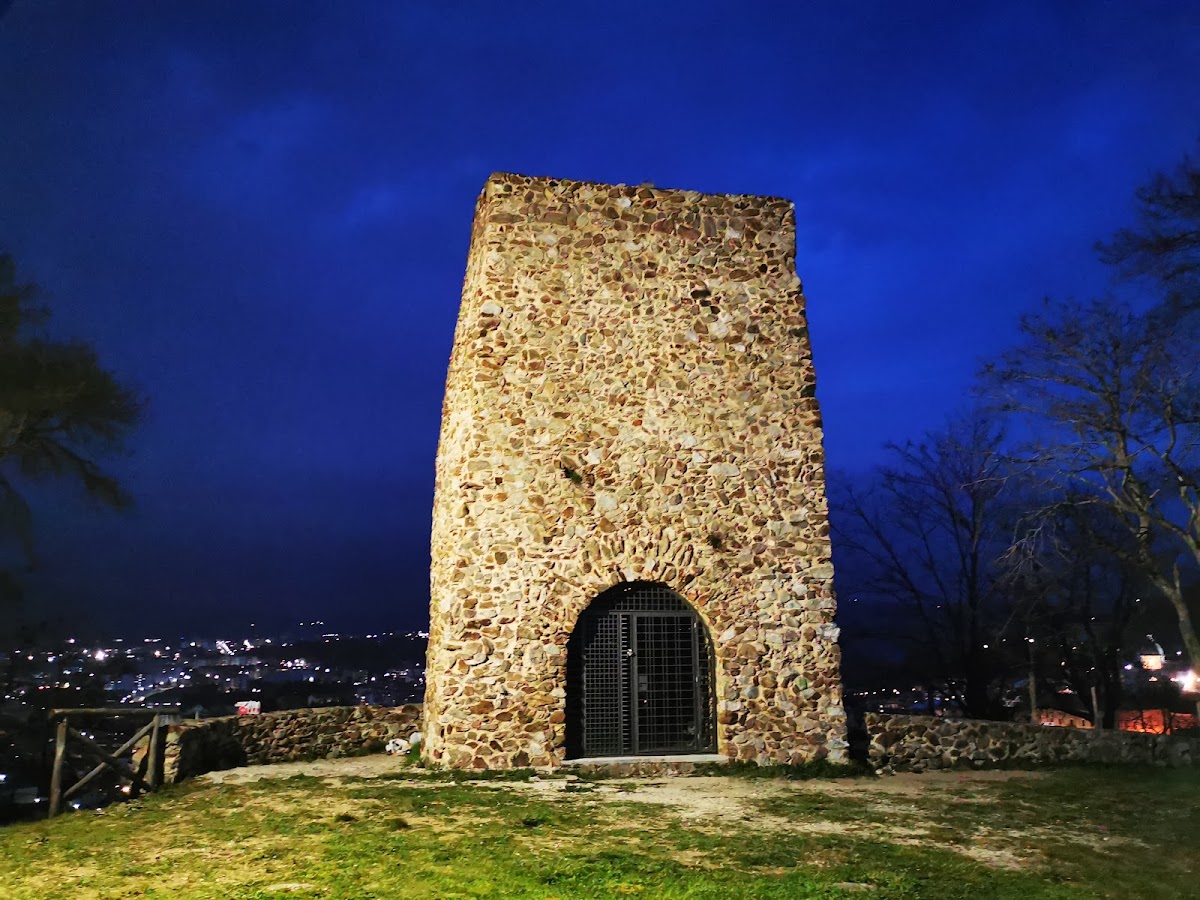
Today, the only prominent surviving part of the castle is a large tower that stands as a distinct emblem of the city of Acri. This tower not only represents the military and strategic past of the fortress but also serves as a historical landmark linking the modern town to its ancient roots.
Nearby sites