Burg Ramsberg: A Medieval Spur Castle in Germany


Site at a Glance
- Rating
- 3.7
- Popularity
- Very Low
- Country
- Germany
- Primary era
- Early Modern
- Eras represented
- Medieval, Early Modern
- Civilizations
- Holy Roman Empire
- Site type
- Military
- Remains
- Castle
On this page9 sections
History
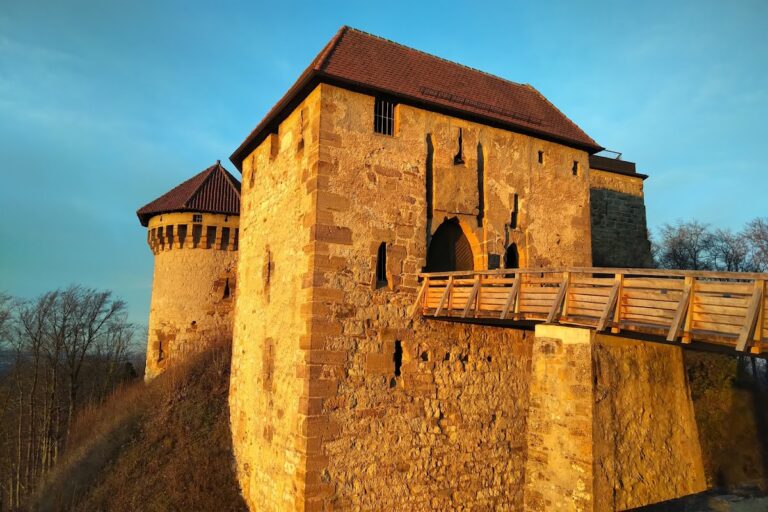
Burg Ramsberg is a medieval hilltop spur castle in Germany, near Donzdorf, built around 1200 and associated with the social rank of counts. Its position on a projecting ridge used the surrounding slopes as an additional defense. The castle later became connected with the noble families and ownership changes that shaped the history of the region.
Origins and medieval ownership
In 1225, Burg Ramsberg was probably in the possession of the knight Ulrich von Plochingen, a relative of Ulrich II and Konrad, known as the Monk of Rechberg. The first documentary reference dates to 22 September 1270. On that day, Konrad, the son of Ulrich von Plochingen, signed a deed at the castle donating a serf woman to St. Blasien Abbey, a Benedictine monastery in the Black Forest region of southwestern Germany.
The Lords of Rechberg, the aristocratic representatives of a medieval noble family from the region, owned Burg Ramsberg from 1327 to 1529. From 1529 to 1999, the castle and its associated lands passed through seven further changes of ownership.
Rebuilding and later history
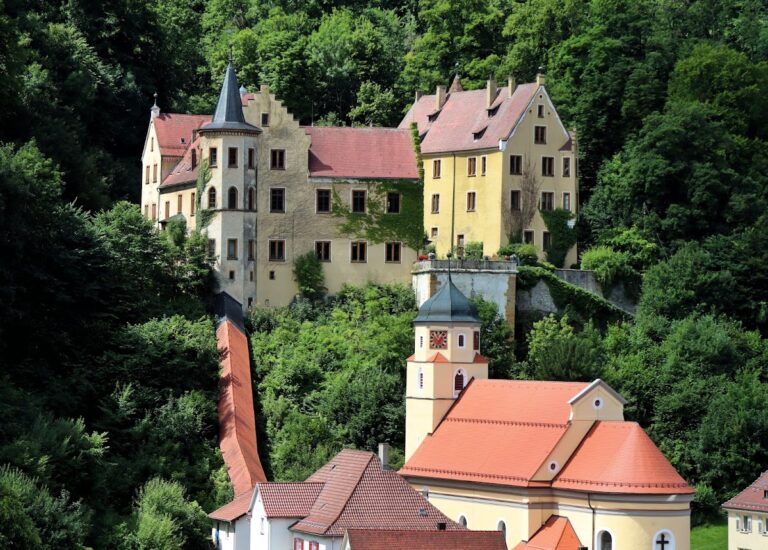
The castle was remodeled first in 1450 and then again between 1560 and 1580. The later campaign created the stone house that now defines the complex. A chapel was also built in 1560, continuing the site’s religious use while adding a major element to its later appearance.
As the castle deteriorated, it returned to municipal ownership in 1809. The municipality demolished the keep in 1830 because it was considered at risk of collapse. In the modern period, Burg Ramsberg became a recognized attraction on the Staufer Road in 1977. This route takes its name from the Staufers, or Hohenstaufens, a medieval German ruling dynasty. Since 2000, the castle has belonged to the Göppingen fashion retailer Dieter Wißmach, who breeds horses at the stud belonging to the complex.
Remains
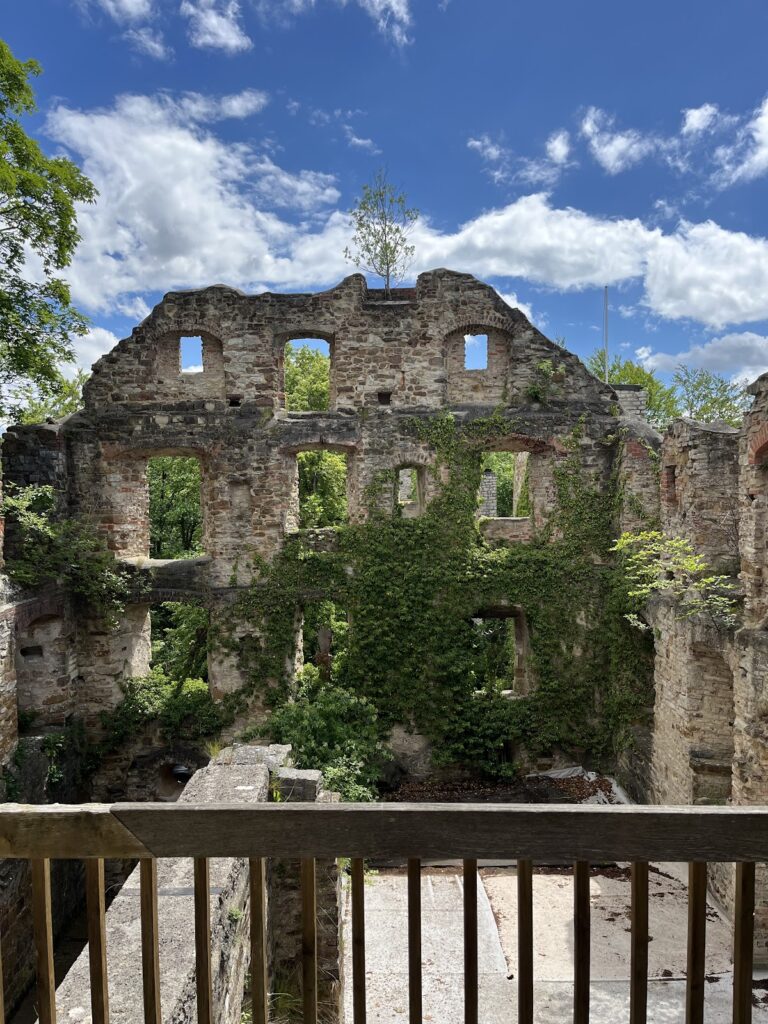
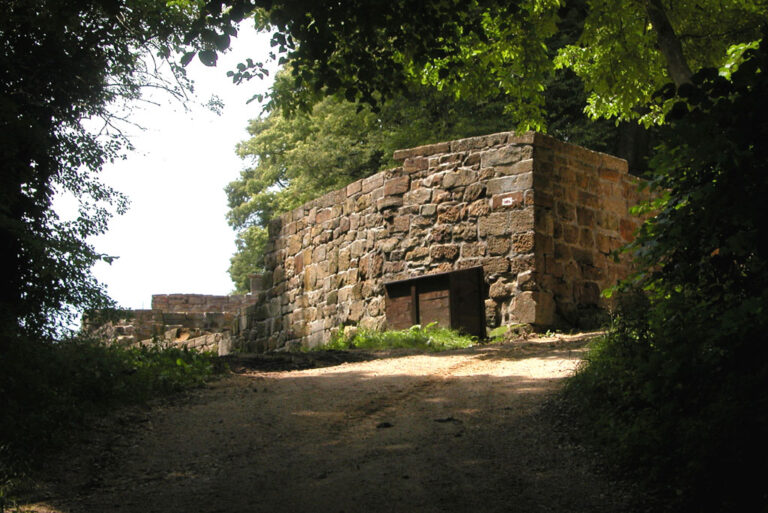
Burg Ramsberg occupies a ridge and one of the two southern spurs extending from the Rehgebirge, a hill range in the Swabian Alb of Baden-Württemberg. Burg Staufeneck stands on the other, western spur. The castle and its associated estate lie at about 515 metres above sea level. Substantial parts of the spur castle survive, including structures built with humped ashlar masonry, in which carefully shaped stone blocks have slightly bulging exposed faces.
Medieval residential hall
Dürnitz hall
The former accommodation hall of the castle garrison dates from the thirteenth century. Known as a Dürnitz, a large residential or communal hall for a castle garrison or household, it has three aisles, nine bays, four octagonal pillars, and a ribbed cross-vault. No comparable hall is known north of the Alps. A similar hall survives at the Crusader castle of Acre.
Sixteenth-century buildings
Castle chapel
The castle chapel was built in 1560. It is Late Gothic in origin and was originally dedicated to Saint Margaret before later being rededicated to Saint Martin. A fire in the 1960s was followed by restoration, and the chapel remains part of the surviving complex.
Stone house
The stone house was constructed during the remodeling campaign of 1560 to 1580. It is the principal structure defining the present castle complex and forms the central architectural expression of the castle’s later phase.