Castell de Guardamar del Segura: A Historic Castle in Spain


Visitor Information
Google Rating: 4.1
Popularity: Medium
Google Maps: View on Google Maps
Official Website: guardamarturismo.com
Country: Spain
Civilization: Unclassified
Remains: Military

History
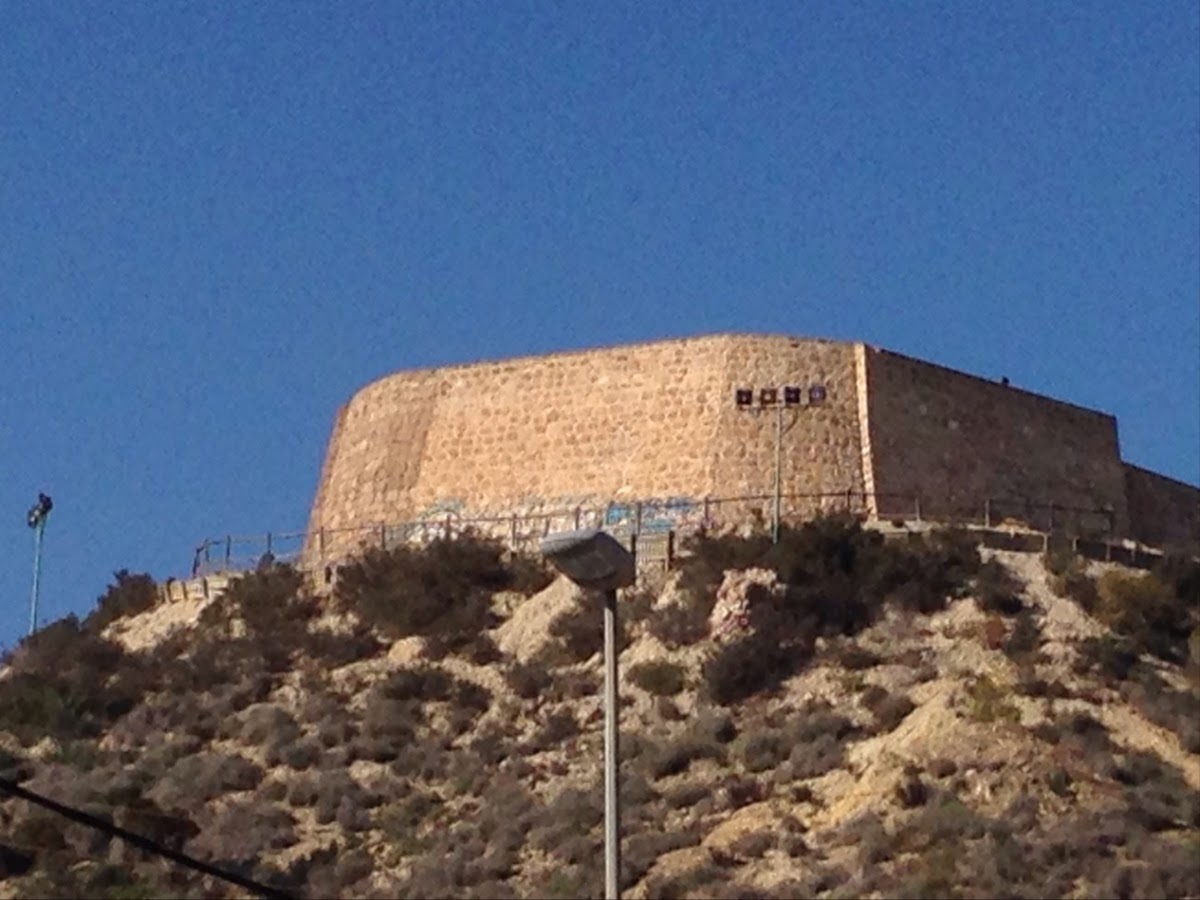
The Castell de Guardamar del Segura stands on a rocky hill near the town of Guardamar del Segura in Spain. Originally constructed by Arabic builders, the castle dates to the first half of the 12th century, though the site had earlier significance as an Iron Age settlement linked to the Iberian people around the 4th century BCE.
In its earliest form, the location hosted an oppidum or castro, a fortified settlement common in the Levantine region during the Iron Age, which set the foundation for later fortifications. The castle that rose atop this hill became a key military and administrative point controlling access to the coastline and the mouth of the Segura River, overseeing maritime routes vital for trade and defense.
During the late 13th century, King Alfonso X of Castile undertook reconstruction of the castle and repopulated the surrounding village with Castilian settlers in 1271. This period marked a shift in control and cultural influence. Later, in 1296, the fortress came under the authority of James II, incorporating it into the Kingdom of Aragon. By the early 14th century, the castle served as the principal stronghold securing the coast and harbor. However, in 1331, the fortress suffered destruction from a raid by Moorish forces who set fire to the complex.
Throughout the 14th century, the castle witnessed further conflict, notably facing a naval siege launched by allied Castilian and Genoese forces opposed to the Crown of Aragon. Despite a resilient defense, the town eventually fell into Castilian hands. In response to these events, Peter IV of Aragon demoted the settlement from its status as a royal town, placing it under the jurisdiction of the nearby Orihuela. This reduction in importance led to a period of marginalization, during which the community became vulnerable to repeated attacks by corsairs and bandits.
Efforts to counter this decline included a repopulation attempt with Moriscos, Muslim converts to Christianity, though this initiative did not fully succeed. The castle and village endured diminishing fortunes until disaster struck in March 1829, when a powerful earthquake severely damaged and effectively ruined the site. Following the earthquake, survivors moved from the hilltop ruins to establish the modern town of Guardamar del Segura on the surrounding plains.
Since then, archaeological investigations and partial restorations have focused on the castle’s lower defensive structures, especially the area known as the Baluard de la Pólvora, preserving what remains of this historic site.
Remains
The Castell de Guardamar del Segura occupies an elongated enclosed space divided into two main sections. The upper part once held the polygonal-plan castle constructed during the early 12th century. This section, positioned on the highest point of the hill for strategic surveillance of the sea and river mouth, now survives only in fragments due to extensive damage caused by the 1829 earthquake.
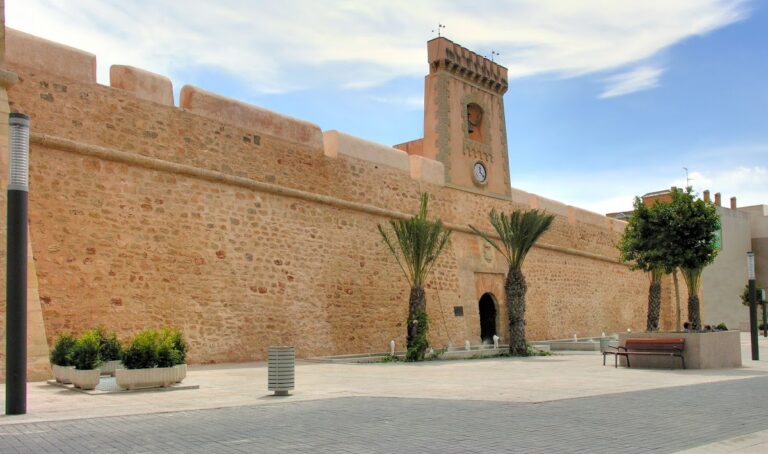
Surrounding the larger lower area is a Gothic-style defensive wall, originally medieval but altered significantly in the 16th century to meet evolving military needs. During this later phase, the medieval towers were lowered, a change intended to adapt the fortress to new forms of warfare, likely involving artillery. Portions of these walls remain standing as solid segments, alongside foundational remains of towers and various auxiliary buildings that served supportive roles within the fortification.
Among the site’s most archaeologically valuable features is the Baluard de la Pólvora, or the Gunpowder Bastion, located in the lower enclosure. This section has received particular attention due to its size and state of preservation, providing insight into defensive adaptations during the castle’s later periods of use. Archaeological works here have revealed structural details that underline the fortress’s importance within the coastal defense system.
Post-earthquake efforts have focused on stabilizing and partially restoring the ruined walls. Remnants visible today include consolidated masonry and old cannons placed near the ramparts to mark the castle’s military heritage. The surviving architectural elements showcase construction techniques employing robust stone walls designed to withstand attacks and offer commanding views of the surrounding landscape.
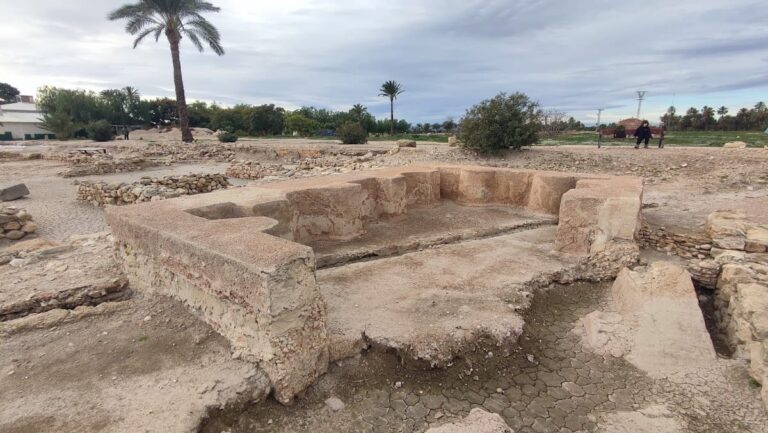
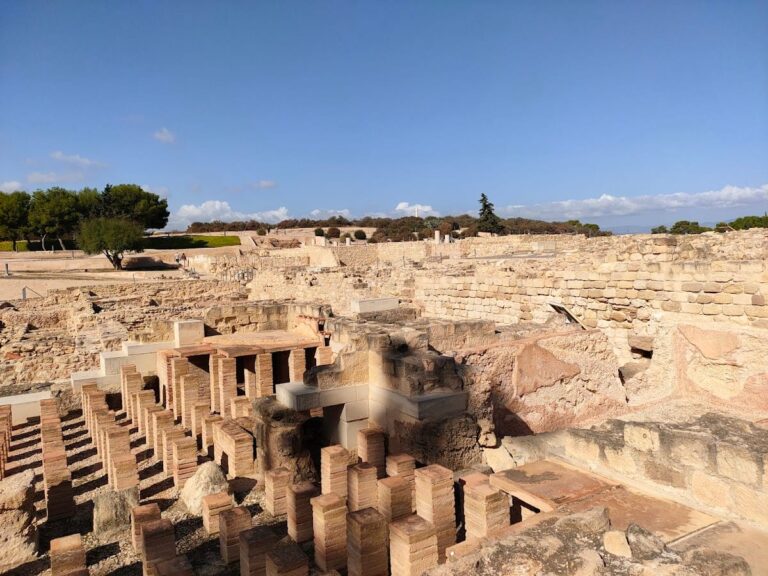
Overall, the remains at Castell de Guardamar del Segura reflect a layering of historical periods, from the Iron Age enclosure beneath to the Arabic castle and subsequent medieval modifications, telling the story of a site that adapted over centuries to shifting political and military challenges.
Nearby sites