Castle of Orihuela: A Strategic Fortress in Alicante, Spain

Site at a Glance
- Rating
- 4.4
- Popularity
- Low
- Country
- Spain
- Primary era
- Medieval
- Eras represented
- Medieval
- Civilizations
- Visigothic
- Site type
- Military
- Remains
- Castle
On this page5 sections
History
Castle of Orihuela is a ruined fortress in Orihuela, Spain, associated with the Visigothic period and occupying a strategically important position in the history of the city. Its existence was recorded in 859, while an earlier fortress may have stood during the rule of Teodomiro, a Visigothic ruler linked with southeastern Iberia in the early eighth century.
Medieval Fortress
The castle remained a large and strategically important stronghold through successive historical periods. It was repeatedly remodeled, particularly after the Christian reconquest, the long expansion of Christian kingdoms into territories ruled by Muslim dynasties in the Iberian Peninsula. Different monarchs provided funds for its maintenance, and the surviving fabric still contains elements from several phases of construction and alteration.
Its reputation for being impregnable was strengthened during the War of the Two Peters, a fourteenth-century conflict between Peter I of Castile and Peter IV of Aragon that reached territories around Orihuela. Tradition held that the castle took twelve years to capture and surrendered because its inhabitants ran out of food rather than because of a successful assault. They were even said to have resorted to cannibalism.
In the sixteenth century, the Aragonese historian Jerónimo Zurita called the fortress the “key and defense” of the entire Kingdom of Valencia. Pedro López de Ayala, a medieval Castilian chancellor, poet, and chronicler, described it as one of the strongest and most beautiful castles.
Destruction and Protection
During the War of the Spanish Succession, an early eighteenth-century European conflict over the Spanish monarchy that also affected fortifications in Spain, lightning struck the powder magazine. The resulting explosion destroyed most of the castle. The fortress was judged beyond recovery, and its demolition was ordered. Further storms during the eighteenth century and the earthquake of 1829 caused irreparable damage to the remaining ruins.
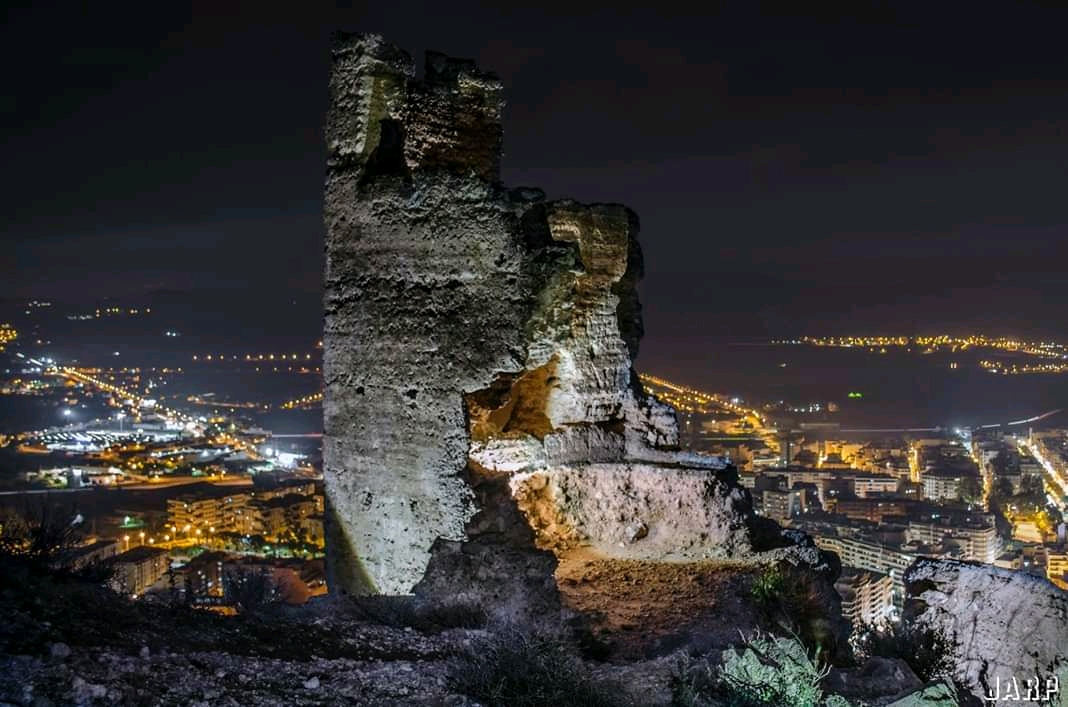
The Castle of Orihuela was declared a cultural-interest monument and historical-artistic monument on 3 June 1931 under heritage designation RI-51-0000373. It was added to the Red List of endangered heritage on 4 January 2008 and is also protected by Orihuela’s Special Plan for the Protection of the Historic Center. Weather, the passage of time, and human activity have nevertheless continued to deteriorate the ruins, creating an urgent need to consolidate the surviving remains and the walled enclosure.
Remains
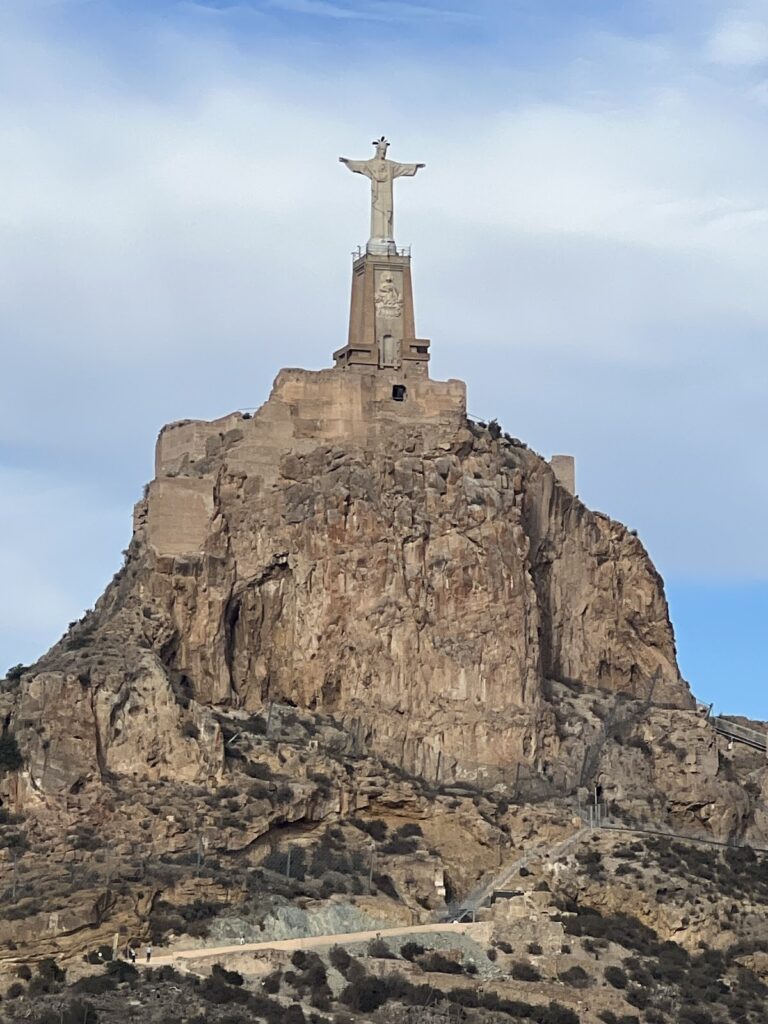
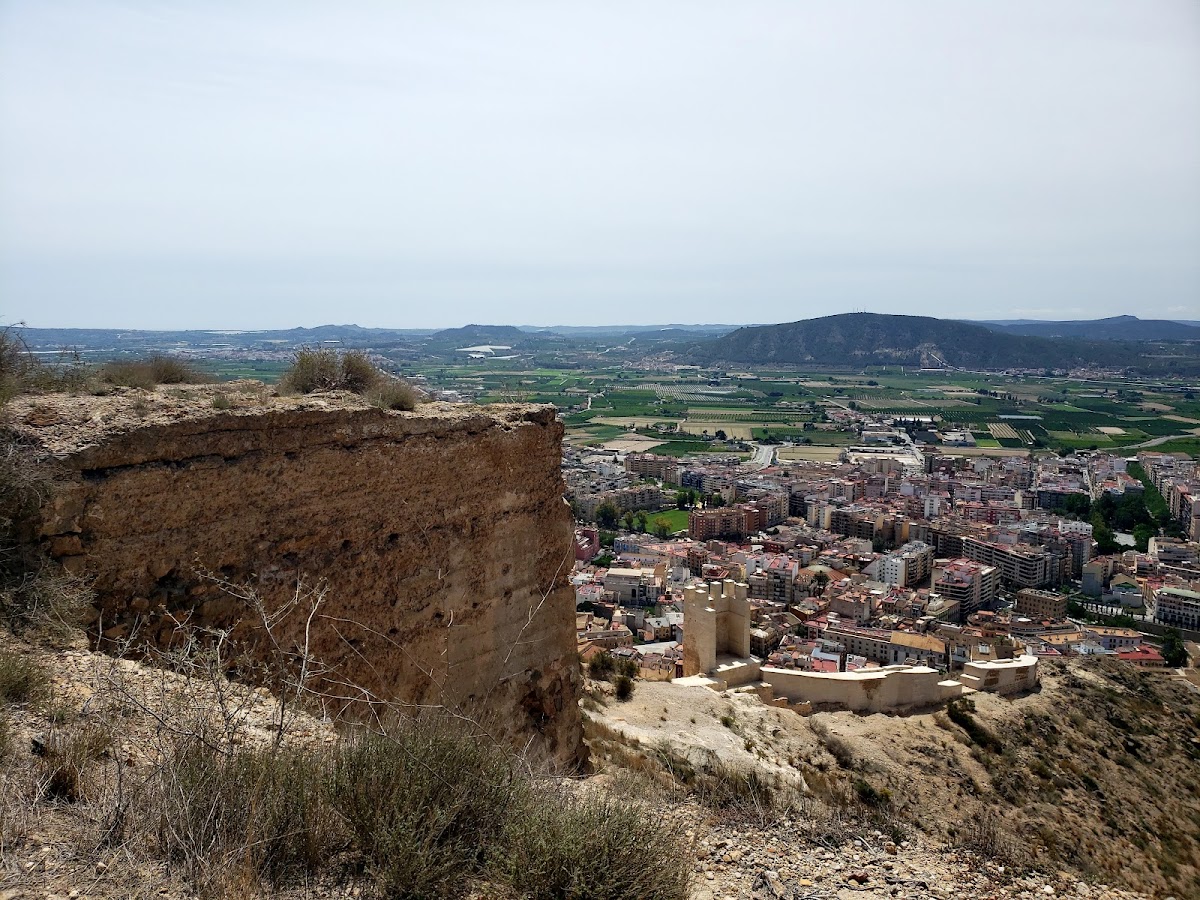
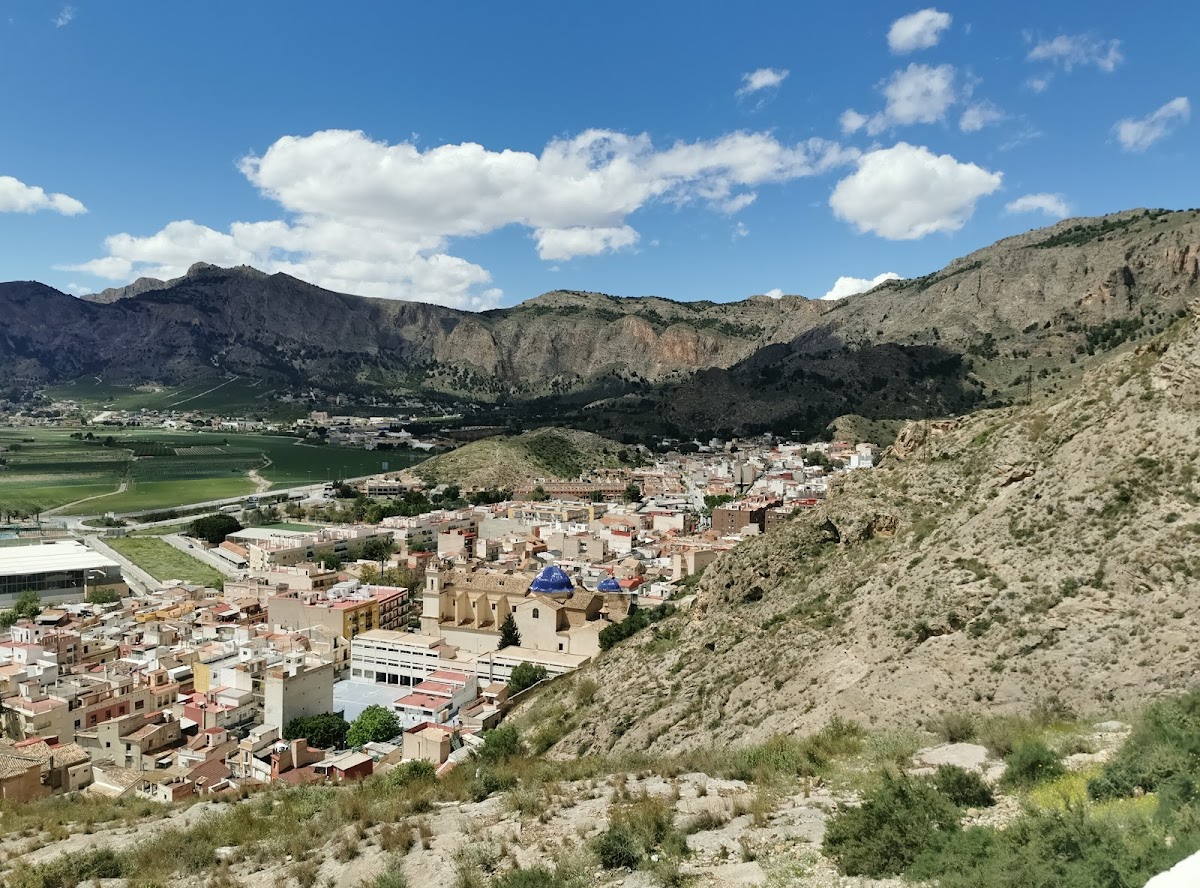
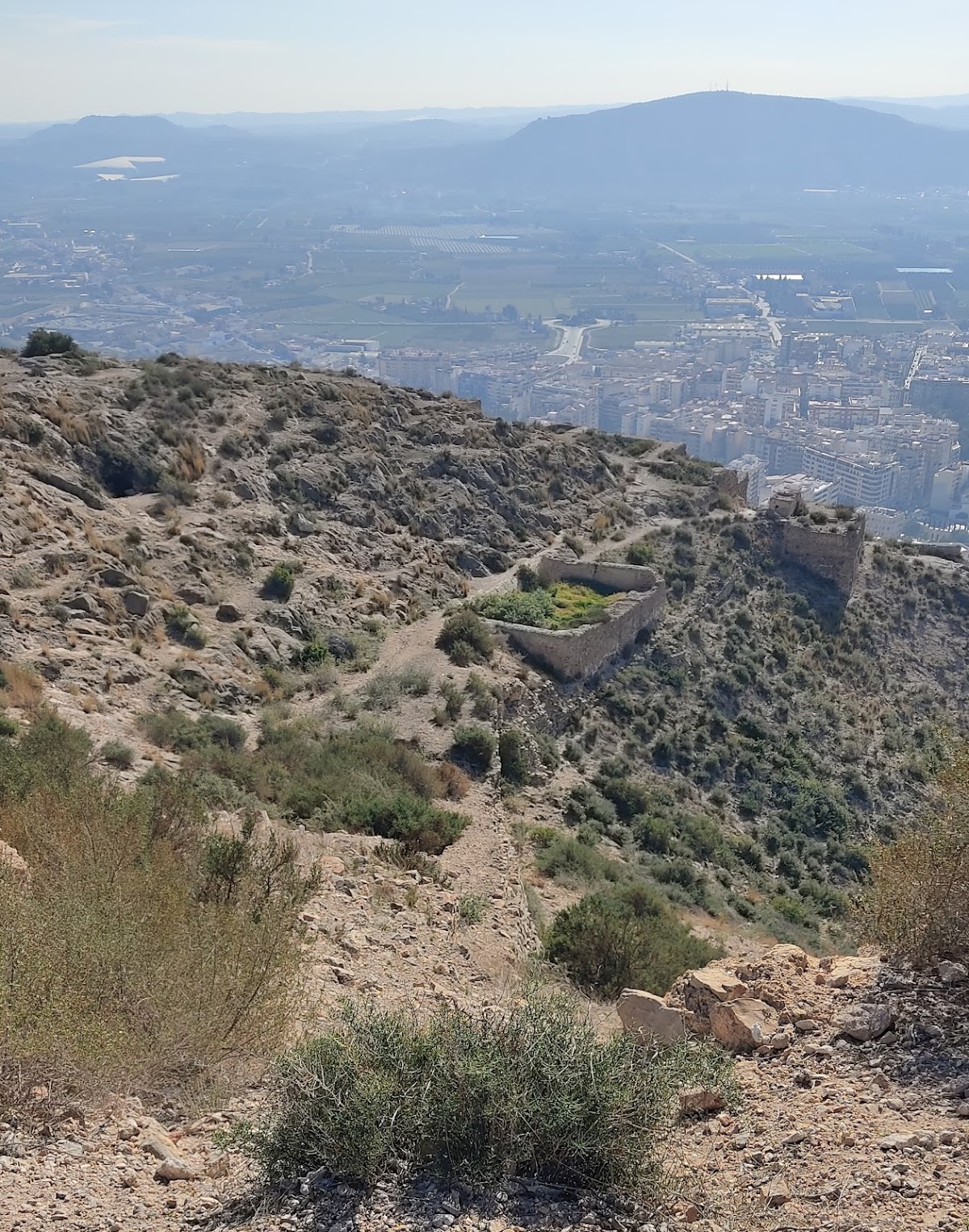
The surviving fortress occupies the summit of Mount San Miguel in Orihuela, at an elevation of about 240 meters. Its architectural character combines Visigothic and Gothic elements, reflecting the successive periods during which the stronghold was remodeled and maintained. The complex is now ruined, but its position and surviving defensive works preserve the basic character of a mountain fortress.
Defensive Layout
The fortress was arranged in seven circles, with the highest circle reserved for senior military officials. Large stretches of the defensive walls remain, together with the ruins of several towers. These surviving structures preserve elements added during different historical periods and form the principal visible remains of the castle and its walled enclosure.