Palacio de Altamira: Castle-Palace and Museum in Elche



Site at a Glance
- Rating
- 4.5
- Popularity
- Low
- Country
- Spain
- Primary era
- Medieval
- External website
- Open
- Eras represented
- Medieval
- Civilizations
- Almohad, Crown of Aragon, Kingdom of Valencia, Spanish
- Site type
- Domestic
- Remains
- Castle
On this page7 sections
History
Palacio de Altamira is a historic castle-palace in Elche, Spain, built in the late fifteenth century by the Castilian nobleman Gutierre de Cárdenas. Standing beside the Vinalopó River, it became the habitual residence of Cárdenas, the first lord of Elche, after he returned the city to the Crown under Isabella I of Castile and Ferdinand II of Aragon, known together as the Catholic Monarchs.
Medieval foundations and noble residence
The palace probably occupies the site of an earlier twelfth- or thirteenth-century structure. That earlier building formed part of the defenses of the Almohad walled town. The Almohads were a North African Muslim dynasty and religious movement that ruled parts of the Iberian Peninsula during the twelfth and thirteenth centuries.
In the late fifteenth century, Gutierre de Cárdenas established the present castle-palace. The property later belonged to the Counts of Altamira, whose name became associated with the building.
Prison camp and museum
In April 1939, after the end of the Spanish Civil War, Francoist troops converted the palace into a concentration camp for Republican prisoners. Severe overcrowding resulted in groups of prisoners being moved to other facilities in Elche, and the palace was later designated a prison camp.
The building was declared a historic-artistic monument in 1961 and entered Spain’s cultural-heritage register as a monument under registration number RI-51-0001292. This protected heritage status forms part of the cultural heritage of Alicante Province. Following restoration, the palace became the home of the Archaeological and History Museum of Elche, founded by the Elche archaeologist Alejandro Ramos Folqués.
Remains
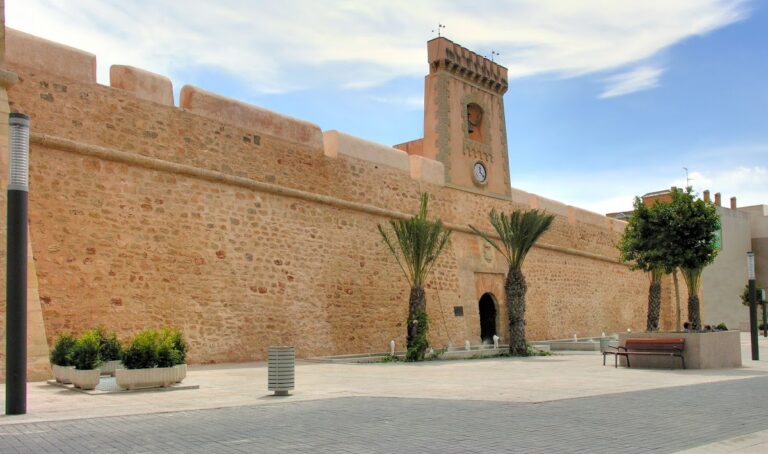
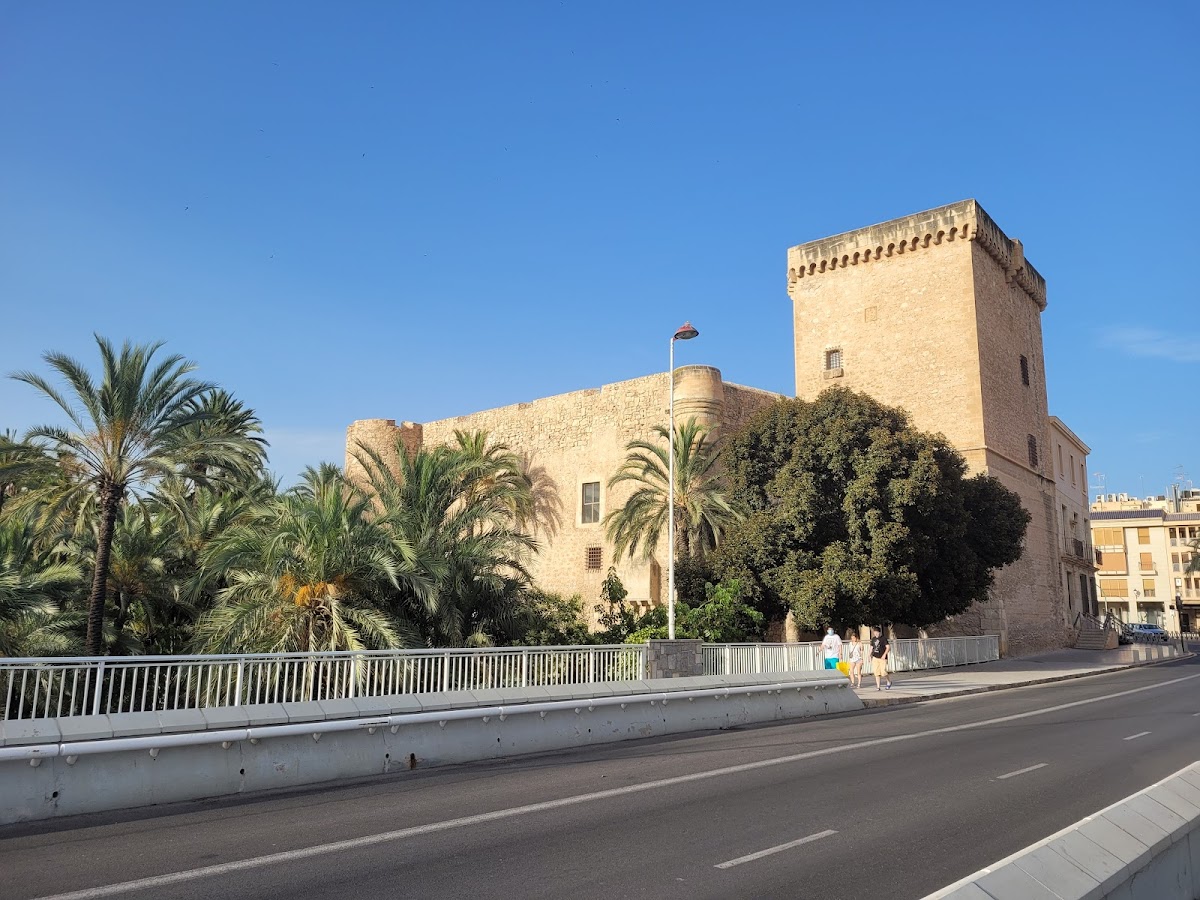
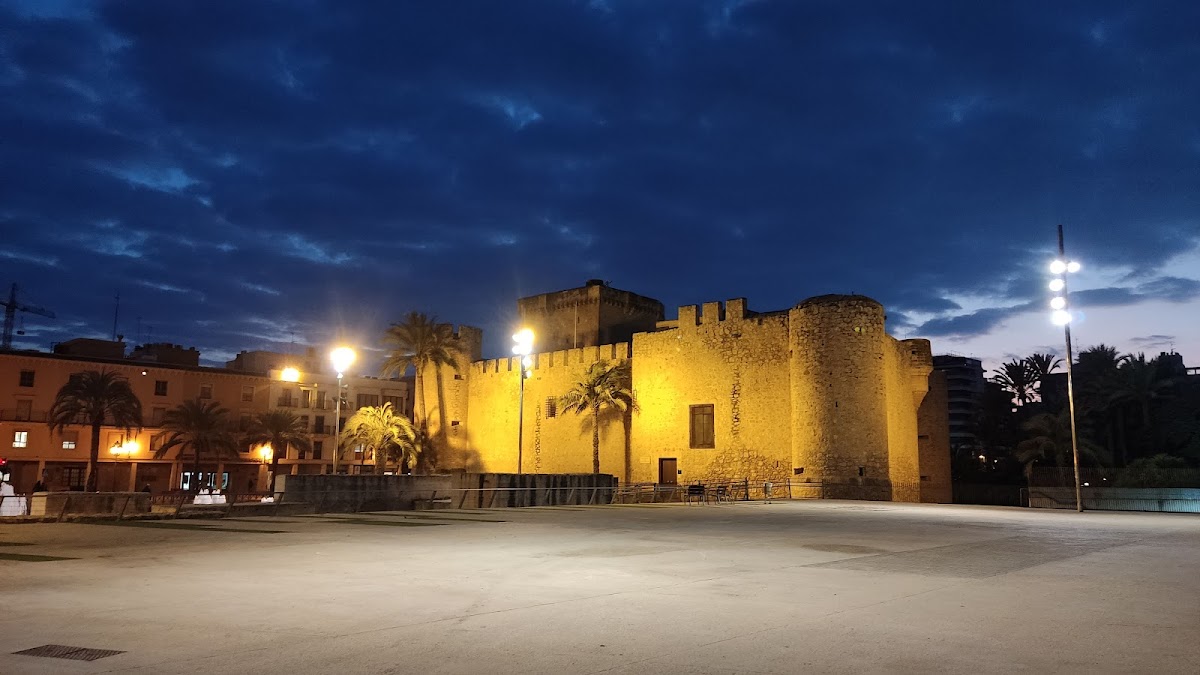
The restored castle-palace has a polygonal plan and combines features associated with Almohad and Baroque architecture. Its fortified form is organized around a solid square main tower, with cylindrical towers protecting the corners. The building survives in excellent conservation condition.
Fortified structure
Main tower
The principal feature is a massive square tower crowned by crenellations. Its strong, compact form expresses the defensive character of the castle-palace and remains a defining element of the restored building.
Corner towers
Cylindrical towers protect the corners of the polygonal castle. Together with the main tower and the surrounding plan, they preserve the building’s fortified architectural character.