Antiphellos Ancient City: A Lycian Coastal Settlement in Turkey


Visitor Information
Google Rating: 4.7
Popularity: Medium
Google Maps: View on Google Maps
Country: Turkey
Civilization: Roman
Remains: Entertainment

History
Antiphellos Ancient City is located near the modern town of Kaş in Antalya Province, southwestern Turkey. Originally known as Habesos, it was established by the Lycians along the coast by the 6th century BCE. This early settlement later came under Persian control during the mid-6th century BCE.
During the Hellenic period, Antiphellos functioned as the maritime port for the inland city of Phellus. Over time, as Phellus declined, Antiphellos grew in prominence and became the largest city in the area. It gained enough autonomy to mint its own coins, signaling its economic and political rise. The city is first mentioned in Greek inscriptions from the 4th century BCE, alongside surviving Lycian inscriptions from the same era.
Antiphellos was a member of the Lycian League, holding one vote in this regional federation. Roman authors such as Pliny the Elder and the Stadiasmus Maris Magni also reference the city, confirming its continued significance into Roman times. Around 141–142 CE, Antiphellos likely suffered damage from a major earthquake and tsunami that struck Lycia. Repairs, including restoration of the amphitheatre, were probably funded by the wealthy benefactor Opramoas of Rhodiapolis.
Despite its coastal position, Antiphellos was never fortified with city walls or an acropolis. In the Roman period, it became a bishopric under the metropolitan see of Myra. Its bishop, Theodorus, attended the Council of Chalcedon in 451 CE. Today, Antiphellos remains a titular see within the Catholic Church. The site was rediscovered in the 19th century by explorers Sir Francis Beaufort and Charles Fellows, who documented many tombs and inscriptions. However, much of the ancient city has been lost due to modern urban development and reuse of building stones.
Remains
The archaeological remains of Antiphellos are spread around the modern town of Kaş, with a layout reflecting its coastal setting. The city lacks defensive walls or a fortified acropolis, but features a variety of tombs, public buildings, and harbor structures built mainly from local stone.
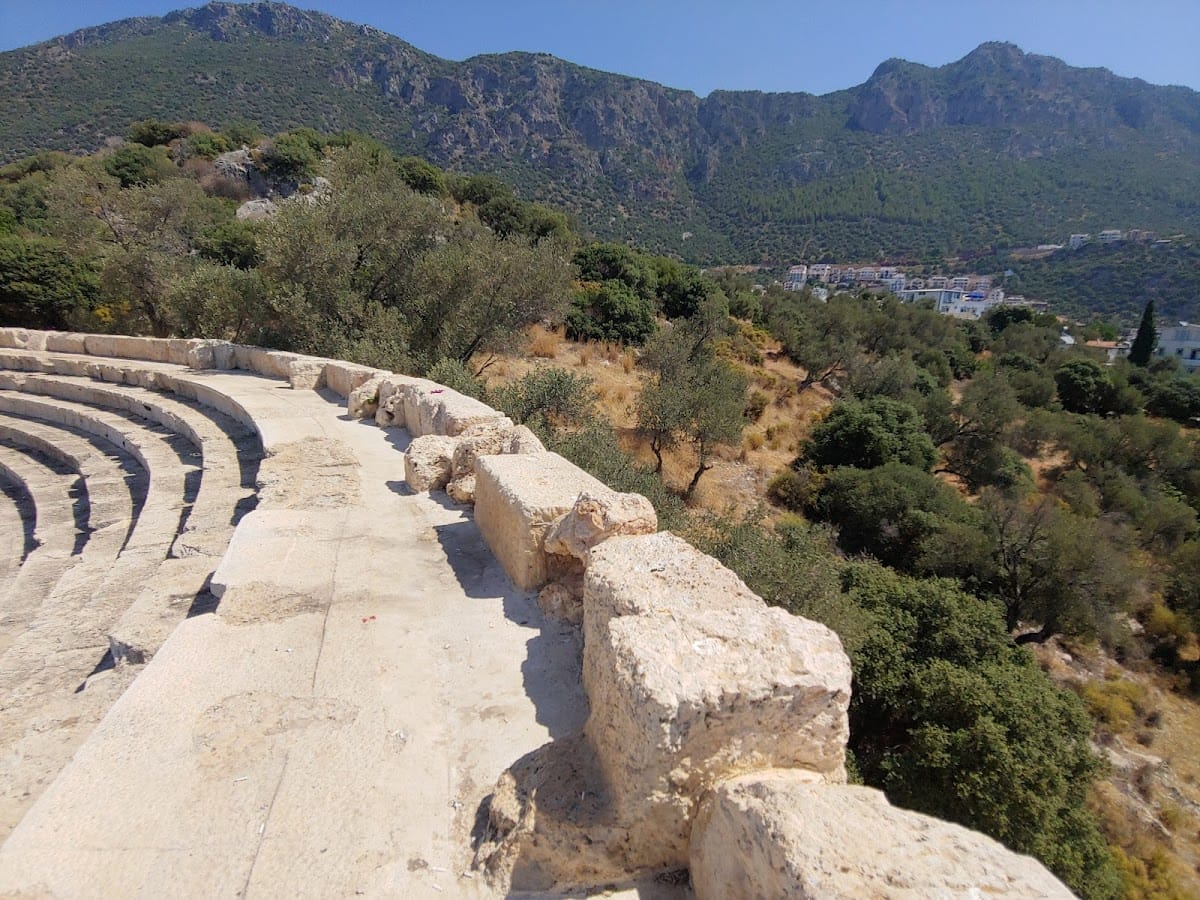
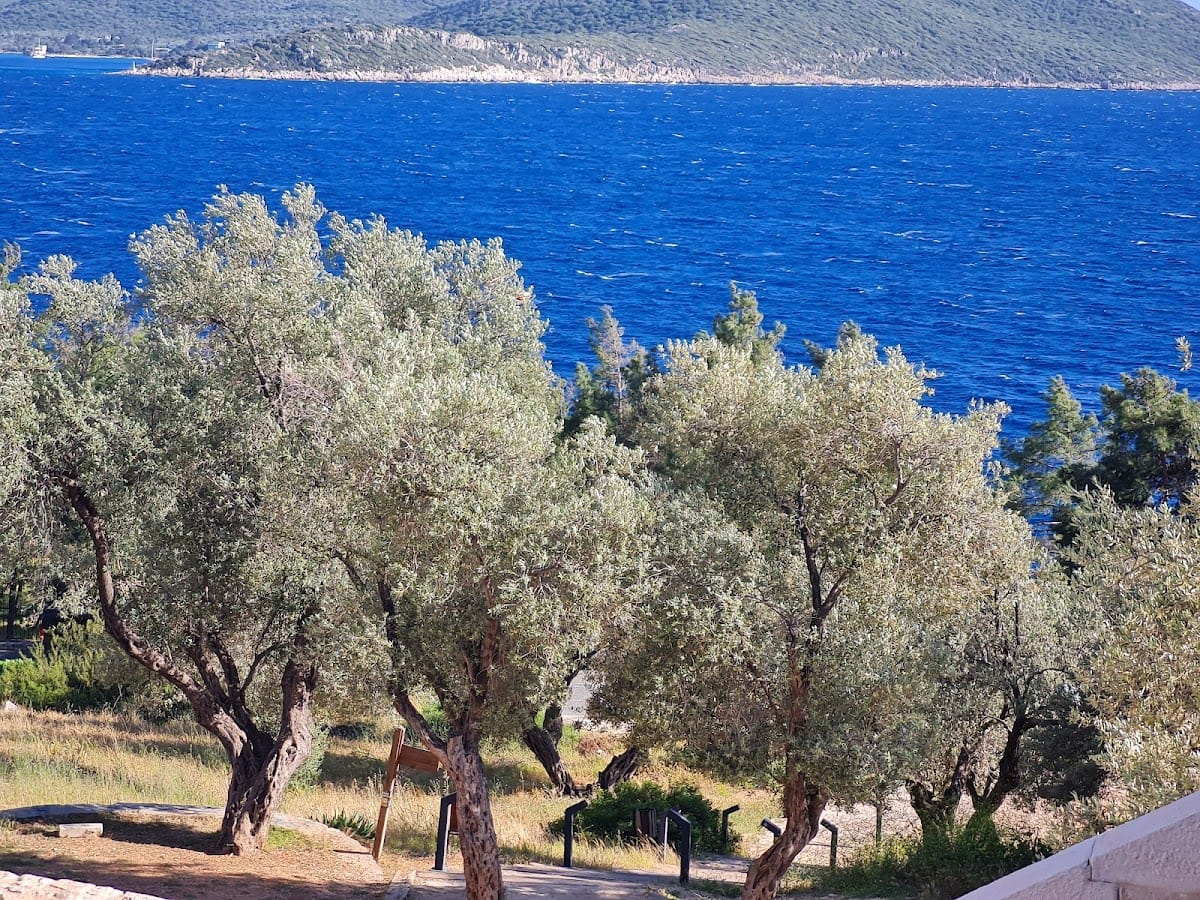
A prominent feature is the Hellenistic theatre, situated about 500 meters from Kaş. It originally seated around 4,000 spectators and is unique in Anatolia for its location facing the sea. The theatre’s retaining wall forms a slightly more than semicircular shape using irregular ashlar blocks, which are carefully cut rectangular stones. It lacks a horizontal passage called a diazoma and does not have a permanent stone stage, preserving the sea view for the audience. The east wall collapsed, likely during the 141 earthquake, and was repaired soon after, probably with funds from Opramoas. The theatre was restored in 2008 and remains largely intact.
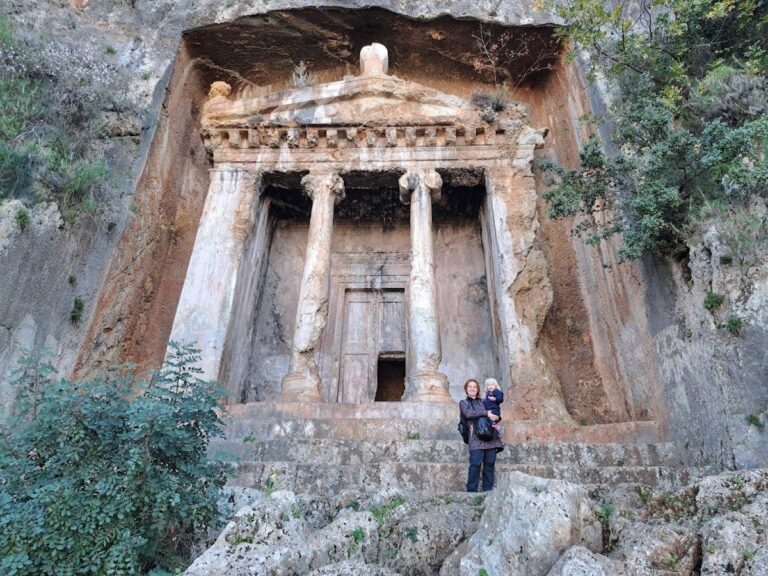
The King’s Tomb, dating to the 4th century BCE, stands on Uzunçarşı Street and is well preserved. This rock-cut mausoleum features a hyposorium, or sunken chamber, about 1.5 meters high with an unsealed entrance and a base 76 centimeters tall. It bears a rare poetic inscription in the extinct Milyan language, also known as Lycian B, which has not yet been translated. The sarcophagus lid is a separate stone block decorated with four relief panels and lion head projections, depicting the tomb’s builder and his wife.
Above the theatre lies the Doric Tomb, a cube-shaped rock-cut structure measuring 4.5 meters on each side. Its east-facing entrance, 1.9 meters high, leads to a single chamber. Inside, a relief of dancing girls dates the tomb to the early 4th century BCE. Architectural details include a moulded frame around the entrance, originally closed by a sliding door, a moulded base with shallow pilasters at the corners, and a band with mutules, small rectangular blocks, on the south side. Only one capital remains from the original decoration.
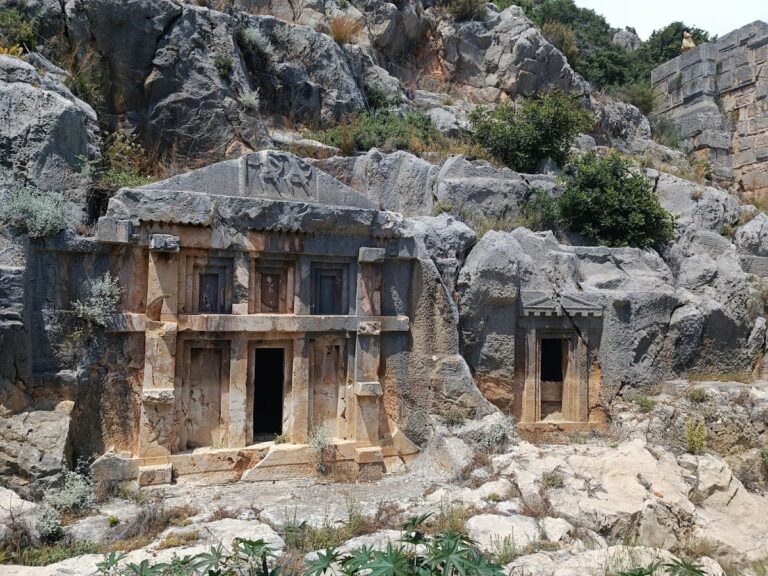
A small temple from the 1st century BCE survives partially, built with five courses of rectangular ashlar blocks. It received additions about four centuries later and was dedicated to an unknown deity. Nearby cliffs contain numerous rock-cut tombs with Lycian and later Latin inscriptions, reflecting the city’s long history.
Along the coast, remnants of an ashlar sea wall extend over 460 meters west of the town. Standing six courses high, this wall likely reinforced the harbor area, which was protected by a natural reef. No city walls or acropolis structures have been found.