Castle of Préjano: A Medieval Military Fortification in Spain


Site at a Glance
- Rating
- 4.4
- Popularity
- Low
- Country
- Spain
- Primary era
- Medieval
- Eras represented
- Medieval
- Civilizations
- Crown of Castile
- Site type
- Military
- Remains
- Castle
On this page7 sections
History
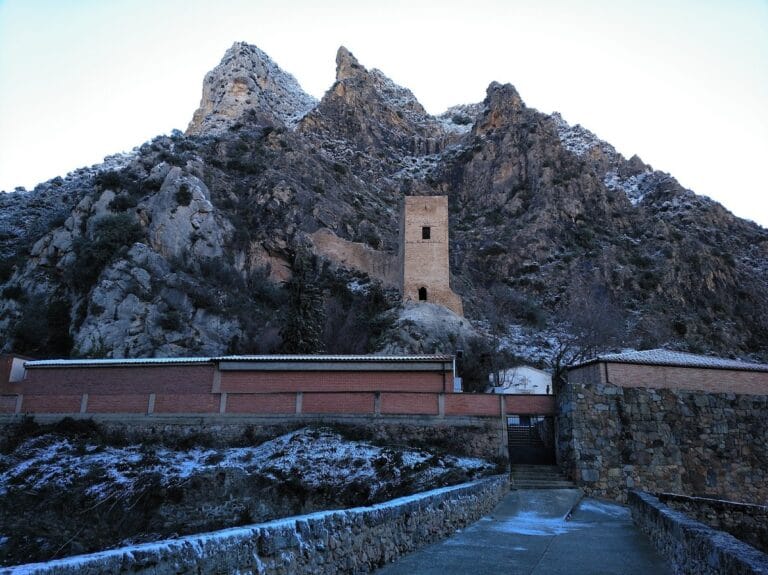
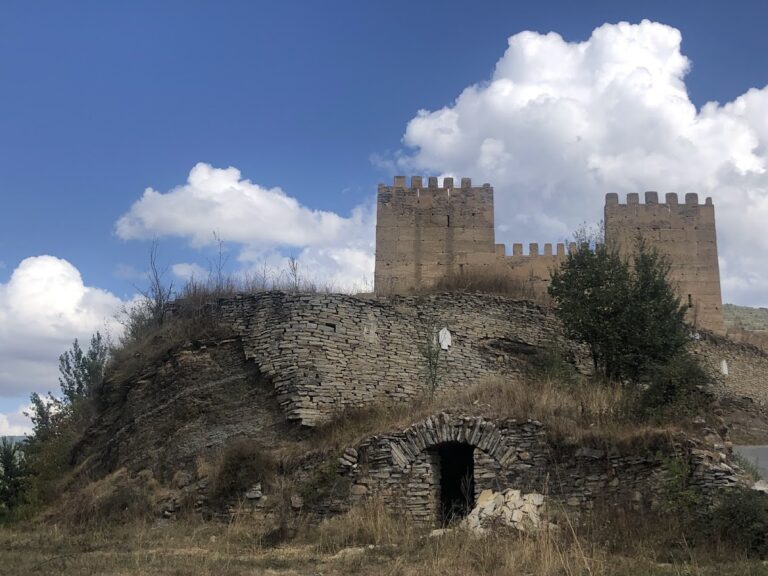
Castle of Préjano is a military fortification in Préjano, Spain, built around a small rise above the town. An earlier fortification occupied the site in the eleventh century, while the surviving strong tower dates from the fifteenth century.
Medieval Lords and Military Control
In 1151, Alfonso VII, the twelfth-century king of León and Castile known as the Emperor, granted Préjano and its castle to Martín Fernández. The grant was probably a reward for Fernández’s service as castellan of Calahorra, a role involving the command or administration of a castle.
In 1284, Don Simón Ruiz sold the castles of Préjano and Yanguas to the Order of Calatrava, a medieval Spanish military-religious order that held fortified properties and exercised territorial authority. Four years later, the castle and the village were granted indefinitely to Vela Ladrón de Fuevara, a nobleman of the powerful Navarrese Vela lineage.
Fifteenth-Century Tower and Later Lords
The present strong tower was built during the fifteenth century, when the castle belonged to Garci Franco de Valladolid. King Enrique IV of Castile dispossessed Franco after he joined the conspiratorial faction of Enrique’s brother, Infante Alfonso, a royal prince involved in opposition to the king.
Around 1498, Antonio Franco was lord of Préjano. The castle later passed to García Manrique in 1565, after which possession returned to the Franco family. At a later period, the Marquises of Gastáñaga held the lordship.
Walls, Cemetery, and Restoration
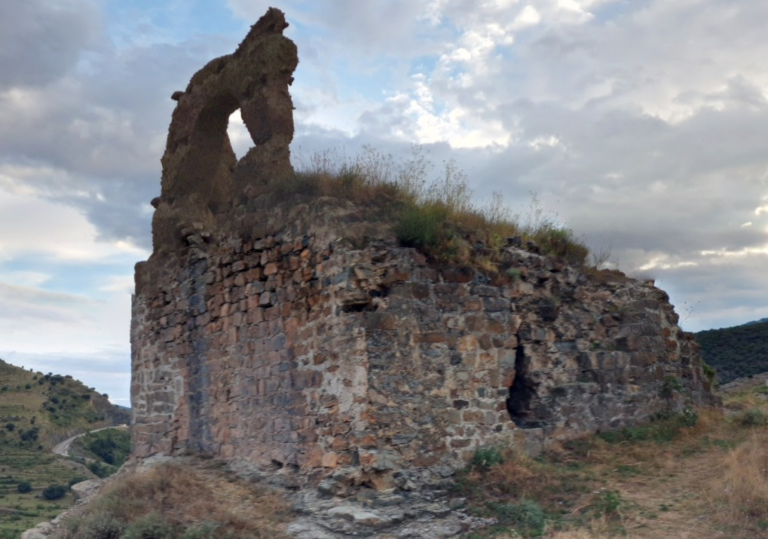
A description from 1849 states that Préjano had formerly been surrounded by walls, although only the present tower survived by that time. The castle courtyard had been used as the town cemetery, a use that continued until the mid-twentieth century, when a cemetery was built outside the town.
Deterioration of the tower led to restoration in five phases between 2007 and 2019. The work included archaeological excavation and research, and the castle is recorded as restored. It is also designated a Bien de Interés Cultural, a formal Spanish status recognizing and protecting places of cultural heritage.
Remains
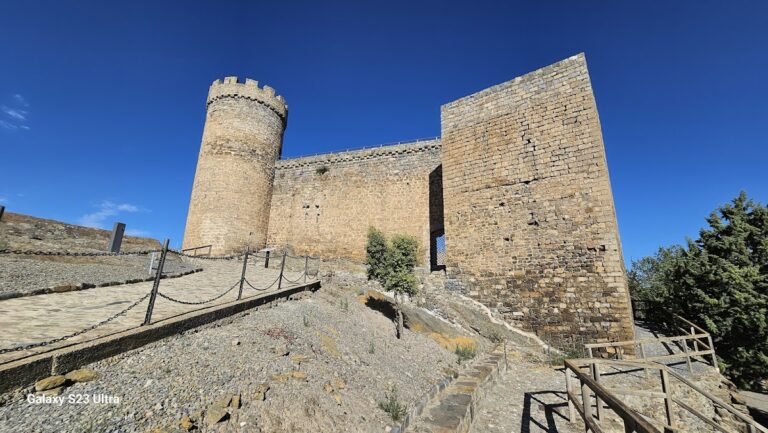
The surviving complex is organized around a pentagonal strong tower enclosed by a rectangular perimeter enclosure. Both the tower and the enclosure have masonry walls, while the tower’s corners are reinforced with regularly cut ashlar blocks. Sloping taluses, or defensive and reinforcing bases, strengthen the foot of the tower.
Strong Tower
The principal tower has a pentagonal plan and rises within the rectangular enclosure. Its entrance is a blocked pointed arch on the southeast side, positioned at the level of the second floor. Restoration added a staircase leading to this entrance, allowing access to the interior and to part of the upper section.
Perimeter Enclosure
The tower is surrounded by a rectangular enclosure whose surviving walls are built of masonry. Together, the enclosure and the tower preserve the central defensive arrangement of the castle, although the wider walls that once surrounded Préjano had disappeared by the time of the 1849 description.