Castell de Moraira: An Eighteenth-Century Coastal Fortification in Spain


Site at a Glance
- Rating
- 4.4
- Popularity
- Medium
- Country
- Spain
- Primary era
- Early Modern
- External website
- Open
- Eras represented
- Early Modern
- Civilizations
- Spanish
- Site type
- Military
- Remains
- Fort
On this page10 sections
History
Castell de Moraira is an eighteenth-century coastal fortification in Spain, built to protect Moraira and the Teulada coast from repeated attacks by Berber pirates, maritime raiders operating from the North African coast. It was the outcome of several earlier coastal-defense projects that had not succeeded. The fort’s present form belongs to the period of Bourbon rule, the European dynasty whose royal arms appear above its entrance.
Construction in the eighteenth century
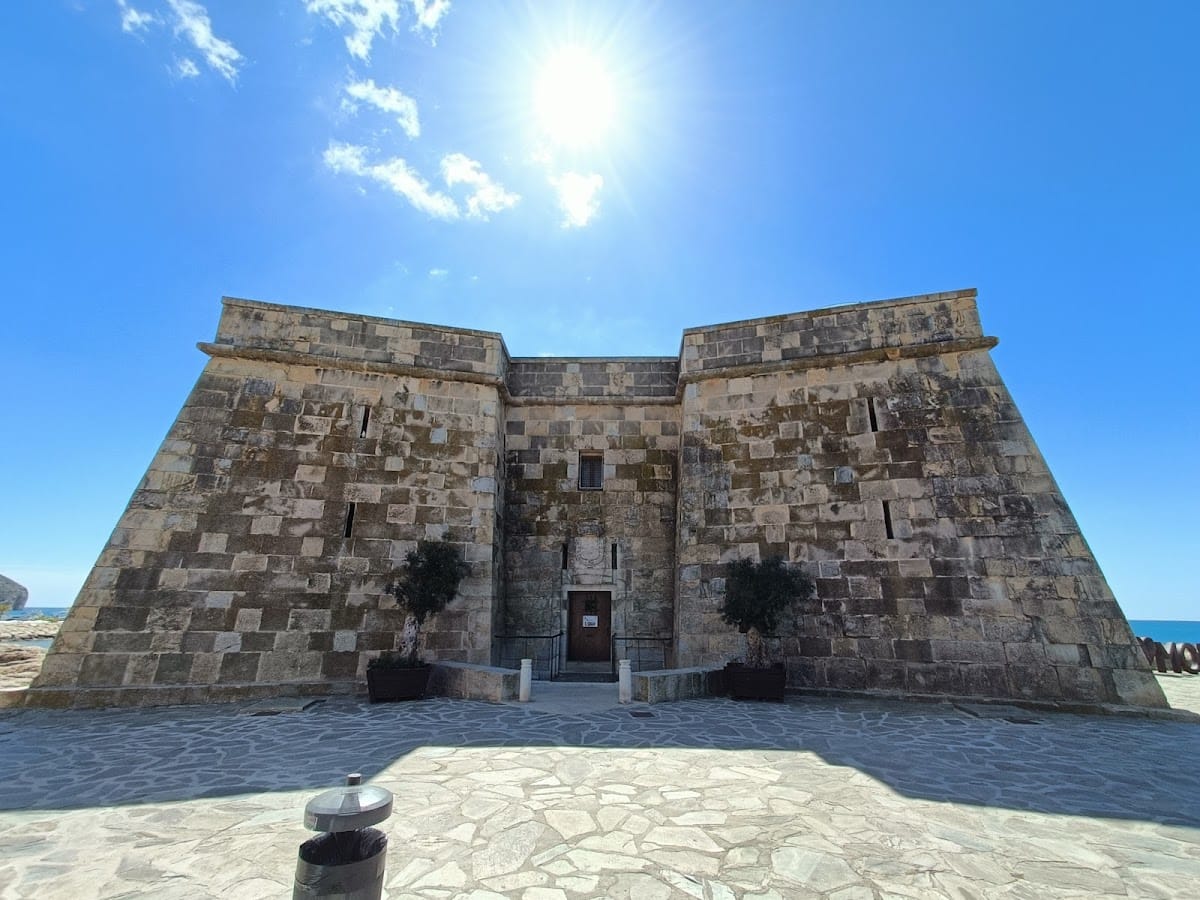
The fort was once assigned to the sixteenth century and attributed to Juan B. Antonelli, but its construction is now placed between 1737 and 1742. Work was still underway in 1741. The Bourbon royal coat of arms above the entrance bears the date 1742, which may indicate the completion of the building.
A letter of 28 October 1744 from the mayor and councillors of Calp to the Governor of Valencia requested the fortification of their town. It referred to the Moraira fort as still under construction and named Nicolas Bodin as its director. This evidence places the building within a continuing program of coastal defense rather than treating the dated entrance coat of arms as conclusive proof that every stage had ended in 1742.
Use, decline, and restoration
Castell de Moraira appears to have remained operational until the middle of the nineteenth century. This conflicts with the theory that English forces destroyed it in the early nineteenth century. Its continued use was supported by the survival into the mid-twentieth century of a watchman associated with the fort.
Between 1875 and 1878, stone blocks from the fort were reused to build the Hermitage of Our Lady of the Forsaken, now a parish church in Moraira. Other materials from the fort were incorporated into local houses. The building later fell into complete ruin before being restored in the early 1980s. The exterior work aimed to approximate its original appearance, while the interior was partly altered rather than fully reconstructed. Castell de Moraira has held Spain’s Asset of Cultural Interest designation since 1983 and forms part of the cultural heritage of Alicante Province.
Remains
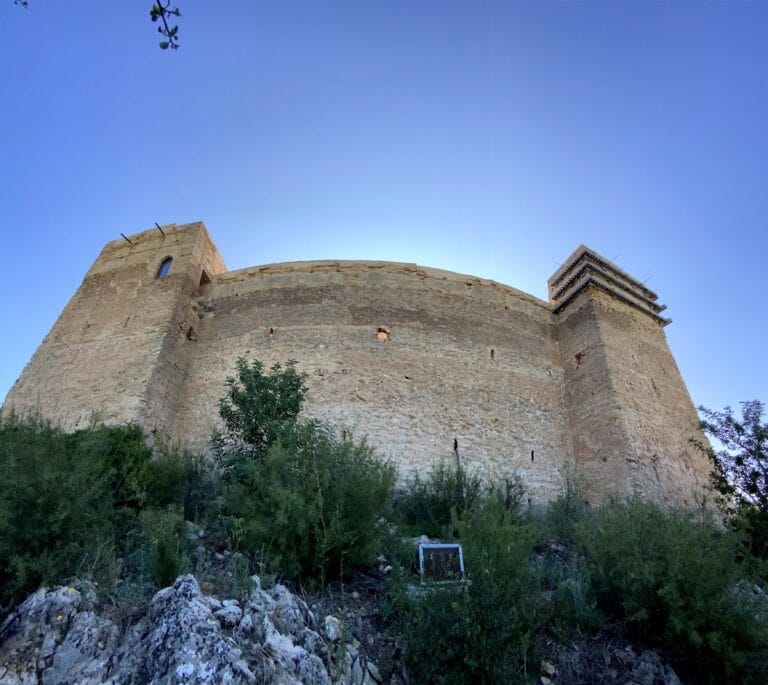
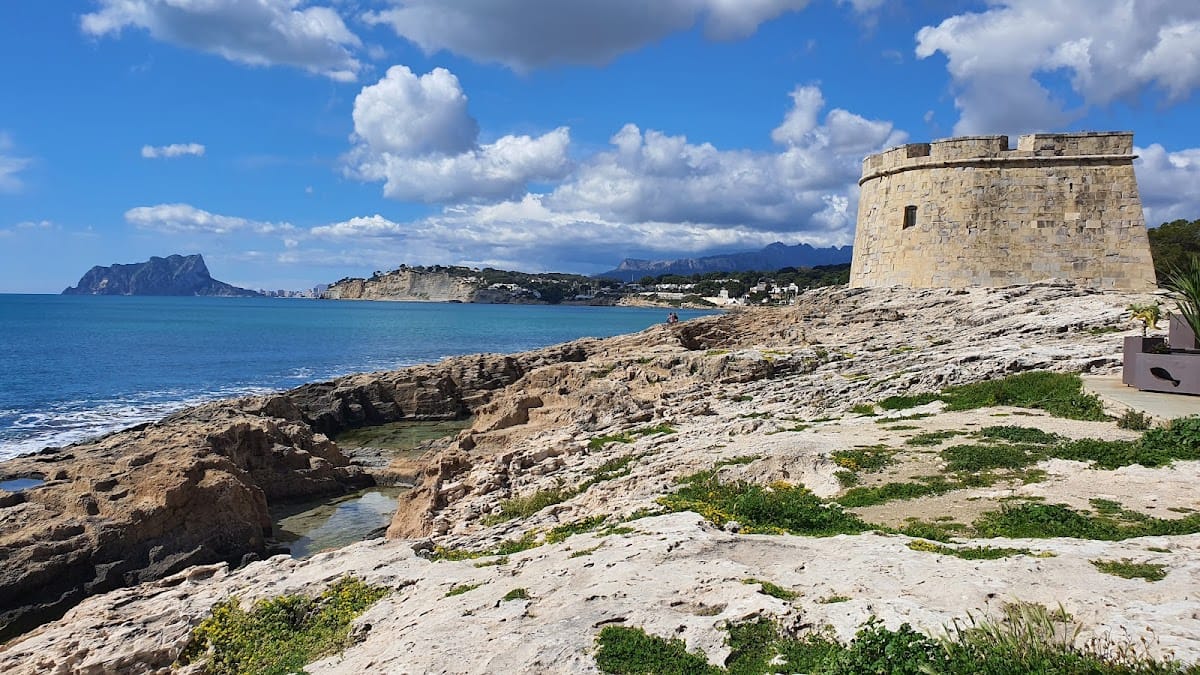
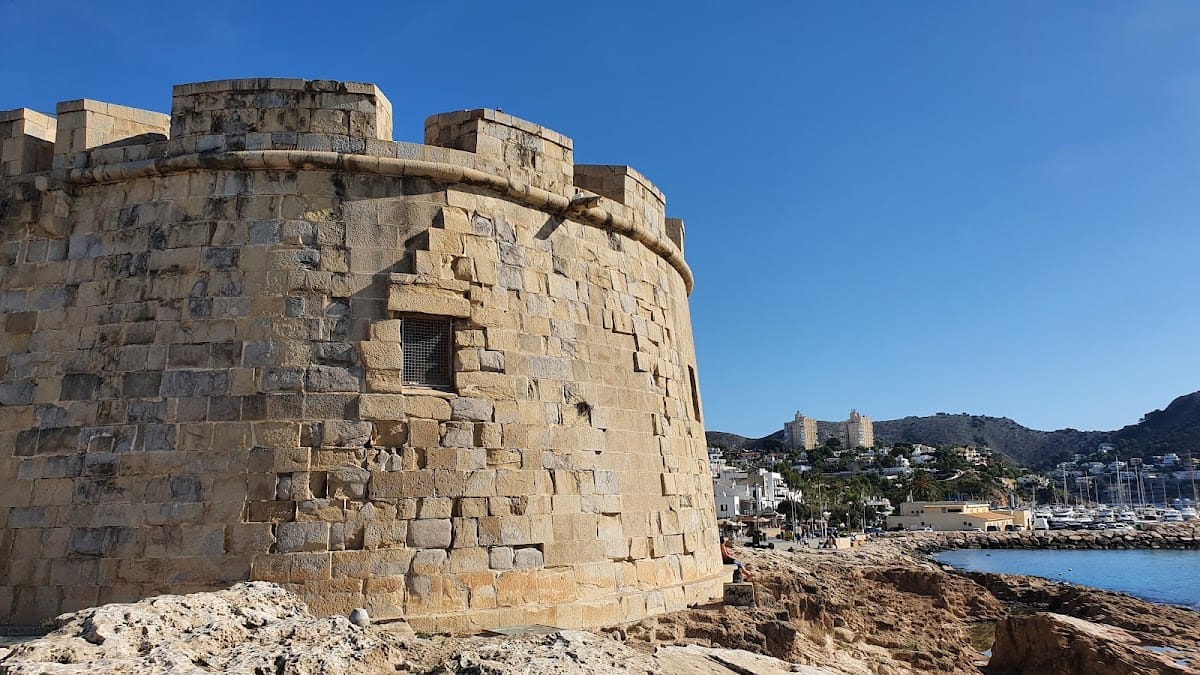
The fort occupies a rocky rise of local tosca sandstone above L’Ampolla Beach and the Bay of Moraira. Its plan resembles a bull’s hoof, with a semicircular southern facade and the entrance on the north. A protective outer work and a ditch once defended the approach, which was crossed by a drawbridge. Restoration revealed part of this bridge, a thick wooden structure protected by an iron plate.
Fortification and interior
Walls and defensive roofline
The walls rise about 10 metres and slope inward as they ascend, a form known as a battered wall. They consist of ordinary rubble masonry faced with ashlar stone from the nearby coast. A half-round molding separates the main body from the roof. Along the roofline, a low continuous wall contains seven loopholes, narrow openings intended for cannon. At the western corner survives the beginning of a structure that may have been a barbican, an outer defense for the entrance, or a sentry box, a small shelter for a guard.
Interior naves and openings
Two thick dividing walls split the interior into three naves, or principal elongated halls. The central nave occupies most of the building’s slightly more than 200 square metres, while the two side naves are smaller. Solid-brick vaults originally covered all three spaces. Light entered through three windows in the semicircular facade and further windows above the entrance. Two loopholes in the north facade illuminated the spiral staircase and a small room in the eastern nave.
The restored interior does not reproduce the original arrangement in full. The two chimneys beside the central window have disappeared, the central courtyard is now covered, and the mezzanine, an intermediate floor, in the western nave was not rebuilt.
Associated structures
Hermitage and Marian devotion
A small hermitage stands opposite the fort entrance. An earlier chapel may have been located within the fort itself. In 1746, Archbishop Mayoral donated an image of Our Lady of the Forsaken, a title of the Virgin Mary associated especially with Valencian devotion, together with a chalice for the celebration of Mass. This connection established devotion to that Marian title among the local seafaring community.
Garrison cistern
A small cistern lies a few metres east of the fort. Dating from the same period as the defensive building, it supplied drinking water for the garrison. It has a rectangular plan and a vaulted roof made from tosca ashlar.