Sinap Castle: A Medieval Armenian Fortification in Türkiye

Site at a Glance
- Rating
- 4.2
- Popularity
- Very Low
- Country
- Turkey
- Primary era
- Medieval
- Eras represented
- Medieval
- Civilizations
- Kingdom of Cilicia
- Site type
- Military
- Remains
- Castle
On this page6 sections
History
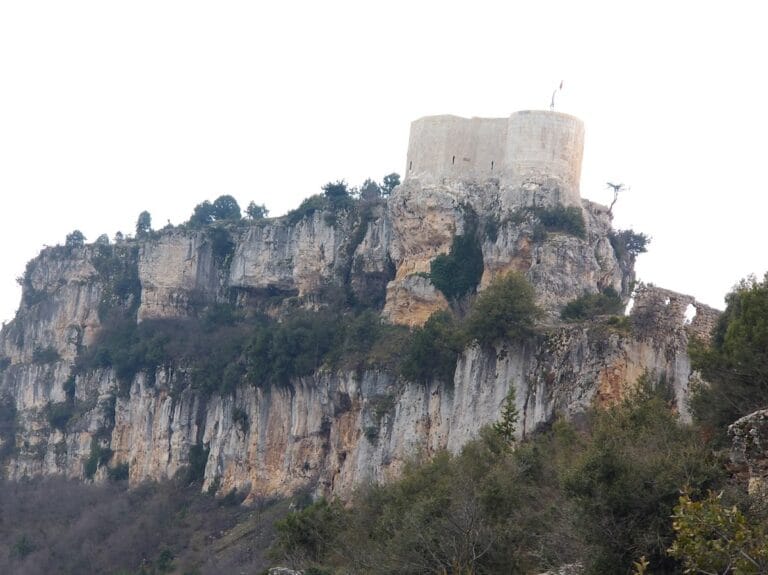
Sinap Castle is a medieval Armenian fortification in Türkiye, near Çamlıyayla in Mersin Province. Built within the historical region of Cilicia, it belongs to the network of castles associated with the Armenian Kingdom of Cilicia, a medieval Armenian state whose strongholds defended routes and settlements. Its construction is generally dated to the twelfth through fourteenth centuries, although the vaulted lower level is also described as a refuge for Armenians during the tenth and eleventh centuries.
A fortress on the route to the Cilician Gates
Sinap was linked to Lampron, also called Namrun, a major fortress about 6 km to the northeast. Together with other smaller garrison castles, it helped control routes leading toward the Cilician Gates, the mountain passage now identified with Gülek Pass through the Taurus range between the Anatolian plateau and Cilicia. Sinap served as both a fortified estate house and a guard post on this strategic route. It stood in a gently sloping, partly forested agricultural valley and formed one element of the wider Armenian defensive landscape.
Name and later condition
The name Sinap means “corner” in Old Turkish. The interior was later demolished or largely destroyed, while the outer walls continued to stand in ruined condition. The fortification was surveyed in 1979.
Remains
Overall form
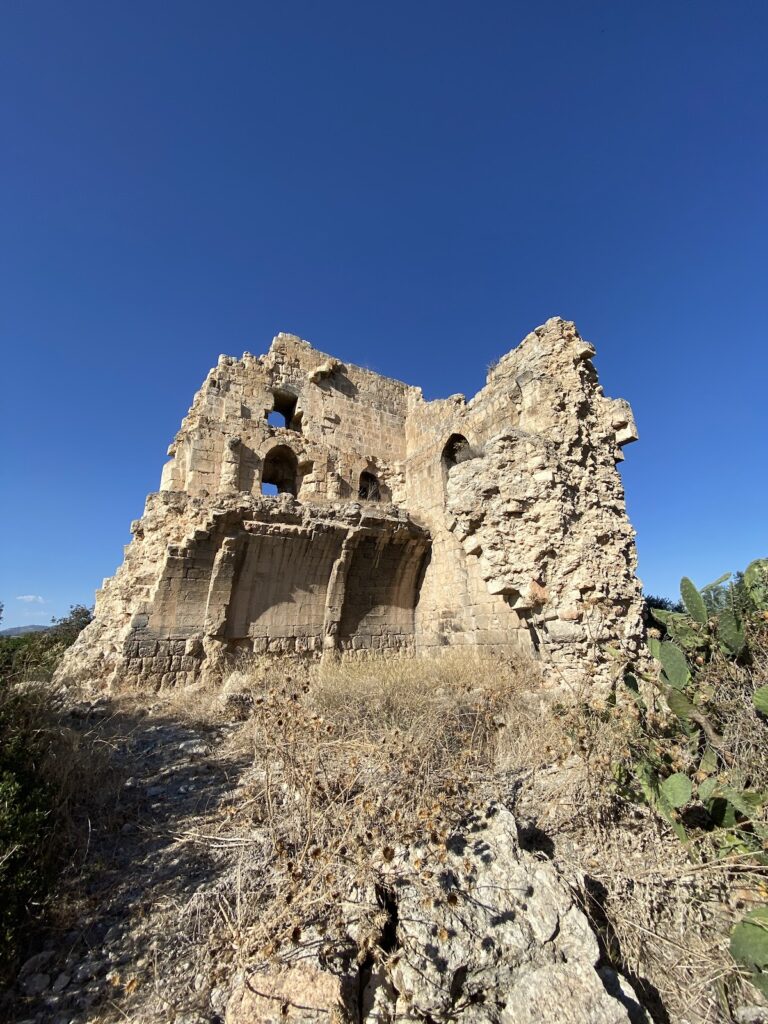
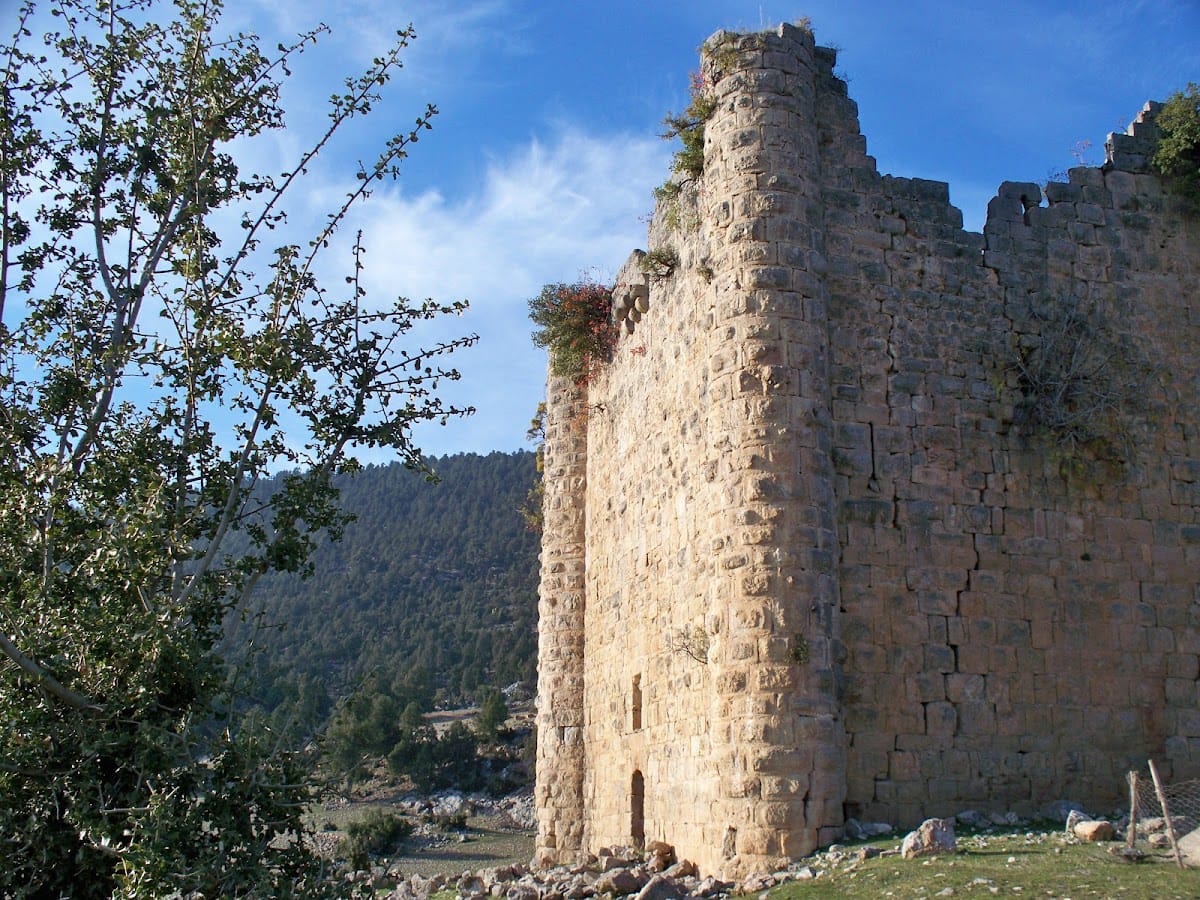
Sinap Castle stands in the Taurus Mountains at an altitude of approximately 1,240 m, on ground that is not especially elevated compared with its immediate surroundings. Northeast of Çamlıyayla and north of Mersin, the rectangular building is arranged over three stories and has a solid cylindrical tower at each corner. Rusticated ashlar masonry, made from regularly cut stone blocks with rough or strongly projecting outer faces, gives the walls a heavily textured appearance characteristic of Armenian construction in the region.
Vaulted levels and defenses
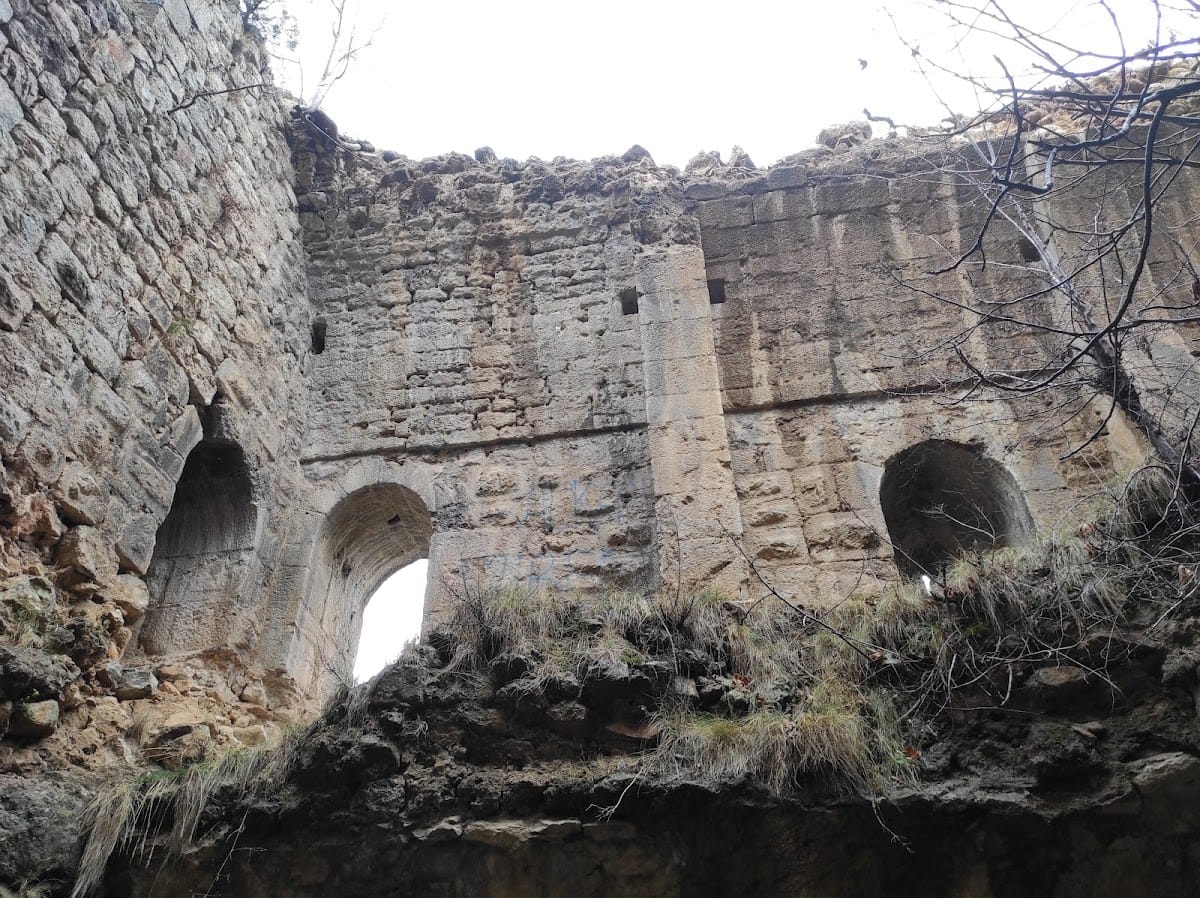
The lower floor contains a partly collapsed pointed vault and has a single doorway in the west wall. A staircase once joined it to the second level, but that connection has disappeared. Part of the second level’s vault remains, while its walls contain nine casemates, protected chambers with openings for observation or fire. These spaces have embrasured loopholes, along with two windows and an apse-like feature or possible apse in the east wall.
The third level has been destroyed. It probably held fighting platforms and may have included merlons, raised sections of a parapet that sheltered defenders between openings. Interior divisions have largely vanished, but the outer walls remain standing as the principal surviving structure of the fortification.