Vouni Palace: A Classical Fortress-Palace in Cyprus




Site at a Glance
- Rating
- 4.5
- Popularity
- Low
- Country
- Cyprus
- Primary era
- Classical
- Eras represented
- Classical
- Civilizations
- Achaemenid
- Site type
- Civic
- Remains
- Palace
On this page6 sections
History
Vouni Palace is an ancient monumental palace in Cyprus, built on a plateau during the Classical period, the fifth and fourth centuries BC. Construction began in the early fifth century BC after the unsuccessful Ionian Revolt against the Persians, in which Cyprus had taken part. The king of Marion, an ancient city-kingdom on Cyprus and an ally of Darius, the Persian king of the Achaemenid Empire, built the fortress-palace to control the nearby city of Soloi.
Persian Influence and Greek Replanning
The first design reflected eastern architectural traditions. After the more successful Cypriot revolt against Persia in 449 BC, a new ruler changed the palace plan so that it followed Greek traditions more closely. This alteration gave the complex a different architectural character while preserving its role as a fortified royal centre above the surrounding landscape.
Destruction and Excavation
Fire destroyed Vouni Palace around 380 BC. Einar Gjerstad proposed that inhabitants of Soloi were responsible, although other scholars have questioned this interpretation. The Swedish Cyprus Expedition, a Swedish archaeological mission investigating ancient sites in Cyprus, examined Vouni between 1927 and 1931. The main excavation campaign took place from 1928 to spring 1929 under the direction of Gjerstad and Alfred Westholm.
Remains
Palace Complex and Water System
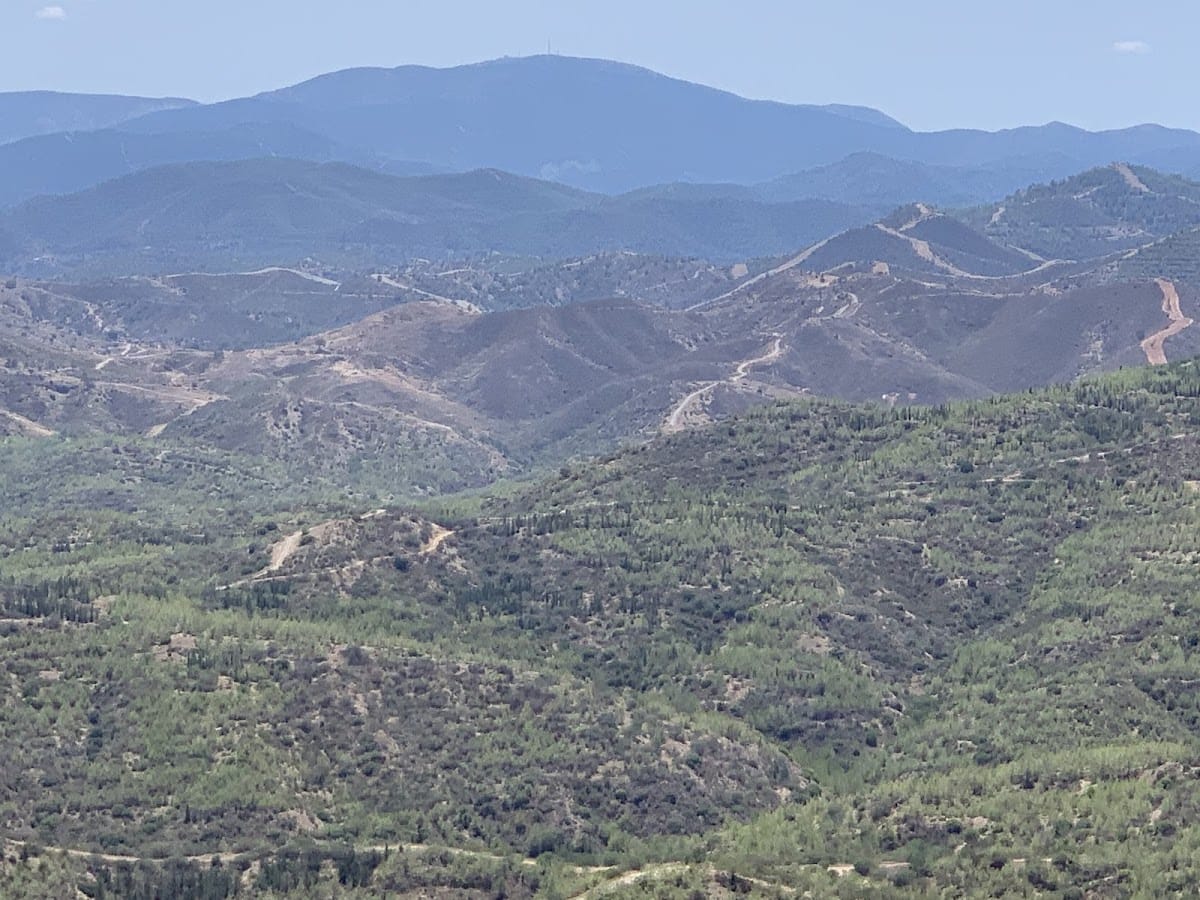
Vouni formed a monumental fortified complex on a plateau about 242 metres above sea level. The archaeological remains lie in Cyprus’s Nicosia District, approximately 50 kilometres west of Nicosia. The terrain is hilly to the southwest and flatter to the north, while the nearest sea is to the northeast. The palace included extensive storage rooms, kitchens, and bathing facilities. Its bathing area contained a sudatorium, a heated room used for sweating and bathing. A large cistern in the courtyard collected rainwater from the roofs and supplied the complex’s water system.
Sanctuaries and Excavated Objects
A temple dedicated to Athena stood on the highest part of the plateau. Athena was a major Greek goddess associated with wisdom, civic protection, and warfare. Several smaller altars were also present, including one dedicated to Herakles, the Greek heroic figure known for extraordinary strength and twelve labours. Excavations recovered offerings to Athena and several statues.
A hoard concealed beneath a staircase contained 248 silver coins and four Persian gold darics. A daric was a gold coin of the Persian Achaemenid period. Of the 252 coins, 122 were transferred to the Mediterranean Museum in Sweden, while the remainder stayed in Cyprus. The coins held in Sweden are deposited at the Royal Coin Cabinet, and the Swedish collections from the expedition are administered by the Mediterranean Museum.
Nearby sites