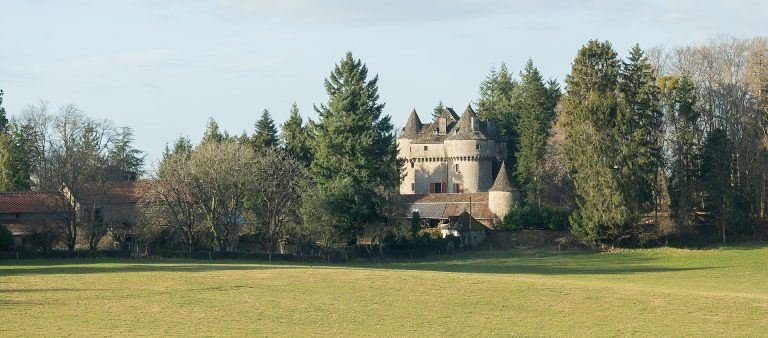
Montal Castle: A French Renaissance Château in Quercy

Site at a Glance
- Rating
- 4.6
- Popularity
- Low
- Country
- France
- Primary era
- Early Modern
- External website
- Open
- Eras represented
- Early Modern
- Civilizations
- French
- Site type
- Domestic
- Remains
- Castle
On this page12 sections
History
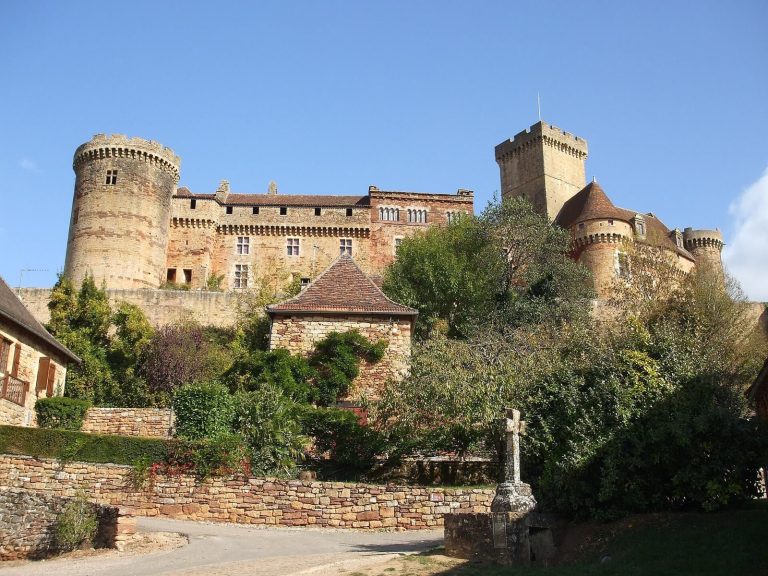
Montal Castle is a French Renaissance château in Saint-Jean-Lespinasse, France, in the Bave valley of the historic region of Quercy. Its transformation from a medieval residence into a Renaissance country house took place between 1519 and 1534, during the first French Renaissance, a period that revived classical forms, mythological imagery, and more open residential planning. The castle is regarded as one of the notable Renaissance castles of Quercy, alongside Assier, Cénevières, Cieurac, and Couanac.
From Saint-Pierre to the Montal residence
A castle known as Saint-Pierre was acquired in 1494 by Robert de Balsac when he married Antoinette de Castelnau-Caylus. Robert was Lord of Entraygues, chamberlain to Louis XI, and seneschal of Agenais. In 1495, he accompanied Charles VIII during the king’s expedition into Italy and was appointed governor of Pisa.
Robert and Antoinette’s daughter, Jeanne de Balsac d’Entraygues, married Amaury II de Montal, Lord of Laroquebrou, in 1496. After Amaury died in 1510, Jeanne undertook the conversion of the existing medieval residence into a Renaissance château. Work continued from 1519 to 1534, and the name of Montal remained attached to the property through her marriage.
Jeanne’s eldest son, Robert, died during the Italian Wars in 1523. The successive deaths suffered by the family became associated with the motto “No more hope,” which was carved on a pediment and shaped the commemorative program of the castle’s façade. The building consequently served not only as a residence but also as a memorial to Jeanne’s family.
Changing ownership and revolutionary damage
By the late sixteenth century, the castle had passed to the Pérusse des Cars family through the marriage of Rose de Montal to François de Pérusse des Cars. François was described as the first Marquis of Montal and Marquis of Merville.
Count Jean-Jacques de Plas de Tanes acquired the château and its lordship in 1771. His son Antoine was a deputy of the nobility in the Estates-General, the representative assembly of the clergy, nobility, and commoners. When the French Revolution began, Antoine abandoned the estate and fled in 1792. The château was ransacked, unsuccessfully offered for sale in January 1793, and converted into an inn.
The property later returned to Antoine de Plas de Tanes, but it was unfurnished and uninhabitable. He transferred it to a cousin of Plas de Curemonte. That cousin’s daughter married into the Boni de Lavergne family, whose son and heir eventually sold the château to a banker from Saint-Céré.
Dispersal and restoration
The banker’s widow sold the château to the property dealer Macaire du Verdier in 1858. In 1880, du Verdier dismantled the building and offered its sculpted decorations, doors, dormers, and fireplaces for sale. The elements were taken to Saint-Denis-lès-Martel for two auctions in Paris. The sales brought 142,000 francs, while much of the stone remained unsold for about twenty years. A second sale on 11 December 1903 was no more profitable.
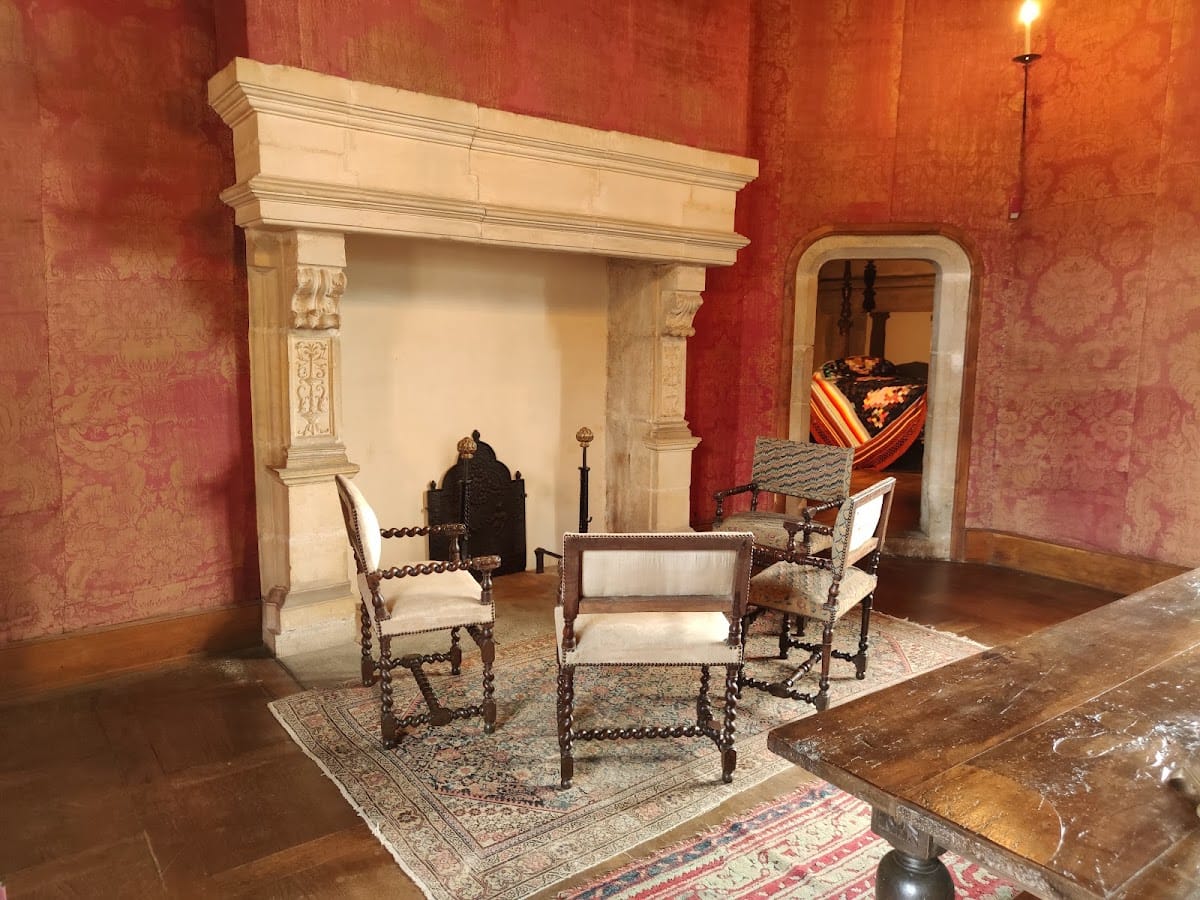
The proposed removal of the main staircase would have destroyed the building completely, but the plan was not carried out. In 1908, the château was sold to Maurice Fenaille, an industrialist and patron of the arts. Between 1908 and 1913, Fenaille restored the property by recovering dispersed elements, purchasing surviving components, commissioning copies where necessary, and furnishing the interiors with period furniture.
On 13 September 1913, in the presence of President Raymond Poincaré and Anatole de Monzie, Fenaille donated the restored château to the French state. He retained a life tenancy, a legal right to occupy or use property for the duration of a person’s life, for himself and his three daughters.
The restoration allowed several dispersed decorative features to return to Montal or to be recreated. Three busts acquired by the Louvre in the 1881 and 1903 sales were reinstalled. The Kensington Museum donated a dormer, a windowed structure projecting from a sloping roof, while the museums of Lyon and Berlin returned the busts of Robert de Balsac and Jeanne de Balsac in exchange for compensation. Elements held by private collectors in France and the United States could not be recovered and were copied.
Wartime refuge and national stewardship
On 22 May 1940, the three children of Leopold III of Belgium, Princess Joséphine Charlotte, Prince Baudouin, and Prince Albert, were sent into exile at the château during the Second World War. Baudouin fell ill there, and the children left for San Sebastián in Spain on 21 June 1940, after the Belgian capitulation.
The Mona Lisa was hidden at Montal in March 1943 and returned to the Louvre in June 1945. The castle has been classified as a French historical monument since 14 June 1909, with additional listed protection recorded in 1955 and 1995. Since 1 October 2006, responsibility for the property has rested with the Centre des monuments nationaux, the French state institution that conserves and manages major national monuments.
Remains
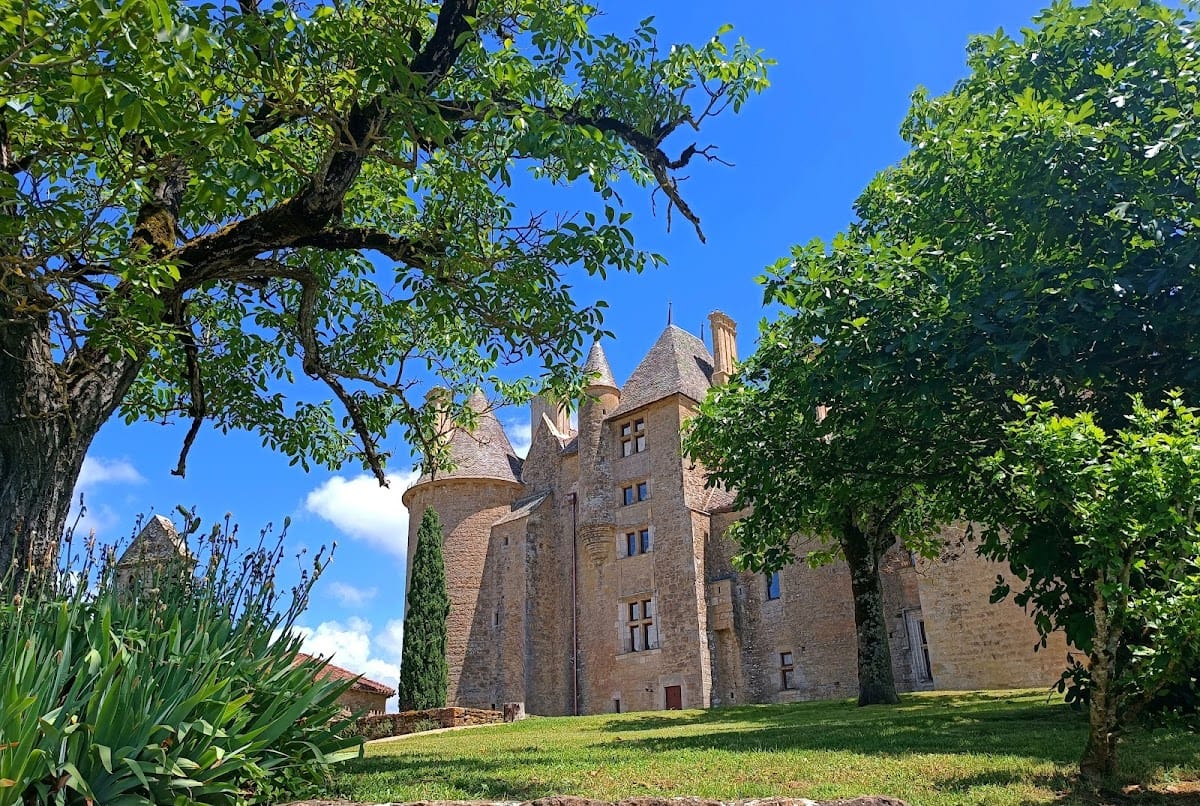
Montal Castle follows the characteristic arrangement of the first French Renaissance. Two wings frame the main courtyard, while three round corner towers and a square tower define the building’s outer form. The exterior remains restrained and retains elements of medieval architectural tradition, although the castle no longer served a defensive purpose. Its broad windows and decorative false machicolations, projecting structures that imitate medieval openings used against attackers, refer to fortification without functioning as defenses. The roofs are covered with stone slabs.
Courtyard and circulation
Residential wings and corner towers
The inner courtyard is enclosed by decorated interior façades belonging to two residential wings. Three round towers occupy the corners, each topped by a pepper-pot roof, while a square tower completes the arrangement. The interior elevations bring the principal sculptural program into the courtyard, where the family’s portraits, symbols, and mythological scenes are integrated into the architecture.
Ceremonial staircase
A straight, double-flight staircase with landings serves the residential wings. Derived from Italian models, it replaced the projecting spiral staircases commonly associated with medieval castles. Its construction demonstrates stereotomy, the precise cutting and assembly of stone into complex architectural forms, and it remains a major example of Renaissance stonework and sculpture in Quercy.
Sculptural program
Frieze and mythological scenes
A sculpted frieze separates the ground floor from the first floor. Its mythological and allegorical imagery includes Hermes riding a unicorn, Hercules and Antaeus, Mars and Victory, cherubs, human figures, and fabulous animals. Hermes is associated with travel, communication, and commerce; Hercules is the heroic strongman who defeated the giant Antaeus; Mars is the Roman god of war; and Victory represents triumph. The frieze also carries the coats of arms and initials of Jeanne and her sons Robert and Dordet.
Family busts and virtues
The first floor contains high-relief busts beneath triangular pediments, the architectural features crowning the portraits. They depict Jeanne de Balsac and members of her family, including Amaury, their sons Robert and Dordet, and other relatives. The arrangement commemorates both living and deceased members of the family.
The façade portraits also include Jeanne’s daughter Nine and Nine’s husband, François de Scorailles. Statues of the cardinal virtues accompany the family images. These virtues are prudence, justice, temperance, and courage. A courtyard dormer bears the motto “No more hope,” linking the surviving sculpture to the family losses that influenced the castle’s memorial decoration.